
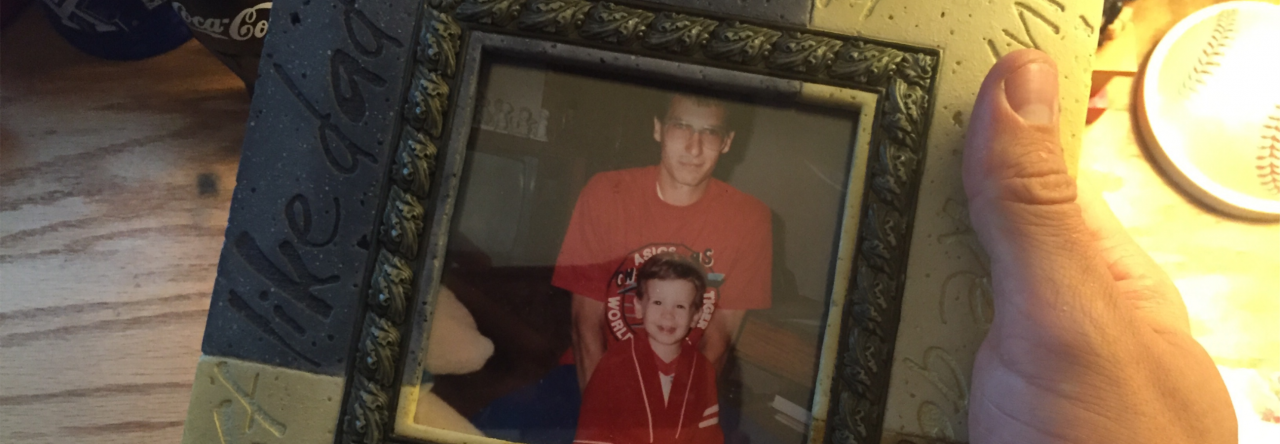

“I think I am beginning to understand why grief feels like suspense. It comes from the frustration of so many impulses that had become habitual. Thought after thought, feeling after feeling, action after action, had her [Lewis’ wife] for their subject. Now, their target is gone.” -C.S. Lewis, A Grief Observed
Every so often, it happens. Every so often, I lose control of any emotional stability that I have and I break down when I think about my Dad, his death, and how much I miss him.
And nearly every time, it’s triggered by some sensation-based memory of my Dad.
The triggers are different, but always associated with him in some unique and special way. They can be as small or insignificant as seeing a bottle of Mountain Dew (his favorite guilty pleasure drink and what I often saw him chug when I was little) or a certain episode of Home Improvement (one of his favorite shows), or as big and significant as hearing someone talk about their father or seeing a father and son together in public.
I think often of my Dad; and I think often of those triggers.
One of my earliest lessons as a small kindergartner helped me to understand the five senses: sight, hearing, touch, smell, and taste. I always enjoyed those lessons and associating certain experiences with the correct sensory mechanism, but I never realized how ever-present those senses are—and how powerful they can be. That power seems to take on new strength, ironically, when we lose someone we love. Even though the catalyst of those particular memories is gone, the slightest sensation can bring us right back to that moment as if our loved one had never left us.
Like the sight of a bald dude.
My Dad would get a real kick out of this, but anytime I see a bald person in public, it makes me think of him. My Dad lost his hair early. He chaperoned one of my 3rd grade field trips, and I remember all of my classmates asking why my Dad didn’t have any hair. Looking back, it wasn’t so much a loss. It was more of a forfeit. Dad’s hair line started to recede a bit in the front, and he absolutely refused to embrace the George Costanza horseshoe that he criticized anytime he saw it. “Just give it up, buddy,” he’d say under his breath as we passed someone who was clinging to any combover or wrap-around-patch he could possibly muster. At age 30, Dad decided to shave it clean and he never went back. For the next 20 years he sported the chrome-dome, and I’ll be honest—he rocked it. My Dad was one of the few men who was given the silver lining of a great head shape during the throes of his follicle tragedy. He had a really good head shape: not too round, not to square, and no weird bumps or crevices. Whenever I pass someone whose hair is thinning, or on occasion pass that man in the mirror who (reluctantly) is experiencing the same thing, I laugh and think about my Dad.
A sound, too, can also bring me back to the many memories that I have of him—mostly associated with music. Certain 90’s country songs (particularly this classic) can pop me right back into the cab of his old pick up truck, bouncing along in a car seat with the windows down as Dad would thumb-drum the steering wheel. If you were in the truck with Dad, you were listening to good country music and that was your only option. Now, when I hear those songs we used to listen to together, I’m instantly transported back with him. Right by his side. Listening. Singing. Tapping my hands along to the beat.
A whiff of aftershave can bring me to memories of my Dad as well. When it came to the application of cologne, Dad did not quite understand the “less is more” rule. He didn’t believe in the “hint” or “leave them wanting more” approach. Instead, he favored a more liberal assault on the senses. He didn’t need high-end scents either. Dad’s go-to aftershave was a green bottle of Brut that could burn your nostrils with just one whiff. A small bottle was likely to last the average person a couple months to a year, but I’m pretty sure Dad thought the bottles were single-use-only. He would eventually work his way up to the men’s line of Bath & Body Works fragrances, and I remember on multiple occasions either myself or Mom having to beg him to dial it back a bit.
“Dad, just because it’s from Bath & Body Works doesn’t mean you need to bathe in it!” I’d tease him.
Now that he’s gone, I admit that I miss those scents. On occasion, I’ll pull out one of his bottles of aftershave that I kept after his death just to take me back to those memories that I have of him (and to clear out my airways).
Running my hands across the quilt that my Mom had made for me from all of his old t-shirts and sweatshirts, I’m immediately drawn to elements of him that awaken my touch memory. Specifically, placing my hands on top of his work coveralls with the stitched name badge embroidered onto the front brings me back to familiar memories of him.
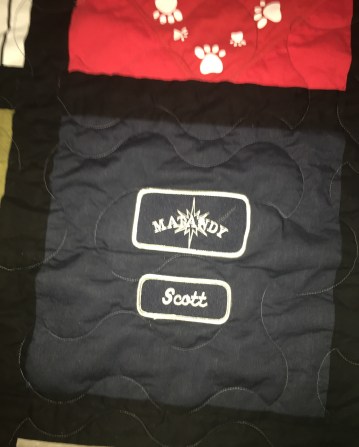 My Dad was a maintenance technician at a steel plant, and coveralls were his jam. He worked a lot (mainly because he enjoyed his work), and there was rarely a day in this life that I didn’t see him in coveralls. They were typically dark blue, and very, very heavy. I remember picking them up on occasion when Mom had just finished doing the laundry and wondering why anyone would want to wear such heavy clothing. Looking back, I likely didn’t appreciate the fact of how difficult my Dad’s job could be. He wasn’t always working in a temperature-controlled building. During the winter, drafts would sweep through the open garage doors that trucks would use to pick up massive steel coils, so my Dad needed the protection. Every time I feel those coveralls, I think about how hard he worked to provide for our family, and how amazing it was that I never really knew how hard he worked. Dad didn’t want to be a burden to others, and he rarely (if ever) complained about having to work in such a physically demanding job.
The tactile memory of his coveralls and Dad coming home after a sweat-drenched day working in a hot steel plant reminds me of his determination, hard work, and sacrifice; but when I feel those coveralls, they also remind me of the joy that I felt each and every time he would come home. Our house was always a warm refuge, but it truly felt like home when all three of us were there.
And of course, my Dad and I shared a mutual love of food. Those food memories are often so strong because our family mostly always ate together and Dad really, really enjoyed family meals—both because he got to eat delicious food, and because he got to spend time with those people that he loved. If I go to Kings Island or a Reds game at Great American Ballpark, I can’t walk by a LaRosa’s pizza stand without thinking of my Dad. It was always his go-to item to eat at those places, but even at home he loved LaRosa’s. Their salads were his favorite, and oftentimes on our “bachelor nights” when Mom would have to work late, Dad and I would find ourselves at the local LaRosa’s Pizzeria chowing down on salads, calzones, pizzas, and Cokes. The first time I had LaRosa’s after losing Dad, I broke down at the table when I instinctively went to pass my olives over to him not even realizing that he would never be there to enjoy them again.
I think of him every time I walk into Grecian Delight, one of our all-time favorite restaurants because of both the food and the dear, sweet woman (Maria) who owns it and rules over the kitchen (along with help from her loving husband and family). When my Dad worked in Middletown at Southwestern Ohio Steel, he and a coworker who lunched together discovered Grecian Delight, and Dad raved about it. Dad made it a point to take Mom and I there one evening for dinner, and hesitantly (we weren’t always the most adventurous), we ate a meal there for the first time when I was ten years old. Our lives were never the same!
 To this day, I still eat at Grecian Delight. One of the best parts of the time I spent working at Miami University’s campus in Middletown was getting to eat lunch at Maria’s multiple times a week! I would walk in and Maria and her husband, Dimitri, would immediately greet me with a smile and a warm hug. That delicious, warm meal (most times a chicken teriyaki pita with cucumber sauce, waffle fries, and a Greek salad) would give me comfort and bring back all the wonderful, vivid memories that Dad had introduced our family to so many years earlier.
Our senses are absolutely incredible.
Our senses have this unbelievable way of transporting us back to an earlier time and place.
And when we experience loss, our senses can also remind us of what we no longer have.
We experience life through our senses; and it’s through those same senses that we experience grief and loss. Little moments that we’ve subconsciously experienced for years or maybe even decades all of a sudden become a focal point that can bring that memory to life in an instant.
As our senses envelop us, so too does any grief that we associate with those sensations. Our senses are always there, ever-present. We cannot simply flip a switch and turn off our senses—they are always with us, and always sensing. And because we are always open to sense, we are also always, and a bit unfortunately, open to grief. That’s why grief is so inexplicable—it can happen at any point, at the slightest touch, or because of the most random vision, or as a result of the faintest scent that might remind us of our loved one and what was lost.
Those senses and the memories that we associate with our lost loved ones can feel like a curse; but with a long-term perspective of grief, we also realize that they will be one of our greatest blessings and a great mechanism that leads to our ultimate healing. Today, I’m writing to those of you who have felt the recent sting of loss and grief (and unfortunately, still in the midst of a horrible global pandemic, the audience that I write to is larger than any of us could ever dreamed it would be). I’m writing to let you know that what might feel like a weapon being used against you right now in this moment will later soothe your soul and bring you some semblance of healing and normalcy again.
Early on, our sensations can spark real pain. I do not and will not deny the pain you’re experiencing. In the immediate aftermath of a traumatic loss, every sensation that reminds us of our loved one can evoke pain and unexpected feelings of longing and heartache. We can break down at the sight of a photo, the voice of a loved one on a forgotten voicemail, or just the touch of a familiar piece of clothing or keepsake.
I’ve said it before and I’ll say it again; there is no textbook way to grieve. We are all built uniquely, therefore we all grieve uniquely (although not in isolation). In the aftermath of losing someone we love, we all react to these sensations differently. Oftentimes, after losing our loved ones, we are looking for ways to control our days in an effort to provide stability in a world that feels rocked by the unexpected. These unanticipated sensations and memories of our loved ones, however, can shatter any semblance of predictability that we may have and throw us into a tumultuous emotional state.
Unfortunately, there is also no timeline on how long these emotional reactions might stay with us or continue to occur. For some, those feelings of pain brought on by a sensational memory might only occur upon our first exposure to whatever that stimulus might be. Other times, however, we might find ourselves having a severe emotional reaction far beyond that first exposure. Especially to those stimuli that have a significant emotional connection to our loved ones.
My Dad has been gone for nearly eight years, which in and of itself is still hard for me to reconcile. Some days, the pain is so fresh and raw that it feels as if my Dad’s death occurred just yesterday; other days, it feels as if I’ve lived an entire lifetime without him. And yes, even eight years later, there are still sensory-based memories of my Father that evoke a particularly painful reaction.
Namely, my Father’s handwriting. I’m not sure what it is, but to this day I still experience deep-seated, emotional grief every time I see my Dad’s handwriting. Maybe it’s because my Dad’s handwriting was such a characteristic part of who he was. His all-capitals-style handwriting was precise, measured, and methodical—just like my Dad. Maybe it’s because our handwriting is something so commonplace that we grow accustomed to seeing every day that, once it’s gone, feels as if every note and every expression of it is a cherished heirloom that we must hold onto. Nonetheless, seeing my Dad’s handwriting still brings with it a visceral emotional reaction from me. I still keep a pad of paper that he had in his truck with random measurements that he had taken from work written on it. Those measurements mean nothing to me; but the hand that wrote them means everything. Eight years removed, I still have to keep that pad of paper stowed away in a box. Just looking at those random scribbled notes can break me down, and I can’t really explain why. It’s a difficult thing for me to understand and make sense of. For now, seeing his handwriting has not yet elicited a positive emotional memory.
But other memories, although they initially brought pain, have now transformed into something much more therapeutic.
In time, those same sensations can bring us real, lasting comfort. With time, the very same things that once triggered our trauma become the very things that heal our deepest hurts. Our exposure to a sensory memory of our lost loved one in the immediate aftermath of the loss can be significantly different from the reaction we will have months, years, or even decades down the road. What reopens a wound in one moment can soothe and salve it in another.
Over time, I began to associate many of those sensory details less with what I had lost and more with what I had gained during the 26 wonderful years of life when my Dad was physically in it. Immediately after losing my Dad, I had an unbelievably difficult time looking at pictures of him. They caused me too much pain because I just wanted to reach out and touch him through the picture, knowing that this would never happen again on this side of Eternity. Now, however, those very same pictures that once brought a tear to my eye can put a smile across my face. Don’t get me wrong; the hurt, heartache, and hunger for his presence are all still there. But the negative consequences of those feelings aren’t as intense. When I look at pictures now, I’m able to channel the positive memories that I often associate with each picture, rather than focusing on the fact that my Dad is no longer here. Instead, the consequences of those feelings of loss are reminders of how much I loved my Dad and how much he loved me.
And ultimately, thanks to my faith in God, they remind me that I’ll see him again.
 Honestly, I’m always a bit amazed that eight years after losing my Dad, I’m mostly able to look at pictures of him without sobbing like I did in those early days (especially because photos can be a very difficult trigger for so many people who are grieving, even years and decades down the road). Every time I see a photo of my Dad, it’s a reminder of how far I’ve come through this journey. It’s a reminder of how much God has loved me and protected me through this inexplicably difficult loss, just as He promised He would. It’s a reminder that where we are in the immediate throes of a traumatic loss is not where God wants us to remain. And it’s a reminder that grief isn’t an impediment to our growth in this life. Grief can be a temporary stop on our journey, but in time, we grow as much in our grief as we do at any other juncture of our development.
Although there’s no definitive timeline, our grief tends to change as the calendar lurches forward. The more time that stands between us and our grief, the more perspective we earn and gain.
The difficulty is maintaining this perspective in the midst of a storm of grief. One of the most difficult parts of these sensory-based reactions to our loss is that we tend to think those temporary reactions are going to be permanent when, in reality, they are far from it. In the immediate aftermath of losing a loved one, we often dread what is to come thinking that our immediate grief is going to be our permanent companion. That is not true. This thinking can defeat us if we allow it to. We must remember that our grief is a non-linear journey that takes time, and that we can’t forcibly wind forward the hands of the clock when it comes to our grief. We may fall and falter with certain steps, but oftentimes we make more progress than we can possibly know or recognize, even if we are not always able to see it from our own vantage point.
As grievers, we must resist the urge to talk about our sensory memories in defeatist, extremist language. I know this sounds like mental gymnastics, but I’ve written this truth many times in this forum: our words matter. And when we are talking about words mattering, it’s not just those words that we speak to others which have consequence. So to do the words that we speak to ourselves. Our internal dialogues are so pervasive and impactful. The conversations that we have in the inner recesses of our own mind, whether positive or negative, have a tremendous capacity to dictate and determine how we progress through the grief journey.
Your right now is not your forever; but you have to think, speak, and behave in a way that acknowledges this.
If you say to yourself, “I’ll never be able to eat at the restaurant that my Dad loved,” that’s (unfortunately) likely to be true. But if you say to yourself “Right now, I can’t see myself eating at that restaurant…but someday down the road I hope to be able to go back,” you then approach your grief with the perspective of a person who will change, grow, and even heal over time.
If you say to yourself, “I am going to completely fall apart every time I see a picture of my loved one,” that’s likely to be the case. If you say to yourself instead, “In this moment, I feel very sad when I see pictures of my loved one…but someday, I know that I’ll have a more positive memory and reaction when I see those pictures,” you immediately recognize that, in time, you will find ways to positively process your grief.
If you speak to yourself in fatalistic, “now or never” tones, that language does not recognize the ability for little steps and developmental moments of growth throughout our grief. Grief isn’t an “all or nothing,” “now or never” experience. One day, a sensory memory might bring with it a ton of pain. And the next time, it might feel a little better. And then each and every exposure after that gets easier and easier until, in time, it transforms into something greater that can help us heal.
You will always have scars when dealing with a traumatic loss; but with time, what feels like a weapon against our soul can transform into a bandage.
If you are grieving or struggling with loss, I am speaking directly to you in this moment: Be kind to yourself. Don’t feel as if you have to plow through your timeline of grief as fast as you possibly can. Don’t feel the need to open yourself up to every sensory memory of your loved one at this exact moment, but be open to the possibility of it down the road. Approach that memory on your own timetable, when it feels right, and be patient with yourself as you figure out what hurts and what helps. And open yourself up to the possibility of change throughout your grief.
 The reality is this: Our sensation-based-memories are an inexhaustible currency of life within which we can, in the right time, find our most valuable riches. Time, however, is that magic ingredient. Just as some precious metals require age to galvanize them and make them more beautiful, so too do those sensory memories of our loved ones. They require time to take off the sharp veneers and edges that can cause us pain so those memories can glow through and help us tap into those positive reactions.
In time, you’ll be okay; and in time, those memories will be more than just okay. They’ll be precious. They’ll be cherished. They’ll provide hope at just the right moment.
And so will you.
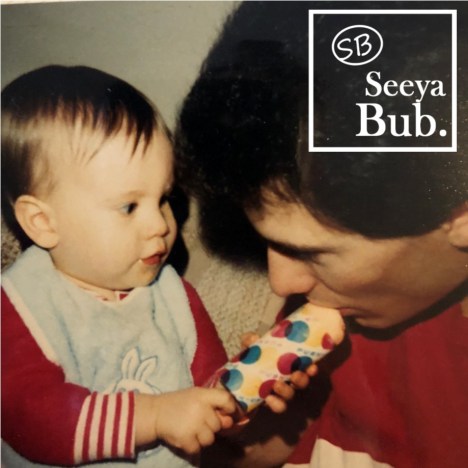 Dad, Losing you was difficult for so many reasons, but it felt even more difficult because you had lived life so fully. You always lived your life with gusto. You loved the visual beauty of nature, the joy of a great meal and a Coca-Cola (or three), and the smell of a summer’s eve bonfire. You shared this love and passion for life with everyone around you, and when you were gone, it made it difficult to enjoy all the things you loved. In time, however, I found that one of the greatest ways to honor you was to experience life just as you always enjoyed it. As time went on, I found myself crying less at the sensory memories I have of you and instead craving them because they provided me healing. Dad, thank you for always living your life in a way that led to wonderful memories. Thank you for being unique, having a personality, and just generally being a character! Thank you for teaching me what things would be helpful as I grieved before I knew that I’d ever need it. Dad, I know there is a day waiting for you and I on the other side of Eternity within which I’ll get to experience all of these things made anew. I’ll get to feel the warmth of your hug, hear the sound of your laughter, and see the smile and familiar twinkle in your eye. I long for that moment, but in the meantime, I’ll cherish the memories that I do have while embracing the things that remind me of you. I love you, Dad. Until that day, seeya Bub.
“You came near when I called you, and you said, ‘Do not fear.’ You, Lord, took up my case; you redeemed my life.” Lamentations 3:57-58 (NIV)


 I didn’t write this story to wallow in my own guilt; I wrote this story to serve as an example to everyone in this life who loves someone or cares about someone that struggles with mental illness—and if the statistics tell us anything, that’s likely everyone. I wrote this story in the hopes that we might be able to normalize and de-stigmatize the conversation around mental illness. I wrote this story in the hopes that, in the same way we might inquire about someone’s health in the midst of a physical injury, we might learn to do the same in the throes of a mental injury. I wrote this post in the hopes that, someday, the question of “How are you doing?” can be met with more honesty than a perfunctory “I’m fine.” I wrote this story in the hopes that, someday, just one person who is unfortunately sitting across from someone who is hurting under the surface might find the courage to ask this unbelievably difficult question and save a life.
 Dad, I miss you more and more each day that goes by. As much as I don’t want to, I often sit back and replay our last conversation together and wonder if I could have done more. I wonder what would have happened had I asked you whether or not you were experiencing suicidal thoughts. I don’t know that you were. I just know that I miss you. I just know that I wish I could have done more because we all loved you so much. You brought such vitality and fun to all of our lives. You were the glue that held so many of us together in unique ways. You were important to all of us, and even thought it has been more than seven years since your death, you are still missed beyond belief. Dad, I would give anything to be able to sit down with you again on that day—not for me, but for you. You deserved a long life. You deserved to grow old, and become a Grandpa, and retire, and all the things that come with a long life. Even though you’re gone, I am grateful that your story lives on and that you continue to inspire all of us through the way you lived your life. Dad, I have so many questions for you; but I’m thankful that when I get to the other side, none of this will matter. All of the hurt and pain that we experienced in this life will be gone. Together, we will be able to rest in an everlasting paradise where the pains of this life are a disappearing vapor. Until that day, know that I love you. Know that I’ll continue doing everything I can to keep your memory alive. Thank you, Dad, for always being there for me—I can still feel you here now. I love you, Dad. And for now, seeya Bub.
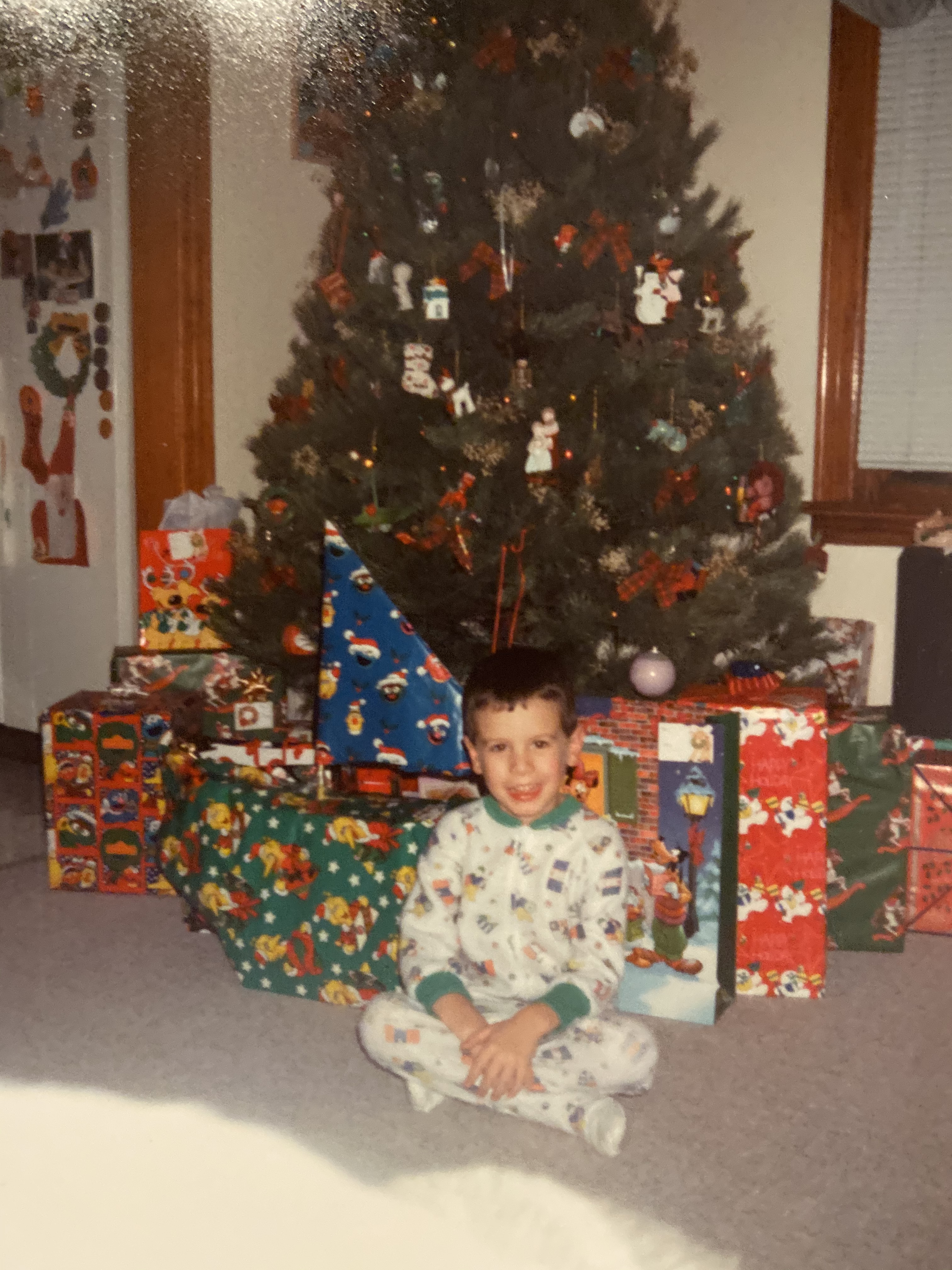 Like most kids, I was usually the first one down the stairs to wait anxiously in the family room for everyone else to wake up. I always felt that sparkle deep in my bones that only a childhood Christmas morning can replicate. I’d look down the stairs and see the twinkling tree that Mom and Dad had meticulously decorated in the living room (
 But he could let moments go by on Christmas morning before lumbering down the stairs. I would wait downstairs with all the patience of a hungry infant. After shaking a few boxes here and there, I’d try and walk around and creak all the right floorboards in the hopes that it might wake up Mom and Dad and cause them to come downstairs. I’d turn on the television and put the volume just a little too high. Maybe sing a spontaneous Christmas carol here and there. A fake cough might do the trick. I also got pretty good at finding ways to cause our dog to bark incessantly in an effort to commence the Christmas morning festivities (thanks, Willow!).
 We always had dogs that enjoyed unwrapping presents, which was quite the feat looking back on things. And as much as Dad enjoyed watching them unwrap the gifts and laughing about it, he also enjoyed taking thousands of photos of them while doing it. Beep, flash. Beep, flash. Beep, flash. Over and over again, the shutter of Dad’s digital camera would snap and snap while capturing what my Dad thought was the most amazing feat man’s best friend had ever accomplished.
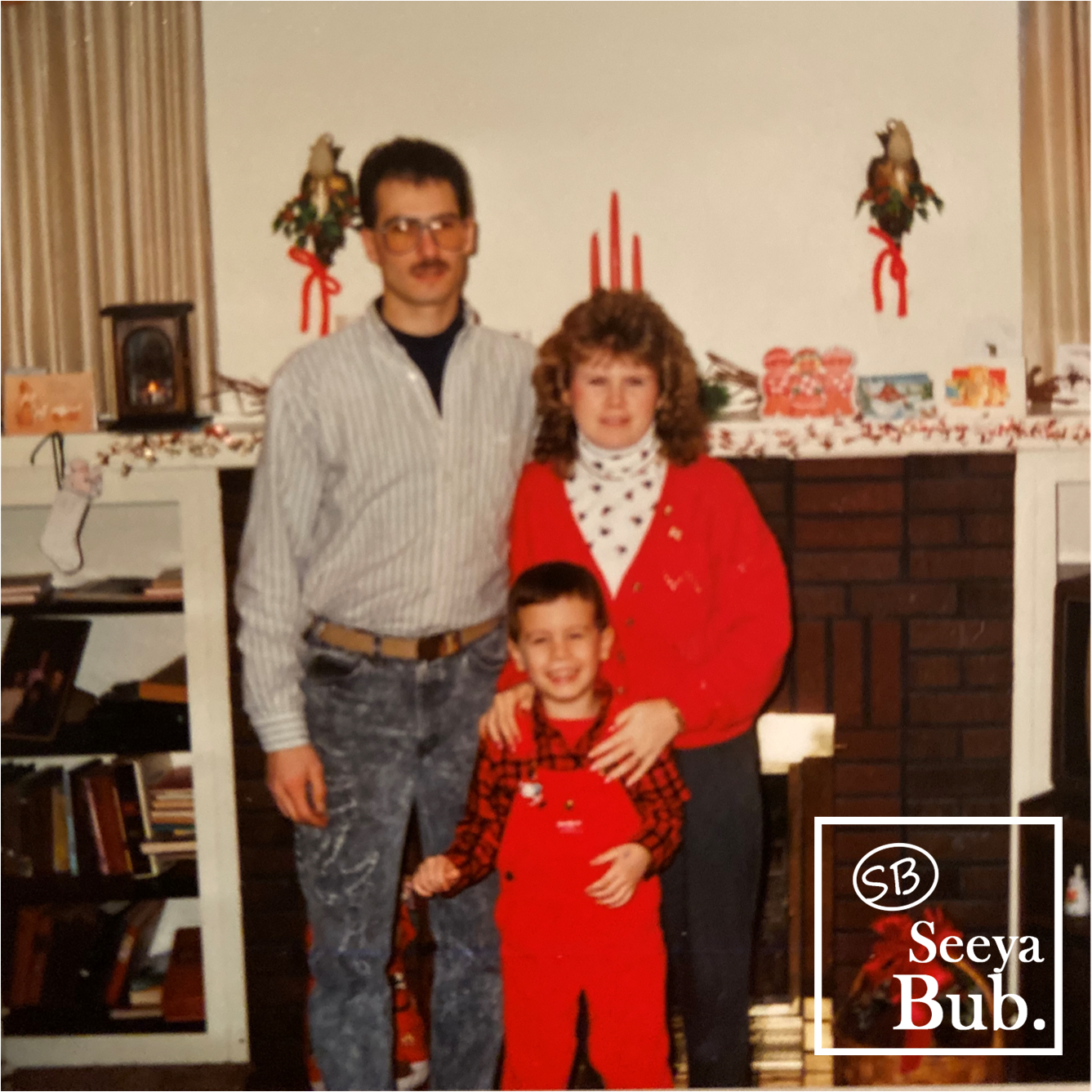 I think the reason I can soak up those memories so well is, ironically, because of the way my Dad forced us all to slow down. On Christmas Day, and in nearly all the days of his life, my Dad was one of those guys who was truly present in every single moment. Nearly everyone who knew my Dad can attest to the fact that he was a man who was always fully present and immersed in whatever he was doing at any given moment. My Dad wasn’t distracted by much when he was around people. When he was having a conversation, he was fully in that conversation. When he was eating a meal, he was fully enjoying the flavors, the setting, and the company. When Dad was working, he was fully engaged in the detail of the work he was doing, ensuring that every little component of the job had been done correctly. And on Christmas Day, Dad wasn’t waiting for what’s next; he was experiencing what’s now.
 Dad, Although the first year without you was hard, it seems as if every single Christmas gets harder and harder in its own way because your presence feels so distant. Although the years have worn on, however, my memories of you seem to become more vivid and full of life because they are so unbelievably important to me. Dad, thank you for helping us create memories on Christmas Day and on every other day. Thank you for always treating time with those you loved as a precious treasure. I often marvel at how you could make each person you interacted with feel so loved and so valued. I honestly think it was because you disconnected from everything in life but that very moment within which you were in that allowed you to connect so intimately with each person. Dad, thank you for always connecting with me, and with your family, and with the people who miss you so dearly. How I wish we had many more Christmas mornings together, even if you were slow to rise, slow to get moving, and slow to satisfy the primal urge for gift-opening within the heart of your adolescent son. I love you, Dad, and I miss you dearly. I wish you were here with us to see and live through all of the exciting moments of our lives. You would have been immersed in every little moment just like you were when you were with us. Dad, thank you for the presence. I miss it, but I know that someday, on the other side of eternity, I’ll get the chance to experience it again. Until that day, Merry Christmas, Bub.
 Over time, I learned—we all learned—how to support Dad when he crashed, and I think we learned by watching how he supported all of us. We didn’t get it right every time, but we tried to be there for him because that’s what he always did. My Dad was the guy who was just there for people. He listened, he didn’t judge, he empathized, and he gave us all reassurance and confidence that the crash didn’t define us. That’s what we all tried to do to support Dad. It was imperfectly executed, especially by me, but we tried. We gave it our best effort.
 Dad, The comfort I felt in your arms walking home after my failed-and-unintentional-bike-stunt was a feeling that I can instantly snap back to at any moment—and it’s a feeling that I desperately miss. You were my rock. You were my safe haven. You provided protection from the dangers of the world, but you encouraged me to not play it safe. Dad, thank you for giving me the feeling of safety that allowed me to ride freely. Thank you for being there on all those days when I needed you most. I never questioned whether or not you were at my side, and even since your death, I’ve known that you were there. I think about you each day and wonder what life would look like if you were still here. Even though there’s sadness at that longing, I know that you’re in a place where the pain you experienced here exists no more. I’m thankful that you’re basking in the glow and warmth of Eternity where the pain of crashing is no more. Dad, I love you, and I miss you like crazy. Thanks for always being there for me—both in this world, and in the next. Until I can thank you face-to-face, seeya Bub.
 Dad, Remember how much fun we used to have wrestling on the family room floor and laughing as you constantly beat up on me?! It doesn’t sound like as much fun as it really was, now that I write that. Dad, I appreciate that in wrestling, and in a lot of areas of my life, you never just let me win. You always made me earn it, which made me value the struggle and see the purpose of it. I’m glad that, for so long, you wrestled well. I know there were probably many days when you felt like your depression would overtake you but, somehow, you found the strength and the purpose to fight on. I’m grateful that you modeled that kind of strength, and I want you to know that when I think about your life, I think about these types of victories—not the way in which you died. I think about how proud I am of you for fighting as hard as you did for so long. Thank you for always allowing me to see the purpose in wrestling well and fighting through those difficult moments. It’s ironic that the lessons you taught me were preparing me to navigate life after losing you. I don’t always do it perfectly—I fall well short on most days, in fact. But even in your death, you have been a great Father to me. Thank you for loving me enough to teach me how to wrestle well. I miss you terribly, Dad. There have been so many moments where I just wish I could be back to those moments of being your young son again. But I know, in my heart, that we will have those days again. Until that day, seeya Bub.

 He was a great father, mentor, and friend. He was a soccer coach, a member of the pool board, and the Director of the Gallagher Center at Xavier University, where he worked for 23 years here in Cincinnati. Kids were drawn to him. He understood them and could always help them through whatever they were dealing with. He was a mentor to more students than I could count. At Xavier, he was in charge of the Student Government, ran the Student Activities Council, and was on the Disciplinary Board. He was always good at working with kids and just knowing when there was something wrong. Whenever a student got in trouble, he would reach out to try to get them back on track. I think it helped him to be able to help these kids. Jim was an amazing dad, too. By the time the girls were in about first grade, Jim started coaching soccer. He was great at it. He would get on their level and get really involved. He was a really hands-on parent, too. He was constantly dreaming up activities that the girls loved, like camping in the backyard, catching frogs, watching their favorite shows and laughing along with them. And he was always that parent who came into class all the time. He was just really close with the girls.
 Dad, I wish you had been able to feel free of shame. I wish you had been able to talk openly about your mental illness, especially during the times when you likely felt so alone. I wish that individuals like you and Jim could have known, deep down, just how much you were loved and how much you would be missed. But, from a distance, I hope you’re able to see how much you were loved by the work being done in your memory. Dad, you were so loved by so many, and I know that you knew that in the depths of your soul—I only wish that the stigma associated with mental illness had not been there to help you remember that in each and every moment. But, for as long as I live, I’ll continue to honor your memory and work to make sure that everyone who listens learns from your life. I’m thankful and grateful that there is a community of individuals, like Nancy, who are in this same fight. Dad, I can’t wait to tell you how important you are to me and so many other people. I look forward to the day when I can embrace you again and let you know how much you mean to me. Until that day, seeya Bub.
  Author Bio: Nancy Eigel-Miller, Founder & Director, 1N5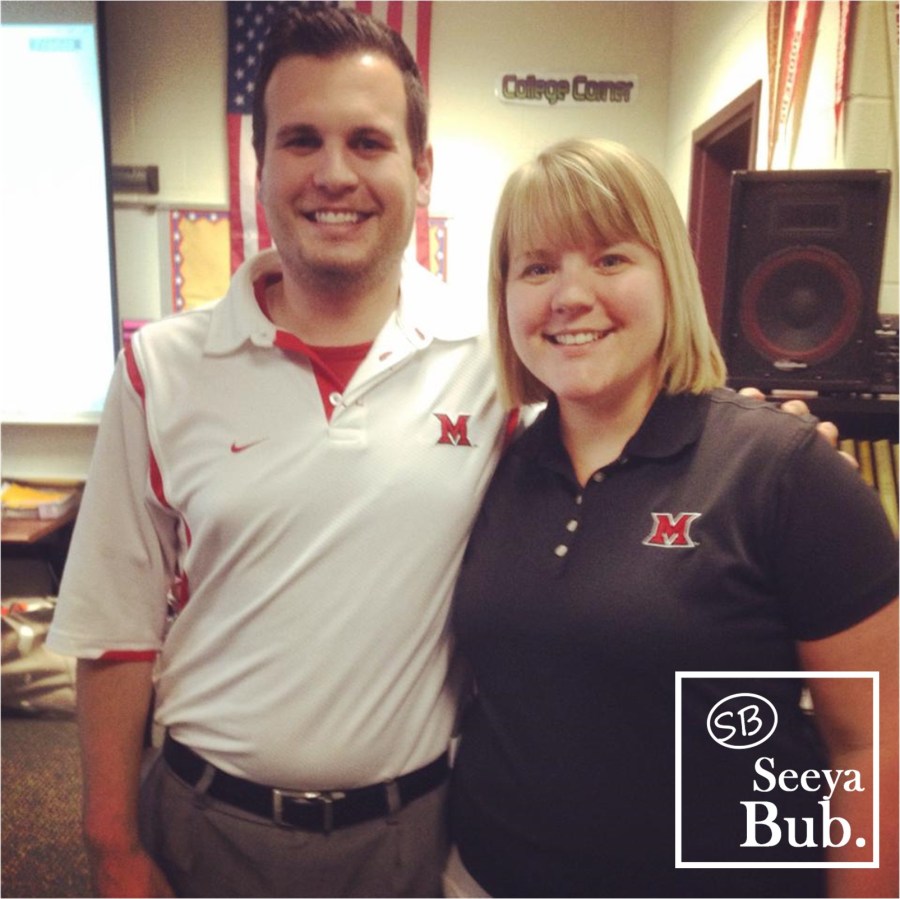
 Oh, how I appreciate the wisdom of a good quote from the philosophical guru of our times, Michael Scott. I’ve watched The Office on a loop for years and years, doing my best to avoid Season 8 (talk about a long, national nightmare), and knowing that the show speaks truth in its simple humor. Let’s be honest—we’ve all had that moment where we’ve noticed a striking and deeply unsettling parallel between our work lives and the lives of those inhabiting the Scranton branch of Dunder Mifflin. And if you’re anything like me, you’ve likely thought of yourself as a Jim-figure when, in reality, you’re more of a Michael. And maybe a Dwight at times. And possibly a bit of a Kevin. But never, ever a Toby. I mean, come on….that guy?
 During my time as an Admission Counselor at Miami University’s Regional Campuses, Christina blessed my life with her thoughtfulness, dedication, and fun-loving attitude. Christina joined our team about a year into my tenure there, and we worked closely with one another on about every project imaginable from campus visits, to coordinating tour guide efforts, and yes, those many, many visits to high schools all across the region. To this day, she is one of the most dependable, loyal coworkers that I’ve ever worked with.
 A brief history and context — I met Tyler in the spring of 2012 when interviewing for my first full-time job at Miami University’s regional campus in Middletown. I was excited to be interviewing for a position that combined many of my interests and talents, and was over-the-moon to be offered a role as an Admission Counselor prior to finishing my Master’s degree. Right away, I knew I had made a great decision – the campus was friendly, our work with prospective college students made a difference, and I got to be closer to home after grad school. And, frankly, it was just a lot of fun to visit high schools and talk about going to college. Tyler and I went to many of the high schools in southwestern Ohio together to give presentations about the college application process, financial aid, finding a major and career readiness. We would be at schools all day, giving the same presentation six or seven times – it got to the point where we had timed down our jokes and one-liners to the second. We made connections with students through games and made a great team in the classroom. We also became good friends in the process, enjoying many lunches at Frisch’s (seriously, so much Frisch’s…) and shared many inside jokes from the road.
 Christina’s post reminded me how fortunate I was to have to her in my life at a time when God desperately knew I was going to need her friendship. It also reminds me that, when it comes to supporting my coworkers and colleagues in their own emotional struggles, I still have a lot to learn. It reminds me that even an imperfect attempt to help someone who is hurting and healing is better than no attempt at all. And it reminds me of the bravery it takes (which Christina showed on so many occasions) to take that step to help, even when you don’t quite know what to do. We have to help others who are grieving, but we can’t help them if we don’t first try.
 Dad, Although it’s been so difficult to live life here without you, I know that you’ve been watching over me—over all of us. I also find peace knowing that God positioned people in my life, like Christina Grote, to help me grieve in a way that was healthy. There have been days when I’ve been so unexpectedly sad since your death, but it always seems that there have been loving people who know exactly what to say in just the right moment. I know that’s no coincidence. I know that it’s all part of a perfect plan to heal an imperfect world. Dad, I’m thankful that you were always such a blessing to your coworkers. I think of the countless people who loved spending time with you at work. I know that you enjoyed your job because you liked working with machines and getting your hands dirty, but I also know that you really loved your job because of the people who brought a smile to your face. Dad, I hope you know that you brought that smile to the faces of so many people during your all-too-short life here on Earth. You were a constant source of encouragement and joy for those who called you a friend or colleague, and we miss that brightness in our lives because you aren’t here. You were gone too soon, but I’m thankful that you made the most of the time you got to spend with people. It’s an important reminder to me when things get busy, and I’m grateful that your life lessons are still teaching me. You were the best Father a boy could ask for, and I can’t wait to remind you of that face to face. Until that day, seeya Bub.



 Dad, My heart hurts deeply when I think about how fearful you likely felt throughout your life. It breaks my heart to know that you experienced such shame which prevented you from reaching out and talking to those of us who loved you. Dad, I just want you to know that we were never, ever disappointed in you. No matter how sick you might have been, and even during the times when your mental illness led you to leave us, we were never disappointed in the man you were. And now, I hope you are resting in the peace of Heaven and allowing God to remind you, daily, that He was never disappointed either. Your life continues to guide me and remind me of the importance of sharing my feelings with others, and although I don’t always do it perfectly, I’m grateful that you’re still parenting me and teaching me daily. I carry you with me every single day, Dad. Thank you, Dad, for showing courage in all those moments that matter most. I can’t wait to tell you, face to face, how proud I am of you for fighting the way you did. Until that glorious reunion, seeya Bub.

 Dad, my heart breaks each day when I think about losing you, and the past six years have been unbelievably difficult. I don’t want to have to navigate life without you because you had so much more to live for. Life was simply better when you were in it, Dad. You brought joy and laughter and security to the world around you, and we’ve all felt your absence every day. I also feel tremendous guilt because I wish it wouldn’t have taken your death for me to realize just how bad you were hurting. Dad, I should have been more patient and understanding. I should have shown you more empathy and grace because you were suffering from a disease that you couldn’t explain, identify, or even put into words. There are so many moments that I wish I could redo—days in which I treated you unfairly or without compassion. Although I can’t replay and fix those moments, I want to spend every day here on Earth trying to redeem your death. I want to make sure that everyone who reads my words and hears my voice knows your story, learns from it, and chooses a different path forward because of it. Dad, you gave me the courage to carry on in the face of your death, and although I’d do just about anything to have you back, I’m so grateful that you taught me to do everything I can to help others who are hurting. Thank you for always loving me. Thank you for always teaching me, even in your death. Thank you for all you gave to me, even on days when you couldn’t even take care of yourself. I love you, Dad, and I miss you tremendously. I can’t wait to be reunited forever in the glory of God’s eternal kingdom. Until that day, seeya Bub.
  Seeya Bub