
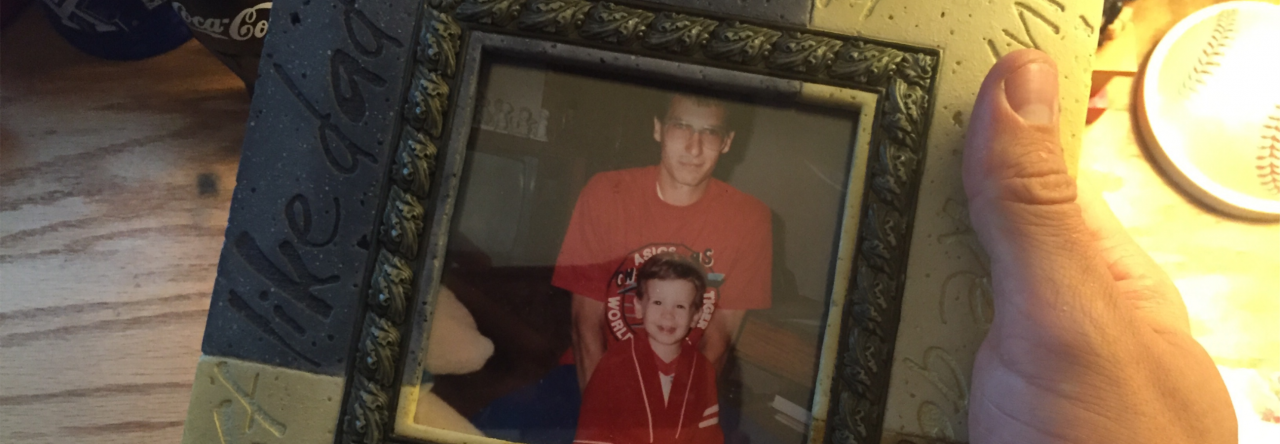

Ty: I can say this with the utmost certainty: I have never once blamed my Dad for his death.
I have never once been mad at my Dad for leaving us earlier than he should have.
I have never once been angry at my Dad since his death.
But that doesn’t mean there are things I wouldn’t change about my Dad’s struggle.
When I look back at my Dad’s experience with depression and his eventual suicide, there are definitely moments of “Monday Morning Quarterbacking” that I would return to and reverse if I had the capability. I think back to my first response to learning of my Dad’s depression, and how I wish I would have treated him with more love and compassion (read more about his in an earlier post). I think back to all the moments where I told him I didn’t have the energy to go on a bike ride or toss in the yard, and given the opportunity to change it, I would have put down the television remote and spent more time with him. I would have never left him alone that morning that he died. I would have prayed with him.
But if there is one thing above all that I wish my Dad would have done differently, it’s this: I wish my Dad would have gone to see a professional counselor.
Let me reiterate: I’m not blaming my Dad for his untimely end. I’m not even saying that this would have definitely changed the final chapter of his life, because that’s for God to know—not me.
What I am trying to do is understand the things that went wrong in our story in an attempt to prevent these same situations from happening to other fathers, other sons, and other families.
I’m trying to understand the reasons why my Dad wouldn’t go see a professional counselor, and they are reasons that aren’t unique to his situation. As a culture, we are often afraid of the stigma or stereotype that comes along with going to see a mental health professional. We are afraid that it makes us look weak. We are afraid to admit that we have a problem. This, coupled with a masculine cultural reinforcement that we simply need to buck up and hide our feelings kept my Dad (and plenty of others) from getting the help they need.
But there’s one more reason worthy of our exploration together: the fear of the unknown.
I know this fear all too well. The first time I decided to go to a counseling session, I didn’t quite know what to expect. I had seen depictions of therapists in movies and on television, and I worried that it was all hokum designed to make a quick buck.
I’m so glad that my counselor proved all of these stereotypes wrong.
If my Dad knew what counseling really was, he would have gone. If he knew what actually happened in those sessions, he would have gone. If he knew that getting help was not a sign of a weakness but was, instead, one of the boldest, bravest decisions an individual can make, he would have gone—if not for himself, for my Mom and I.
Which leads us to this post. Welcome back my friend (and I hope yours) Jeff Yetter—Licensed Professional Clinical Counselor, and the man who has walked with me “arm in arm” through so many struggles. He is the counselor who helped me realize the power and potential of going to see someone who can provide help. Jeff is a sincere, authentic, man of God who has provided so much brightness in the face of the evil that has invaded my life. Jeff’s first post detailed how we came to know each other and how we’ve come to walk together through the trials of my life. Now, I’ve asked him to provide a description of his unique counseling style—a theory he created called “Think to Feel”—in an effort to destigmatize the counseling profession.
So, if you find yourself needing help but are too afraid to pick up the phone and schedule that first appointment, I hope this message provides the ultimate encouragement you need.
Jeff: I am so humbled and grateful to have been asked by Tyler to contribute, again, to this amazing blog. What an incredible ministry this is for Tyler, and for all who come here to read, and share, and learn, and love! It is an honor to be with you all once again…
For this post, Tyler has asked that I share with you all the way that I “do counseling”. He has asked that I share my primary method of working with the folks who come to see me, because he believes this has been helpful on “our walk”. I sincerely hope you find it valuable as well.
A Little History…
As a first-semester graduate student in counseling studies, way back when, my earliest recollection was being directed by department faculty to decide what theory of counseling I was going to practice when I completed my degree. In other words, I needed to decide what I believed about human beings and their behavior, in order to know exactly how I was going to do counseling when I got out in the “real world”. Sure, there were courses on counseling theories and techniques, and I learned about the greats in the field, like Freud, Jung, Adler, Rogers, Skinner, and Ellis (to name a few). But where did I fit in this picture? I knew I wasn’t going to be a “clone” of one of these theorists, and I had an inkling that I believed in Cognitive Behavioralism (“thinking” as it relates to behavior), but I was pretty uncertain as to which direction I was going to go as a practitioner. So, I left grad school with three wonderful gifts: excellent grades (all grad students do well, academically), a beautiful diploma (fit for framing), and infinite confusion with regard to theory and effective techniques of counseling practice. So…
The Birth of a Theory
I entered the counseling profession determined to help people. True, the notion of “helping people” emanates from the minds and hearts of nearly every recent graduate in the health care field, but I really believed it was possible – I just didn’t know exactly how to go about it. I needed to think about what I believed about human beings, their behavior, and what, if anything, produces change in human behavior. So, I started to actually practice counseling. I was nice. I listened well. I could paraphrase and re-state what I heard with the best of them. But this wasn’t enough to me. Not to mention, I was placing an incredible amount of pressure on myself to heal my patients. This was not going to work well for me, if I wanted to be in the field for very long. So, I began to consider, “What makes me feel?” Seemed like a logical place to start. And that was it – “makes me feel”. I realized that NOTHING “makes” me feel. Things, people, songs, movies, situations, the weather, do NOT “make” us feel. We actually “make ourselves feel” by the way we THINK about these things. And a theory was born. My “theory”. Simply put, we “Think to Feel”.
Think to Feel
Ok, Jeff, what are you talking about? We think to feel? What?? Like I said above, nothing “makes” us feel. People come into my office every day with the belief that things, people, situations, movies, music, etc. “make” them feel. Have you ever said, “a sunny day makes me happy”? Or, “that movie made me cry”? Or, “he really makes me mad”? Well, that’s not true. Any of it. And believe me when I say this, that’s GOOD NEWS! Allow me to explain…
If a sunny day “made” people happy, EVERYBODY would be happy on sunny days. If movies “made” people cry, EVERYONE watching the same movie, at the same time, would be crying. The entire audience. All of them. This simply does not bear out. There is always variation in an individual’s response to his/her environment. Different people “feel” differently, because they “think” differently. In other words, it is the way we “think” about the sunny day that produces the way we feel about it. For instance, I may look out the window and say, “thank you Lord, for this day. I have my twins (9 year old son and daughter), my health, and I’m doin’ ok”. So I feel ok. Someone else may look out the window and say, “yeah it’s sunny, but it’s still too cold out there”. So, he/she may feel less than enthused with the weather, and therefore he/she does not allow for a positive impact on his/her mood. Similarly, when watching a movie, it is what we are thinking when we are watching that produces how we feel about the film. We may be engrossed in the story, identify with a character, or relate it to something in our own life, and ultimately shed a tear. Someone else may be watching the movie, thinking of all he/she needs to do at work tomorrow, and has no feelings about the movie, whatsoever. Thoughts “produce” feelings. Things do not “make” us feel. Let’s continue…
Powerful
The foundation of my theory is one of “empowerment”. I want people to feel strong and empowered. I want people to know they actually have a choice in how they feel about the things they encounter in their lives. And this is the crux of “Think to Feel”: THE ONLY PERSON IN THIS WOLRD YOU CAN CONTROL IS YOU. Think about this for a second. “I can only control me”. Pretty cool, right? Also happens to be true. We can only control ourselves. Consider this: God gave us Free Will. He made us, He created us, and yet, He doesn’t “control” us. He allows for us to make choices. His will, yes. His plan, absolutely. But our choice. Free will. I figure if this logic was good enough for the Lord, it probably makes sense for us as well. Therefore, we cannot control what another person says, does, thinks, or feels. And conversely, no one controls what we say, do, think, or feel. Pretty powerful, if you allow for it to be. The only person who can “make you feel”, is you.
Feelings are choices. Not like choosing a flavor of ice cream, but choices nevertheless. Because “choice is power”. Think of this example: if I say “Joe Blow makes me mad”, who has my power? Joe does. Now, I am mad, but powerless to do anything productive about it, because my power resides with “Joe”. However, if I say, “I’m mad at Joe”, I am mad, but my power still resides with me. May sound like “semantics”, but rest assured, it is not. Two very different and distinct subjective experiences. One: you are mad and powerless. The other: you are mad and “in charge” of your feelings. You have “chosen” to be angry. And that’s fine. Feelings aren’t always pleasant, but they are always a choice.
To further this “power” example, I use the sport of football. Many years ago, I was a quarterback, and in the huddle, when I would call a “hand-off”, I would kindly remind the running back to “hold the ball”. Meaning, don’t fumble. Don’t put the ball on the ground. Don’t toss it up in the stands to your friends. And don’t hand it to the linebacker trying to tackle you. Seems logical. But my point is, the football represents the team’s power. Without it, you can’t score. For metaphorical purposes, I refer to “holding the ball” in life. Don’t give it away. It’s your power. Don’t give your power to the weather, to a movie, or to another person. That “ball” is yours. It’s your power. Hold onto it. Hold the ball!
Positive Thoughts: That’s It?
Ok, now some of you might be thinking, “Alright Jeff, if we “Think to Feel”, all we need to do is just ‘think happy thoughts’, right?” We just need to “look on the bright side, and all will be well?” Nope. Believe me, if thinking happy thoughts worked, I would be unemployed. Everyone would simply walk around thinking positively, and all would be well. But of course, that is not how life works. Bad things happen. Sadness and depression are part of life. People get anxious. Sometimes we feel lousy. Negative feelings occur all the time. See, even though we “think to feel”, and feelings are a choice, sometimes the appropriate or even necessary way to feel, is to feel “bad”. “Thinking to feel” is not a “cure” for feeling bad. It simply allows for the “ownership” of those feelings. “I feel bad”, versus “it makes me feel bad”. A choice. Therefore, empowered to do something about it. It’s the difference between “having bad feelings”, and “bad feelings having us”. The difference between “having depression” and “depression having you”, etc.
Although life doesn’t “make us feel”, we are still very much “affected” and “impacted” by life. I always say, “if you jump in a lake, you get wet”. Life “affects” us. We are “impacted” by things people do and say. It’s just that those things don’t “make us feel”. We get to “hold the ball”. Keep our power. And now, life becomes a little more manageable. And in essence, that’s what I do each and every day. I teach people how to “hold the ball”, keep their power, and learn how to “think” in ways that allow them to “feel” better than they did with their old way of thinking. So, each day, each session, each person who comes to see me, learns that we “Think to Feel”.
Always Help
Like I mentioned in my first post, we all have hurt, confusion, pain, and issues. But it’s important to remember: you’re not alone. Because we “think to feel”, it’s important to remember that we are never alone. It is times when people believe they are “alone”, or no one understands, that they feel hopeless. That “thought” of being “alone”, produces the “feeling” of hopelessness. But as I said, we are never alone. There is always “someone”. Whether a family member, a friend, a clergy person, a coworker, or even a professional. There is someone. Let’s all find that “someone”, and maybe even be that “someone” to others. The thought that there is someone out there, produces hope. And that’s the goal of “Think to Feel”. To offer hope…
Bless you all. Until we speak again.
– Jeff
“For as he thinks in his heart, so is he…” Proverbs 23:7
 Ty: Dad, you would have loved spending time with Jeff, and more importantly I’m confident that he would have been able to help you find a level of peace and comfort in the midst of your depression. I have many regrets in this life, but one of my biggest is that I didn’t encourage you to go seek professional help more vigorously. I know that his style of counseling is something that would have resonated with you. I know that you would have been comfortable talking to him, and I have no doubt that you would have befriended him, just like you did with nearly everyone you crossed paths with. I wish that, as a family, we could have found a way to make you more comfortable with the idea of counseling. But, I find peace in the fact that you are now in a place where you no longer experience the pain of depression. You are living in a beautiful paradise with our Maker in a land where the trials of this world are long forgotten. I long to see you experience this peace, but until then, seeya Bub.
“Ask and it will be given to you; seek and you will find; knock and the door will be opened to you. For everyone who asks receives; the one who seeks finds; and to the one who knocks, the door will be opened.” Matthew 7:7-8 (NIV)
 Jeffrey Yetter, M.Ed., LPCC
Licensed Professional Clinical Counselor
Jeff Yetter has practiced in the field of counseling and psychotherapy for the past 24 years. He has worked in both the public and private sector, and is currently in Private Practice in Middletown, Ohio. Jeff has also been an Adjunct Professor in the Graduate School of Counseling at Xavier University. Academically, Jeff completed his undergraduate study at the College of Mount Saint Joseph (now, MSJ University) in Cincinnati, Ohio, where he graduated Magna Cum Laude. He completed his Master’s Degree in Agency and Community Counseling at Xavier University. He completed his Post-Master’s Endorsement in Clinical Counseling at Xavier University as well.

 Dad, I know that there were so many times when I didn’t understand why you would tell me to slow down, but now it all makes sense. I look back on the moments when you were happiest here in this life, and it seemed to be the moments when you were unplugged, disconnected, and severed from all the chatter and distraction that we think is important. You found what was really important in life, and you embraced it head on. You found ways to enjoy the beauty and simplicity of God’s creation, and you found a state of quietude that led to happiness and rest. I’m striving to be like you in so many ways, Dad, but I’m working especially hard on slowing down. You’d be proud to know that I still drive a little fast, just like you, but I’m slowing down to enjoy the things that were important to you and are important to me. Until we can enjoy them together in heave, I’ll seeya, Bub.



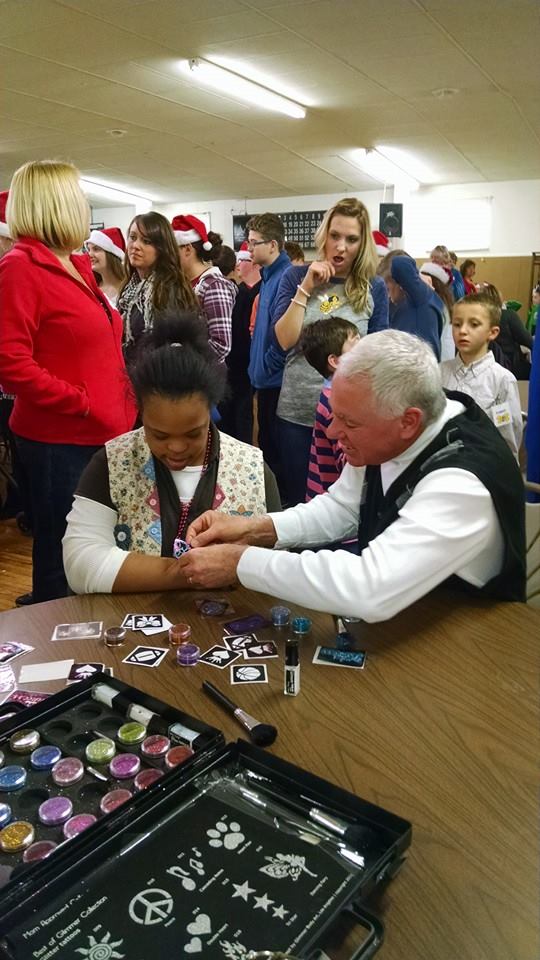
 Bob Rusbosin
 Dad, There are so many days where I can’t get the questions about your death out of my mind. There are moments where the questions are so tense and overwhelming that I can’t seem to let them go. The more that the days go by since losing you, the more unanswered questions I seem to have. But I know that you’ve found peace in Heaven. I know that you’ve found comfort in the arms of God. I know that each day, I am one step closer to seeing you again and having those questions answered. Until that day, I’ll rest easy in the fact that God knows exactly what He’s doing. And until that day, seeya Bub.
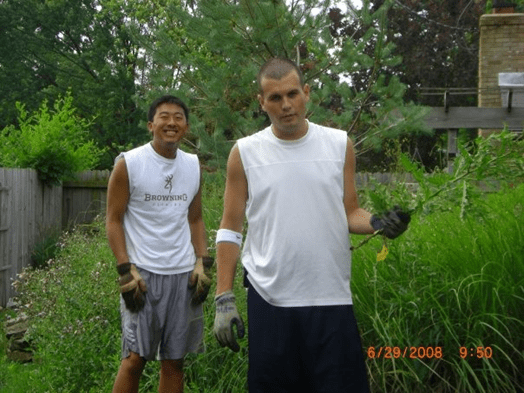

 Chris Beatty
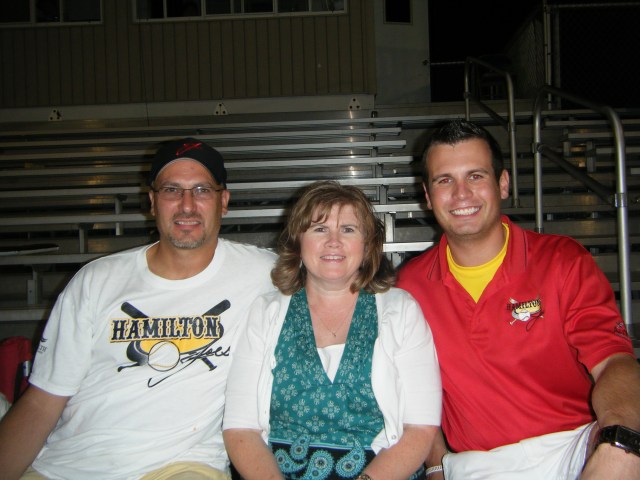
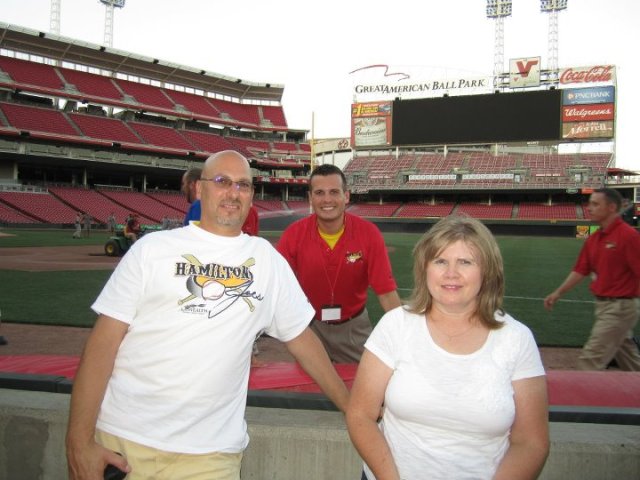
 Dad, I can’t even begin to tell you how much I miss seeing you at my games. I may not have always shown it like I should have, but I always loved having you there. You made it a priority to come and hear me announce, and you didn’t do it out of obligation—you did it because you loved me. You did it because you enjoyed the simple moments that life provided. Every time I look down at the grandstand at a Joes game, I picture you sitting there. Every time I announce a game at Miami Hamilton, I can still see you strolling across the court towards me once the game ends. I long for the day where I can be there at a game with you again. If there are baseball games in heaven, I can’t wait to sit next to you and enjoy one together. But for now, seeya Bub.
 Of all the talents that God gave my Dad—and he gave him many—cooking was not one of them. As a youngster, my Dad often worked second or third shifts, which meant he would usually pick me up from A.M. kindergarten. We typically arrived home around noon, and I had always worked up a healthy appetite from all the finger painting and make-believing that had occurred that morning. After getting home, Dad would head into the kitchen to embark on a culinary expedition, perusing the items in the fridge and freezer, but always deciding on the same entrée for our lunch menu…

 Dad, What I wouldn’t give to hear you sing another song right next to me. What I wouldn’t give to go back to those days where we would ride around in your truck and listen to country music together. I’m thankful that you always set the right example for me in church by singing along with the worship songs. I’m thankful that you always remembered that singing songs of praise and worship aren’t about us but are about developing a relationship with God. Certain songs come on the radio, and I still think of you. I’ll always be appreciative of the memories you gave me as a young child listening to country music in your truck. Thank you for being a Dad who always had a song of love in your heart. Until we both join the chorus of heavenly angels together, seeya Bub.
 Dad, I always admired your energy and vitality. You attacked life and took on new challenges, and you were never that Dad who loved the couch more than he loved spending time with his family. In your life, you always seemed to be able to find a good balance between rest and being active, but when you were active, you always made the most of it and there was always a huge smile on your face. Whether it was riding bikes, walking the dog, playing softball, schooling a bunch of youngsters in basketball, or simply goofing around in the backyard swimming pool, you realized that life was designed to be lived. Even though I didn’t always listen (and boy do I wish I would have), you always encouraged me to get up and get going. You always encouraged me to believe there was life outside of a TV set or computer screen, and since you left I’ve tried to live this out. I’m looking forward to many bike rides together on the other side of Eternity. And if you could talk to the Big Guy upstairs and have him send me a little more muscle mass, I’d be appreciative. Until then, seeya Bub.
 Dad, I would never fault you for the sickness you experienced, but I sure wish we could have gotten you the right treatment you needed. You had so much to live for and experience, and I know that Jeff could have helped you fight off the demons and doubts you were facing. I’m still learning from you even after you’re gone, and because I love you I promise that I will always get help when I need it. I’ll never let my emotions overwhelm the plan God has for my life, and I’ll always encourage other people to get help when they need it. If nothing else, you would have loved talking baseball with Jeff. I’d give anything to see the two of you meet—and someday you will. But for now, seeya Bub.
  Jeffrey Yetter, M.Ed., LPCC
  Seeya Bub