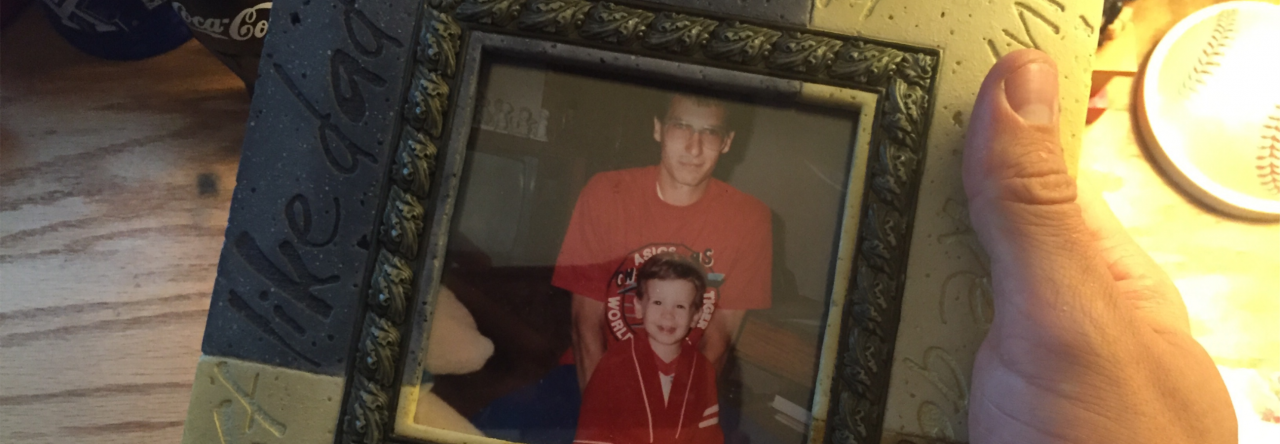
One Year of Seeya Bub

“God, I just ask that you let this help someone. If my words can just help one single person avoid the same end that met my Dad, then it will all have been worth it. Give me the strength I need to do justice to my Dad and his life. Walk with me through this, God. I can’t do this alone. I’m really scared, but I know you want me to do this.”

This was the prayer that I prayed one year ago when I prepared to launch Seeya Bub. I can vividly remember sitting at the desk of my office at home, not knowing what to expect. I was crying, and my hands were shaking (more than they usually do, that is).

For a few months, quietly behind the scenes, I had been working on a blog that I had initially resisted. I had set out to write a book about my Dad, his struggles with depression, and his eventual death from suicide. I was growing frustrated because I found it so hard to stay motivated. As I shared this struggle with close friends and family members, a few of them began to suggest a blog as a possible alternative, and I would immediately shake my head no. Most blogs frustrated me because people were just writing without purpose—bloggers were just blogging to be heard, not caring at all what they wanted to say.

The more I thought about things, though, the more I began to warm to the idea of a blog over those summer months. I liked the idea of being to write and react, write and react, write and react. I loved the idea of being able to get feedback from my readers as I went so I could pivot accordingly to topics that they found useful. More than anything, however, I liked the idea of being to reach people who needed help quickly. I envisioned that someday, someone would be sitting at their computer struggling with depression or suicidal thoughts. They would search aimlessly for some sense of hope, come across my blog, and maybe, just maybe, think differently about the path of their life. I didn’t know how many of those people were out there when I started writing.

And boy, was I surprised at the amount of people who were struggling, just like my Dad was.

I tried my best (with the help of some wonderful YouTube videos) to figure out how to manage the technical aspects of a blog, how to deliver posts to as many readers as possible, and how to work in visuals that would honor my Dad. I had done my best to patch everything together, and all that stood between me and the tremendous anxiety I felt was a “Go Live” button and a quick social media post to announce to the world what I was doing.

Just a few hours later, I found myself back at that same desk where I had written the words of that first post, sobbing as I held my head in my hands. I was crying, not from sadness, but from a place of overwhelmed gratitude. Within just a few hours of launching the blog, hundreds of family members, friends, colleagues, and acquaintances had visited the site and read the post. These same readers were sharing Seeya Bub on their own social media networks, encouraging their friends to read and follow. I was receiving messages and comments of unbelievable support.

Most touching in those initial days of the launch were the private messages that I received from readers who were either struggling from mental illness and suicidal ideations, had previously struggled, or had unfortunately lost loved ones just like I lost my Dad. These messages were full of extreme pain and unfathomable hope. These were messages of courage and strength, pushing me to talk about these difficult topics and share my Dad’s story.

God hadn’t answered my prayer on that night. He took my request, made it bigger than I ever could have imagined, and has delivered on my wildest expectations each and every day over this one amazing, spectacular year.


This week marks the one-year anniversary of Seeya Bub’s official launch, and I can’t help but be completely overwhelmed and nostalgic when I think about all of the wonderful things that have happened since that first post.

God is leading me on a journey that I never could have imagined, and I’d like to share some of my reflections over this past year with you today.

Readers. I honestly had my doubts about whether folks would read the words I posted on this blog. Yes, I know my story matters, but it’s a busy world. Taking the time to read and really think about someone else can be hard to do in a hectic life—and I’m guilty of it myself. When I hit that “Go Live” button, I wondered if people would find my message valuable enough to read, and read again, and again.

When I sat at my desk a few hours after launching the blog, I just kept saying “Wow” and shaking my head over and over again. I couldn’t believe what I was seeing. I couldn’t believe the response. And I still can’t.

And ever since then, you’ve continued to read. I’m sitting at that desk one year later having had over 6,500 views at Seeya Bub. It’s astounding, and heartwarming, and emotional for me to see the response. So if you’re reading now and you’ve read in the past, please know how thankful I am to you. Thank you for following the blog, thank you for sharing it you’re your friends, and thank you for pushing me and encouraging me when times got tough or words and messages were hard to come by. You’ve encouraged me to keep writing. You’ve reminded me that my Dad’s life mattered—to me and to you. And you’ve reminded me that I need to share it. Thank you, thank you, thank you.

Pulling Off the Mask. As hundreds of people poured through the visitation line at my Dad’s funeral, there was one common phrase that was repeated over and over and over again: “I had no idea that he was struggling.” I wasn’t surprised to hear this. My Dad was always a jovial guy. He wore a mask better than anyone. He was able to easily hide the depression that would often hijack his brain. It was hard to explain to folks how someone as fun-loving, compassionate, and generally happy as my Dad could find himself in the pit of depression so deep and inescapable.

But Dad was there, and after I launched the blog I found out just how many other people are there too. From the moment Seeya Bub went live, I began receiving messages from people I knew—and some that I didn’t—sharing similar stories. Stories of mental illnesses that make it debilitating for them to get out of bed. Stories of near-fatal suicide attempts. Stories of darkness, and stories of spiritual intervention from above.

And that was evidence alone that God was doing what I hoped he would do with my message. The story mattered, but the telling of the story was what mattered most. So often, just like my Dad, the stories of depression, anxiety, and suicidal thoughts remain untold, hidden behind a mask of protection. Let’s be honest—it’s scary to share our feelings, and when we don’t even know why we feel the way we do, it’s even scarier. And when we aren’t able to share our feelings, we grow isolated. We feel alone. We feel like there has to be more to life and that, if there isn’t, life might not be worth living.

I know that’s how my Dad must have felt. And thanks to those of you who have been courageous enough to share your own struggles with me, we are pulling off the mask of mental illness and helping people fight back the isolation and despair. Make no mistake—this is a battle. We have to fight for ourselves and those we love. We have to fight against the shame that is erroneously coupled with mental illness. But every time we pull off a mask, we are delivering a swift punch to mental illness and depression.

Ultimately, we have to let people know that it’s okay to not be okay…but it’s not okay to stay that way.

Speaking about my Dad. After my Dad died, I wondered how I would tell people what happened. I dreaded the funeral because I wondered how many people would try to pry for information about what really went wrong. I worried that I might not be able to ever speak about my Dad. I worried that his death might become a distant memory. And I worried that other families would continue to suffer, just like mine, without my Dad’s story being able to help them.

I tried to talk to people about my Dad and his memory. Sometimes I would make it through, and other times I would fall apart and be completely inconsolable. I knew that I wanted to write a book about losing my Dad, but if I couldn’t even have a conversation with folks about losing my Dad, how was I ever going to be able to write chapter after chapter about his death?

All I can say is this: God provides. And He equips. And where we fall short, He is there to give us the strength and inexplicable courage that we might never possess without His presence.

I started writing posts months before I knew I wanted to launch the blog. And once I started, I couldn’t stop. I began remembering stories that I had forgotten. There was something strangely addicting about writing about my Dad and how much I loved him and missed him—it was like I was out hunting and capturing memories before they could escape forever.

And as I grew more comfortable writing about my Dad, I also found a brand new comfort when it came to speaking about him. Yes, it still hurt not having him here, but I could talk without breaking down. I could feel grief and joyful memories at the same time. I could share his story without falling to pieces each and every time. As I grew more resilient, I found new opportunities to talk about my Dad and remember his story—and I knew the more I shared his story, the more it could help people who are hurting like he was.

Processing my Own Grief. Most importantly, Seeya Bub has given me the ability to work through my own grief and loss over losing my Dad. It isn’t why I started the blog and it might sound selfish, but I’ve grown so much as a result of sharing my story of my Dad with all of you. Losing a loved one brings on unbelievable grief, and when the grief is so unbearable it is easy to bury things below the surface—sometimes, it’s the only way to survive and get through. Regardless of how deep you might bury those feelings, however, they find interesting ways to work themselves back to the surface.

Writing about my Dad and losing him gave me a unique opportunity to recognize those issues and how they were affecting me, both consciously and subconsciously.

This griefwork has been the most difficult part of life after losing a loved one. There are some days when I just flat out don’t want to do it. I’ll sit down at my computer, fall apart, and realize that I’m too emotionally distraught to write anything productive. Other days, however, the writing is strangely soothing. I can remember a story that brings a smile to my face and write about it positively. I couldn’t imagine ever being able to do that in the days that followed my Dad’s death. The courage that this experience has given me is something I’ll always thank God and all of you for giving me.

No matter the feelings, being able to write and share my heart with all of you has been an unbelievable (and unintended) blessing. Knowing that you read reminds me that I’m not in this grieving alone.


(I hope) there are many, many more years of Seeya Bub to come, and in the one that is approaching, I ask all of you for your support. I also hope you will say a prayer for me while you’re at it. Over the next year, I am planning to write about some very personal and difficult topics regarding my Dad’s death. I’m going to share more of my life without him and how much I miss him. Each and every time that I sit down to write, I get nervous about sharing these pieces of my story and my soul because I don’t know how readers will react to them.

In this year to come, I simply ask that you continue to do what you’ve been doing. I ask that you continue to pray that God will give me the skills I need to reach hearts and minds through this endeavor. Together, I hope that God will help us help others.

On this one year anniversary of Seeya Bub, I also want to take a moment to say thank you for one more thing. Thank you, to all of you, for loving my Dad. Being able to talk with those of you who knew my Dad has been unbelievably therapeutic. You share stories about the difference he made in your life, and about the joyful memories you have of him. What’s even more mind-blowing, however, are the tender messages I receive from people who never knew my Dad, those who have come to know him solely through the blog, who say what a tremendous man he was. I will never be able to say thank you enough for those kinds of messages. Knowing that you enjoy the writing is special, but knowing how highly you think of my Dad brings a tear (and many more) to my eyes every single time. He was an amazing man with an unbelievable heart, a resilient spirit, admirable talent, and compassion beyond understanding. I’ll always love him—knowing you do too comforts the heart of this grieving son more than I could ever describe.

In the year to come, I promise to keep honoring my Dad. I promise to help anyone who is hurting and suffering in any way I can. As long as you read, I’ll be here to write. We are in this together. We are in this for my Dad and all the other people who suffer.

It’s only been one year on a journey that’s got years of life left on it. I’m packed and ready, and I hope you are, too.

One Year PhotoDad, You would be completely astounded to see how many people are touched by your story. You would be overwhelmed by how many people loved you and how deeply they loved you. I know that you’re watching over this journey and giving me the guidance from above that I’ve always needed, and I’m thankful for that. But I wish I didn’t have to write. I wish that you were still here with us. I desperately wish that that fateful July day in 2013 had ended differently. I would do anything to have you back here with me, with us, but I know that you’re at peace. I know that you are basking in the glow of God’s glory in Heaven. And if you can’t be here with us, I’m certainly glad you’re there. Dad, continue watching over me. Continue giving me the words I need to reach the hurting, grieving people in our world. Give me the wisdom and insight to share your story. Thanks for always watching over me. Until I can thank you face to face, seeya Bub.

“Rise up; this matter is in your hands. We will support you, so take courage and do it.” Ezra 10:4 (NIV)


Halloween

I love candy. And as a result, I love Halloween.

When I say I love candy, I’m talking about complete and utter infatuation. An obsession—and an unhealthy one at that.

Sour Patch Kids. Twizzlers. Mounds bars. Red licorice Scotty dogs. Dots. Nerds. Ju Ju Bees. Reese Cups. Butterfingers. Sour Punch Straws. Laffy Taffy. Haribo Gummy Bears (if you eat any other kind, I seriously question your decisions in life).

Mom, if you’re reading this, I can finally admit. Even though you made candy readily available in the house, I still felt it was appropriate to hide a small candy stash underneath my bed so I could eat it throughout the night at my leisure. At any given time during my childhood, I would usually have a small Ziploc bag full of fun-size boxes of Nerds and Sour Patch Kids that I would open with the delicate stealth of a Ninja in the night so you wouldn’t hear down the hall. I also did this with Dr. Peppers—I had this awesome move where I would cough really loudly when I opened the pop-top so you wouldn’t hear the loud (and inexplicably pleasant) CRACK! of an aluminum can pop top. I’m sorry I deceived you…but if this was the worst thing I did as a kid, I think you fared alright.

I loved Halloween, yes, because of the candy, but more importantly I loved it because my Mom and Dad always made Halloween a very special time around our house. On Halloween, Mom would always cook some of our favorite appetizer-style foods: pigs in a blanket, sausage balls, pepperoni bites, and my all-time favorite…potato skins! We always had plenty of punch with rainbow sherbet in it. I don’t know when this tradition started, but I don’t remember a Halloween without it.

I was also a big fan of the costumes. Big fan. Mom and Dad always made sure I looked good…and comical. There was the year that I was a pirate. Dad wanted to make sure that I was a striking mini-swashbuckler, so he picked up a tray of facepaint and made sure that he painted a perfect five-o-clock shadow across my face. I was only about six or seven, and there’s just something rather hilarious about seeing a kid with facial hair. There was the year that I was the Genie from Aladdin, and Dad made sure that the blue facepaint perfectly matched my Genie costume. Or the year that I was a Dalmatian, and Dad painted black spots all over my face.

Okay…reflecting back on all of this, maybe he just liked seeing how many embarrassing ways he could paint my face.

Mom and Dad always took the time to make Halloween special—not just the day of, but the entire season leading up to it. My Mom is the queen of house decorations. We used to have a room in our house that we affectionately referred to as “the junk room” (sorry to reveal your secrets, Mom!). There were boxes and boxes and boxes of decorations for each and every season. Our house would be completely transformed during Halloween. I remember a light up jack-o-lantern in a witch hat that always hung on our front door. A fuzzy black spider that made a spook “ooooooh-oooooooooh-oooooooooooooh” noise every time you pressed it. From bathroom towels to cups and plates and everything in between, you always knew it was Halloween in the Bradshaw House.

Dad stuck to the outdoor, more-manly seasonal decorations. One of his favorites? Yard bags. You remember these, right? These were the huge orange garbage bags that, when filled up, look like big jack-o-lanterns or ghosts. I remembered being really excited to take these out into the yard and fill them up. To fill them up, you had to rake up all of the leaves in the yard and put them into these bags.

Looking back on this, I see how easily gullible I was as a child when it came to chores disguised as seasonal traditions…

We had one big problem, though. Our yard had a lot of little trees in it. We also had a lot of trees that had a lot of little tiny leaves—you know, those annoying little leaves that stick to everything and get tracked in your house no matter how many times you wipe your shoes off. These types of leaves weren’t always the best to fill up huge bags that looked like pumpkins, and frankly our yard just didn’t have enough leaves to fill them up with. So, Dad and I would rake up as many leaves as we could, and then fill the rest with crumpled up newspapers. Then, we would display the bags proudly in our front lawn so everyone could see….our yard waste? Once again, I was easily deceived when it came to child labor.

I think my Dad’s most impressive contribution to the Halloween decorating season, however, was his artistry and craftsmanship when it came to jack-o-lantern carving. My Dad was a builder in many respects. He built a gorgeous deck around our backyard swimming pool. He built the garage and foyer expansion onto our house. Most would call him a carpenter, but I considered him more of an artist. The things he built and constructed were beautiful. Dad took his time, and he always did things the right way.

Who would have thought that this obsession with quality and attention to detail would have extended to pumpkins that were bound to rot in two weeks? With my Dad, it was a no-brainer. Everything he made was top-notch, whether it was permanent or fleeting.

Every year that my parents would take me to the pumpkin patch to pick out pumpkins to carve for Halloween, Dad and I were always on the hunt for two particular pumpkins: a rounded fat one, and a tall skinny one.

After all, it wasn’t a Bradshaw Halloween without Bert and Ernie jack-o-lanterns.

You heard me. Bert and Ernie jack-o-lanterns.

Growing up, I was a Sesame Street addict. I was hooked from the first “Sunny days” of the theme song. So much so that one year, my dear, sweet Grandma Sharon almost lost her mind the day I made her watch the Sesame Street Christmas special at least 37 times. She still has flashbacks when she hears Feliz Navidad.

Of the entire cast of characters on Sesame Street, my absolute favorite was Ernie. I had a stuffed Ernie that went with me everywhere I went. My Mom had to sew his nose back on a few times, and his orange felt skin and bright blue jeans faded and tinged. On the show, Ernie was cool and funny and always knew how to get the best of his banana-colored roommate. He had a killer laugh.

And he was so much more sophisticated than that tickle-fiend Elmo.

By association, because I liked Ernie, I also had to like Bert (even though I liked Ernie better). They are a classic American duo—right up there with Lucille and Ethel, Batman and Robin, and macaroni and cheese. They were the toddler’s Abbott and Costello.

I don’t remember when it started, but since before I can remember, I had always liked Ernie. Maybe that’s why Dad chose to carve our jack-o-lanterns into unbelievable replicas of my favorite puppet duo.

I remember watching Dad carve the pumpkins every year. It took a few hours for him to complete. Dad had patterns that he and Mom had picked up around Halloween one year. Dad worked on the pumpkins with the patience and attention to detail of a renowned artist. Every year, he would tape the patterns onto the perfectly selected pumpkins that mirrored the head shapes of Bert and Ernie. Then, Dad would use a tiny stick pin to meticulously poke holes into the lines of each pattern. Slowly and methodically, he worked until each shape he would need to cut was temporarily outlined with holes. Then, with a set of carving knives that I’m sure were the best he could find (because that’s what Dad always did), Dad would work to carve out all the pieces.

I wish I still had those patterns because my description doesn’t do it justice. There were more cuts and slices in this carving job than a plastic surgeon performs in a year. Dad would glide through each piece until the pumpkins had an uncanny resemblance to my favorite pals from Sesame Street. We would put candles in the jack-o-lanterns and proudly display them on our front porch, as many trick-or-treaters and their parents would profess their admiration when they graced our home.

As I grew older, Dad would eventually ask me to help him each year—but they never looked as good as his. I’ve never had the patience or artistry that my Dad had when it came to working with his hands. If anything, my feeble attempts to recreate Ernie on a pumpkin made me appreciate Dad’s work even more.

And now that he’s gone, I appreciate Dad’s pumpkin carving skills more than ever. I have an unbelievable admiration for the time and energy Dad spent every year on those special pumpkins.

And I’m also grateful that his subject matter never changed.

Being such a talented in the art of pumpkin carving, I’m sure there were other things my Dad wanted to carve over the years. Dad could have carved monsters and spooky faces. He could have carved the images of celebrities. He could have free-handed and imagined his own brilliant creations.

But Dad always carved Bert and Ernie—not because he wanted to, but because it always brought a smile to my face. Looking back, I’m confident of that.

None of this is out of character for my Dad, because Dad was always doing whatever he could to make people happy. As his only son, I was often the beneficiary of the love he put out into the world.

Now that he’s gone, I don’t just remember the big acts of love and generosity. I remember the little ones, too, like carving Bert and Ernie pumpkins on Halloween. Or spending time making sure my costume was elaborate enough to make the neighbors laugh. Or making sure I had a military grade flashlight to walk with as I trick-or-treated so I was always safe. I probably didn’t tell him how much I appreciated all of those things at the time. Immaturity does that when you’re young. Now, though, I’m unbelievably grateful for all of those moments—and wishing, more than anything, I could have them back to experience all over again.

Halloween might be a minor holiday for some families, but it’s always a significant one for my family because Mom and Dad made it so much fun when I was growing up. It was more than pumpkins. It was a spirit of excitement that invaded our house because of everything they did to make the holiday special.

Now, Halloween feels different because those pumpkins aren’t there anymore—and neither is my Dad. I miss him desperately every day, but I especially miss him on those big days that were always so much fun.

Halloween can be a difficult holiday because it’s the start of a season where Dad’s absence is felt in a particularly strong way. He’s not here to carve Bert and Ernie pumpkins on Halloween. He’s not around to carve the turkey for our family on Thanksgiving. He’s not there on Christmas day to take pictures of our family dog rip open Christmas presents with her teeth.

I’m unbelievably sad because I feel Dad’s absence around this time of the year, but I’m ridiculously thankful to know that I have 26 years full of amazing memories with him. I’ll always have the pain of Dad’s absence with me, but when times get tough around Halloween or on any other day, I’ll always have the happy memories, too.

And someday, maybe I’ll get good enough to carve a few Bert and Ernie pumpkins for kids of my own. They won’t be as good, but I’ll give it my best. That’s what Dad would have wanted.

Dad and Lucy at Pumpkin PatchDad, I really, really miss you on Halloween—and every other holiday for that matter. The Bert and Ernie jack-o-lanterns you carved for us every year were spectacular. Not just because of your talent, but because you took the time to do them over and over again when I’m sure you had other things you would rather carve. My childhood was special because I had tremendous, loving parents. I wish I had said it more then, but thank you. Thank you for always doing the little things to leave me with big memories. Thank you for showing me on the holidays and every day that you loved me and that you cared about me. And thanks for all the Bert and Ernie pumpkins. I wish I could have them one more time, but until I get to see you and thank you face to face, seeya Bub.


“Most important of all, continue to show deep love for each other, for love makes up for many of your faults.” 1 Peter 4:8 (TLB)

Bonfires

The picture is still sharp into my brain. I can conjure it up with vivid realness—especially as the leaves begin to burn bright orange and yellow and red before they fall to the ground this time of year.

It’s a silhouette of my Dad sitting in a chair staring into the flames of a backyard bonfire.

My Dad loved the simple things in life. A good meal. A good country song. A relaxing ride in the truck. The feel of the sun on his skin. A new Dewalt power tool (most of which I’ve inherited and have no idea how to use).

My Dad had a long list of things he loved about life. Although he never wrote this list down, I have a pretty good idea of one thing that would be near the top:

Bonfires.

Yes, bonfires. My Dad was a firebug. He loved setting things on fire. I mean, not in a crazy pyro sort of way. It was always controlled and safe…well, most of the time.

I know why my Dad loved bonfires. He loved the popping and cracking of the logs as they turned into ash. He would be mesmerized by the flames. He would sit in a chair near the firepit he built in our backyard and be completely hypnotized by the fire. On a cool night, he might sit there for two or three hours and let the flames warm his skin, and he was in his happy place every time he was there. He didn’t need music. He didn’t need a cellphone for endless and pointless scrolling. He just needed a chair, a can of Coke, our dog Lucy by his side, and a stack of logs that he could burn through the night.

For as long as I could remember, Dad had an almost-nightly ritual of retreating to the backyard after the sun would set. Rather than settle in front of the glow of the television, Dad would often park a chair near our backyard firepit, load some wood into the wheelbarrow, and prepare for a relaxing night. And he always had a smile on his face.

As he spent more time near the firepit, his techniques and methods became more and more elaborate. Dad had always started his fires with a blowtorch, which is plenty effective enough for anyone who needs to start a fire. But for my Dad, a blowtorch just wasn’t good enough. Not quick enough. Not exciting enough. Not ridiculous or dangerous or powerful enough.

So Dad did what any man who watched way too many episodes of Home Improvement might do. He built a device that would start the fire quicker.

And by “device,” I mean a flamethrower.

That’s right. A flamethrower. And a homemade one at that.

What does a homemade flamethrower look like, you might ask? It’s basically a wand-torch device with a trigger that is attached to….a propane tank.

Of all the things I’ve inherited of my Dad’s, this might be my favorite. I’m completely terrified to operate it in the instance that I might burn all the hair off my head in a fiery explosion, but at least I have it. (My Dad didn’t have to worry about things like this because of that whole “bald at 30” thing he had going on…). Here’s a picture of me actually getting up the courage to use it one time after he died. Note…I mask the terror pretty well: Using Dad's Flamethrower

Dad was really proud of this flamethrower. I’m pretty sure Mom was utterly terrified that he was going to be that guy on the news with ash all over his face after a backyard explosion saying “I had no idea that my homemade flamethrower attached to a propane tank would actually explode…” I would often laugh and roll my eyes every time I would hear the roar of that flamethrower in the backyard. I knew Dad was at it again…and that I would have the family room television to myself for a few hours.

Dad’s experimentation extended far beyond starting devices, however. He also experimented with materials. At first, his goal was probably to find things to burn that would help the fire last longer. Then, that grew into an obsession with which natural materials would make the most interesting and loud noises if he threw them into the fire.

In a fit of excitement one year, my Dad and our neighbor Shawn planted a small patch of bamboo in our backyards. That small patch eventually grew into a bamboo plantation that could feed an entire zoo full of pandas.

One evening, my Dad got a bright idea to chop down some of the bamboo (which, by the way, makes it come back even faster and in ridiculous amounts) and see what would happen if he tossed it into his firepit. In a fit of childlike amusement, my Dad nearly lost his mind when the bamboo made an exploding pop that sounded like a firework. So, my Dad did what any mature, grown adult would do.

He chopped down stalk after stalk of bamboo for about three hours and tossed them all into the fire, laughing his head off every single time they exploded. The pattern became all too familiar if you were sitting inside the house listening: Pop from the bamboo, a series of vicious barks from Lucy at the popping noise, and a chuckle from my Dad. Over and over and over again, all throughout the night.

And sidenote…if you throw about thirty stalks into the fire at once, you might want to warn the neighbors that they are not being shot at first.

In addition to the bamboo burns, Dad also loved setting a good Christmas tree on fire—after Christmas, of course. For my entire life, we always had real Christmas trees in our house. My Dad refused to buy an artificial tree. Although he said that he always had real trees because they looked better, I think he also looked forward to January 15th when it was time to dispose of the dried out evergreen.

Dad would take the ornament-stripped tree to the backyard, dig a small hole in his firepit, and stand the tree up for its ceremonial cremation. Then, Dad would take a blowtorch (or eventually his flamethrower), and light the tree from the bottom. Within 45 seconds, the entire tree would be completely engulfed in flames, the reflection burning bright off my Dad’s glasses as he smiled and laughed. He never seemed to tire of this after-Christmas tradition. Oh Christmas tree, Oh Christmas tree, how lovely is your fiery death….

I think back over all those nights that Dad would spend camped out next to our backyard fire, with our dog Lucy barking at every single popping bamboo shoot as if it were some invisible enemy she could silence. I think of all the nights where Dad wouldn’t even have time to change out of his work coveralls because he had worked so long to provide for our family. I think of all the times when Dad would be mad that it had rained for a few days in a row, interrupting one of his favorite rituals.

And I also think of all the times when Dad would ask me to come sit with him by the fire and I would say no.

I wish that I had spent more time with my Dad near the firepit when I had the chance to do it. Dad would often invite me to come sit with him. I would occasionally take him up on his offer, but not as often as I should have. Most times, I would be too busy. Or doing something stupid like watching television. I desperately wish I could give back all of those reruns for a few hours and a stack of felled bamboo with my Dad in the backyard…

I think that my Dad sat by the fire so often because it was peaceful and relaxing. Dad could shut the world off and connect with his primal side: a man, his fire, and the stars and moon overhead. Life was simple when Dad was sitting around the fire, and Dad loved simple. Dad was at peace when he was surrounded by crackling flames, chirping crickets, and the beauty of God’s creation.

But now, after losing my Dad to suicide, I think those fire nights were even more important for my him. I never realized the extent to which the noise and cloud of depression had overtaken my Dad’s mind. The feelings of doubt and shame and fear had to be so loud every single day for my Dad. I’m sure there were so many times when my Dad just wanted to silence the world around him. When it came to the internal voices that told my Dad he wasn’t good enough or wasn’t worthy of love, I am sure that my Dad wished he could hit a button or flip a switch and turn those voices off.

I think a night by the bonfire was my Dad’s way of silencing those voices.

My Dad could sit by the fire and let the worries of the world and his depression melt away. There’s something strangely mesmerizing about a good fire, but there’s also something about a fire that takes humans back to our earliest roots. Sitting by the fire, I imagine, allowed my Dad to return to the parts of his life that were simpler and easier and happier and better. My Dad had many, many dark days in his life; but I’m so glad that he had many, many bright nights when he could relax, let his worries down, and sit in the warmth of a roaring fire.

I’ve grown to appreciate bonfires more and more since losing my Dad. Like I’m sure he experienced, they also calm my mind and quiet my soul. More importantly, in the life after Dad, a bonfire helps me return to the moments of happiness in life when my Dad was here on Earth. I’ll sit and laugh when I think of his flamethrower. Or his obsession with exploding bamboo. Or his Christmas tree infernos (I sold my soul to the Devil and use an artificial tree, which I’m sure upsets Dad even in Heaven, but someday I’ll buy a real tree and make sure I set fire to it just like Dad would have wanted). I’ll smile when I picture the look of happiness that was always on his face when he sat in a high patio chair with a glass of Coke in hand. I simultaneously cry and happily remember how Dad would stoke the fire with a rake or pitchfork while Lucy ran around him wildly grabbing sticks and chewing them into a million pieces as he laughed at her craziness.

This Fall, I’ll burn a fire in honor of my Dad. I’ll remember all the great times he shared around the flames, and I’ll long to relive and correct all those nights when Dad sat by himself and I should have been next to him. If there’s a firepit in heaven, I’m sure Dad has a chair camped nearby.

Let’s just hope God has a few forests full of bamboo for Dad to play with.

Dad and Lucy Standing at Pumpkin Patch with SB LogoDad, When I think of the things you enjoyed, I always think of bonfires. They provided you with such amusement, but deep down I think they also provided you with a lot of peace. Your mind and soul just seemed to be quieter and happier when you were sitting around a good fire. I wish I could take back all of those days when you’d ask me to come sit with you and I said no. I wish I had spent more time with you around the fire, but there never would have been enough time with you because you made life so exciting and full of love. It may not be around a fire, but I’ll spend more time with those I love because I realize that I should have spent more time with you when I had the chance. I love you, Dad. I miss you like crazy, although I don’t miss the constant bamboo explosions. Okay, who am I kidding…of course I miss those. Thanks for all the fires we did share, but more importantly thanks for keeping the fire in my heart going even after you’re gone. I’m looking forward to that first bonfire together on the other side…I’ll bring the flamethrower. But for now, seeya Bub.

Then Jesus said, “Come to me, all of you who are weary and carry heavy burdens, and I will give you rest.” Matthew 11:28 (NLT)

Last Words

As you may have done, I woke up this Monday morning with a barrage of CNN alerts on my phone. After trying to blink the fuzziness from my eyes and shake my brain awake, I sat up with my back against the headboard attempting to wake myself earlier than I wanted to—always a difficult task for me.

It was a little before 6am, and I was reading words on the screen of my phone that I didn’t think could be true. Shooting in Las Vegas. 20 confirmed deaths. Over 100 people injured. My heart immediately felt pain. Could this really be true?

Traveling for work that day, I found myself glued to the television set in the lobby of my hotel as I ate a good breakfast and chugged a few glasses of orange juice. I saw the same footage you likely did. I watched as innocent people attempting to have fun at a country concert ran in terror, hearing blasts but not knowing what they were or from where they came. I saw people huddled like school children in a tornado drill, attempting to seek shelter behind concrete barricades. I saw bodies lying scattered across the Vegas strip and wondered how, again, we found ourselves as a nation in the midst of brutal and senseless violence.

“Isn’t this just awful?” An elderly man who worked at the hotel serving breakfast came around to my table, motioning towards my empty plate that he planned to clear.

“Yes sir, it is,” I responded. “I just can’t wrap my head around why someone would do something like this.”

“I can’t either,” the man said. “It just don’t make sense anymore. Used to be when you had a disagreement with someone you could talk it out or settle things differently. Now, people just get mad and start killing and shooting. Even the church ain’t safe. People go get mad and shoot people in church.”

“It’s a scary world. It really is.” The man and I continued to talk. We watched the developments on the screen in front of us. It was still early, and the reporters on screen were still trying to make sense of what had happened in Las Vegas as I did the same with the man from the hotel.

As I drove from high school to high school that day for my job, I spent my time in the car listening to the radio station, and my stomach grew ill as the numbers steadily rose. 30 dead, 250 injured. Then 40 dead. And then, a staggering 59 deaths with over 500 people injured.

Whenever these tragedies occur, and God knows they occur all too often, I find myself looking at the pictures of the victims and reminding myself that those aren’t just pictures. Those are faces. Faces that belong to human beings with lives and families and stories that are important to tell. I’ll often find myself trying to learn more about those individuals. I’ll wonder about their families. Their careers. The things they would have accomplished had it not been for senseless violence. I think desperately about the loved ones they are leaving behind.

And yes, tragedies like this often remind leave me wondering about last words. What were the final things they said to those they loved? What are the final memories those loved ones will have of those they have to say goodbye to?

It reminds me to leave those I love with love at every chance I get.

It reminds me of how I left my Dad.

I am fortunate. Yes, fortunate. Yes, I lost my Dad. His death was unbelievably tragic and completely unnecessary. I wake up every single day wishing that losing my Dad was just a bad dream. I wake up every day wishing that things would go back to the way they were. That my Dad would still be alive. Still living, and still loving.

In spite of all of this, I am fortunate.

I am fortunate that my last words to my Dad were “I love you, Dad.”

And I am thankful that his last words to me were “I love you too, Bub.”

I will be forever grateful that my last words to my Dad were words of love.

I didn’t know those were going to be the last words I ever said to my Dad. In my heart of hearts, I believed I would leave my Dad that day and see him later that afternoon. I knew that things weren’t good in terms of his mental stability, but I didn’t know they were that bad. Never in my wildest nightmares would I have guessed that a morning conversation with my Dad on July 24, 2013 would be the last conversation we would ever share.

Just like those going to a country concert in Las Vegas never thought that they would be saying goodbye to their loved ones.

Monday’s massacre offered the reminder that I should never need. The reminder that life is amazingly scared and unbelievably fragile. Monday was a reminder that tragedy is often tragic because it’s so unexpected, so unnecessary, and so completely avoidable.

I’m not writing anything original. I’m probably not writing anything that you haven’t heard from a parent, grandparent, friend, pastor, or teacher. But it’s so important. And this weeks horror in Las Vegas is an unfortunate reminder.

I didn’t always leave my Dad with words of love. I think back over the times when I would get mad at my Dad or frustrated with him. Usually, it was because I was being a petty, annoying teenager. I would get mad at my Dad (like most teenagers do) for very, very stupid things. He made a comment about my driving. Who was he to comment about my driving?! He had all the family speeding tickets! Or he would use my laptop and inevitably screw something up. I would get mad at him and say something insensitive and then remind him of his transgressions every time he used my laptop in the future. Or the most egregious of all offenses: while I would be watching television in our family room, he would lay on the couch. And fall asleep. And snore. Loudly, annoyingly, and obnoxiously. Yes, I would actually get mad at my Dad for snoring. And I would yell at him and wake him up…or (my favorite move) I would pinch his nose until he woke himself up while I pretended like I had done nothing at all.

I see how petty, irrational, and insensitive I could be towards my Dad at times, which makes his unrelenting and unconditional love even more impressive.

My Dad was the man who understood the “last word” principle better than anyone. My Mom and I can both attest to this. There was rarely a time where my Dad would let a disagreement last longer than a few minutes. It was annoying for someone like me who likes to hold grudges. Dad and I would bicker about something, and thirty minutes later he would be talking to me as if nothing had happened. As a matter of fact, Dad had the uncanny ability to actually be even sweeter to people who were mad at him. I’m still trying to master this, but I’ll never be as good as he was.

My Dad lived his life as if his goodbyes might be his last. And I’m so thankful that he did, because it makes that last goodbye all the more special.

I have many regrets in my life, and many associated with how I treated my Dad when I didn’t get my way. I wasn’t a perfect son. But I am thankful that our last words, the words I’ll remember with amazing vividness, were simple expressions of love for one another.

In trying to understand my grief, I’ve talked with many other people who have lost their loved ones unexpectedly or prematurely. For every person I talk with that shares a similar story of their final conversation with a loved one, I also talk with folks who have deep-seated regret over the things they forgot to say. The angry comment on the way out the door. The argument over leaving a wet towel on the bathroom floor. Forgetting to say I love you. The things said in regret and the things unsaid in pride can be unbelievably detrimental to our souls when life gives way to tragedy and loss.

The horrible violence in Las Vegas this week is a reminder that we just don’t know when our words to a loved one might be our last. As the news reports rolled in on Monday, I stopped and said a prayer. I said a prayer for those 59 lives. I said a prayer for those 59 families. There are 59 people dead who didn’t deserve to have their last conversations with loved ones, but I prayed that those conversations were full of messages of love. I prayed that those who are now grieving are able to look back and remember saying or hearing “I love you.” I prayed that the memories they have are full of wonderful, loving moments. I prayed for peace at the soul level for these grieving families.

I currently sit in another hotel room, and as I write I am watching Bob Patterson and Amanda Patterson speak (courageously) on CNN. Lisa Patterson, Bob’s wife and Amanda’s mother, is among the 59 who are no longer with us for no reason whatsoever. I can see their heartache. I don’t know their pain, but I can feel it. I’m angry at this killer. I’m angry at the man who stole Lisa Patterson and so many others away from their loved ones. I’m angry at true villains, like murder and suicide, that take our loved ones away from us prematurely. I hope the families of the victims feel love and can remember the love from those they lost. It will be that lingering feeling of love that our loved ones leave behind that sustain us through the heartache and sorrow.

This week’s tragedy is a reminder. A reminder to always let our loved ones know we love them. It’s a simple lesson and a reminder we shouldn’t need, but how many times do you hear stories of individuals who lose a loved one who wish they had said “I love you” just one last time? We hear it all too often. Let’s make sure we refuse to let our last words be anything but expressions of love.

Love is nothing if it isn’t expressed. And I’m thankful my Dad taught me that each and every day.

Dad and Seagulls with Seeya Bub LogoDad, I miss you every single day. I replay our last conversation together in my head so frequently. I can see your face, I can hear your voice, and I can feel the warmth of our last embrace before I left the house that day. Dad, I’m so thankful that we told each other that we loved one another one last time before I left that day. And I’m sorry for all the days when I didn’t tell you I loved you. When I didn’t express my gratitude and appreciation for all the things you did for our family. When I didn’t tell you how proud I was of you for fighting so hard. Your death has proven to me just how fragile life really is. I hate that it took losing you for me to learn this lesson. Dad, you are still teaching me important life lessons every single day. I pray for those who are hurting this week in the aftermath of the Las Vegas shooting, and even though their departure (like yours) was far too soon, I hope that you are welcoming those 59 brave souls home in Heaven. I love you, Dad. Until our last words can be our first on the other side, seeya Bub.

“How then can evil overtake me or any plague come near? For he orders his angels to protect you wherever you go.” Psalm 91:10-11

Rocks

Since the time I was little, I’ve always liked rocks.

(If that isn’t a captivating intro, I don’t know what is. And now that I think about it, this could have something to do with my struggles in social settings…)

When I was a kid, I was like a little geologist. I have deeply entrenched memories of one of my favorite vacation activities growing up—mining for rocks!

(Once again, the implications for my social life are becoming clearer and clearer.)

As a kid, our family vacations often included trips to places like Gatlinburg, Tennessee and Brown County, Indiana. We often went there so my Mom could do lots of shopping and so my Dad and I could do…well, anything but shop.

No matter the destination, Mom and Dad always made our family vacations so special. As an only child (the social struggles continue), I was fortunate enough to often be the center of attention for my Mom and Dad. Looking back, I realize how truly lucky I am for that. My parents both worked very, very hard to provide for our family. They really deserved a vacation to be able to relax and unwind, but they always made sure to keep me bouncing from one fun activity to the next to make our vacations memorable. They obviously did their job, as those trips are still some of the happiest moments of my life.

Back to the rock obsession. Many cities like Gatlinburg often have a rather simple attraction for individuals like me who are interested in rocks. These little makeshift mines are all over the state of Tennessee for would-be-gemologists like me. You walk in and it feels like a real mine. Running water troughs, mining buckets, lanterns, mining carts. Often on display are huge geodes with beautiful purple crystals sparkling inside when they’ve been halved.

I have so many childhood vacation memories of my parents taking me to these little amateur mines and watching me as I explored the store. Then I got a chance to become a real miner, which was the most exciting part of the trip. Mom and Dad would walk up to the counter and buy a bag of dirt…

Wait…we actually paid for dirt?!

Stay focused, Bradshaw.

What made the dirt valuable was not the dirt itself, but the shiny gems that lay nestled within it. When I was little, I always daydreamed that my bag of dirt would include the scoop fresh from the mine that had a huge chunk of gold in it. Looking back, I see how gullible I really was, but what kid isn’t?

My favorite part of the day was when I would get to slowly pour my bag of dirt into a miner’s box with thick, screen netting across the bottom of it. Then, I would take my miner’s box and jewel-filled dirt over to the flowing water stations, and I would slowly rinse away the dirt to reveal the treasures underneath. I would then pick out the gems from the box and place them into a bag so I could take them home and…stare at them? I really don’t understand my fascination anymore, but I’m sure it was probably super cute.

As a kid, I always mined for rocks slowly and deliberately to maximize my time. I would pour tiny clumps of dirt into the box bit by bit and wash them away, because there was something super exciting about watching these dirty rocks turn into stunning gems with just a rinse of water. I wanted to milk the excitement for as long as I could. I remember going on vacation one time with my Mom’s side of the family when my little cousin (more like a little brother) Jake went mining with us. Always a bit impatient, he dumped his entire bag of dirt into the box at once and plunged it into the water, finishing everything in about thirty seconds flat. Rookie…

More than any rocks I ever found, I remember my Mom and Dad always being there with me and making the day even better. Mom and Dad would always sit on the bench next to me in front of the water troughs as I sat up on my knees and mined for gemstones. Mom’s face would light up anytime I found a purple amethyst, as that always seemed to be her favorite color. Dad, always a bit of a nature enthusiast, would use the charts on the wall to try and help me identify the rock names. One year, he even bought me a sectioned container that the gentleman at the store helped me label so I could sort my rocks accordingly. Wow, just writing that sentence made me realize what a little nerd I truly was…

Dad was also really good at finding the little, tiny gems that I likely would have missed. I can still picture his fingers crushing little clumps of dirt to reveal a shiny piece of gold (of the fool’s variety of course) for me to take home. Next to swimming in the hotel pool, mining for gems was always one of the highlights of my vacations as a kid, and I had my Mom and Dad to thank for it.

Those childhood trips are long gone, but the memories are still there. Now, I can put those memories in perspective when I think about the sacrifice my parents must have made for those vacations, and I can appreciate them even more.

After losing Dad, I worried that I’d never be able to enjoy another vacation or trip again. But I knew that vacations and trips were inevitable.

My job as a recruiter at Miami takes me to some pretty unique places. I’ve had the opportunity to recruit all throughout Ohio, but I’ve also been fortunate to travel to places like New York, Colorado, Texas, and most recently California to talk to students about their college dreams. I’ve had the chance to go to cool locations for professional conferences as well. I am also fortunate that God has given me the personal resources to travel and see and experience many amazing moments.

Although each trip is a little different, I often find myself saying the same thing over and over again…

“Boy, Dad really would have loved to see this.”

When I first started traveling after Dad’s death, I didn’t know how to handle this sadness. Oftentimes, I couldn’t. I would be in the middle of doing something touristy and I would just breakdown and sob. I would completely fall apart anytime I saw something cool that I wished I could have shown my Dad. There were numerous moments in the immediate aftermath of his death when I would actually take my phone out of my pocket and begin to dial his number before realizing he would never be able to pick up. It would tear my heart apart every time this would happen. As sad as I would feel, I would also feel extremely guilty. Guilty that I had never made enough time to see all of these things with him while I still could. The pain was paralyzing.

On one trip, however, an unexpected new tradition started that’s helped me cope with Dad’s loss. I had travelled to Aspen, Colorado and had some time to do some exploring of the natural beauty there. I can say beyond a shadow of a doubt that some of God’s most beautiful handiwork is evident in the hills of those mountains. I don’t know that I’ve ever seen any landscape that can take my breath away like that of Aspen. The views are beyond stunning, and it only takes one visit and a hike to the top of a mountain to realize how truly small you are in light of God’s entire creation.

I decided to take one afternoon to hike up a mountain whose foothills were right behind my hotel. The guest services representative at the hotel warned me that the altitude would be a bit of an adjustment, and to give myself plenty of time to stop and breathe on the way up. I smiled and assured him that I had been working out pretty intensely recently, and started my trek.

As I sat on a rock huffing like a multi-decade smoker about seven minutes into the hike, I silently cursed the hotel representative for not warning me more vigorously of the pain I was going to endure.

Eventually (and very, very slowly) I made it to the top of that mountain. I looked down over the valley and the town of Aspen, and I couldn’t look away. I felt closer to God on that day. I felt closer to my Dad. And I said to myself, “Boy, Dad would have loved to see this.”

And I cried. I wept. I thought about all the good times we had and all the good times we wouldn’t. I wanted him there with me, even though he always has been. I wanted to feel his presence.

As I looked down at my shoes to wipe the tears from my eyes, I remembered seeing a rock. It was nothing fancy. Just an everyday rock at the top of a mountain. It was yellowish and a bit oddly shaped. When I held the rock in my hand, it looked like a little mountain. It was the type of rock that my Dad, a sometimes-annoying nature enthusiast, probably would have noticed.

And I felt Dad saying, “Hey, Bub. There’s a good one.” Just as he had said to me on so many of our rock mining expeditions together.

I picked up that rock, put it into my pocket, and eventually made my way down the side of the mountain. And ever since then, on every trip I go on, I’ve been picking up rocks for my Dad.

I have rocks from many different states. I grabbed a bright stone in Denver at Red Rocks Amphitheater. I picked up a rounded stone at a recent trip to the beach in Gulf Shores, Alabama that had been weathered smooth by the crashing waves. And just this past week, I snagged a yellowish rock from the craggy shores of a beach in Santa Cruz, California to commemorate the first time my feet ever touched the waters of the Pacific. This particular piece had broken loose from the large rocks that made up the shore, and taking it with me made it feel like I was holding onto something much bigger than a tiny stone. This was a piece of a huge and beautiful shoreline puzzle, and that piece was mine.

(Note: I have not investigated the legality of taking rocks from these areas, so if there are any environmentalists or rock cops reading this blog, please forgive me for my thievery.)

I have these rocks scattered around my house and, for the most part, I can look and tell you where each one came from. I remember the trips, and I remember the feeling of wanting my Dad to be there with me.

Those rocks remind me that he is—and that he always will be.

My Dad absolutely loved nature, so I think it’s only fitting that one of my testaments to him would harken back to something so primitive and so basic. It might be crazy, but I think about these rocks as being placed there for me to find by God and by my Dad. I think about them working together to design rocks that will grab my attention and placing them in cool spots that they want me to see. I think it’s their way of telling me not to feel guilty for living life without my Dad.

More than anything, these rocks help me cope. It might sound stupid, but we all grieve in our own unique ways. For me, those natural rocks are a connection to my Dad. They harken back to the days when my family, complete with him, would sit on a wooden bench in Gatlinburg, Tennessee and mine for little tiny gems to study in the backseat of the car on the way home. I would eagerly get home and show people the rubies and emeralds and pyrite and obsidian pieces I had discovered, and my Mom and Dad never made me feel nerdy or ashamed (maybe the should have!). These rocks are tangible reminders of my Dad. They remind me that his memory lives in on my life each and every day, and like a rock, they provide a strong foundation.

I have a feeling that I’ll be grabbing rocks until the day I die. It’s simple, and to some it may not seem like anything spectacular, but it helps me feel at ease. It’s helped me defeat the guilt that Satan wants me to irrationally experience. Yes, my Dad is gone, but all of the rocks—his rocks—are still here. They are scattered across the world, waiting for me to discover them. As he did many times when I was a kid, my Dad is beckoning me towards adventure. He’s telling me to live and to enjoy the living. He’s telling me that there are beautiful things we might not have seen together, but that we will get to experience the most beautiful scenery ever when we reunite again.

For those of you who are suffering and hurting and dealing with loss of any kind, I encourage you to find your rocks. Find the tangible thing that allows you to hold onto your loved ones and that reminds you that those individuals are always with you.

And parents…if your kid has a thing for rocks, rest easy. They’re cheaper than video games.

dad-and-me-in-pool-with-sb-logoDad, I have such fond memories of my childhood because you and Mom always made them so special. I remember all the wonderful trips we went on together, and I remember all of the things we used to do together that made those moments so memorable. I loved mining for rocks when I was little, and as nerdy as it might have been, you always encouraged me and kept the excitement at an all-time high. Dad, there were so many things I wish we could have had the opportunity together. I hate that we can’t do them now, but I am thankful that I’m able to remember you simply by grabbing a rock off of the ground. You are an amazing Father, both in life and in death, because you always made life worth living and you left an impression on everyone who knew you. Thank you, Dad, for always being my rock. Thank you for giving me the love I needed every day. Until I can thank you in person, seeya Bub.
“God alone is my rock and my salvation, my fortress where I will not be shaken.” Psalm 62:6 (NLT)

Why I Fight

“Why do I want to do this? Why do I want to do this?”

I sat at the desk in my office at home asking myself this question over and over and over again. My Dad’s death had been weighing heavy on my heart (as it does nearly every day), but there was something that felt different at this moment of my grief. In the immediate aftermath of losing my Dad, I was just trying to survive. I was just trying to make it through the different and unexpected challenges that accompanied each day. I didn’t know how to do it, and I simply took things one day at a time.

But a few years after losing him, I wanted to do something with my grief. I wanted to make sure my Dad didn’t die in vain. I wanted to help other people.

I wanted to fight.

As I mentioned in last week’s post, September is Suicide Prevention Month, which has caused me to think more and more about the larger fight against mental illness and suicide, along with the personal implications for my own journey. Suicide Prevention Month forces me to think about my own motivations for writing and speaking and advocating for a more open and honest discourse about mental illness.

So why do I fight?

I fight because my Dad didn’t take his own life, but because his life was stolen from him. My Dad was a victim of suicide, and in an earlier post, I’ve written about why that phrasing matters. My Dad didn’t take his own life. Depression and mental illness robbed him of joy, and eventually, his existence as well.

I fight because my Dad was robbed. He was robbed of the experiences he deserved to have. He deserved to enjoy retirement. He deserved more beach vacations. He deserved to be a Grandpa and play with his children (and probably feed them way too much candy before turning them back over to their Dad). He deserved more walks with my Mom and our dog. He deserved more bike rides and miles on his truck and chances to embarrass his son with his ridiculous Dad humor.

But depression stole all of this from him, and from my family. Depression told my Dad, falsely, that he didn’t deserve these things. I wish I could have told him more that he did.

I fight because I feel robbed. There are so many things I wanted to see and do with my Dad. Naively, I thought that I had so many years to check items off of our bucket list. In the blink of an eye, all of those moments were gone. We never got to go to a country concert together. We never got to go on a kayaking trip. We never hiked the mountains like we wanted to. We never went on a diet and started working out together like we said we would (Okay, let’s be honest…that one probably wasn’t going to happen anyway). There are so many “would-be” moments that are now gone forever. My heart longs to have those days back. I wish for nothing more than the opportunity to be next to Dad. To hear his laugh. To tell him how loved he was and always will be.

I fight against mental illness because it’s mental illness that stole all these moments away.

I fight because I’m angry at the true enemy. I don’t understand the ins and outs of depression and mental illness, and although I’m trying to learn, I don’t pretend to be an expert on the nuances, causes, and neurological forces that cause people to sink into such horrible and inescapable periods of darkness.

But I can name the enemy. And I can use the talents God has given me to advocate for those who are much better equipped to research and study and develop treatments.

And I can help expose the enemy by pulling back the curtain.

People who lose their loved ones to cancer don’t get mad at their loved ones. They get mad at cancer.

People who lose their loved ones as victim of violent crimes aren’t mad at their loved ones. They get mad at the murderer.

Therefore, I get mad at depression. I get mad at mental illness. I get mad at the pressures of our society that caused my Dad to hide his hurt.

And it makes me want to fight. And to deliver a knock-out punch.

I fight because, unfortunately, my Dad’s story is only one story in a host of others that have a terrible ending. As much as I’m fighting to remember my Dad, I’m also fighting because I want to live in a world where no one else ever has to experience the heartache that I have. I’m fighting because I live in a country where 30,000 Americans lose their life to suicide each year[1]. I’m fighting because I live in a country where someone becomes a victim of suicide every 16 minutes[2]. One death by suicide is one too many. And I’ll keep fighting because these victims, like my Dad, deserved better.

I fight because I have a printed copy of an article from CNN on my desk from December 2016, and I fight because it’s the story of Brandy Vela. Brandy was an 18-year old high school student in Texas with beautiful blue eyes and a bright smile. As all too many high schoolers know, bullying can be harsh. So much so that it forced Brandy to believe that her life was unlivable.

Brandy VelaBrandy’s classmates would make up fake Facebook accounts and message her and taunt her. The teasing was relentless. With maturity far beyond her years, Brandy chose not to respond, but her classmates were relentless. Brandy even went so far as to change her phone number and report the bullying to local police, but the authorities weren’t able to help because the perpetrators used an app that couldn’t be traced. The police told Brandy and her family that they couldn’t do anything until there was an actual fight or physical altercation.

On a seemingly usual Tuesday, Brandy sent a very unusual text to her family members from the bedroom of her home. “I love you so much,” the text read. “Please remember that, and I’m sorry for everything.”

Her family rushed to her bedroom and found Brandy with a gun to her chest. They begged and pleaded for Brandy to see that her life mattered. That her life was worth living.

“I can’t do this anymore,” Brandy responded. “I’m tired. I’ve come too far not to do it.”

Brandy’s life ended in front of the family members that loved her most.

Fortunately, two individuals have been arrested in connection with Brandy’s death. I can only hope that the individuals who invested their time in tormenting a fellow classmate will receive swift justice, but I hope the guilt for their actions feels worse than any punishment.

This is not normal. This is not acceptable. This is not an acceptable end for any man, woman, or child, period. If we value life, we will do everything we can to eliminate the forces that cause individuals to think that life isn’t worth living.

Our world and our society are both full of unbelievable and unnecessary pressures. These are pressures that drive people to think they aren’t enough. Pressures that drive people to think that the hurt and pain they feel will last forever.

Every death by suicide is unique and completely different, and there are contributing factors that make each case unique. The pressures facing Brandy Vela and her feelings were very different from those that hastened my Dad’s death, but there is one unfortunate commonality: left behind is a family full of grief, questions, and unending pain.

Like Brandy Vela’s family, I am left wondering “what if.” What if I had done more to try and help my Dad? What if I had forced him to seek medical attention? What if I would have stayed with him the entire day instead of leaving the house? What if my Dad was still here?

Suicide isn’t fair. It isn’t fair to those whose lives are cut unnecessarily short. It isn’t fair to the families who are left behind. Those victims and those families deserve the strength of an army to take down this enemy once and for all.

For my Dad and for every single family affected by this horrible epidemic, I ask you to join the fight.

Just Like Dad Picture with SB LogoDad, I miss you every single day. I replay our last conversation, the hurt I saw in your eyes, and our last words to one another. I also replay all the moments throughout life when I knew you were hurting, and although I can’t help you any longer, I want to help other people. I don’t want any individual to experience the pain you felt. I don’t want any family to experience the loss that ours has felt without you. Dad, I hope you will continue to be my guardian angel, watching over me as I do my best to honor your memory and your story. Thank you for always teaching me that it’s important to help those who can’t help themselves. Thank you for always showing me that love can heal all wounds. I hope your story reaches those who are hurting and causes them to get the help they deserve. I promise I’ll make you proud. Until the race is done, seeya Bub.

“Therefore, my dear brothers and sisters, stand firm. Let nothing move you. Always give yourselves fully to the work of the Lord, because you know that your labor in the Lord is not in vain.” 1 Corinthians 15:58 (NIV)

[1] https://www.dosomething.org/us/facts/11-facts-about-suicide

[2] https://www.dosomething.org/us/facts/11-facts-about-suicide

A Call

I can still dial those seven digits by heart, and often times, I still do.

I don’t do it intentionally. It’s habit, because for so many years I called my Dad every single day.

I really miss dialing my Dad’s number. When I was little and my Dad worked second shifts at the steel plant, I missed seeing him when I got home from school. So, my Mom always kept Dad’s number written down for me near our household phone. I would call the plant and the receptionists always recognized my voice. They would call for my Dad over the public-address system, he would eventually find a phone, and he would talk to his boy. Sometimes just for a few minutes, and other times for a little longer.

I don’t think I ever realized what an inconvenient interruption this probably was for my Dad. He worked in a large steel plant in the age before everyone had a cell phone in their pocket, so every time his little boy called, he would have to stop whatever complex project he was working on, find a phone in a quiet spot in the plant (which was hard to find), and chat with me. I’m sure this wasn’t good for his productivity, but it was good for his family. And when it came to my Dad, family was always more important.

Eventually, Dad got a cell phone and from that point on, it was always very easy to get in touch with him. I used to be able to call Dad for anything…and I really didn’t even have to have anything in mind to talk about! Sometimes, I would just call to talk, to hear his voice, and to see what he was up to. He had the same cell phone number for as long as I can remember, and dialing his number or my Mom’s number was as natural as breathing. Mom and Dad were (and still are) my lifelines.

Whenever something good would happen to me at work or school, I knew that I could always call my Mom and my Dad first to hear their congratulations. Whenever I was hurting or down, I could call Mom and Dad and they would always lend a listening ear. Whenever my car would break down (which was often), I could call Dad and he would tell me what to do to fix it. And then, when I inevitably had no idea what he was talking about, I could call him back and tell him I needed a ride. I could call him anytime and tell him about something funny that had happened, and I knew he would always be there to listen. No matter the time or the purpose (or lack of one entirely), Dad’s line was always open when I needed it.

And now, I would do anything to be able to dial those numbers again, hear his warm greeting, and talk with him about anything. And everything.

Recently, I’ve had a string of accomplishments and great things that have happened in my life. Things have gone well and I’ve had a positive and optimistic outlook, and there have been instances when I hop in my truck and think about folks I could call to share my good news with. Inevitably, Dad is one of the first people to come to mind. And when I can’t talk to him, it hurts.

I’ve also had some moments recently when I’ve doubted my ability. I’ve lacked confidence in my own capacities, and I’ve had moments where I needed support, love, and a pat on the back. Whenever I start doubting, I will naturally begin to say to myself “I sure wish I could call Dad and talk to him about this.” I know that my Dad would have given me the “atta boy” I needed to weather the storm. I know that my Dad would have bolstered my spirits and told me that he believed in me and that I should too.

More than anything, I’ve wanted to call my Dad for guidance. Over the past year, I’ve gone through tremendous change in many areas of my life. I’ve gone through questions and trials regarding my career, my life’s calling, and my life in general. There are no road maps in this life, but in lieu of roadmaps I always had my Dad to give me the sound advice I needed to navigate the bumps and curves. There have been so many times when I sit in the desperation of my own indecisiveness and wish I could call him one more time. There have been so many nights where I’ve cried in my truck and will simply cry out in frustration, “Dad, what should I do?” And yes, there have been many nights where the trauma of my life fades from my line of sight and I pull my phone out of my pocket and dial those seven numbers before I even realize what I’m doing.

And it’s those nights that are the absolute worst.

I get a sinking pit in my stomach each time this happens, and it happens every few months. Part of me feels so very guilty when this happens. When I dial my Dad’s number four years after his death before I realize what I’m doing, I often wonder how I could ever behave as if life hasn’t changed when it’s been altered forever. I feel guilty for not calling him more when I had the opportunity to do it. I feel sadness that, even if I did go through with it and dial those numbers, I wouldn’t hear his voice. I feel loss because something as simple as an everyday phone call has been taken away from me forever.

More than anything, the nights where I accidentally begin to dial my Dad’s number are extremely painful because they reignite the intensity of my grief in a way that few other things can. When I accidentally dial my Dad’s number, it takes me back to what life used to be. It makes me think of all the times I would call Dad when he was working or away from the house. It reminds me that he was never, ever too busy to pick up the phone when I called him. It forces me to remember that for so many years, whether I appreciated it or not, my Dad was just a phone call away.

And it reminds me that all those things are gone. And there is a deeply difficult longing that ensues for just one more phone call, even though I know that one more phone call would never be enough.

Look, I know that this isn’t an earth-shattering revelation in the field of grief. Many, many people who have suffered loss on any scale will often write or talk about how they miss having phone calls with their loved ones. How they will habitually dial a loved one’s phone number years after they are gone, only to realize later on what they were doing.

But I’m choosing to write about it anyway to show those who are grieving that we are not alone. In the midst of our grief, it’s okay to do things that we don’t understand. We resort to habits of love because we long to have our loved ones back. It’s okay to experience those moments of relapse because it shows how wonderfully natural it was for us to have those individuals as part of our daily lives. And, particularly, those of us who have lost loved ones to suicide wish that a phone call might have changed something.

September is Suicide Prevention Month. It’s a month that uniquely reminds me what I’ve lost while also confirming my passion to prevent that loss in the lives of others.

So, if you are hurting like my Dad was hurting, I encourage you to make a call. I encourage you to reach out to family and friends and loved ones and anyone who will listen to share your pain.

If you are so full of despair that you can’t imagine going on, please know this: Your life matters. You matter. And your pain, although severe, is temporary if you can find the help. Your pain will subside if you can find the right treatment. You deserve to be healthy, and there are people who are committed to helping you find that.

National Suicide Prevention Lifeline LogoAnd if you want that help, I encourage you to call the National Suicide Prevention Lifeline at 1-800-273-TALK (or 1-800-273-8255). 24 hours a day, seven days a week, there are individuals from local crisis centers who will provide free and confidential emotional support. They will help you gain perspective on your life and connect you with resources that can save it. You can learn more at https://suicidepreventionlifeline.org/

I once took part in a mental health first aid training course (which I’ll write about in future posts), and I remember the instructor giving us the number for this line. She encouraged us to program the number in our phones in case we ever needed it or needed to give it to someone we thought was in danger. I probably followed her orders because I’m a rule follower, but I don’t think I honestly believed that I would ever need to use that number.

Then, almost a year later, my Father lost his life to suicide.

I wish I would have known. I wish I would have sat down with him, called the number, placed it on speakerphone, and had one of my most important phone calls with Dad. So in this month and in all the months that will follow, let’s all commit ourselves to making a call when we need it—because as much as we might need that call, maybe the person on the other end of the line needs it just as much.

Make a call because I can’t. Make a call because you matter. Make this call so your loved ones can continue calling you.

Make the call because you deserve love.

Dad with Baby Lucy and SB LogoDad, There have been so many times when I’ve wanted to pick up the phone to call you, and there have been so many times I’ve done it only to realize you won’t be able to answer. In the four years that you’ve been gone, there have been so many momentous occasions—both good and bad. In each of those moments, I’ve wanted to call you to tell you all about them, to get your advice, and to hear your positive encouragement. But it’s the little moments that I miss just as much. The days when I would call just to ask you what you were doing. The days where I would call to hear you tell a stupid joke. The days when I would call just to hear your voice and remind myself how lucky I am. My heart hurts each and every time that I realize I can’t call you, and I wish I had been able to do more to keep you around for more phone calls. Dad, I’ll always remember how even in the most mundane phone calls you made me feel loved. I’ll carry that in my heart forever. I’m longing for a day where this long distance is no longer. I’m yearning for a day when I can talk to you face to face, forever and ever. Until that day, seeya Bub.

“I long to dwell in your tent forever and take refuge in the shelter of your wings.” Psalm 61:4 (NIV)

The Church Must Speak (Part 3): Solutions

Note: This is the concluding piece in a series on mental illness and the Christian church. Before reading, please read the introductory message on the silence of the church (Part 1), and the previous post on the stigmas that cause this silence (Part 2).

Silence pervades our pews.

Silence pervades our pulpits.

Silence causes Christians to continue hurting unnecessarily.

And we should do something about it.

Yet, the church largely recoils when they have a chance to address the stigmas that cause this silence.

A head on attack is needed. It’s time for Christians to put on the armor of God and face this enemy down once and for all.

We can talk about the silence, and we can talk about the stigmas. But we have to talk about the solutions to make any real and lasting change.


I’ve said this a few times in this short series, but I feel the need to say it again. I’m not a trained minister. I didn’t go to college for theology or ministerial education. I’ve never led a church from the corner office or the pulpit.

But I have sat in the pews brokenhearted. I have watched people in the church, like my Dad, feel like their struggles with mental illness and depression are still unspeakable. I’ve felt the deep wounds of suicide and the loss of a loved one that results.

And I want to do something about it.

So, I set out to write this series knowing that I would end right here. I knew that I would end my writing about the church and mental illness from a vantage point of productivity and action. I knew that solutions would be the end game.

To some, these solutions might seem obvious, and others may find their churches are already doing these things (which I hope is the case). But for me and my vantage point on the larger Christian church in America, I think enacting these five solutions would help the church became the leader in the fight against mental illness.

Solution 1: Pastors and ministers must find the courage to speak from the pulpit about mental illness. Pastors and clergymen: You’ve been called by God to lead your flock—the entire flock. And that includes members of your flock who suffer from mental illness.

God has given you a tremendous responsibility, and I don’t envy the job he’s entrusted to you. You have a difficult mission on this Earth, no doubt. There is unbelievable responsibility heaped upon your shoulders. But you’ve been selected for this job by God for a reason, and you are more equipped than you think to lead your congregations on this issue.

As I mentioned in earlier posts, research has shown that most pastors who avoid preaching on the topic of mental illness do so because they feel unprepared and unequipped to talk intelligently about the topic. This can no longer be an excuse. Pastors and church representatives should take the responsibility to be active learners and to seek out the information they currently lack. I’m not saying that all pastors should have to earn a doctorate in psychology, but I am saying that they should find ways, both formal and informal, to familiarize themselves with the topic. Maybe it’s a book. Maybe it’s a YouTube series. Maybe it’s coffee and a conversation with a local mental health professional in your community. No matter the method, it’s time for pastors to buckle down and understand the ins and outs of depression, anxiety, suicide, and all the other mental illnesses that our fellow believers suffer from.

If 20% of your congregation suddenly lost a family member to cancer, I’m sure you would do whatever it took to learn more about the disease and how to cope with sudden and instantaneous grief. If 20% of your congregation had to file personal bankruptcy, I’m sure you would take this as a cue to learn more about God’s plan for our finances. You might even preach an entire series on God’s perspective of wealth, money, and tithing.

So why do we not treat mental illness with this same level of interest and seriousness?

Studies have shown us that it is very likely that at least 20% of your congregation is suffering from some form of mental illness. So, it’s time for you to be a student again. It’s time for you to equip yourself with knowledge. We can’t just hide behind the excuse that we aren’t equipped to talk about the subject as a cop out. We live in the greatest information age of all time. Yes, we may have to work and be studious to understand it, but I believe God has called you to do that.

Solution 2: Churches should provide education campaigns to their entire congregation (not just those who are suffering) to help counter the dangerous stigmas that exist. Learning and listening cannot be the sole responsibility of church leaders if we expect to win this fight. Churches and congregations across the country must offer and engage in active, intentional educational campaigns to fight back the dangerous stigmas that prevent us from serving the mentally ill. The church should play a more active role in offering education and awareness programs intentionally designed to defeat these faulty beliefs once and for all.

Each church might deliver this differently, which is the beauty of the community God has created. In the 12th chapter of Romans, Paul beautifully articulates the brilliance of the Christian church, saying that each member (and in effect each church) serves a different purpose in the larger family of Christ. All churches are connected by a common belief system, and there can be no division between us on our foundational beliefs, but God brings together a diverse group of believers for a reason. As a result, their translation of God’s values into particular actions and programs might vary from group to group, as long as they are grounded in the mission and love of Jesus Christ.

Church leaders should pray seriously about how their flock might best engage with the topic of mental illness. For some churches, it might be a sermon series on mental illness. For others, it might be a small group discussion or a Bible/book study. It could be a guest sermon from a Christian counselor who serves those who are suffering. And for others yet, some believers might learn best by actually engaging with the mentally ill at a local treatment facility. No matter the delivery method, Christian believers of all functions within the church, from those at the most powerful positions to the individuals who just worship every Sunday, must fight ignorance with knowledge and information. Walk a mile in their shoes. Work to understand what you don’t understand. Jesus came down to walk among us, and we should also walk amongst those who are hurting.

Let me add an important note: If you are offering these programs solely to those who are suffering, you really are preaching to the choir (pun absolutely intended). Yes, service programs and support groups are extremely valuable, and I’ll discuss this later on. But education campaigns are intended to develop empathy in those who do not understand or identify with the pain of mental illness. That’s why I believe it is important to offer these types of discussions in prime-time settings. Don’t relegate the discussion of mental illness to a time slot that will miss the majority of your parishioners. Bring the discussion into the light. By talking about this topic during a traditional worship service that involves all church members—both the sufferers and those who are not afflicted—you remove the guilt and stigma attached to mental illness and chip away at the secrecy that prevents many from seeking help. These programs will only make monumental change within the Christian community if they are offered to both those who are suffering and those who are not.

Jesus came to this Earth to be one with us, His believers. Let your congregations learn how to be one with those who are afflicted with mental illness.

Solution 3: Churches shouldn’t feel the need to treat the mentally ill themselves, but should instead be able to connect the suffering with adequate resources and support. Church leaders say they often avoid discussions about mental illness because they are unequipped to treat those who are suffering.

No kidding!

The mentally ill don’t come to your churches to be treated. They come to feel loved. And validated. And important in the eyes of God.

Your job is not to treat the mentally ill. The role of the Christian church is not a treatment facility. The role of the Christian church is a mission of advocacy. Find those who are hurting—and then find them the help they need.

Pastors, church leaders, and congregation members—you do not have an obligation to treat the mentally ill, nor should you attempt to without proper training. You do, however, have an obligation to help these sufferers find appropriate treatment. God calls you to serve, and this is service.

I believe all churches should be well-connected throughout their communities. With medical doctors, and financial planners, and business owners, and educators, and, yes, mental health professionals. So, when a mentally ill brother or sister walks into your church and asks for help, your answer should not be “Sorry about your luck—I don’t have a degree in that.” Your answer should be “I’m sorry that you’re suffering. Let’s work together to find you someone who can help.”

Churches can play a more prominent role in the battle against mental illness if they are able to connect those who are suffering with mental health counselors who might be able to counsel them, diagnose their problem, help them find medical treatment, or create a plan to avoid further pain. Churches can be the conduit through which those individuals find their remedies. Churches can help locate these counselors, make calls with nervous individuals to schedule appointments, pay for co-pays or fees, and a whole host of other compassionate behaviors that Jesus Christ encourages us to live out.

Start small, my friends. Maybe it’s just creating a list of mental health professionals in your community that you can give to someone if they are suffering. That could be the difference between life and death for the person who receives it. Whatever it is, don’t feel the need to be the treatment. Understand your role as the path to treatment, and live it out in each and every interaction.

Solution 4: Churches must build trust among smaller circles in an effort to unify the entire congregation in community. Can you imagine sharing your mental illness in front of your entire congregation? Probably not. But could you imagine sharing it within a small group of fellow believers whom you trust implicitly? Christian community can be found in large groups, but I think it’s often found in smaller, more personal settings.

We don’t have to share our struggles with the entire congregation. We should, however, have small communities and circles within our larger church families where we can share the deepest and darkest corners of our souls with one another.

It’s time for the Christian church to begin normalizing and validating the hurt and pain experienced by those with mental illness. Support groups go a long way in this effort.

In order to normalize the prevalence of mental illness, people who walk into our churches shouldn’t feel like they are the only ones who are suffering. In order to make that happen, we have to show those who are hurting that, yes, Christians suffer too.

Although education and awareness campaigns should reach the entire church (both those who are suffering and those who are not), support groups should be more insular and more safe. Support groups should be a safe haven for the mentally ill to gather with other believers, let their guard downs, and feel a sense of companionship in their similar struggles. Just as churches might offer support groups for grieving widows, divorcees, or singles, churches should create a venue for men and women with similar struggles to come together and share their burdens.

These support groups, ideally, will serve as the baby steps to open a church-wide conversation about mental illness, vulnerability, and common suffering. To expect someone to go from unspoken prayer request to congregation-wide confession is unreasonable. Instead, we should give our parishioners incremental opportunities to strengthen their resolves and experiment with vulnerability. You don’t have to share your struggles with the entire church to achieve Christ-like community.

Remember this: Jesus shared many teachings with everyone he encountered, but he chose to be the most vulnerable with a small group of only 12 ordinary men.

Solution 5: Including but not limited to mental illness, the Christian church must create a culture of openness free of judgment. Mental illness is unique, but it also shares many of the same tendencies with other worries and self-perceived weaknesses. And it’s finally time for the church to say that weaknesses are built into God’s plan. Weaknesses are natural.

How many times have you gone to church in your Sunday best after accumulating the woes and baggage of your Monday-through-Saturday worst? How many times have you sat in the pew, feeling like life could fall apart at any moment? How many times have you walked through the church doors with a smile on your face and the weight of the world weighing on your heart? You’re worried about your job, your finances, your home, your family, your self-image, and everything that comes along with life on this planet. Then, a fellow worshiper walks up to you with a smile on their face and says “Hi! How are you today?”

And with all this weight and all these burdens, you answer “I’m doing good!”

I’ve done it. I still do. And I feel like a coward every single time.

Brothers and sisters, I ask you this—if we can’t be broken in the church, where can we be broken? If it’s not safe to be vulnerable in the house of God, then just where else do we go? If I can’t go to church and feel that it’s okay to not be okay, where else should I turn?

There should be a directive on every church door in America that reads “Leave your mask at home.”

It’s time for the church to do more than open our doors. It’s time for the church to open our eyes, our ears, and most importantly our hearts.

So, we must actively monitor our reactions when people share their struggles. We must eliminate the judgmental looks and side conversations that arise when someone mentions they are suffering from depression or anxiety or suicidal thoughts.

This one is a little more simple with less concrete steps, but this is how I approach it. I think we should react to people sharing their hurts, fears, and shortcomings the same way Jesus would have reacted. If someone shared a deep hurt, do you think Jesus would have casted them a judgmental look in return? Would he have turned around and gossiped with the disciples and betrayed that person’s trust? Would he encourage that person to just “snap out” of their sin?

Or would Jesus hug that person? Would he cry with them? Would he tell them that there are ways to overcome their sickness? Would he walk next to them and protect them? Would he tell them that even in the midst of the darkest storms, God still loves them?

That’s the Jesus I know. That’s the Jesus I love. And that’s the Jesus I serve.

So, the easiest solution is this: We should treat the mentally ill the way Jesus treats them. With unconditional love, unrelenting compassion, and unbelievable fellowship.


I’ve often thought about what I would want the church to look like if I could make all my wishes and solutions come true. I’ve thought about the stances and actions I’d like to see the church take. And all this thinking brings me right back to where I started…

I’d love to go to church and never hear the phrase “unspoken prayer request” ever again.

I would love to be able to walk into a church and say “You know, I’ve been struggling with the weight of anxiety this week.” Or “I feel like I’m just not quite myself, and I don’t know why.” I long for the day when anyone suffering from mental illness could freely voice their concerns without judgement or undue criticism.

And I’m committing to the fight.

The church must speak, and we are the church.

Are you ready to start talking?

Dad and Me at Beach with SB LogoDad, Although I miss you terribly, I am envious that you are living in the absolute perfection of heaven where all your pain is gone. I know that you are now in a perfect relationship with God—the one that he intended when he created mankind. I hope that I can find the strength to bring this world as close to that perfection as humanly possible. I think about all the times that I didn’t support you when you were suffering the way I should have, and for that I will always be sorry. But, I’m doing my best to make up for my shortcomings. I’m trying to be to others what I wish I would have been to you all along. Dad, I wish I could have created a place where you felt it was okay to admit that you weren’t feeling well and that you were hurting. I promise to make that a reality for all those who are still suffering. And I’ll honor your memory all along the way. Until I can see you and tell you all these things face to face, I’ll always love you. Seeya, Bub.

“For this reason, take up all the armor that God supplies. Then you will be able to take a stand during these evil days. Once you have overcome all obstacles, you will be able to stand your ground.

“So then, take your stand! Fasten truth around your waist like a belt. Put on God’s approval as your breastplate. Put on your shoes so that you are ready to spread the Good News that gives peace. In addition to all these, take the Christian faith as your shield. With it you can put out all the flaming arrows of the evil one. Also take salvation as your helmet and God’s word as the sword that the Spirit supplies.

Pray in the Spirit in every situation. Use every kind of prayer and request there is. For the same reason be alert. Use every kind of effort and make every kind of request for all of God’s people.” Ephesians 6:13-18 (GW)

The Church Must Speak (Part 2): Stigmas

This is Part 2 in a special three-part series on the Christian church and mental illness. Please make sure you check out Part 1: Silence.

Unspoken prayer requests are unspoken for a reason.

I know that not every unspoken prayer request is related to mental illness; but I do think that a large majority of those who suffer from mental illness are afraid to make it known.

And the last place they should be afraid is the Christian church.

But they are.

When I started this series, the easy part was realizing that the Christian church largely stays silent on the topic of mental illness. The difficult part was understanding why. Why would a caring, loving church stay silent on a topic that affects so many parishioners who sit in the pews week in and week out? Why would the church choose to stay silent when people are broken and hurting? When lives are being lost? When families are being torn apart?

There’s a reason why those unspoken requests continue to remain unspoken.

The stigmas that surround mental illness, although mostly untrue, are just as pervasive in the church as they are in any other institution in our society. And these stigmas are preventing people from finding the peace they deserve—and the love that Christ wants them to experience.


So what are these stigmas? What are these faulty thoughts surrounding mental illness and suicide? Why are they still alive in the modern church? How foolish are they? And what can we do to counter them? I have my ideas.

To prevent these stigmas from spreading, we’ve got to understand just how faulty they actually are. So, for the rest of this post, I’m going to ask you to engage in a bit of a metaphor with me.

I want you to imagine that a man comes to your church with a broken leg. He hobbles in on crutches. A huge, fiberglass cast holds his shattered bones into place. After some uncomfortable shuffling, he eventually finds a pew near the back of the church in an attempt to avoid the eyes of his fellow worshipers.

Now, imagine that you notice this man. And imagine that you immediately judge him negatively because of his broken leg. Or you question his walk with God. Or worse…you completely ignore him and his pain.

Crazy, right?

If someone has a broken leg in the church, we don’t ask any questions about why their leg is broken, but we offer to help. In any way we can.

If someone in the church has a brain function or thought process that is broken, however, our reaction is very, very different. And this differentiation is at the heart of the stigmas that prevent the Christian church, largely, from serving the mentally ill.

That, my friends, is the heart of my argument. Although the response and treatment for an injured leg and an injured brain are vastly different, our Christian response to each of those injuries should operate from the same exact place of love and compassion, not judgement. We must counter the stigmas; but to counter them, we have to call them out, one by one. Although there are many stigmas about mental illness that run rampant in both the church and everyday American society, I believe these three are the most particularly dangerous and damaging.

STIGMA 1: If you suffer from mental illness, your spirit is weak, your faith is low, or you are distant from God. Situate this stigma in the context of the conversation we had just a moment ago. Imagine if I had the audacity to question the physical or spiritual fortitude of the man with the broken leg. “Man, you must have some pretty weak bones there fella,” I would say to him. Or “That’s what you get for not drinking enough milk!” Or worse, imagine if I said, “Wow, what did you do to make God so mad that he broke your leg?!” If I ever responded to anyone with a broken leg with an attitude like that, everyone in the church would immediately call me a hypocrite. They would call out my lack of compassion—rightly so!

But there are believers in the Christian church each and every day who make those same judgments about their brothers and sisters who suffer from mental illness. They secretly call them crazy. They avoid interaction with these people. They question whether or not they actually believe in God at all.

This type of thinking is completely unacceptable.

I can’t speak to the root of each and every person’s own individual struggle with mental illness. I can’t say with 100% certainty that all cases of mental illness have nothing to do with a larger spiritual battle. But I can say that believing every case of mental illness stems from a person’s personal walk with Christ is foolish.

And I can also say I’ve encountered this stigma.

No, I’ve never interacted with someone after my Dad’s death who comes right out and says, “Your Father must have been mad at or distant from God,” but they don’t have to come right out and say it. I can see it in their eyes. I can tell that they don’t want to engage because they think of my Father as someone who must have had little faith in God.

But I can tell you that my Dad believed in God. He believed in the power of the Cross. He loved Jesus—and more importantly lived his life in a way that showed people how much he loved Jesus. But my Father’s mind was highjacked by a horrible, complex, and devastating disease. Just like someone who loses a family member to cancer or heart disease, I lost my Father to suicide. Suicide, a debilitating disease that clouds the mind and warps the senses stole my Father. In fact, I think my Father’s faith is probably the thing that allowed him to fight as successfully as he did for so long.

I think one of the most Christ-like things we can do is admit that sometimes, we just don’t know why certain things happen. And I’ll be the first to admit that I don’t always understand depression and mental illness. It could be spiritual, for some. It could be neurochemical and physiological for others. It could be brought on by dire circumstances or a whole host of other influences. But, like Jesus, I want to listen to people who are hurting. I want to listen to people who are suffering, hear their stories, and help them find comfort in the arms of Christ. And if I automatically assume that every battle with depression is entirely spiritual in nature, I’m missing the point of Jesus’ ministry—and so is His church.

STIGMA 2: Suicide is the unforgivable sin, and if you’ve ever entertained it or had suicidal ideations, you’ll never be forgiven. As a Christian, you should just know this isn’t an option. Somehow, we’ve come to believe in the church that suicide is a sin that is elevated above any other—and, unfortunately, we lump mental illness into this bucket of “unforgivable sins” that don’t actually exist.

Go back to the poor man I described in the previous section with a bum leg. Put yourself in his shoes (and cast). Imagine if someone told you that your struggle to stay healthy must be a punishment from God for some sin you had committed. Would it make you want to serve Him? Or would it scare you?

I don’t know about you, but I serve a loving God. I serve a compassionate, forgiving God. And I serve a God who says I have swept away your offenses like a cloud, your sins like the morning mist. Return to me, for I have redeemed you” (Isaiah 44:22, NIV).

Unfortunately, there are a whole host of people in the larger Christian church who, whether consciously or underneath the surface, believe that there is something unforgivable about mental illness and suicide. I don’t understand this, and I never will.

Charles Stanley is one of the most knowledgeable Christian speakers and scholars of our time, and I remember being given a copy of his book Emotions by my pastor, Harville, after my Dad’s death. I tore through page after page because I loved Stanley’s approach to dealing with our emotions (more on Stanley’s book in the Library section), but then my heart froze when I got to page 243 in a chapter entitled “Despair.” My eyes fixed on the word “suicide”, and I began to panic. My palms began to sweat because I was afraid of what might come next. Stanley is a Baptist minister who started his career behind the pulpit in the 1970’s, and I made assumptions about his beliefs on suicide. I worried that a man like Stanley—a studied and learned man—was going to tell me something about my Father’s eternity that my heart couldn’t bear to hear.

And then, with the tenderness I needed in just that moment, Stanley penned the words that my broken heart needed to hear. He wrote:

“Now, before we move on, let me clear up a misconception I frequently hear repeated. If you or someone you love has attempted suicide, please be assured that it is not the unpardonable sin. Some believe it is because the person does not have the opportunity to repent, but nothing in God’s Word suggests suicide will not be forgiven” (p. 246).

I put down the book, and I began crying. God knows my heart, and He knows I’m a natural skeptic, and he knew that I would need the perspective of a Biblical scholar like Charles Stanley to convince me that my Dad’s heart—and his Eternity—belonged to the Lord and Savior he served.

And it’s not just Stanley. After reading his book, I sought out more and more perspectives. And everywhere I looked I found the same thing from Christian scholars I knew I could trust—mental illness and suicide are not the unpardonable sin.

But the words of men shouldn’t be enough to convince us. Those of us in the Church should let everything we do be dictated by the Word of God, and nowhere in the Bible am I able to find evidence that those who suffer from mental illness or suicidal ideations are not welcome at the foot of the Cross.

In fact, I find example after example of broken, hurting people finding comfort in the arms of Jesus Christ.

Don’t miss what I’m saying—I don’t want to minimize the devastating impact of suicide. It’s horrible and it’s irreversible. It leaves a chaotic imprint on the hearts and minds of those who are left behind to deal with the trauma, anguish, and confusion. My Dad’s death has put questions on my heart that I know I’ll never have answers to on this side of Eternity. This one isn’t easy. We have to find a way to talk about mental illness and suicide in the Church without encouraging emotionally vulnerable and hurting people to do something they might regret. We have to let them know that even though all of our sins are forgiven, it doesn’t erase the collateral damage that a suicide might inflict. In showing God’s love, the suffering and potentially suicidal person will hopefully see the love of a fellow Christian that will encourage them to find help.

But in order to even bring those people into the conversation, we have to make them feel loved. And sending them the signal that their pain is unforgivable will immediately close off their path to the Cross.

STIGMA 3: I want to help you, but I don’t know how. In the Lifeway study that I shared last week, a large number of pastors who said they don’t regularly talk about the topic of mental health in their churches brought up a common reason for avoiding the subject: they said they aren’t prepared to help those people who are suffering. They worried that they didn’t have the knowledge or academic background or expertise to aid the mentally ill and potentially suicidal, so they avoided the topic all together.

Guess what? You’re more equipped than you think you are. We all are.

Let’s jump back to my metaphor once more. Imagine going up to the person with the broken leg in your church and saying “I would love to help you, but I’m not a doctor and I don’t know anything about how to mend bones. So best of luck!” It’s ludicrous, but it’s also what we are doing with mental health.

Pastors and church leaders, you are right. I don’t expect you to have the same knowledge as a trained clinical professional in the field of psychology. I also don’t expect you to have the medical knowledge of a physician, but I do expect you to talk about dealing with tragic illnesses. I don’t expect you to have the training and knowledge of a financial planner, but I do expect you to talk to Christians about their finances and God’s perspective on money and wealth. I don’t expect you to have the scientific background of Einstein, but I do expect you to talk about how Christians should treat the gift of God’s Creation.

So yes, I expect you to talk about mental illness, even if you don’t have all the answers.

You may not have the academic training or credentials, but you do have the wherewithal and perspective on the power of the Holy Spirit to direct hurting and broken people to the resources they need. No, you may not be able to fix the problem yourself—but isn’t that the point? Isn’t the true message of following Christ a desire to let the Holy Spirit work in our lives to pick us up when we can stand no longer? Isn’t the point of the Church to bring together people with different talents and functions and backgrounds to serve God and serve one another? You might not be able to solve the problem for that person, but you can pray for a solution. You can pray over their problem with them and pray for answers from above. Those answers may come in the form of a Christian counselor, a medical physician, or a clinical psychologist or therapist who can help that suffering person find the treatment they deserve.

I’ll say it as clearly as I know how: A lack of knowledge is not an excuse for a lack of empathy.

And that help is exactly why I write. I don’t point out the faults of the Christian church’s approach to mental illness purely as a critic. I come to the table desperately seeking solutions. I come to this conversation with a positive and optimistic belief that, together, God’s people can unite as a strong army in the fight against mental illness, depression, and suicide. I believe that we can counter these stigmas head on in our congregations and communities, and I believe we can change the world, just like our Father calls us to do.

I recognize the silence. I know there are stigmas.

What do we to counter all of this?

I’ll offer those solutions in next week’s conclusion.

Dad, I’m ashamed to say that it took your struggle and your death for me to realize just how hard the struggle to overcome mental illness really is. And it took losing you to soften my heart for other people who are hurting. It took watching you suffer to realize that mental illness is complex and hard to understand. It took your hurt for me to understand that mental illness is unpredictable and so very difficult to counter. It took losing you for me to understand how the judgement of mental illness weighs on an already heavy heart. It took losing you for me to realize that there are simple ways to help hurting people that might make all the difference. Dad, I think about you each and every day, and I think what more I could have done as a son and as a fellow follower of Jesus Christ to help you find the comfort and peace that you deserved. But I know, deep down, you’ve found an abundant and everlasting peace in Heaven. I would do anything I could to have you back here with me, but for now I’ll fight to help others who, like you, are hurting and fearful that they will never find acceptance. I love you, Dad, and I miss you dearly. Until my fight is complete, seeya Bub.

“The Lord is close to the brokenhearted and saves those who are crushed in spirit.” Psalm 34:18 (NIV)

The Church Must Speak (Part 1): Silence

From the time I was little, I grew up in churches where the pastor would beckon for prayer requests from the pulpit. Over those next few minutes, the pastor would look out over the congregation and field requests from the flock. Physical ailments, family struggles, and difficult job situations always prevailed.

Usually, about halfway through the list of prayer requests, someone would raise their hand and ask for prayer for an “unspoken request.” Then, the pastor would ask the congregation if there was anyone else with an unspoken request, and a spattering of hands would shoot towards the rafters.

I remember people asking for prayer for sick family members and neighbors. I remember prayer requests for job situations. But in the litany of prayer requests that were offered, I can’t remember a time in my life in the church where someone asked God to heal their particular struggles with mental illness, depression, bipolar disorder, schizophrenia, suicidal ideations, or any of the other brain illnesses that plague our society.

But I heard and saw the requests for prayer regarding unspoken (and apparently unspeakable) issues. And it wasn’t until my Dad died from suicide that I began to connect the dots between mental illness and unspoken prayer requests.

The Christian church must speak.

God’s people need to hear it.

I need to hear it.

And God wants His Church to speak—I’m confident of that.


I grew up in the Christian church and I am still a proud member of the Christian church, and I’ll be the first one to admit this unfortunate fact: Largely, the Christian church in America remains silent when it comes to the issue of mental illness.

My accusation is not an original one. Listen to Perry Noble, the former pastor of NewSpring church and author of the book Overwhelmed: Winning the War Against Worry. Noble has had his own struggles with depression, and the church wasn’t a place that was equipped to heal his suffering:

“In late 2008, I sank into a black hole that I now know was depression. It was the darkest time of my life, and I honestly wanted to die. I was so desperate to find relief that I seriously thought about ending my own life. And it wasn’t because I didn’t love Jesus, but rather because I had allowed my life to get out of control.

Believe it or not, people [who belong to the church] on the right side of the cross struggle with depression.

The sad thing is that in all my years of church work, I can’t recall hearing a single message on the subject of depression. I’ve even heard church leaders say that if a person is dealing with depression, it’s because of some unconfessed sin that needs to be dealt with.”[1]

Listen to Dr. Frank Page. Page is the president and CEO of the Executive Committee of the Southern Baptist Convention, and a pastor for more than three decades. Personally, Page knows the pain of depression in a way few others could understand, as his daughter Melissa tragically lost her life to mental illness and suicide. In a special study I taught at my church, Paige writes:

“We readily pray for one another when we’re dealing with sickness, surgeries, cancer, or some chronic illness. Mental illness, on the other hand, is not often mentioned. Mental illness can take many forms, and it is estimated that 1 in 10 people suffer from depression. People suffering from mental illness are all around us, including the church. Instead of ignoring the issue, let’s consider a far more positive approach.”[2]

(Both of these authors have amazing books that I’ve listed in the Library section of Seeya Bub if you’d like to check them out and read more.)

Listen to nearly any pastor in the Christian church today, and I think that if they’re being honest they will readily admit that mental illness is often something that is either ignored or could be discussed more within their own congregation…until it’s usually too late for someone.

Listen to the numbers. Lifeway Research conducted a comprehensive survey in 2014 where they talked to pastors about mental illness and the response of the church to these issues. In that survey, Lifeway asked how often pastors speak to the church in sermons or large group messages about mental illness.

  • 3% of the pastors surveyed said that they spoke about the topic of mental illness several times a month.
  • 4% said they spoke about mental illness at least once a month.
  • 26% said they spoke about mental illness several times a year. And an overwhelming 66% of the pastors surveyed said that they spoke about mental illness once a year, rarely, or never at all.[3]

So…7% of pastors are speaking about mental illness regularly, and 92% either infrequently or never discuss a topic plaguing a large number of Americans and certainly congregation members.

The reality is this: People who sit in the pews week in and week out are suffering from these issues. I’ve suffered, my Dad suffered, and countless Christians that I’ve had conversations with have had these same struggles. But for some reason, the church doesn’t speak to them.

And I believe people all throughout Biblical history have suffered from depression, even if they didn’t have a formal name to put to it. In the book of Psalms, David swings back and forth from the highest of highs to the lowest of lows. And boy, are those lows really, really low. Take a look at Psalm 6 where David says:

Be merciful to me, LORD, for I am faint;O LORD, heal me, for my bones are in agony. My soul is in anguish. How long, O LORD, how long? Turn, O LORD, and deliver me;
…I am worn out from groaning; all night long I flood my bed with weeping and drench my couch with tears. My eyes grow weak with sorrow; they fail because of all my foes. (v. 2-7, NIV)

Sounds a lot like some stories I’ve read from those suffering from mental illness…

The Apostle Paul accomplished more than any man in the church after Jesus Christ, in my opinion. He had more to boast about and be happy in than anyone, but some propose that even he suffered from a period or bout of mental illness. 2 Corinthians 12:7-9 shines some light on this claim:

Therefore, in order to keep me from becoming conceited, I was given a thorn in my flesh, a messenger of Satan, to torment me. Three times I pleaded with the Lord to take it away from me. But he said to me, “My grace is sufficient for you, for my power is made perfect in weakness.” (NIV)

And don’t even make me get started on that poor Job fella…

I’m confident that God included these Biblical examples in our history to offer comfort to those who are suffering centuries later. If men like Paul and Moses and David and Job and Noah could suffer and still be loved and used by God, so can I. So can you. So could men like my Dad. I think God is telling us that it’s okay to not be okay…but that it’s not okay to stay that way. That’s where the church should come in.

Whether they are talking about mental illness or not, our churches are all sending a message about mental illness; unfortunately, the signal sent through silence is not the one that I believe Jesus wants us to send. When the church is silent on the topic of mental illness, it sends the message that the church doesn’t care. Or worse, that the church knows people are suffering but refuses to do anything about it.

This all comes back to my belief (not my original words) that the Christian church should be a hospital for broken people, not a museum for perfect people. If there is anywhere that people with mental illnesses should feel free to talk about their struggles, it should be the church. If there are any people that should be trusted confidants and judgement-free sources of help and support, they should be God’s people. If there is anyone that should be able to tell those with mental illness that God loves them and wants to see them healed, it should be God’s mouthpieces here on Earth doing the encouraging.

Jesus makes it clear in Matthew 11:28: “Come to me, all who are tired from carrying heavy loads, and I will give you rest” (GW). I know my Dad and the millions of others who suffered from mental illness felt tired. I know they felt weary. Jesus didn’t tell them to take their problems somewhere else because the church isn’t equipped. He said to bring those troubles to His feet.

We can’t be silent anymore. Jesus doesn’t want us to be silent. He wants His church to speak. And speak we must.


In the next few weeks, I am going to embark on a journey through this blog to encourage the Christian church and all believers to reflect on what they can do in the fight against mental illness, depression, and suicide. This is an important fight. It’s a fight for our lives and the lives of those we love.

In the next part of this three-part series, I will talk about the faulty thinking that I feel is at the root of the church’s silence. I will dig deep into the myths of mental illness that have paralyzed the church’s progress in this fight.

I’ll conclude this series by talking about solutions. I think Jesus commands His church to serve those who are suffering, including the mentally ill. I’ll talk about the practical solutions that will make the church relevant in this battle, and the need for all churches to stand up and speak out.

Above anything I write, I ask in this moment and in the weeks to follow for your prayers. I am not trained or educated in theology. I am not a pastor. I am, however, a hopefully-humble servant of Jesus Christ, and a grieving son who longs to protect others from the fate that found my Father. I ask that you pray for me in the days and weeks to come as I write, share, and engage. I hope you will ask God to direct my hand in everything that I do through this series. I’m speaking because I wish the church had spoken to my Dad. I speak because I want the church that I love dearly to speak, too.

I speak with the hope that some other boy will be able to sit in the pew next to his Dad longer than I did.

Family Easter Photo with SB LogoDad, Since the time I was a little boy, you always taught me the importance of my relationship with Jesus. But you always taught me that my relationship with Jesus always needed to be reflected in my relationship with other people. I can’t imagine how many times we must have went to church together when you were hurting more than I ever knew. I wish I knew what to do then. I hope that I know what to do now. I’m trying my hardest to change the world around me, to make it a better place for those who are suffering like you did. Thank you for giving me a lifetime of inspiration, Dad. I’ll never get over losing you, but until we are together again, seeya Bub.

“Come to me, all who are tired from carrying heavy loads, and I will give you rest.” Matthew 11:28 (GW)

References:

[1]Overwhelmed: Winning the War Against Worry by Perry Noble (2014), p. 35.

[2] Bible Studies for Life, Fall 2014 Leader Guide: Ministry in the Face of Mental Illness by Frank Page (2014), p. 161.

[3] http://lifewayresearch.com/wp-content/uploads/2014/09/Acute-Mental-Illness-and-Christian-Faith-Research-Report-1.pdf