
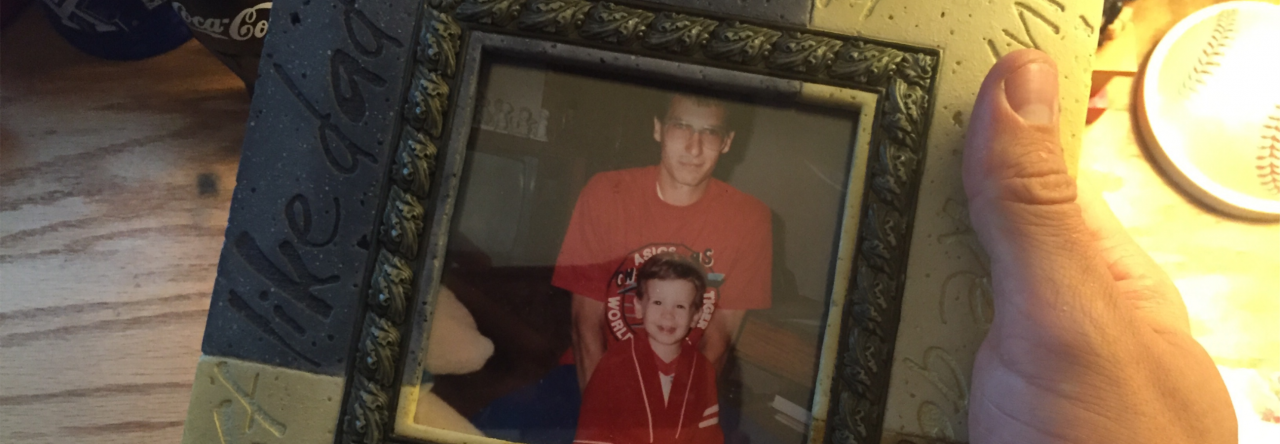

I never asked.
I never asked my Dad if he was having suicidal temptations.
I wish I had.
With a pit in my stomach and many, many questions bombarding my thoughts, I stood next to my Mom for hours on end next to my Father’s casket. I couldn’t shake the feeling that we shouldn’t have been there. My Dad had passed from suicide, and other than his struggles with mental illness, he had lived a healthy life. I often hear people say “gone too soon,” but in that moment, it felt like more than a platitude. My Father was only 50 years old at the time of his death, and he had many, many more years ahead of him had depression not robbed him of that future.
Mom and I were hurting and struggling, but so were the nearly 1,000 people who showed up at Dad’s visitation. For hours, they stood in a line that wrapped through our church foyer and into the parking lot waiting to say goodbye to my Dad and to provide any comfort they could to our family. They provided that comfort—and so much more. Their sadness was a reflection of just how much my Dad was loved. Dad spent a lifetime loving people the way that God taught him to. This was the evidence of a life well spent.
We cried with and hugged so many people and had conversations about my Dad that rejuvenated our grieving souls. We talked with family members. We talked with colleagues. We talked with friends. We talked with people who had been in our lives long ago, and those who were also there every day.
There were many interactions that are imprinted on my brain from that night, but a handful that really stand out in particular.
Especially my conversation with Mary Bausano.
When I saw Mary approach the casket, my already tear-filled eyes welled up with a new flood of emotion. Mary compassionately approached me with tears of her own and open arms, and as I sobbed I kept repeating a confession to her that had been on my conscience since the moment I found out my Dad was gone.
“I didn’t ask him. Mary, I didn’t ask him.”
Mary Bausano is one of those unexpected life changers—the people who enter your life when you least expect it or in a super ordinary way that end up having an extraordinary impact. While I was a student at Miami University Hamilton, Mary was the Director of Student Counseling Services and the Assistant Dean of Students to my mentor, Dr. Bob Rusbosin. I interacted with Mary quite a bit because I served in the Student Government Association and spent considerable time in the Office of Student Affairs in Rentschler Hall (although I must admit, some of those visits were simply to pad my pockets with the free suckers that were on Miss Carol Stubblefield’s desk).
More than that, however, Mary was the very first college professor I ever took a class with. I was fortunate to be a student in Mary’s section of EDL 110: The University & The Student, which was a transition course to help new freshmen navigate their college experiences. As a first-generation college student who was a nervous wreck about the four years that were ahead, I needed this course more than I was willing to admit.
And Mary was the perfect guide to help me make this transition. Mary was approachable and confident and helpful and caring—all the traits that, in my opinion, are most important in being a good teacher at any level. Mary used a blend of discussion and course activities that brought a level of interactivity to the college classroom that I had not expected. I look back on the fact that I have now pursued graduate degrees and worked in higher education for quite some time, and I can directly trace the origins of my journey back to the course that Mary taught in a second-floor classroom of Mosler Hall.
I would stay in touch with Mary during my entire time at Miami, and that friendship continued once I joined the staff at the Regional Campuses. But before long, I found myself back in the classroom with Mary, albeit for an unexpected topic.
A staff-wide announcement came across my inbox offering an opportunity for any Miami employee to participate in a free Mental Health First Aid training course at the Hamilton Campus. And to my surprise, Mary would be teaching the course! I responded quickly and signed up for the course, knowing that my motivations for taking the course were more complex than I was willing to let others know about.
During the first day introductions of our class, Mary asked us to share why we were taking the course with our fellow classmates. When my turn came, I made a conscious decision to hide my true motivations for being there. I mentioned that a neighbor had been exhibiting some signs of severe mental distress, and I said I wanted to learn more about the interventions that might be available to help this person and also protect my family.

My real motivations for taking the course, however, hit much closer to our own home than the neighbor’s. The deep-down truth was that my own Father had struggled with depression for his entire adult life (although I didn’t find out about it until later in his life) and I was grasping for answers. I felt completely helpless when it came to my Dad’s depression. I didn’t know what to do, what to say, or what to feel. If my Dad had been suffering from a physical ailment, I likely could have come up with tangible things to do in an effort to make him feel better; but when it came to a mental illness, I just didn’t understand how I could help.
There was more. The deeper, personal truth was that I was suffering from mental illness myself—and intensely. In the chapter of my life leading up to the course, I had been fighting through an intense battle with anxiety that had been completely debilitating. About a year before taking the course, I hit a breaking point and couldn’t function anymore. I was completely overtaken with angst, and unable to function because I had convinced myself that I was suffering from a fatal illness that the doctors could not diagnose. My brain illness had taken its physical toll as well. For months on end, I could only sleep for two to three hours each night, and on many nights, I would startle awake from horrific dreams in which I was an attendee at my own funeral. I struggled to eat and lost weight unintentionally. I felt constantly weak and struggled to maintain my sanity.
I didn’t understand how to help my Dad; but I also didn’t understand how to help myself.
The good result from the bad breakdown was that, after confessing my struggles to my parents, I was finally able to find the help I needed. I began taking anxiety medication with the advice of my doctor, and I began regular appointments with my therapist Jeff Yetter to work through the issues associated with my clinical anxiety. I was finally starting to feel as if I was regaining some sense of control over my thoughts, emotions, and behaviors that had been desperately absent during these dark days.
Things had gotten better, and I was fortunate for that. Even having gone through my own personal struggle, I still felt ill-equipped to help my own Father. I didn’t quite understand all of the reasons why I had gotten better, but I also recognized that my Dad and I, although both suffering from mental illness, suffered very, very differently. I suffered from anxiety caused by a traumatic event which created an unhealthy (and completely unfounded) fear of death; my Dad, on the other hand, suffered from depression, a disease that (when not controlled) made death appear to be a relief from the pain and difficulty associated with it.
Nonetheless, I buried these motivations under the surface and dove in to the course head-first with Mary guiding us through the curriculum. If you’re unfamiliar with Mental Health First Aid (and I absolutely was when I entered), the program has two primary goals: (1) to familiarize individuals with the wide-array of mental illnesses and the unique nuances of each, and (2) to prepare those individuals to respond to those who are suffering in a way that prioritizes health and healing. The goal for those who complete the course is not to be therapists or psychiatrists themselves, but instead to respond in a way that can encourage those suffering from mental illness to get help from those trained individuals. Think of it as someone who completes a CPR course. You don’t have to be the doctor who performs the heart surgery; you just have to know the skills to keep that person alive until the doctor/medical professionals can arrive on the scene. Mental Health First Aid is very similar. MHFA responders become the catalysts for healing and conduits who connect those who are suffering with those who can help.
Partially because of the content and partially because of Mary’s amazing skills as an educator, I dove right into the course. I was amazed at how little I actually knew about mental illness even though I had suffered myself and been so closely associated with my Dad’s struggles. There was so much about depression I did not understand, including its prevalence in our society. Even having suffered from anxiety, I did not understand how easy it was for a psychological disorder to then manifest itself in physical symptoms. I grappled with the pain that individuals with psychosis must have felt when they experienced regular delusions or hallucinations, and my heart ached as I heard the stories of those struggling with substance abuse or eating disorders. As I’ve mentioned here before, there was a pain-filled world existing around me that I had been blind to, either unintentionally or intentionally. The course opened my eyes in ways I had not expected.
What was even more beneficial, however, was the application phase of the course. With a gentle, steady, and determined style, Mary worked with all of us to develop the skills, behaviors, and techniques needed to respond to those who were struggling with any host of mental illness. She helped each of us to realize that, although difficult, we could grow into this role and help those who were hurting.
Like any good training course, Mental Health First Aid offered a great acronym to assist those in the first responder role as they entered into a conversation with the person who was in crisis: ALGEE.
A – Assess for risk of suicide or harm.
L – Listen nonjudgmentally.
G – Give reassurance and information.
E – Encourage appropriate professional help.
E – Encourage self-help and other support strategies.
All of the steps in the ALGEE acronym made sense to me, and pacing through each of those steps intentionally helped me to understand what types of statements, behaviors, responses, and actions were appropriate or beneficial to someone in the throes of a mental health crisis.
But I must admit, the first step gave me pause. Part of the assessing phase of the mental health first aid response was spotting the physical and tangible manifestations of mental illness, or those things that could be outwardly observed or experienced: threats of suicide, talking or writing about death, expressing hopelessness, exhibiting unexplained anger or rage, or even withdrawn behaviors or physical effects. The more difficult part of the need to assess risk for suicide occurred when the person in need of assistance might refuse to talk, engage, open up, or readily send up any warning signs. That interaction required the skill and acumen of a confident responder, because it required asking a question that no one likely ever wants to ask.
Effective assessment, according to all the research, might require us to ask the individual across the table if they were contemplating or considering suicide.
When Mary started to talk about what we needed to do during the “Assess” stage of our conversations, I remember the shock my classmates and I felt. Asking that difficult question just didn’t seem like the right thing to do.
Together, we read this portion of the textbook: “If you suspect someone may be at risk of suicide, it is important to directly ask about suicidal thoughts. Do not avoid using the word suicide. It is important to ask the question without dread and without expressing a negative judgement. The question must be direct and to the point. For example, you could ask:
- ‘Are you having thoughts of suicide?’
- ‘Are you thinking about killing yourself?’” (Mental Health First Aid, 2009, p. 25)
“How many of you are surprised by this?” Mary asked us. It felt as if everyone in the room was as surprised as I was by the recommendation that was being offered. Asking this question, and especially using the word “suicide” with someone who was hurting, led us to believe that we were planting the thoughts of lethality into their already suffering minds.
We talked through our reservations with Mary, and I’ll always remember her sense of openness and her giving us the space (as people who were not experts) to talk through the difficulties we saw with this approach. Without judgement, Mary listened to each of our concerns, but then, slowly and purposefully, helped us work through them to understand why asking the question directly might help someone in the midst of a life-threatening crisis.
“If you appear confident in the face of a suicide crisis,” our books and Mary explained, “this can be reassuring for the suicidal person. Although some people think that asking about suicide can put the idea in a person’s mind, this is not true. Another myth is that someone who talks about suicide isn’t really serious. Remember that talking about suicide may be a way for the person to indicate just how badly they feel,” (p. 25).
My classmates and I still voiced our concerns. “But I feel like asking that question could do harm,” we responded. “What if the person isn’t thinking about suicide, and then we put the thought in their head?”
But Mary reassured us that asking was better than leaving the conversation unsaid—and the research that is being conducted in mental health and suicide prevention resoundingly confirms this (for more information, see the resources I’ll include at the end of this post). The trainers for Mental Health First Aid were not encouraging responders to run around asking every single person they interacted with if they had contemplated suicide. This isn’t a blanket response. Instead, the trainers encouraged responders to use their newfound knowledge of the warning signs related to depression, anxiety, bipolar disorder, and other forms of mental illness to spot someone who might be having suicidal ideations or who could be headed down that path. Then, in those specific situations, responders have a duty to ask a question that can often turn the stomach of the person asking it.
I am a man who trusts experts because the expertise they’ve earned is often hard-fought; and in this circumstance, even though it sounded counterintuitive to me to bring up the topic of suicide with someone who was in pain, I vowed to follow the instructions. I believed, in my heart, that the individuals at Mental Health First Aid and my teacher, Mary, had the best of intentions and wanted to equip my classmates and me with the skills to help those who are suffering from mental illness.
Fortunately, Mary did more than just implore us to ask this question (another sign of what a wonderful teacher she is). After giving us space to question and engage with the idea, Mary then put us into pairs and told us that we would have an opportunity to practice asking the question.
As awful as it might feel, we were going to role play asking this question.
Mary gave each of us a small sheet of paper which included our “acting directions,” which were signs and symptoms that we needed to exhibit when playing role of the person suffering from a mental illness. We were to do our best to showcase the symptoms that had been described to us in the “character directive” and to make the role-play-situation as real as possible. Then, the person serving in the role of the mental health first aid responder would respond with empathy, sincerity, and ultimately, ask the individual about any potential for suicide.
Even in a simulated environment, I was amazed at how difficult it was to ask another living, breathing human being if they were considering self-harm. My palms were sweaty and my hands were shaking. I felt a lump in my throat as I asked my class partner if she was contemplating suicide. When she responded that she was (in character), I did my best to empathize, normalize, and tell her how much she mattered. Then, mutually, we worked together to try and devise a plan to get help, which included seeking the treatment offered by a licensed therapist.
We continued to practice, and I must admit…although the words and processes started to become more standardized, routine, and familiar, I don’t know that the emotion of having to ask that question ever faded.
What did change, however, is that I slowly became a bit more confident and accustomed to the emotion of the moment.
Mary gave us time and space in the course to talk through the emotions we felt asking that question. Hearing how difficult it was for my classmates was also reassuring. It was good to know it wasn’t just me who struggled. But we also listened to the reaction of the person playing the individual who was suffering. Being on the receiving end of that hard question, they largely mentioned that hearing someone care enough to ask that question made them feel as if they mattered. It gave them hope. It let them know they were not alone.
Throughout that 4-week course, we continued to practice asking that question at Mary’s direction. The more we practiced, the better our responses became. The more our confidence was built. We were not only able to detect the signs of someone who might be suicidal, but we were also able to try and respond with helpful resources, tools, and action plans that might help the suffering individual find the treatment he or she needed to survive. In addition to these questioning and response techniques, we also learned more and more about the varying typologies of mental illnesses and the differences in their symptomatic manifestations. It was heartbreaking and simultaneously enlightening. Prior to this course, I had never considered the complexity of mental illness and the different ways that it played out in the lives of so many individuals. I was blown away by the prevalence of mental illnesses in the lives of others in our country.
In every example of mental illness that we discussed, I must admit I thought of my Dad; however, I never, never once considered that my Dad would become a part of such a scary statistic.
Sitting across from my Dad in the darkened family room of our family home on July 24, 2013, I tried to talk with my Dad. In the heat of what I knew was likely the darkest moment of my Dad’s battle with mental illness, I tried to rapidly think back through all the things I had learned from Mary and the Mental Health First Aid course.
Just a few hours before his story morphed into a tragedy, I asked my Dad a lot of questions. I asked him how he was feeling, even though I knew that his answer would not even come close to reflecting the true pain that tormented his soul. I asked him if everything was okay at work. I asked him about other burdens he was carrying in his life and whether or not these felt overwhelming. I asked him about the doctor’s appointment he had scheduled for later that afternoon. I asked him about his misgivings and apprehensions related to seeing a counselor or therapist, although I couldn’t seem to convince him that this would help.
Successfully in some respects, I employed many of the tactics I had learned from the course. But in the midst of all the questions I asked my Dad on that fateful day, I did not ask him if he was having suicidal thoughts.
No matter how much practice I had, I just couldn’t bring myself to do it. I could not bring myself to ask the man who had guided me through this life if he had thoughts of ending his.
Unfortunately, it’s the question I didn’t ask that still haunts me.
Standing near the casket on the day of his visitation, I wept and confessed my guilt to Mary. In true Mary Bausano fashion, she stepped forward and she grabbed both of my shoulders. In a compassionate and empathetic voice, she brought her hand to my cheek and did her best to minister to me in that moment of grief and guilt.
“Tyler. He was your Dad. You have to understand the dynamics of the relationship and how that affected your conversation that day. Your Dad was an authority figure in your life, making it even more difficult for you to ask him if he was contemplating suicide. He was your Father. Tyler, you are not responsible for this.”
I needed to hear that validation from Mary, the person who had taught me how to respond to those who were in the throes of a mental health crisis. I needed her encouragement and reassurance that I had not been the lynchpin in my Dad’s tragic end.
Standing near my Dad’s casket, I felt it was important to talk with Mary for a long time because her instruction had been so important to my understanding of mental illness. Even though My Dad’s life had ended from suicide, I also felt that the information Mary had taught me helped me to be more empathetic and understanding of my Dad’s struggles (and eventually my own) when he was here in this life. As she had encouraged me so many times before as a student, Mary refused to let this moment defeat me. We stood there, and with a tender heart, Mary helped me understand how deeply my Dad was hurting and suffering, even if his wounds and injuries were not physical or visible.
I was thankful to Mary on that day. And I’m still extremely grateful for all she taught me. Even though my Dad’s life might have ended prematurely, much of what I learned about helping those who are struggling with mental illness I can trace back to Mary’s course.
And I’ve been in many situations since losing my Dad when, thankfully, I’ve had the confidence to ask that difficult question. Ultimately, I know how important it is to ask.
Here’s the truth: A person who is suffering from depression and already feels like a failure will likely hide those feelings behind a mask. If we expect those same individuals to readily offer up their suicidal ideations without being questioned, we are fooling ourselves when it comes to the hard truths of mental illness.
The reality is this: I did not think my Dad was suicidal. I don’t think anyone in his life did, and in some senses, I try to remember that when I feel guilty for not asking him. My Dad was too bright, too outgoing, and too full-of-life (in my mind) to ever be suicidal. It just didn’t compute with the image of the man I knew.
That being said, I still wish I had asked. I’m not writing these words to beat myself up over what was left unsaid. I’m writing this in the hopes that those who are reading and find themselves in a similar position that I was in might have the courage to ask.
My Father’s death offers important lessons, and when I can help to prevent this same occurrence in the lives of others, I’ll do it. The lesson when it comes to asking this question is this: in most cases where a suicide occurs (like my Father’s), it’s rare that those around them could have ever envisioned this as a likely scenario. Whenever I talk with survivors of suicide (individuals who lose a loved one to suicide), they typically all say the same thing: we never could have imagined our loved one was suicidal. Yes, there are some cases where there may be visible warning signs on the surface or previous suicidal attempts (it doesn’t make suicide acceptable, but some instances are more predictable in others). Even in those situations, however, I think that no one really envisions suicide as something that is “likely” to occur. That’s because it’s unnatural. That’s because it shouldn’t occur. Life wasn’t designed that way.
But the unfortunate statistics bear out: it is occurring, and it’s occurring at a heartbreaking clip. Recent statistics are beyond frightening, showing an average of 130 deaths from suicide per day according to the American Foundation for Suicide Prevention.[1] On average, that’s a death from suicide roughly every 11 minutes in the United States.
So, the message is clear. We must ask. When we suspect a suicide might occur, we must root it out. We must give the suffering individual hope and a path forward other than death. We must overcome our own fears and ask a difficult question, because it may be exactly what the recipient of that question needs to hear to know they matter and bring them out of the cloud of hopelessness they are living within.
 I didn’t write this story to wallow in my own guilt; I wrote this story to serve as an example to everyone in this life who loves someone or cares about someone that struggles with mental illness—and if the statistics tell us anything, that’s likely everyone. I wrote this story in the hopes that we might be able to normalize and de-stigmatize the conversation around mental illness. I wrote this story in the hopes that, in the same way we might inquire about someone’s health in the midst of a physical injury, we might learn to do the same in the throes of a mental injury. I wrote this post in the hopes that, someday, the question of “How are you doing?” can be met with more honesty than a perfunctory “I’m fine.” I wrote this story in the hopes that, someday, just one person who is unfortunately sitting across from someone who is hurting under the surface might find the courage to ask this unbelievably difficult question and save a life.
Had I asked this question, I don’t know what my Dad’s response would have been. There is a good likelihood that he would have kept his mask on tightly (as he did so many times before) and responded that he was not feeling suicidal even if he was. There is a good chance the question might have caught him off guard and sent off a warning sign that would have put myself and my family into a different mode of response. There is a good chance that he might have answered with honesty and we would have had an opportunity to talk him through how important he was to all of us who loved him while moving to get him the medical attention he so desperately needed. There is a chance we could have had a breakthrough.
No plan is full-proof, but even if there was an infinitesimal chance that it could have saved his life, I desperately wished I had asked it—even if the response from my Dad was not truthful.
Take it from me: I wish I had asked.
Sometimes, I wonder how I would have felt had my Dad told me that he was not suicidal only to have him die from that mechanism a few hours later. Would I be riddled with guilt that I put the thought into his head?
Here’s the truth: Knowing what I know now, the thought was already there. Maybe it had been there for longer than any of us knew. And it’s a thought that, unfortunately, is there for so many individuals who are struggling with mental illness. It’s a thought that burrows under the surface and invades our psyches when we are mentally ill. It’s a thought that, when given too much power, can close off our rational mental processes. And it’s a thought that, sadly, cannot be exposed unless someone from the outside shines a light on it.
It’s a thought that might only come to the surface if we find the courage to ask.
Asking that question is our way to shine a light on this epidemic. Asking individuals if they feel suicidal doesn’t put the thought there; it exposes a thought that is likely already in existence. Most importantly, asking the question is the only way to open the doors to healing and treatment for many who struggle to ask for it when they need it.
I won’t live my life wondering if I should have asked my Dad this question because I know I should have. That being said, I will not give into the temptation of guilt and feel responsible for my Dad’s death. There is no one, no one, who is guilty for what happened to my Dad on that fateful July morning—including my Dad. I don’t blame him. I don’t blame anyone in his life. I blame mental illness. I blame depression. I blame the stigmas developed in our society.
The only way to counter these is to ask. Mary taught me that—and having gone through a tragic loss of a loved one to suicide, I still believe she was right.
The only way to clear the path to that vulnerability and healing is to ask. When you interact with a loved one who you think might be suicidal, ask them and respond accordingly. Keep an eye out for warning signs. If they are suicidal, stay with them and find them the help they need offered by medical and psychiatric professionals.
And most importantly, love them. It might not seem like it, but just by asking this very difficult question, you are showing love. You are showing compassion and tremendous care by asking someone who is struggling if they’re contemplating a dangerous and unthinkable end. You would only ask that question if you loved that individual—remember that yourself, and remind the person that you’re asking just how much you love them.
In the end, those individuals that you ask will thank you for doing the difficult thing. And as a son who lost a beloved father to a horrible mental illness, I’ll thank you for helping to make sure that my Father’s story does not become someone else’s.
Together, we can learn to ask this question—and together, we can learn how to respond with empathy and care to those who answer it.
 Dad, I miss you more and more each day that goes by. As much as I don’t want to, I often sit back and replay our last conversation together and wonder if I could have done more. I wonder what would have happened had I asked you whether or not you were experiencing suicidal thoughts. I don’t know that you were. I just know that I miss you. I just know that I wish I could have done more because we all loved you so much. You brought such vitality and fun to all of our lives. You were the glue that held so many of us together in unique ways. You were important to all of us, and even thought it has been more than seven years since your death, you are still missed beyond belief. Dad, I would give anything to be able to sit down with you again on that day—not for me, but for you. You deserved a long life. You deserved to grow old, and become a Grandpa, and retire, and all the things that come with a long life. Even though you’re gone, I am grateful that your story lives on and that you continue to inspire all of us through the way you lived your life. Dad, I have so many questions for you; but I’m thankful that when I get to the other side, none of this will matter. All of the hurt and pain that we experienced in this life will be gone. Together, we will be able to rest in an everlasting paradise where the pains of this life are a disappearing vapor. Until that day, know that I love you. Know that I’ll continue doing everything I can to keep your memory alive. Thank you, Dad, for always being there for me—I can still feel you here now. I love you, Dad. And for now, seeya Bub.
“For this is the message you heard from the beginning: We should love one another.” 1 John 3:11 (NIV)
Additional Resources: If you’re like me, you still struggle with the idea of asking someone you love and care for whether or not they are considering suicide. It’s a difficult idea to come to terms with, because those conversations about life and death are not fun to have. But the research is clear—your asking someone whether or not they are considering suicide or having suicidal thoughts could, in fact, save that person’s life. If you are struggling with this idea or have additional questions regarding this important part of assessing risk for self-harm, please explore these additional resources. I promise you that the time you spend reading them will be worth it to the individual lives that will be impacted by your desire to learn more and help:
“The Question That Could Save a Life” by Karen Young (Hey Sigmund)
And of course, I recommend that you learn more about the life-saving techniques offered through Mental Health First Aid, and if possible, I would encourage all of my readers to enroll in and complete a course.
References:

 Dad, At times, Christmas has felt so empty without you. My heart has been enraptured with pain when I think about what was stolen from you and us by mental illness. You deserved many more Christmases. You deserved to celebrate with our growing family, and to eventually be a Grandfather who were spoiled with your generosity and sense of childlike wonder. The holidays had a special sparkle when you were here to celebrate them, and since you’ve been gone, we’ve all felt an overwhelming sense of loss, guilt, and sadness. But the gift that was given to us was the reassuring truth of knowing that you are safe in God’s arms—free of pain, distress, and all the unfair difficulties that haunted you in this life. Dad, there is no question in my mind where your Eternal mailing address is. I know you are in Heaven, watching down over all of us and telling us that life is going to work out even on the days when the pain of losing you makes it hard to believe. I think of you all the time, but even more so on Christmas. Christmas was a happy time because you provided so much joy to those you loved. Watching the way you enjoyed spending time with your family has been an inspiration to me, and I wish you and I could sit around, share a glass of punch, and laugh again the way we always did. Dad, thank you for teaching me what it means to be a man who loves his family not just at Christmas, but every day of the year. I have many more Christmases to go without you, but I’m looking forward to that first one we can spend together in Eternity. Until that day, I love you. Merry Christmas, Bub.
 Dad, I’m sorry for all of those moments that we should have spent together. I’m sorry for all of those times that I wasted when we had the opportunity to just be together, but I didn’t realize the value of those moments. Ultimately, I’m just sorry we didn’t have more time. Dad, you brought such joy to my life—and to everyone’s life that you interacted with. Any amount of time with you would have failed to be enough. There are so many things we should have done together, and I’m sorry I didn’t make a more genuine effort to make those things happen. Dad, I hope that I’m still learning from your life. I hope that I am taking the time that God has given me and using it more wisely than I did before you died. It still doesn’t erase the pain of losing you and the desire to have more of you in my life, but I hope that I’m realizing the fragility of life and the need to invest my time in the things that matter—the things associated with loving God and loving other people. Dad, please continue teaching me. Thank you for living a vivid life that still feels important each and every day. And Dad, I’m keeping a list of all those things we should have done. Someday, we will have the opportunity to do them all, and I can’t wait. Until that day and the glorious reunion that awaits, seeya Bub.
 Most nights, Lucy would make her way into my room, usually at just the right moment. She would push the door open with her snout, tail wagging feverishly, and climb up onto the bed. After arriving, Lucy would place a paw on either side of my shoulders and lick my face until I begged her to stop. A twin mattress doesn’t provide much room for a grown man and a 70-pound dog, but Lucy made a way. She would curl up alongside me and lay her head across my chest. And in those moments, even though she was a dog and might not have understood human emotions, Lucy soothed my heart in ways I’ll never be able to describe.
 Lucy also helped soothe my pain because of the fact that
 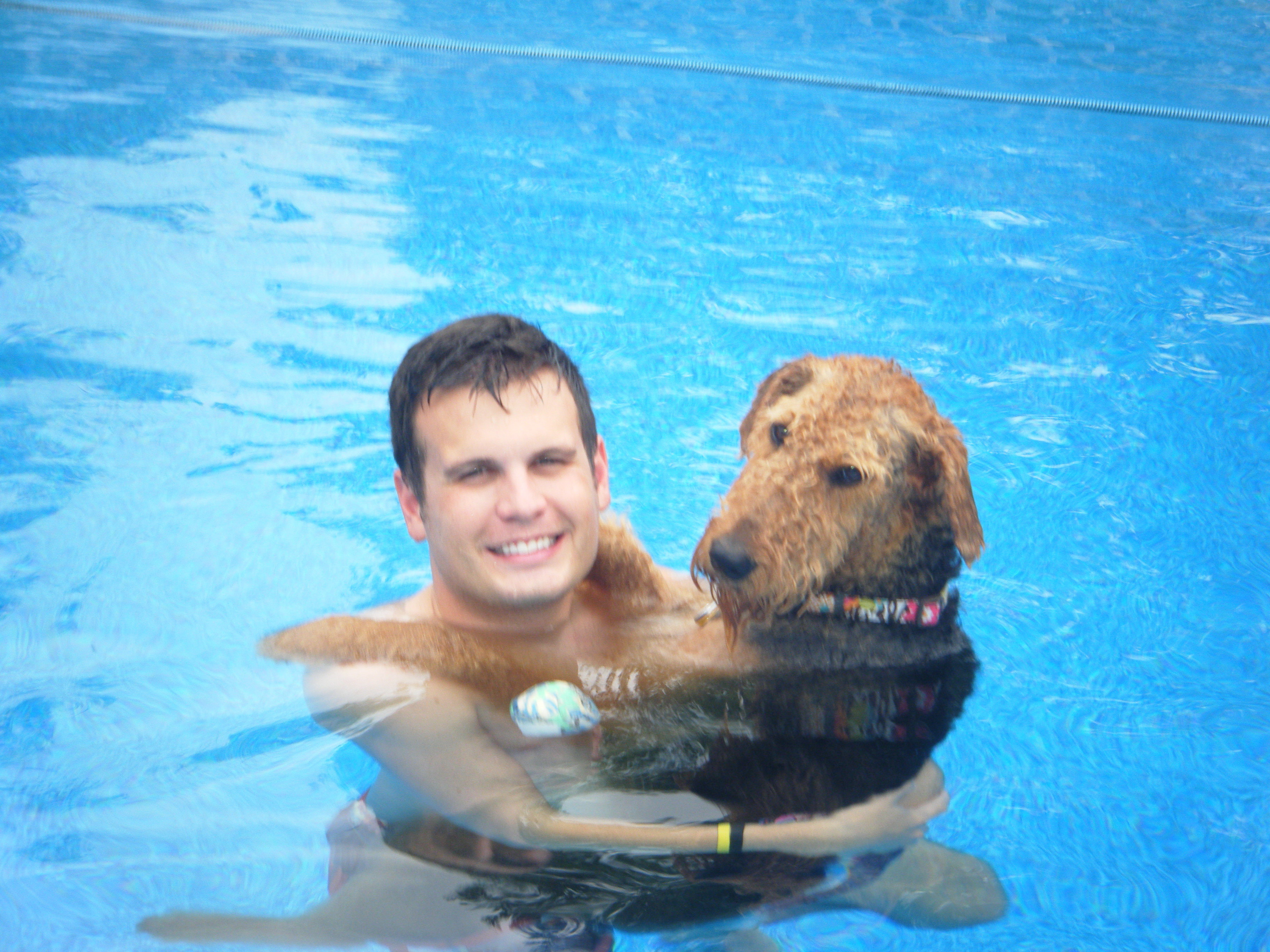 It was that puppy companionship, along with many other wonderful people and things, that helped me heal and grieve my Dad properly. I had so many wonderful people who knew exactly how to minister to me after losing Dad—my Mom, my grandparents, my church family, my friends, my coworkers, my neighbors, and even complete strangers. I also found little things I could do to help me grieve for Dad properly—things to help me forget about the pain of losing him. I read my Bible frequently in my study. I wrote feverishly—some of those scrawlings eventually turning into the foundations of this project. I exercised frequently, although the Ryan Gosling physique (or anything
  remotely close) still eluded me.
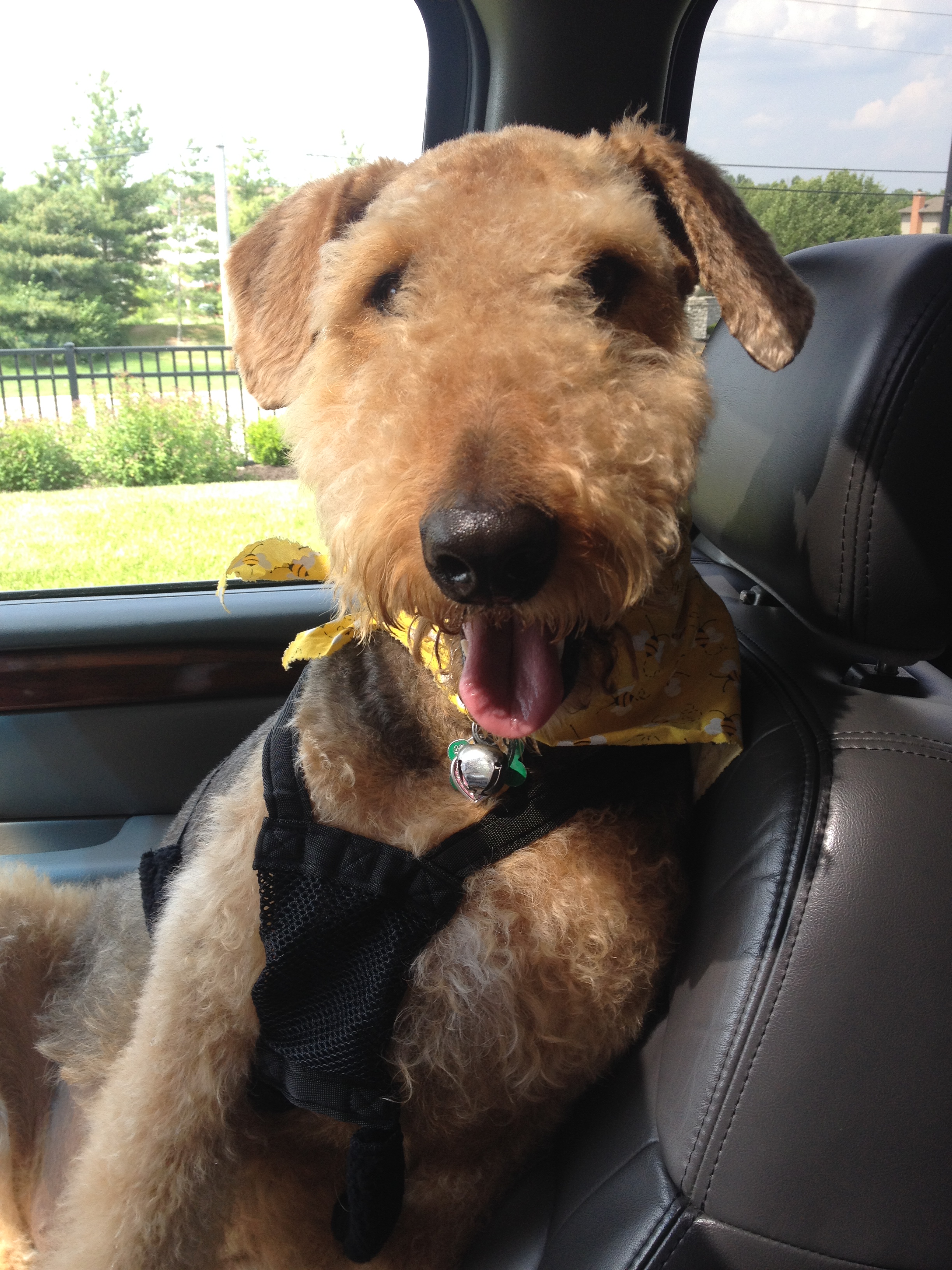 On other days, I would let Lucy hop up into the passenger seat of my car and we would take a drive together. Lucy really enjoyed driving around town, and her excitement created smiles and laughter in neighboring vehicles as she sat calmly next to me in the car with her seatbelt on. I would make a conscious effort to go through drive-thrus with Lucy to show her off to anyone who would remark about what a cute pup she was. She was cute—she deserved the adoration!
 It’s hard to describe, but in those moments, Lucy would nervously saunter up to my side when she knew I was hurting. It was like she understood that she needed to be by my side. And that’s what she would do. She would hop on the couch and lay her head in my lap. She would leave all her toys (and boy did she love toys) to just lay near me. I would gently pat her head or her back, and slowly, her presence would help me escape from that immediate terror. She did more for me in those moments than I could ever tell her. Lucy showed me what it meant to be “man’s best friend.”
 That sadness would often give way to anger. Lucy’s death was completely avoidable and unnecessary. A groomer that we had trusted—a groomer who knew the despair of our family situation—had cared so little about our family and our pet that he let her die as a result of his negligence. As you might imagine, the story of Lucy’s death attracted the attention of a local news station.
  I bought a pound of the licorice dogs (and a few other goodies, of course), and the second Paige and I got into the truck, I opened the bags and started chowing down. I tasted the licorice, and it brought back all the memories of Lucy and how funny it was to watch her eat licorice. I began recounting the story to Paige, and before I knew it, I was flashing back to the moment I lost her. All of the sadness and despair of her death was as real then as it was on the day I lost her—all because of a piece of licorice that reminded me of her.
 On occasion, I’ll put on that
  Dad, I need to tell you that I’m sorry and that I’m thankful. I’m sorry that I acted so stubborn when you chose to bring Lucy into our family. I’m sorry that I acted like a “little jerk” (your words…and mine) when you were just doing what was best for us. Ultimately, I’m so grateful that you chose Lucy. I’m grateful that you raised her and trained her and taught her to be a fun, family dog. We had no idea how much we were going to need her fun-loving, thoughtful companionship after losing her. In a way, I feel like Lucy carried on so many of your personality traits after you were gone. She was a constant reminder of the zest and excitement you had for life. She was there to help us grieve in so many ways after you left us. I think Lucy was your angel here on Earth for us. I think that she was your way of telling us that life, even when it’s painful, can still have a lot of joy and happiness. Losing her was like losing you all over again. It was as if another piece of you—a very important piece—was gone forever. But Dad, I know that we will never lose you entirely. Your memory will always live on in our hearts and in our minds because you made such an indelible mark on all of us. Dad, thank you for Lucy. Thank you for teaching her to love us when we needed it most. Although I miss you both dearly, I hope that you are together again in heaven—and I hope there are plenty of Frisbees to toss. You deserve paradise, Dad. You deserve the greatest things that God can offer, and I can’t wait to experience that joy alongside you. Until that day where you and I are together again in a life that knows no end, seeya Bub.
 From the moment she came home, Lucy was impossible to resist. I have a weak-constitution for puppy cuteness, and Lucy melted my defenses rather quickly. Airedale terriers are adorable puppies. What will eventually grow into a 60 or 70-pound dog starts out as an eight-pound ball of fur with a shortened snout and gangly legs. Lucy looked like most Airedale pups I had seen in photographs, but there was one defining characteristic that was different. Lucy had a tiny little white patch of fur right on the middle of her chest. I had never seen an Airedale with any color fur other than black and brown. Immediately, she was different from the rest; and the more I got to know her, the more wonderfully different I discovered she was.
 Dad sat the blanket bundle down on his lap, and Lucy poked her head out from the blanket mound and peered around our family room. She looked straight at me with her dark eyes, and when she made her way down onto the carpet and slowly meandered towards me, I knew that I was done. My resistance would have to fall, because this pup was just too cute. With the pain of losing Willow momentarily fading, I reached down and scooped Lucy into my arms. For the rest of the night, she and I spent our time on the couch as she adjusted to her new surroundings. A few times, I glanced at Mom and Dad and saw them giving one another that familiar “I told you he’d cave” look. I tried my best to not let them get any satisfaction from defying my gutless order to not bring home another family dog, but it was useless.
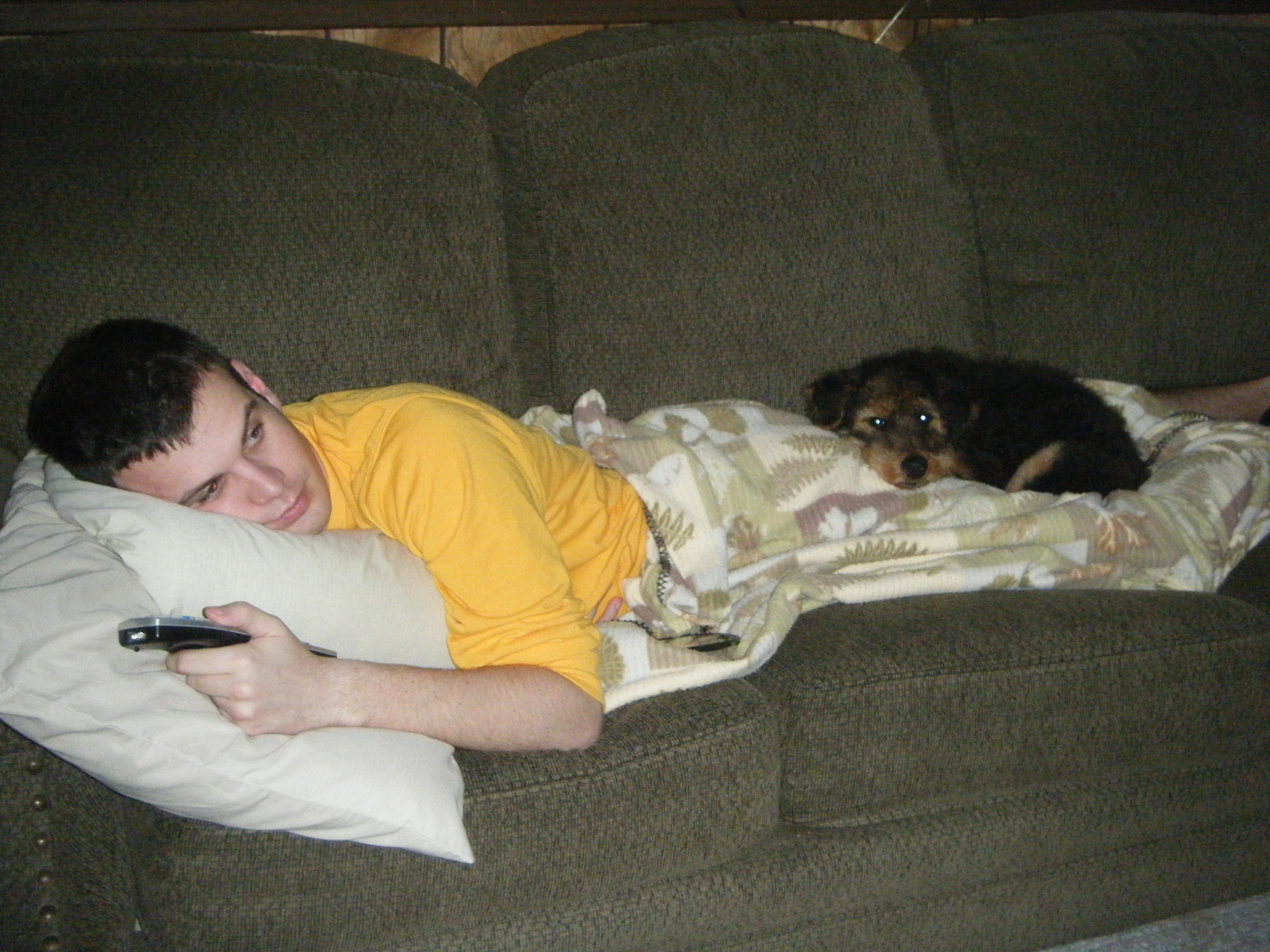 And from that moment on, I don’t think I ever quit loving Lucy. Even if my stubborn pride wouldn’t let me admit it.
 Lucy had that in abundance. Lucy’s calm demeanor during the first 24 hours of her life in my family was a well-executed mirage delivered by a sneaky infiltrator. When I came home on Lucy’s second day in the Bradshaw house, the docile, pleasant pup that I had left that morning was replaced with a rambunctious, mischievous, four-legged fur-covered peddler of destruction. When I came home that day, my poor Mother looked like she had barely survived a hurricane. She looked at me with a frazzled exasperation as Lucy, with toys strewn all across our normally-clean family room, bounced and barked and bolted to every corner of the house. She was worse than a baby because she was faster. I couldn’t believe she had fooled us! Lucy had spunk—and a whole lot of it.
 But with Lucy, it was different from the start. She was immediately allowed onto the couch—and I was shocked! And then, the unthinkable happened; Mom actually let Lucy sleep in the bed with her! What world was I living in?! Who had abducted my Mom and who was this woman that now gladly beckoned the dog onto the furniture?
 When Lucy was little, I used to carry her around the house quite often. And unlike most dogs, she really enjoyed being carried! After a little while, it got more and more difficult to carry her around as she continued to grow. And by the time she reached 40 pounds, our little puppy, who I affectionately called “Monkey”, was a bit to heavy to carry with one arm. So I did what any normal person would do.
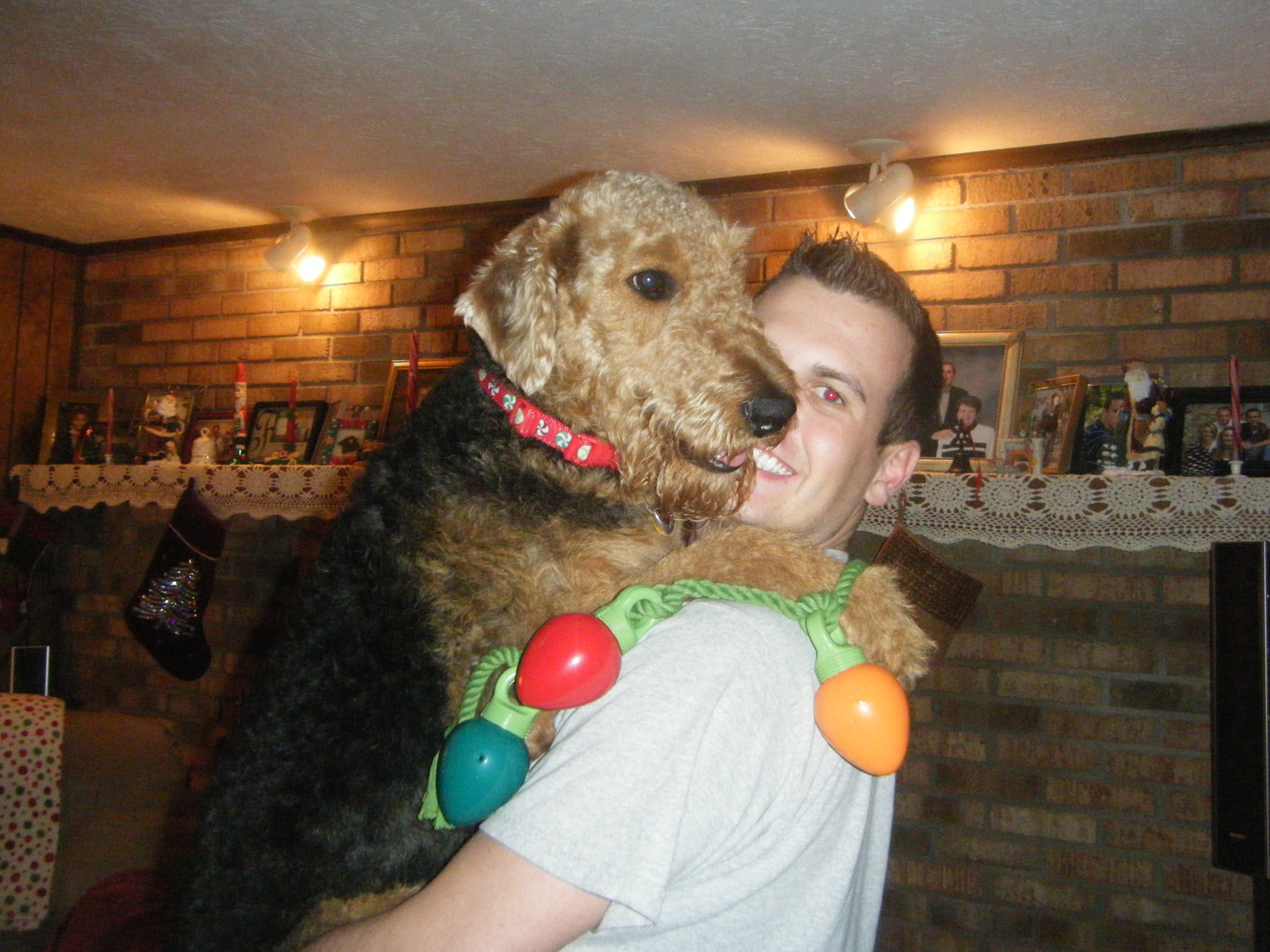 I would actually pick Lucy up by her front legs and toss them over my shoulder. Then, Lucy would wrap her hind legs around my waist, and I would comfortably carry her around as she nuzzled her snout on my shoulder. Looking back, it’s the most ridiculous thing I could ever imagine doing as a dog owner.
 Thankfully, my Dad, our dog-whisperer-in-residence, was there to take care of most of the discipline and direction when we first got Lucy. My Dad loved working with animals, even when the animals weren’t easy to work with. I think he saw teaching pets as a challenge that he wanted to conquer, and he had a way of showing love through firmness. Quickly and efficiently, Lucy was housebroken and learning how to sit, lay down, and yes…play hide and seek with Dad. My Dad had a special talent, and we all benefited from it.
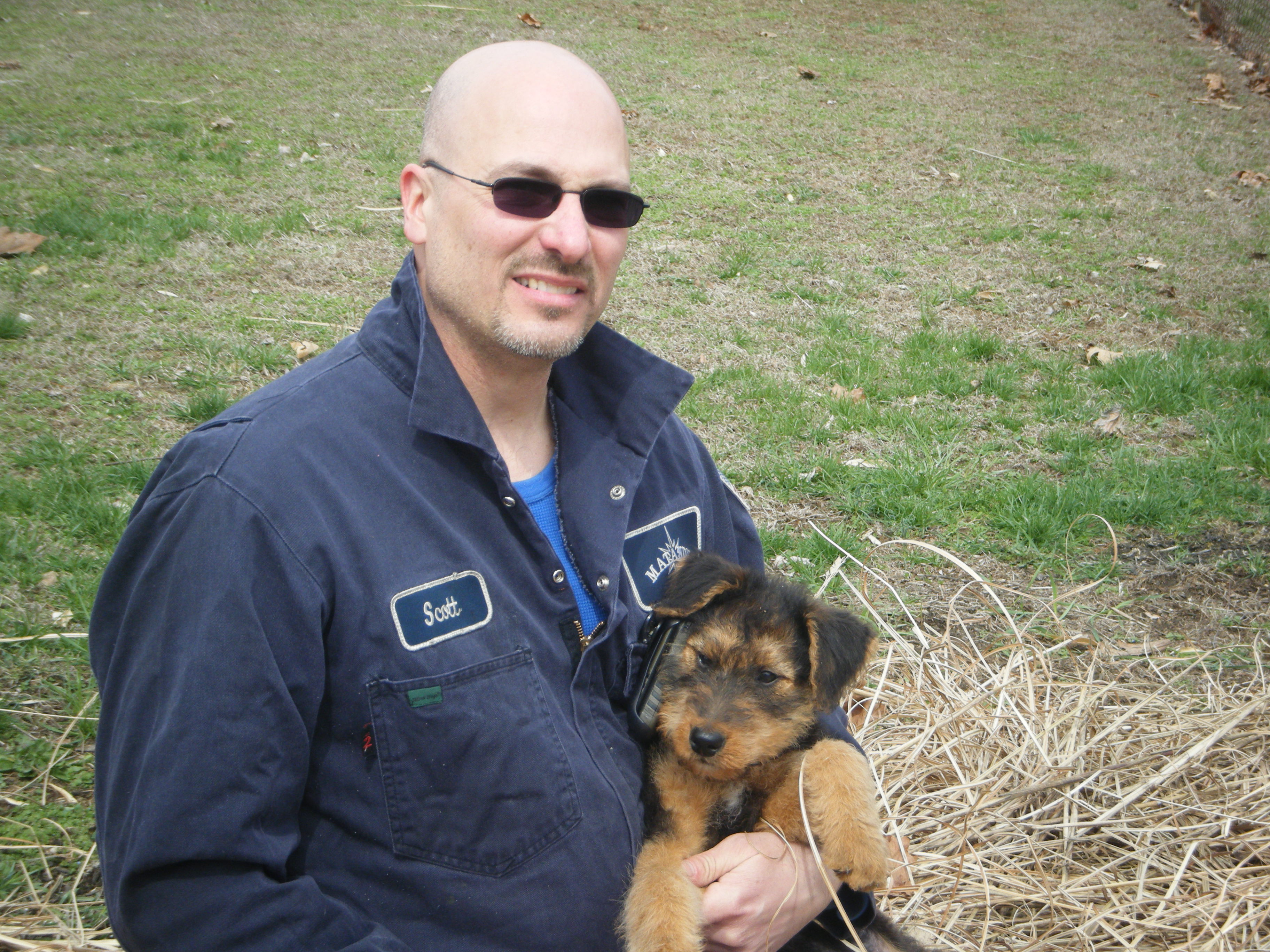 Dad, being a playful guy, did everything with Lucy. If he was home, he wanted to be near her. If he had a bonfire in the backyard, Lucy was with him. If he was eating dinner, she was patiently waiting for a scrap nearby. If he was taking a nap, she was on the couch cuddled next to him. There were hour-long walks to the park, trips to the dog beach at Hueston Woods, and countless other memories that the two of them created together. They are memories filled with laughter and companionship, but joy more than anything else.
 And Lucy was there to help me—and all of us—find a small ray of light in the midst of the dark clouds that enveloped our family. Lucy—sweet Lucy—would help to save us as best she could.



 When I was extremely young, my family never took beach vacations. To this day, I’m not sure why because we all loved the beach so much. My very first time seeing the ocean was on a family trip to Panama City, Florida as an eighth grader. Our entire family (grandparents and cousins included) spent a wonderful week on the Gulf Coast, and I remember the momentous nature of that trip, even as a middle schooler. A 12-hour, multi-day car ride had finally concluded, and my Mom and Dad walked me out towards the ocean once we arrived. With my parents, I saw the ocean for the very first time and I got to experience its magnitude. I got to touch sand, and taste saltwater, and splash in the world’s largest pool. Even as a young kid, I appreciated the significance of this experience.
 After a really, really long drive, my family finally arrived to our condo in Gulf Shores. Shortly after arriving, I think we all knew then that we had found our family vacation spot. There was something about it that made us feel like we were home.
 As I’ve written before, Dad was a tremendous athlete. And also as I’ve written before, I was a horrible one. But Dad never let my lack of athleticism curb an opportunity to play. At the beach, Dad and I could throw a frisbee for hours—as long as the wind cooperated. We would warm up close to one another and gradually step back as we threw until we would finally hit a point where we had to wind our torsos like a corkscrew to get the frisbee to sail over the white sand. Dad and I would leap and dive into the sand to catch a frisbee—his leaps and dives always significantly more graceful than mine—and we would yell at each other for not being able to properly hit our target. “Did you actually expect me to catch that?!” we would yell across the beach at one another. “You’re gonna kill a kid with that thing if you don’t learn how to throw it!”
 And at the beach, Dad never played it safe. More than anything, I think Dad and I probably got the most enjoyment of our daily game of “See Who Can Swim the Furthest Out from the Shore and Make Mom Freak Out the Most” (catchy, no?). Much to my Mom’s displeasure, Dad and I were notorious for jumping into the water and swimming straight ahead until our arms gave out. The water would grow colder and colder the further we would swim, and periodically Dad would stick his arms high above his head and straight-dive down to see if he could still touch the bottom. If he could, we still weren’t out far enough. All the while, my poor Mother would sit anxiously in her beach chair watching our bobbing heads grow smaller and smaller in the waves. The best version of the game was on the beaches where there were life guards on duty, and in those scenarios, we tried to see how loud we could get them to blow their whistles at us! We knew we were really killing the game if we could swim far enough to encounter a deeper sandbar, and if we did, we would sit out on the sandbar and rest until it was time to swim back in. Dad would wave to Mom on occasion from the depths of the mighty ocean, and it was amazing how peaceful the deep ocean water can be. All the ambient noises of the beach fade away when you’re that far out (you especially can’t hear life guard whistles or motherly-shrieks).
 My Grandpa even told a story at Dad’s funeral about his love for always being the last one up. On occasion, my family would take vacations with our extended family, which included my Grandpa Vern, Grandma Sharon, my Uncle Lee, my Aunt Beth, and my two cousins Jake and Megan. Those were always wonderful vacations, and every day, my Grandpa and my Dad were always the last ones up to the condo. But even my Grandpa couldn’t hang with my Dad.
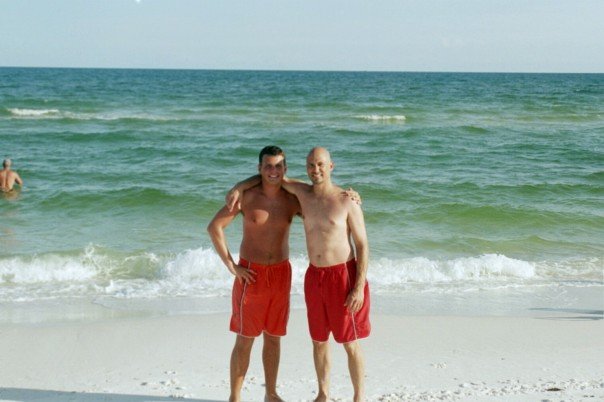 Standing there at the beach, I told Steve how much I missed my Dad. I really didn’t have to say anything, because Steve knew—and he was experiencing the grief himself. Steve had been tremendously close with my entire family, and my Dad treated him just like he would treat his own son. Instead of only crying, though, I was able to share tremendous memories and stories of my Dad, telling Steve all about the funny things he had done at the beach on our family vacations. I shared stories about Dad’s Banana Boat expedition, his wave-runner sandbar collision, and how he was always the last one up for dinner. Little by little, the tears were slowly replaced with a smile and laughter. I didn’t miss him any less; I just had a different focus. Instead of focusing on the loss, I was able to focus on his life. Instead of focusing on the time we didn’t have together, I focused on all the wonderful times we did.
 I spend a lot of time on the beach during dusk as many of the families on the shore will begin to retreat to their condos. And I do this for a simple reason: that’s what Dad would have done. I’ve learned why he loved it so much. As the beach starts to quiet down from a busy day of frivolity and fun, there’s a quiet stillness that begins to wash across the shore. That stillness is enticing and comforting, and it’s in those moments that I often feel closest to God. And I think about how peaceful those moments must have been to a man who struggled with depression. Dad treasured that peace. And now, I treasure the memory of his life during those peaceful moments, and I try to live it out every chance I get.
 Dad, there has never been a time when I’ve gone to the beach without thinking of you—and there never will be. You made our time at the beach together so memorable, but more than that, you taught me so many important life lessons while we were there. You taught me to slow down and relax. You taught me to soak in God’s beautiful creation. You taught me to be kind to people and get to know them, because God created them, too. You taught me to let go of all the busy things from back home and simply enjoy the life that was in front of me in that moment. I take these lessons with me everywhere I go, but especially when I go to the beach. Even though I’m still able to have fun when I go, it just isn’t the same without you. I miss our throwing sessions, and sometimes I’ll just carry a baseball in my backpack to turn over and over in my hands and think of the time we spent together. I miss trying to see who could swim the furthest out, and watching you beckon me further even when I felt like I couldn’t keep swimming. I miss walking along the shoreline with you and listening to your stories about oil rigs in the distance or planes flying overhead. You had an inquisitive, appreciative spirit for all life had to offer. And more than anything, I miss watching you enjoy those moments on the shore by yourself being the last one up. It’s strange, but sometimes it’s like I look down from the balcony and I can still see you sitting there. Dad, I know you’re still with me. I know that you’re guiding me and watching over me in everything that I do. Thank you for always being my best teacher. Thank you for being a Dad unlike any other. And thank you for always teaching me that the last one up wins. I love you, Dad. I miss you tremendously. I sure hope there are beaches in heaven, because if there are, I promise I’m going to swim further out than you. Until that day when we can be beachside together again, seeya Bub.
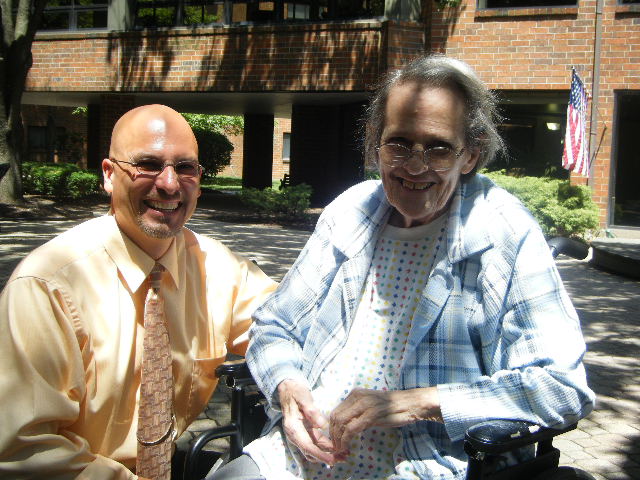
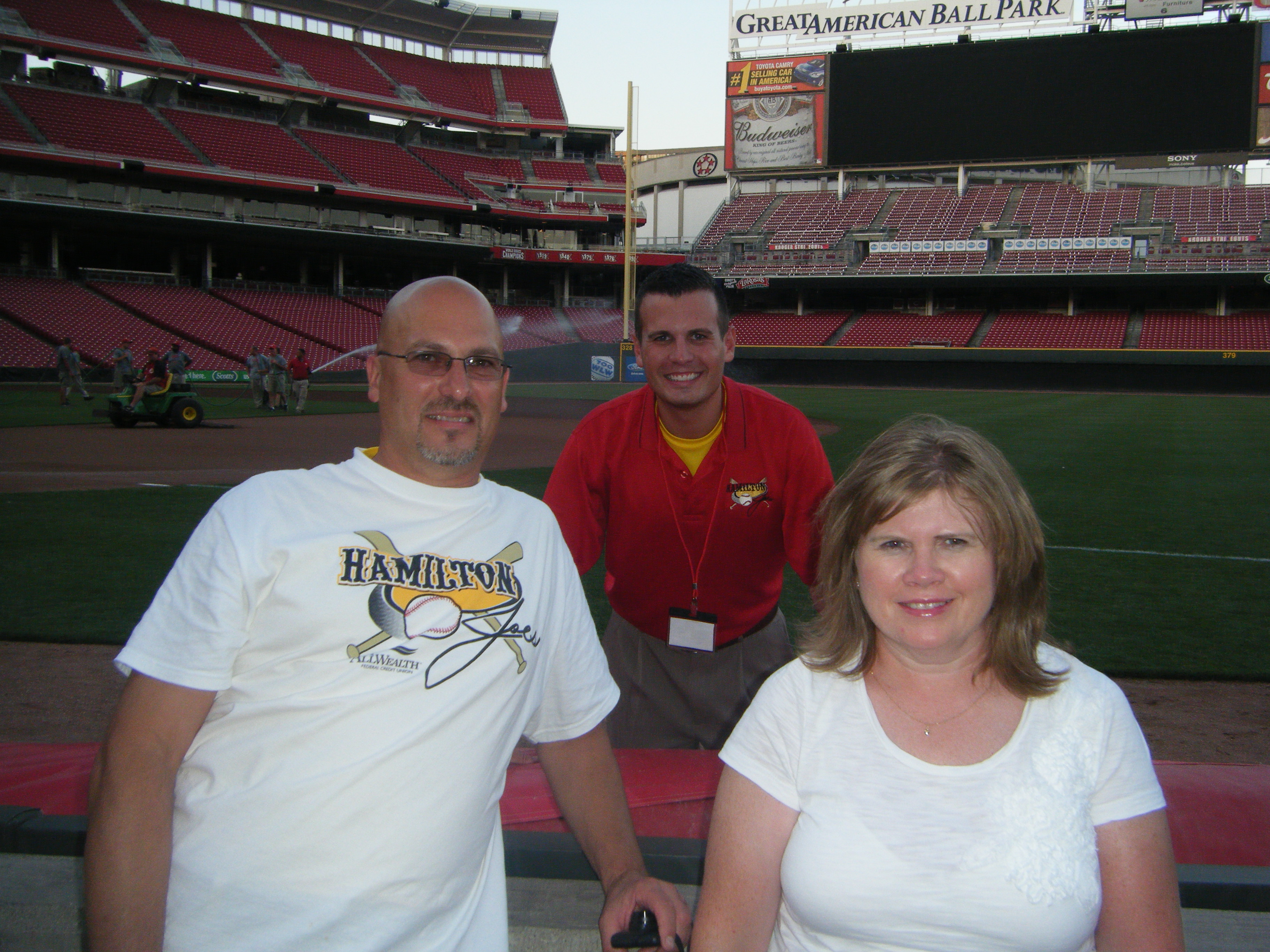 And my Dad was a completely selfless Father. As a child, he spent every minute he had making sure I was entertained and happy in life, even on days when he was likely tired and exhausted from work. When I was in high school, my Mom and Dad took an entire weekend to redo my bedroom to make it more appropriate for a young man in adolescence (the motif went from childhood baseball to vintage baseball—and I loved it!). If my truck broke down in high school (which was a semi-regular occurrence), my Dad was the first person there to help me. And although I’m sure there were many other exciting places he would have rather been, he was always in the stands anytime I announced a basketball or baseball game.
 Dad, It hurts my heart tremendously when I think that there are people out there who think your death is selfish. It pains me when I hear individuals say that death from suicide is selfish because they didn’t understand your pain. They didn’t see the despair in your eyes on that last day. They didn’t see the years that you suffered. They didn’t see how badly you wanted to be healthy. They didn’t live with the unnecessary shame that you lived with for so long. Dad, none of this makes your death and absence any easier. None of this makes the pain of losing you any less real. And yes, I wish things had gone differently on the morning of July 24, 2013—for you, for me, and for all of us. But you suffered from a disease that you didn’t understand. A disease that not even medical professionals completely understand. You died because this disease took over your brain, and I hope you know that I understand this. It doesn’t make your death right, and more than anything I wish you were still here, living the life you always lived to the fullest. But I’ve never been angry with you for your death. I’ve never loved you any less—and I never will. Dad, you are not defined by your death, but by the tremendously selfless life you led. I’m so sorry if you ever felt like you weren’t enough for us, Dad. You were always enough. You lived a completely selfless life, and I wish I was able to remind you of that. Until that day, I’ll keep fighting for your legacy. I’ll keep fighting, alongside God, to redeem the pain of losing you in an effort to try and prevent this pain in the lives of others. And until that day when I can tell you just how selfless you were, seeya Bub.
 Dad, I wish I had known. In spite of all your struggles that you dealt with each and every day, I never, ever thought that suicide would attack you and our family. I never believed for one moment that your life was in danger, probably because you shielded us from so much of your heartache in an effort to protect us. Dad, I wish I could have done more to help you. I don’t blame myself for what happened, but I would do anything to replay those moments when I should have done something. But in your memory and because you always taught me to help people, I’m trying to keep others from suffering like you did. I’m trying to make people aware of something that I wasn’t aware of until it stole you away from us. Dad, I miss you every single day. I wish I had many more minutes to spend with you. Someday, we will have those minutes and many more. Someday, we will be able to enjoy being together again. Until then, seeya Bub.
 Dad, I miss you every single day. I replay our last conversation together in my head so frequently. I can see your face, I can hear your voice, and I can feel the warmth of our last embrace before I left the house that day. Dad, I’m so thankful that we told each other that we loved one another one last time before I left that day. And I’m sorry for all the days when I didn’t tell you I loved you. When I didn’t express my gratitude and appreciation for all the things you did for our family. When I didn’t tell you how proud I was of you for fighting so hard. Your death has proven to me just how fragile life really is. I hate that it took losing you for me to learn this lesson. Dad, you are still teaching me important life lessons every single day. I pray for those who are hurting this week in the aftermath of the Las Vegas shooting, and even though their departure (like yours) was far too soon, I hope that you are welcoming those 59 brave souls home in Heaven. I love you, Dad. Until our last words can be our first on the other side, seeya Bub.
  Seeya Bub