
“Where we love is home—home that our feet may leave, but not our hearts.”
-Oliver Wendell Holmes, Sr.
The emptiness of a vacant home has always been simultaneously eerie and simplisticly beautiful to me. When a home is full, it’s easy to look around and see things: tables, chairs, sofas, pictures, books, vases, towels, silverware, rugs, televisions, appliances, and toys. Our eyes easily bounce from item to item when a home is full of things.
But when those things are removed and all we are left with is unadorned walls and open floors, the noise of those things is gone. Without that noise, we begin to hear the stories that those walls tell, and the laughter, emotion, and tales of years gone by begin to echo throughout the halls. Deep conversations of yesteryear reverberate across the floorboards. The laughter of special family moments slowly drift to consciousness again, and history weaves a new story built through memory. Tearstains once again glisten and reflect the pain of hardship; and love, through the silence, speaks at full volume once more. A silent, empty house speaks loudly, and it tells the story of a vibrant, loving home that once was and, someday again, may be.
Just a few short weeks ago, I found myself in a silent and empty home. One that had meant—and still means—so much to me.
My engagement to Paige has started a wondrous and adventure-filled new chapter of my life, which also involved moving into a new home together in a new neighborhood. Our new home is wonderful, and I love being able to grow closer to one another through the joy and challenge of creating that home together. It’s been a simply perfect move.
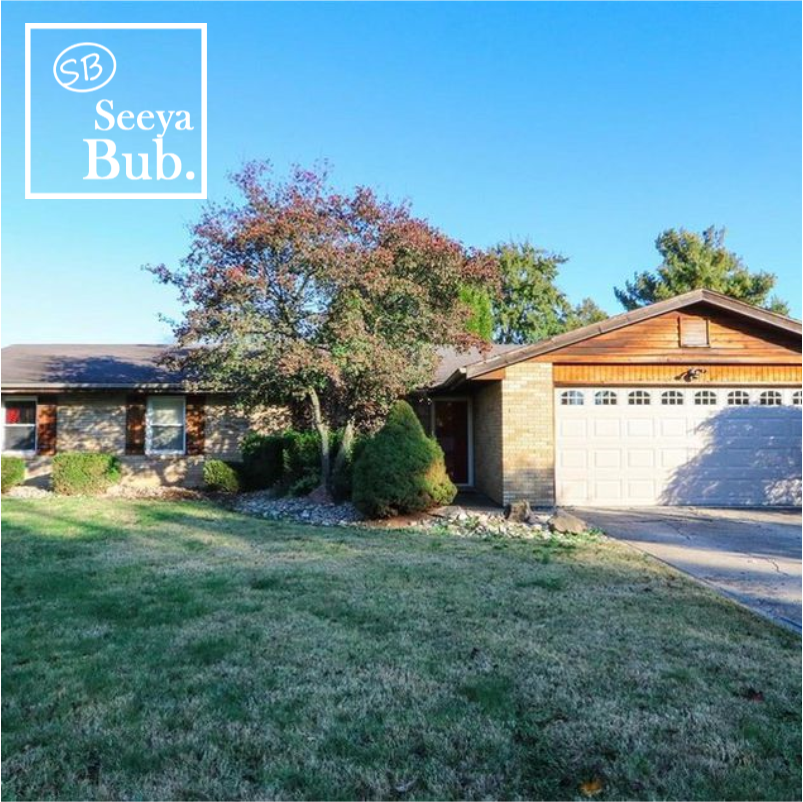
The best moves—the most important, healthy moves in our lives—however, can also be simultaneously grounded in the sadness of leaving behind a life we once knew. It’s like getting rid of a t-shirt that is comfortable and has memories but is too small or beyond tattered. That old life of mine took place at a simple, little home on Gateway Drive in Fairfield Township, and as I stood in the frame of the front door looking around at empty walls and barren floors, I began to think about how that house was a haven for me through the most difficult chapter of my entire life.
And in those final moments, I began to hear my Father’s voice again.
 In my very first post at Seeya Bub, I mentioned that the first house I ever owned was the one right around the corner from my parents. My Dad was actually instrumental in getting the whole process started. In one of his beyond-frequent conversations with the previous neighbors who owned the home, Dad mentioned that I was looking to purchase a place to live—and they mentioned that they just happened to be thinking about putting theirs back on the market. Dad came home with a sparkle in his already-sparkly smile, and mentioned that he thought I should give it some consideration. The next night, I got a tour from the owners in a house that I had been in many times, and just a few days later they graciously accepted the offer I had sent their way (I recount the full story in another post). Both Mom and Dad were over the moon about the thought of me living within a thirty-six second walk of our family home; and although I had the occasional fear of turning into a real-life Ray Barone, I was also excited to be close to them. I knew that being a first-time homeowner was going to present a host of new challenges—especially to someone like me who lacks the basic skill to do many of the things required of a good homeowner. I knew that, whenever things got tough, Mom and Dad would be right there.
And boy were they ever. In every single scenario in which I ever need my Mother and Father during that first year, they always responded. They truly were perfect neighbors. Just having them next door gave me the confidence, power, and courage to believe that I could be a homeowner—and a good one. It also helped that Mom was next door to help (who am I kidding, “do all of”) my laundry, and Dad was always there if I needed to borrow one of the 638,279 tools he owned.
I’ve often heard that what makes a good neighborhood are good neighbors. I was lucky to live in the best neighborhood because the two best adults I’ve ever known lived right next door.
I owned that wonderful little house for six-and-a-half years after purchasing it in 2012, and standing in the doorway of it on my last day as the owner created a wave of emotion within me that I didn’t expect. I made the decision to go to the house alone on that last day because I had started my journey as a homeowner on my own—it felt only right to leave the house for the last time the same way I had come into it. For a moment, I moved briskly and purposefully as I did the important things I needed to do for the new family who was moving in: I checked to make sure the light bulbs were working, the windows were locked, the floors were clean, and everything was in order.
Once that checklist was exhausted, however, it hit me that there was nothing left to do in this home for me—ever again. I had completed my last obligations to my home on Gateway Drive, and there was nothing left to tend to except the memories that were left behind. And in that moment, I began to walk through each and every room, slowly pondering the stories that were sealed inside those walls.
That silent house spoke loudly in those last few moments, telling the story of the six years I had spent there.
I could easily flash back to the memories I had of Dad helping me move into the house, and all the work that went into making everything as perfect as we could. I remember Mom and Dad both being so excited and bringing me little housewarming gifts as I slowly got settled in. My favorite was the surprise gift that I didn’t discover until it scared bajeezus out me. After a long day at work and announcing, I came home to grab a Coke Zero out of the fridge. Staring up at me from the floorboard were four bearded men printed on a kitchen mat—the cast of Duck Dynasty. Dad had snuck in and left the mat there while I was gone, and in that moment I wondered why I had given him a key!
Mom and Dad were both so excited to see me finally reach this new and invigorating chapter into my journey towards adulthood, and they took particular pride in knowing that I had worked hard to call that house my own; but their help in doing all of the things that needed to be done around the new house was instrumental. From the moment that the house became mine, both Mom and Dad helped me labor to make it feel more like my home. Mom cleaned feverishly and made sure to clean every square inch of the house—from the inside of each kitchen cabinet to the baseboards and windowsills.
My Dad’s biggest task, however, was helping me with a project that I started on before I even took full ownership of the house: reclamation of the backyard pond.
The owners that I had purchased the home from had inherited a beautiful, 12,000 gallon pond that was the centerpiece of this back yard paradise in the middle of suburbia. Gorgeous stones surrounded the entire area of the pond, which had two smaller pools with waterfalls streaming into the main pond. With a greenhouse sitting on the bank of the pond and a lovely brick patio that led right to the front edge of the water, it was a gardener’s dream.
For the previous owners, however, it had been a nightmare.
In the nine years that they had owned the home, they decided to let the pond go dry and dormant. Although that neglect didn’t create any major structural issues, it did leave nine years’ worth of accumulated plant growth, weed takeover, and wildlife infiltration for the new homeowner to deal with.
Which was me—and by association, Dad.
I worked out a deal with the sellers to allow me to come over and work on the outside of the house before they had officially moved out, and Dad and I got to work very, very quickly, along with my good friend, Steve Adams. We thought we had a lot of work ahead of us.
And unfortunately, even that was an underestimation.
For what felt like a few weeks, Steve, Dad, and I would put on our boots, grab any yard tool we could find, and hop into the jungle that had taken over this backyard pond for an evening’s worth of hard labor. Unfortunately, the roots had grown unmanaged for so long that they had all tangled and woven themselves together, leaving a dense root mat about a foot and a half thick in the bottom of the pond. Out of those roots grew cattails and other weeds that were taller than we were! So, for hours and hours each night, the three of us would use a machete (of course my Dad owned a machete) to saw out 30-40 pound chunks of the root mat and weeds, heaving them out of the pond and into a trailer my Dad had borrowed from a friend.
That work was exhausting, no doubt; but it also brought the three of us closer together as we laughed, joked, sweated, complained, and despised everything about having to clean a pond while imagining how serene it would be once everything was finished. We talked about how nice it would be to sit on the back patio as the water bubbled over the rocks, the Lily pads that would eventually grow, and whether or not I would put fish in the pond.
It was the unexpected wildlife, however, that gave me one of the funniest memories I’d ever have in the house. One night while the three of us labored away in the pond, I heard Dad shout unexpectedly. It immediately caught my attention because my Dad rarely shouted, and there were very few times when he was actually surprised, scared, or caught off guard. I had never heard him make a sound like the one that had just come out of his mouth. I turned my head and saw him high-stepping it away from the center of the pond as he looked down towards his boots. Then, I saw him move towards a section of rustling cattails with the stealth, determination, and excitement that I had seen while watching Steve Irwin on episodes of The Crocodile Hunter. All of a sudden, Dad pounced—and he stood up proudly holding a gargantuan snapping turtle by the tail!
“He got me!” Dad yelled. “And now, I got him!”
The turtle, clearly not appreciating being held by his tail, swung wildly and snapped his jaws while Dad tried to stay clear of any nibbling. It was hilarious watching Dad carry this huge turtle around by the tail trying to avoid his bites, and I couldn’t stop laughing at the faces and sounds he was making. He let out an infamous Turtleman “Yeee-yeee-yee! That’s some live action!” yell, channeling one of his favorite television shows at the time, and jumped out of the pond and placing the turtle in a bucket. After watching and admiring his catch, Dad eventually took the turtle down to the nearby canal and released him, happily, along the banks—and all the while, I stayed back at the house laughing at Dad’s encounter, and praying that turtle would never return.
Nearly six years later, on my last day in that home, I stood in the living room looking out between the panes of the sliding glass door with that same pond just fifteen feet away. We had made it look good again, and even though he wasn’t there, I could still picture that moment. I could still hear his laughter. Years removed from seeing Dad, I was immediately taken back to the joy of that moment. Years of loss and hurt and grief couldn’t prevent me from hearing his voice, seeing his smile, and picturing the time we spent together there.
I turned from the door and looked across the empty tile floor of my living room, picturing all of the areas where my couch and television and tables had once been—and ultimately, picturing the spot where Dad had spent so much time with me when he would stop over at the house. One of my favorite parts about living next to my parents was that we didn’t have to make appointments or schedule time in our calendars to see one another—it just happened naturally as a result of living next door. A few nights a week, Mom and Dad would always stop over after dinner to just say hello, catch up, and fellowship with one another. Dad’s visits—as they were with nearly any interaction he ever had on this planet—always turned into rather lengthy stays. Before you even knew it, a fifteen-minute conversation had turned into an hour talk, a few episodes of The Office, and an impromptu nap with full-volume snores in the recliner opposite me on the sectional.
Looking at that spot and knowing how quickly the years had passed since losing Dad, I longed for those simple, everyday interactions again. Yes, I missed the big moments; but it was the everyday visits, the smile, the work coveralls, and the laughter that I remembered and missed most. Maybe even the ridiculously-loud nap snoring. I missed the man more than the moments. I felt guilty when I realized how often I took those simple moments for granted while Dad was alive. I cringed when I thought of all the times that I secretly wished Dad might leave after being at the house for two or three hours because I had things that were seemingly more important that I needed to finish. Looking back, it was painful for me to realize that nothing, nothing, could have ever been as important as those little moments. And I wanted them back more than anything.
With tears beginning to well up in my eyes, I moved through the kitchen and into the living room, reminding myself of all the moments that Dad had come over to fix this or repair that. I saw his handiwork, care, and attention-to-detail in every corner of my home, and those little details brought back a flood of painful loss. How many times had I taken his talents for granted? When it came to construction, home repairs, building, and repairing, there was no one—absolutely no one—more talented than my Dad. God gave him a builder’s heart and mind—and He gave it all to him because I inherited absolutely none of that same talent. Looking through the house as it sat empty, I found little areas where Dad had patched drywall, painted, or fixed things around the house. These were things that only I would have noticed because he had fixed and repaired them so perfectly. Standing in the house, I wished that I had listened to and learned from my Dad so much more than I did. His talents and servant’s heart to help me, his only son, made my first foray into homeownership manageable, and I wished he had had more time to showcase his talents to the world.
I walked down the hallway, and continued to see his carpentry skill reflected in my home office—my favorite room of the entire house. Since the time I was little, I always wanted to have my own home office/library filled with books, baseball memorabilia, paintings, and portraits adorning the walls. I don’t know where it came from, but for as long as I can remember, I’d had a very specific vision for what I wanted that office to look like: walls divided with a white chair molding running throughout, red paint on the bottom and a soft, light brown paint on top, wood furniture, lots of books, and plenty of bobbleheads. Shortly after moving in, Dad helped me do just that.
 The books and bobbleheads had been removed months earlier, but the chair molding and paint were still on the walls, and I couldn’t help but run my hands across the work Dad had done and feel like I was right there next to him again. His work put breath to his memory even though he had taken his final breath many years ago. He treated that job, like every job he had, with an obsessive attention to detail, making sure the chair molding ran into the closet, ended at a perfect angle, and didn’t impede the closet door’s ability to close. It was exactly what I wanted.
But in this grand tour of a home that once was, I also couldn’t ignore the fact that this was a home filled with hurt, pain, and trauma. It was that very office where I was sitting when I received the call that there was an emergency at my parents’ house, and that I needed to come home quickly. It was that office where I sat and cried for nights after losing my Dad—constantly reading my Bible, searching for answers, and finding very few that could adequately soothe the grief and hurt I felt. It was that office where I rediscovered a letter my Dad had written to me as a “freshie” in high school—and I glared at the spot where I had read his words knowing that those would be the final, loving, encouraging messages I would ever receive from him. For all the times that I had enjoyed that office and the comfort it provided, it was also the epicenter of the most painful chapter of my life.
Next to the office, I found the spare bedroom and began to cry, resurrecting the many tears that had been shed there shortly after losing Dad. I remember walking in that room the night that Dad had passed away. It was the middle of the night, and the house had finally quieted from all the visitors who came to help soothe my family’s wounds. Quiet, however, doesn’t lead to sleep when you’re trying to make sense of a traumatic loss. Sleep evades those who are hurting and grasping for answers and explanation—and it would evade me on this night. I knocked on the door and slowly opened it, finding Mom resting on the spare bed with our dog, Lucy, right by her side. Like me, Mom couldn’t sleep either. I went into the room, sat on the ground, and just began sobbing. I didn’t know how I was going to make it through the night, and I couldn’t even think about making it through the days and months and years that would come without Dad. Mom and I just sat there as the moon shone through the blinds for a long time, talking and crying and trying to build each other’s confidence for the difficult road ahead. Like she did so many times after losing Dad, Mom found a way to comfort me even though she was hurting as well. Standing in that room on my last day in the house, the pain of that evening was as real as it ever was; and it was hard to believe how Mom and I had come so far from that hopeless, desperate moment.
I moved to the room opposite me in the hallway and found my own bedroom. In the back corner of the house, this had been my own personal retreat for so long. The darkened gray walls there had created a comfortable, soothing surrounding—but after losing Dad, it was impossible to feel comfortable. On certain nights, those walls felt like a prison. As I thought back to all the times I had slept in that room, I also thought back over the many nights in which I had not been able to sleep because the pain of my Dad’s loss was too real, too monstrous. There were so many monumental moments of grief contained within those four walls. It was the spot where I wrestled with my faith, wondering why a God I loved—and a God who I knew loved my Father and me—would allow something this disastrous to strike our home. The day of my Dad’s death, I sat up in my bed as my pastor, Harville, sat in a chair in the corner of the room doing his best to answer questions about my grief that even he didn’t quite understand. It was the spot where I first saw my friend, Chris, after many years of our friendship being estranged. He walked into that room and hugged me the day after he had heard about my Dad’s death, and instantly all of the petty things that had separated us for so long completely evaporated, and the redemptive power of God’s love renewed a friendship that hate could not keep apart. It was the spot, on the evening of my Father’s funeral, where I felt completely incapable of even getting out of bed. It was that spot where my Great Aunt, “Auntie” Vivian, prayed for me to have the strength to get up, to fight again, and to persevere. It was where she opened up to me and shared how she overcame the debilitating grief of being widowed four times throughout her life. It was the spot where she told me how hard those days were, and how much she knew I missed my Dad, but also where she promised me that God would redeem all of this hurt and sorrow. There were many nights, sitting on that bed into the late hours of the evening and the early hours of the morning, where I would read my Bible and other books about grief, searching for answers that I needed—some of which I received, and others of which I’m still searching for.
Yes, that bedroom witnessed some of the darkest moments of my grief in some very, very tumultuous days; but it also served as the stage for my own recovery, offering hope and guidance, strength and renewal.
Eventually, I found the strength to walk outside of the house to the area I envisioned having the hardest time saying goodbye to—the empty sideyard. That sideyard had been important to me since before I even owned the home because that was the spot that connected to my parent’s yard—the spot where Dad and I would toss. The previous owners had always been kind enough to let us use their yard to toss a baseball back and forth. On that last day, even though it was nearly five years removed from the last time I played catch with my Dad, I could still hear and feel the pop of the glove. I could still feel the roughness of the tattered old baseball we tossed. I could still hear Dad’s laugh when I missed an easy catch—which happened more often than it should have. I could still feel the sweat of my brow after a fun session of back and forth, back and forth, back and forth, and I could still feel the joy that the simplicity of tossing a baseball brought to the two of us.
On many nights after losing Dad—more nights than I care to count—I found myself walking out into that sideyard in the middle of the night for relief and peace and grieving. I’d sit down in the wet grass and look across the empty, moon-bathed yard, and on the other side I’d see an emptiness where my Dad should have been that haunted me and exposed the depths of my grief. Sometimes for just a few minutes, and other times for an hour or more, I’d sit there crying, laughing, reminiscing, and wishing more than anything that my Dad would magically reappear with glove in hand, ready to toss again. That sideyard was my sanctuary of sorts because of the memories that were there, and on that last day, a part of me felt as if letting go of the house also meant I had to let go of all the memories that were there.
And on the opposite end of that empty sideyard sat my childhood home—the place where I had spent my most formative years as a son of Scott and Becky Bradshaw. I am fortunate that that household is filled with such positive, warm, and loving memories. I am thankful to God for giving me parents that built a home any child would be lucky to live in, and it had nothing to do with the walls, paint, or windows. It had everything to do with feeling like I was safe and accepted there. It had everything to do with feeling like my parents were molding me into someone better each and every day.
The proximity of Mom’s house after losing Dad, however, was also a blessing that neither one of us foresaw at the time that I signed the contract. Having my parents right next door was a life-saver when I had bought they home and they were both alive—especially that one time that my breaker box caught on fire and could have potentially burnt the entire structure into a heap of ashes. It doesn’t matter how old you are when that happens—you always need your parents.
But what I didn’t foresee initially was God’s larger plan. I didn’t see the storm waves brewing on the horizon that God saw, and I didn’t know that He was strategically giving me that house to live in at the exact moment in time that I needed to be there. There were so many nights after losing Dad that having Mom right next door was extremely soothing for both of our grieving hearts. Looking back on all those moments, I could feel God’s hand moving over the entire experience. And I’m thankful—even though the storm did come—that he brought me through the other side by giving me that home. He put me there for a reason, and I’m thankful for it.
When you live in a house for six years, it’s amazing how much “stuff” you can accumulate. It’s insane to see how many physical possessions you can accumulate in that relatively short amount of time. What’s more shocking, however, is the amount of emotional “stuff” that can be contained under that solitary roof. It’s amazing that one house can tell that many stories. On that last day, it finally hit home how much of this pivotal chapter of my life was tied to that place, and it utterly overwhelmed me.
As the packing and moving process wore on longer than I wanted it to, I started to recognize some of my hoarding tendencies, wondering why I had kept items that were clearly of no use to me thinking that, someday, I’d find a use for them. As freeing as it was to dispose of truckbed after truckbed of garbage, there was also a part of me that wondered if I was throwing something away that, later, I’d regret. I am really hoping that Chemistry self-help book I bought my junior year of high school and never used isn’t worth thousands of dollars on eBay because it currently resides atop a heap of trash at Rumpke.
However, as I packed my things and the house grew emptier and emptier, I also had to convince myself that I would be able to take my memories with me when I left. Letting go of the house, in a sense, felt like I was also turning my back on a life that once was. There were so many pivotal experiences that occurred within those walls, and there was a part of me that felt as if leaving the house also meant I was throwing those experiences away.
As I said goodbye, I had to remind myself that all the good memories I had made with Dad in this home and in this neighborhood weren’t going away the second I handed over the keys. In fact, those intangible, powerful memories would be the most important things I would take with me. Yes, there were some physical reminders of Dad’s life that I had to leave behind when I said goodbye to that little home; but that would never, never erase or dilute the power of the memories that I would take with me forever.
Nonetheless, that last day was an emotional one. It was a marker in how far I’ve come since losing Dad. It was a reminder that, in spite of the moments which felt as if my grief would completely diminish the quality of my life, despair would never win. Yes, I lost my Dad to suicide—but I continued to live. I found a wonderful partner who loves me unconditionally, and someone who I can’t wait to spend the rest of my life with, tackling new adventure after new adventure together as husband and wife. Over those years, I grew closer to my Mom and other family members as we found new ways to live without Dad, even though our hearts were hurting. I took new jobs (and some old ones), traveled to new places, met new people, and experienced new experiences that I couldn’t ever envision in my most fantastical dreams.
Life has happened in that house when life didn’t always seem livable after losing my Dad—and I thank God that He continued to let life happen there.
Standing in that door frame for the last time, I looked out upon the little house that had given me comfort, shelter, and peace in the most difficult chapter of my entire life. I closed my tear-filled eyes and heard the sounds of Dad’s voice, laughter, and joking once more. I remembered the faces of people who gathered in my home the day we lost Dad, and I remembered their sincerity and concern, their gratitude and love. I thought of the hopeless nights where I bathed in my grief, but I remembered the hopeful ones, too. And all throughout, I heard the echo of my Dad’s voice telling me that it was time for the next adventure, and that he would never, ever leave me.
He was telling me that it was okay to say goodbye to that house.
I walked over and sat an envelope on the counter for the new owners, which contained a handwritten letter telling them the hope I had for their future as the newest residents of Gateway Drive. I told them how that house had been a safe-haven for me in a dark and stormy time. I expressed to them my excitement that that house would give them all the positive memories that it had given me. And I prayed that they would find the same love, warmth, and serenity that I had found there.
And as I sat that letter down on the counter and turned towards the door, I said a thank you one last time. I said goodbye to a chapter of my life that would never be relived—both the good and the bad. And the finality of that moment spoke to my heart, encouraging me to go but to take all my wonderful memories with me.
I walked out of the door for the very last time, and said goodbye and thank you. And I was grateful that, through it all, that little house on Gateway Drive had become a home and provided everything to me that I ever needed—including the things I never knew I’d need.
An empty house might sound silent, but if you listen closely, it will tell the deepest and most important stories of your heart. I’m thankful that I listened.
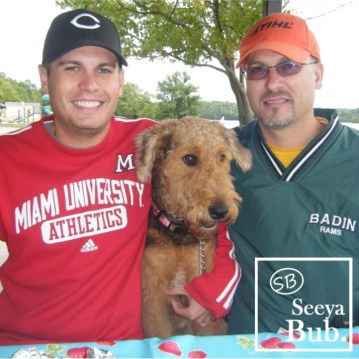 Dad, Leaving my house on Gateway Drive for the last time felt like I was leaving another piece of you behind. It’s so easy for me to associate you with that house because you were so instrumental in making my first home a reality. You were there, step by step, as I faced the challenges of becoming a new homeowner, and you helped me face those head-on….or shell-on in the case of that vicious snapping turtle in the pond! I have so many positive memories of the year that we lived right next door to one another. I miss you showing up at the backdoor and hanging out just because you wanted to say hello. There were moments in that home after losing you that were so difficult—but they were also so important. They were moments where I could picture you and see you and hear your voice again, and as the years wear on, part of me worries that I’ll lose some of those memories. But Dad, you’re always with me—whether I own that home or not. You’re always walking right alongside of me guiding and directing me, and I’ll never, ever forget that. I’m glad for that year we spent as neighbors, but I’m even more grateful for the 26 years we spent as Father and Son. Dad, I’ll never quit loving you. I’ll never quit wishing you were still here with us, and that the pain you felt on this Earth had never existed. But I’ll also never stop thinking about the moment that you and I will be reunited again in Heaven. We will be neighbors in an Eternal Kingdom, and I’ll look forward to more-than-a-lifetime of laughter and love again. But until that day, seeya Bub.
“The rain came down, the streams rose, and the winds blew and beat against that house; yet it did not fall, because it had its foundation on the rock.” Matthew 7:25 (NIV)

 Dad, I’m sorry for all of those moments that we should have spent together. I’m sorry for all of those times that I wasted when we had the opportunity to just be together, but I didn’t realize the value of those moments. Ultimately, I’m just sorry we didn’t have more time. Dad, you brought such joy to my life—and to everyone’s life that you interacted with. Any amount of time with you would have failed to be enough. There are so many things we should have done together, and I’m sorry I didn’t make a more genuine effort to make those things happen. Dad, I hope that I’m still learning from your life. I hope that I am taking the time that God has given me and using it more wisely than I did before you died. It still doesn’t erase the pain of losing you and the desire to have more of you in my life, but I hope that I’m realizing the fragility of life and the need to invest my time in the things that matter—the things associated with loving God and loving other people. Dad, please continue teaching me. Thank you for living a vivid life that still feels important each and every day. And Dad, I’m keeping a list of all those things we should have done. Someday, we will have the opportunity to do them all, and I can’t wait. Until that day and the glorious reunion that awaits, seeya Bub.
 Most nights, Lucy would make her way into my room, usually at just the right moment. She would push the door open with her snout, tail wagging feverishly, and climb up onto the bed. After arriving, Lucy would place a paw on either side of my shoulders and lick my face until I begged her to stop. A twin mattress doesn’t provide much room for a grown man and a 70-pound dog, but Lucy made a way. She would curl up alongside me and lay her head across my chest. And in those moments, even though she was a dog and might not have understood human emotions, Lucy soothed my heart in ways I’ll never be able to describe.
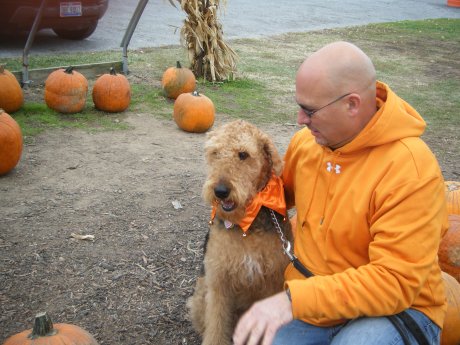 Lucy also helped soothe my pain because of the fact that
 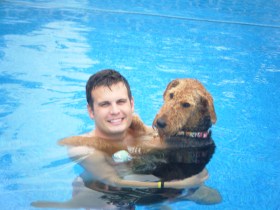 It was that puppy companionship, along with many other wonderful people and things, that helped me heal and grieve my Dad properly. I had so many wonderful people who knew exactly how to minister to me after losing Dad—my Mom, my grandparents, my church family, my friends, my coworkers, my neighbors, and even complete strangers. I also found little things I could do to help me grieve for Dad properly—things to help me forget about the pain of losing him. I read my Bible frequently in my study. I wrote feverishly—some of those scrawlings eventually turning into the foundations of this project. I exercised frequently, although the Ryan Gosling physique (or anything
  remotely close) still eluded me.
 On other days, I would let Lucy hop up into the passenger seat of my car and we would take a drive together. Lucy really enjoyed driving around town, and her excitement created smiles and laughter in neighboring vehicles as she sat calmly next to me in the car with her seatbelt on. I would make a conscious effort to go through drive-thrus with Lucy to show her off to anyone who would remark about what a cute pup she was. She was cute—she deserved the adoration!
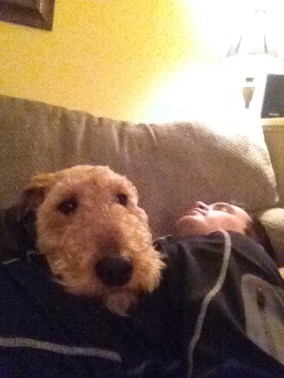 It’s hard to describe, but in those moments, Lucy would nervously saunter up to my side when she knew I was hurting. It was like she understood that she needed to be by my side. And that’s what she would do. She would hop on the couch and lay her head in my lap. She would leave all her toys (and boy did she love toys) to just lay near me. I would gently pat her head or her back, and slowly, her presence would help me escape from that immediate terror. She did more for me in those moments than I could ever tell her. Lucy showed me what it meant to be “man’s best friend.”
 That sadness would often give way to anger. Lucy’s death was completely avoidable and unnecessary. A groomer that we had trusted—a groomer who knew the despair of our family situation—had cared so little about our family and our pet that he let her die as a result of his negligence. As you might imagine, the story of Lucy’s death attracted the attention of a local news station.
  I bought a pound of the licorice dogs (and a few other goodies, of course), and the second Paige and I got into the truck, I opened the bags and started chowing down. I tasted the licorice, and it brought back all the memories of Lucy and how funny it was to watch her eat licorice. I began recounting the story to Paige, and before I knew it, I was flashing back to the moment I lost her. All of the sadness and despair of her death was as real then as it was on the day I lost her—all because of a piece of licorice that reminded me of her.
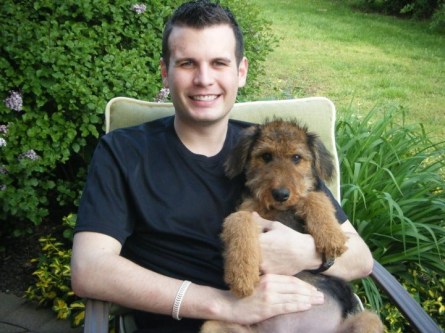 On occasion, I’ll put on that
 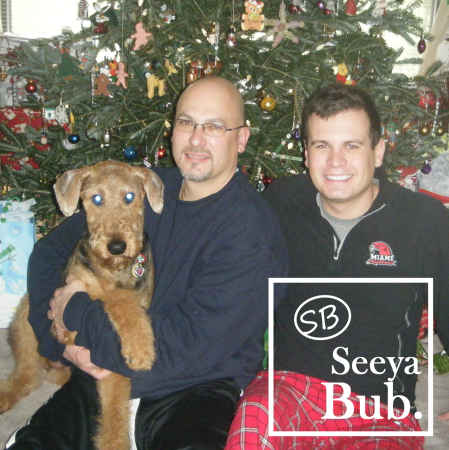 Dad, I need to tell you that I’m sorry and that I’m thankful. I’m sorry that I acted so stubborn when you chose to bring Lucy into our family. I’m sorry that I acted like a “little jerk” (your words…and mine) when you were just doing what was best for us. Ultimately, I’m so grateful that you chose Lucy. I’m grateful that you raised her and trained her and taught her to be a fun, family dog. We had no idea how much we were going to need her fun-loving, thoughtful companionship after losing her. In a way, I feel like Lucy carried on so many of your personality traits after you were gone. She was a constant reminder of the zest and excitement you had for life. She was there to help us grieve in so many ways after you left us. I think Lucy was your angel here on Earth for us. I think that she was your way of telling us that life, even when it’s painful, can still have a lot of joy and happiness. Losing her was like losing you all over again. It was as if another piece of you—a very important piece—was gone forever. But Dad, I know that we will never lose you entirely. Your memory will always live on in our hearts and in our minds because you made such an indelible mark on all of us. Dad, thank you for Lucy. Thank you for teaching her to love us when we needed it most. Although I miss you both dearly, I hope that you are together again in heaven—and I hope there are plenty of Frisbees to toss. You deserve paradise, Dad. You deserve the greatest things that God can offer, and I can’t wait to experience that joy alongside you. Until that day where you and I are together again in a life that knows no end, seeya Bub.
 From the moment she came home, Lucy was impossible to resist. I have a weak-constitution for puppy cuteness, and Lucy melted my defenses rather quickly. Airedale terriers are adorable puppies. What will eventually grow into a 60 or 70-pound dog starts out as an eight-pound ball of fur with a shortened snout and gangly legs. Lucy looked like most Airedale pups I had seen in photographs, but there was one defining characteristic that was different. Lucy had a tiny little white patch of fur right on the middle of her chest. I had never seen an Airedale with any color fur other than black and brown. Immediately, she was different from the rest; and the more I got to know her, the more wonderfully different I discovered she was.
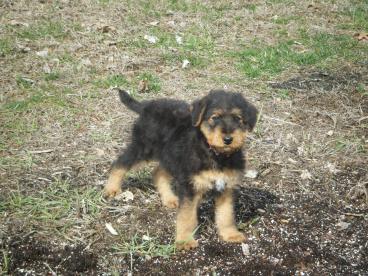 Dad sat the blanket bundle down on his lap, and Lucy poked her head out from the blanket mound and peered around our family room. She looked straight at me with her dark eyes, and when she made her way down onto the carpet and slowly meandered towards me, I knew that I was done. My resistance would have to fall, because this pup was just too cute. With the pain of losing Willow momentarily fading, I reached down and scooped Lucy into my arms. For the rest of the night, she and I spent our time on the couch as she adjusted to her new surroundings. A few times, I glanced at Mom and Dad and saw them giving one another that familiar “I told you he’d cave” look. I tried my best to not let them get any satisfaction from defying my gutless order to not bring home another family dog, but it was useless.
 And from that moment on, I don’t think I ever quit loving Lucy. Even if my stubborn pride wouldn’t let me admit it.
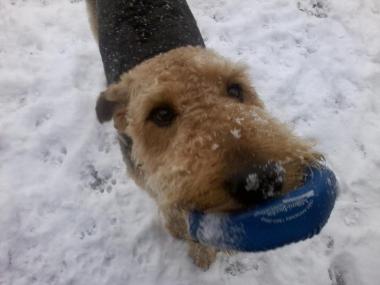 Lucy had that in abundance. Lucy’s calm demeanor during the first 24 hours of her life in my family was a well-executed mirage delivered by a sneaky infiltrator. When I came home on Lucy’s second day in the Bradshaw house, the docile, pleasant pup that I had left that morning was replaced with a rambunctious, mischievous, four-legged fur-covered peddler of destruction. When I came home that day, my poor Mother looked like she had barely survived a hurricane. She looked at me with a frazzled exasperation as Lucy, with toys strewn all across our normally-clean family room, bounced and barked and bolted to every corner of the house. She was worse than a baby because she was faster. I couldn’t believe she had fooled us! Lucy had spunk—and a whole lot of it.
 But with Lucy, it was different from the start. She was immediately allowed onto the couch—and I was shocked! And then, the unthinkable happened; Mom actually let Lucy sleep in the bed with her! What world was I living in?! Who had abducted my Mom and who was this woman that now gladly beckoned the dog onto the furniture?
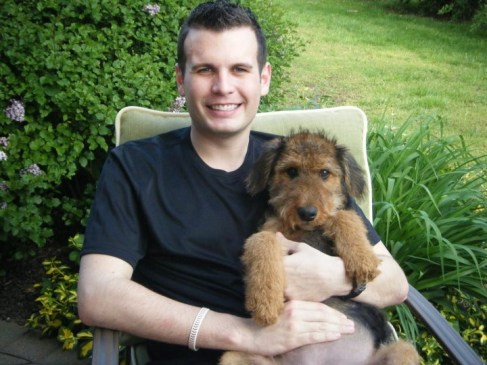 When Lucy was little, I used to carry her around the house quite often. And unlike most dogs, she really enjoyed being carried! After a little while, it got more and more difficult to carry her around as she continued to grow. And by the time she reached 40 pounds, our little puppy, who I affectionately called “Monkey”, was a bit to heavy to carry with one arm. So I did what any normal person would do.
 I would actually pick Lucy up by her front legs and toss them over my shoulder. Then, Lucy would wrap her hind legs around my waist, and I would comfortably carry her around as she nuzzled her snout on my shoulder. Looking back, it’s the most ridiculous thing I could ever imagine doing as a dog owner.
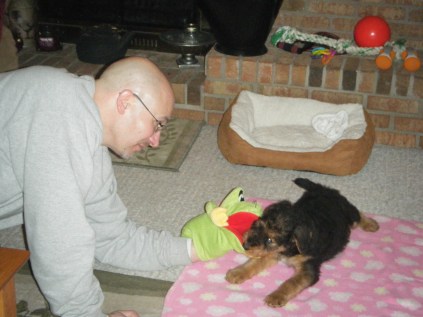 Thankfully, my Dad, our dog-whisperer-in-residence, was there to take care of most of the discipline and direction when we first got Lucy. My Dad loved working with animals, even when the animals weren’t easy to work with. I think he saw teaching pets as a challenge that he wanted to conquer, and he had a way of showing love through firmness. Quickly and efficiently, Lucy was housebroken and learning how to sit, lay down, and yes…play hide and seek with Dad. My Dad had a special talent, and we all benefited from it.
 Dad, being a playful guy, did everything with Lucy. If he was home, he wanted to be near her. If he had a bonfire in the backyard, Lucy was with him. If he was eating dinner, she was patiently waiting for a scrap nearby. If he was taking a nap, she was on the couch cuddled next to him. There were hour-long walks to the park, trips to the dog beach at Hueston Woods, and countless other memories that the two of them created together. They are memories filled with laughter and companionship, but joy more than anything else.
 And Lucy was there to help me—and all of us—find a small ray of light in the midst of the dark clouds that enveloped our family. Lucy—sweet Lucy—would help to save us as best she could.
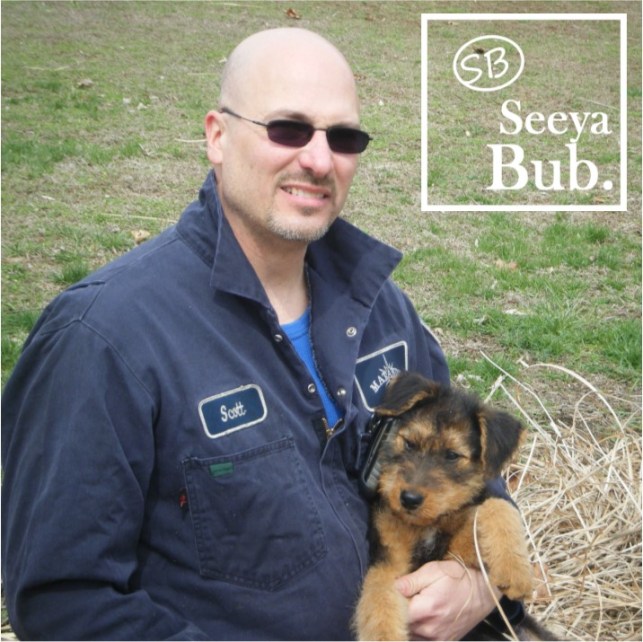
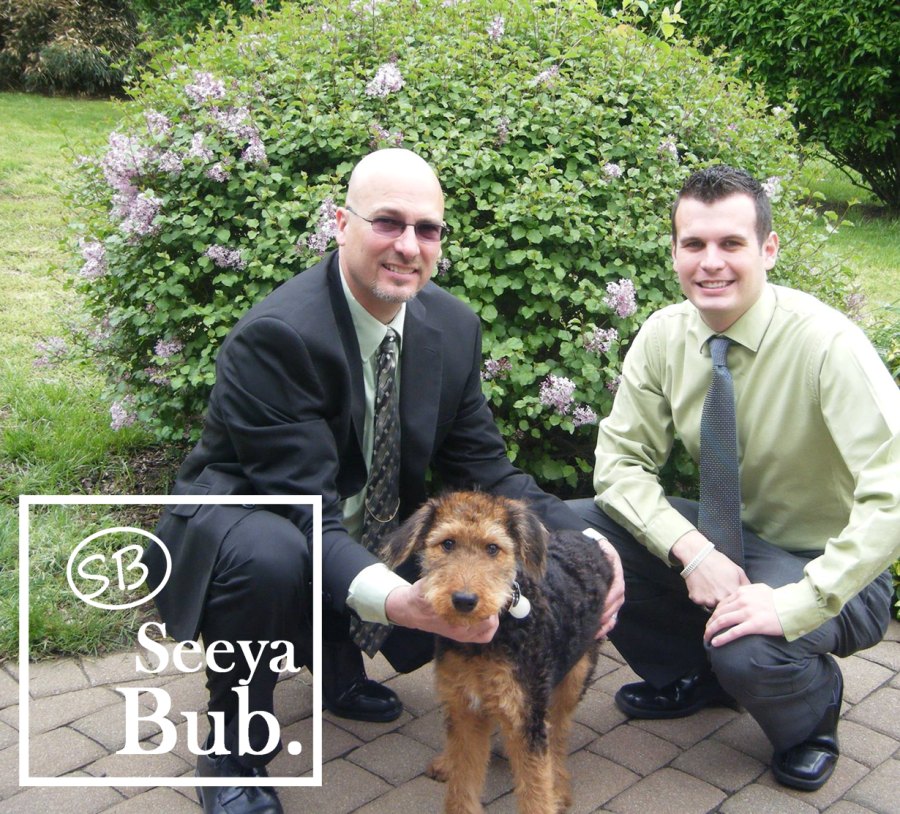
 Every single day is difficult—all 1,827 of them; but every single year, July 24 is a date that stares at me from the calendar. It looms in the distance for months, and when it passes, I always breathe a sigh of relief that it’s come and gone. But I know, deep down, that it’s coming again. It will always be there. No particular July 24 has been more or less difficult—just different. But because of the nice, round number, this one feels like a milestone. A milestone I wish I didn’t have to reach.
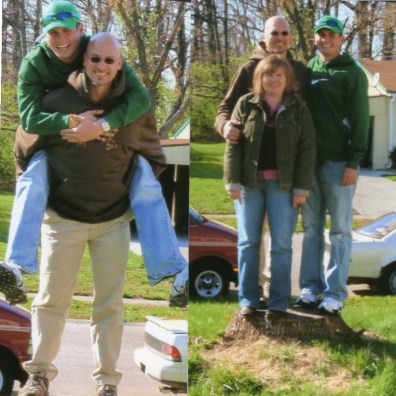 But guess what? No amount of procrastination could stop that date from coming. No amount of denial could stop me from thinking about what this day represents. This day would come—and yes, it would eventually pass—but the second it did, the clock just begin counting down towards another unfortunate milestone. The next Christmas. The next birthday. The next Father’s Day.
 On the other side of all that grief and sadness, there will be an everlasting love made whole again. On the other side of that grief, there will be a man whom I recognize, smiling and welcoming me into his arms. In that moment, I’ll love never having to say “seeya, Bub” again. That day is coming, although it’s very far off.
 Dad, I cry so much when I think that it’s been five years since you and I last talked. Sometimes, those tears are unstoppable. We never even went five days in this life without talking to one another. Dad, it really has felt like an eternity—but sometimes your memory is so real and so vivid that it seems like it was just yesterday when we lost you. But I know the real time. I know that it’s been five whole years since we’ve been able to be in your presence. And life simply isn’t the same without you. We all cling to your memory. We marvel at the things you built and the way you provided for our family. We laugh about the funny things you did to make life more fun. But I also weep when I think about how much life you had left to live. Dad, I’m so sorry that you were sick. I feel horrible that we couldn’t do more to help you find the cure you deserved. I’m sorry that you were robbed of the life you deserved to enjoy. I’ve felt so much guilt in losing you Dad. I know that you don’t want me to feel this way, but I just wish there was more I could have done. You deserved that, Dad. You deserved more, because you gave everything. As painful as these five years have been, Dad, I find peace in the truth of Eternity. I find comfort knowing that you are enjoying God’s eternal glory in a paradise that I can’t even begin to fathom. Dad, thank you for watching over me for these past five years. Thank you for never giving up on me—both in this life, and in the next. Thank you for giving me a lifetime of memories and an example of what fatherhood should be. I love you, Dad. I always did, and I always will. Thank you for loving me back. Until I see you again, seeya Bub.
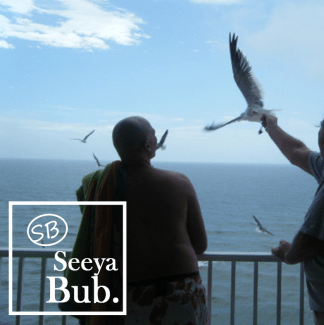 Dad, There have been so many times when I’ve thought about the fear you must have experienced in your life. You were always my Superman—that strong rock and foundation in my life when everything else seemed dangerous. On the outside, you were always “Mr. Fix It,” and I know it bothered you that you couldn’t solve your own struggles with depression. On the surface, you always held everything together—for your family, for your friends, and especially for Mom and I. But Dad, I wish I could have told you that your struggles with mental illness were never a disappointment to any of us. We never thought less of you when you battled with your depression. Sick or healthy, we always loved you and wanted to be near you. You were never a failure to us, Dad. You never failed us, and I wish you had known that more. I am afraid of doing life without you. I have a fear that I can’t do what God is calling me to do to tell your story. But I know that He is with me, and I know that you are with me. I know that you are watching down and pushing me and urging me onward, just as you always did when you were here with us. We all miss you, Dad. We will never stop missing you. You never let me down, and I can’t wait to tell you that in person. Until that day, seeya Bub.
 Reverend Dan Walters

 When I was extremely young, my family never took beach vacations. To this day, I’m not sure why because we all loved the beach so much. My very first time seeing the ocean was on a family trip to Panama City, Florida as an eighth grader. Our entire family (grandparents and cousins included) spent a wonderful week on the Gulf Coast, and I remember the momentous nature of that trip, even as a middle schooler. A 12-hour, multi-day car ride had finally concluded, and my Mom and Dad walked me out towards the ocean once we arrived. With my parents, I saw the ocean for the very first time and I got to experience its magnitude. I got to touch sand, and taste saltwater, and splash in the world’s largest pool. Even as a young kid, I appreciated the significance of this experience.
 After a really, really long drive, my family finally arrived to our condo in Gulf Shores. Shortly after arriving, I think we all knew then that we had found our family vacation spot. There was something about it that made us feel like we were home.
 As I’ve written before, Dad was a tremendous athlete. And also as I’ve written before, I was a horrible one. But Dad never let my lack of athleticism curb an opportunity to play. At the beach, Dad and I could throw a frisbee for hours—as long as the wind cooperated. We would warm up close to one another and gradually step back as we threw until we would finally hit a point where we had to wind our torsos like a corkscrew to get the frisbee to sail over the white sand. Dad and I would leap and dive into the sand to catch a frisbee—his leaps and dives always significantly more graceful than mine—and we would yell at each other for not being able to properly hit our target. “Did you actually expect me to catch that?!” we would yell across the beach at one another. “You’re gonna kill a kid with that thing if you don’t learn how to throw it!”
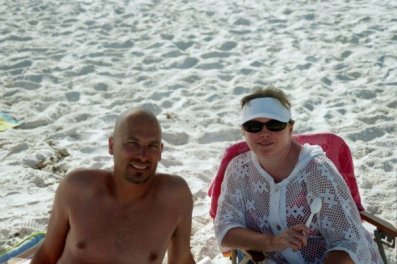 And at the beach, Dad never played it safe. More than anything, I think Dad and I probably got the most enjoyment of our daily game of “See Who Can Swim the Furthest Out from the Shore and Make Mom Freak Out the Most” (catchy, no?). Much to my Mom’s displeasure, Dad and I were notorious for jumping into the water and swimming straight ahead until our arms gave out. The water would grow colder and colder the further we would swim, and periodically Dad would stick his arms high above his head and straight-dive down to see if he could still touch the bottom. If he could, we still weren’t out far enough. All the while, my poor Mother would sit anxiously in her beach chair watching our bobbing heads grow smaller and smaller in the waves. The best version of the game was on the beaches where there were life guards on duty, and in those scenarios, we tried to see how loud we could get them to blow their whistles at us! We knew we were really killing the game if we could swim far enough to encounter a deeper sandbar, and if we did, we would sit out on the sandbar and rest until it was time to swim back in. Dad would wave to Mom on occasion from the depths of the mighty ocean, and it was amazing how peaceful the deep ocean water can be. All the ambient noises of the beach fade away when you’re that far out (you especially can’t hear life guard whistles or motherly-shrieks).
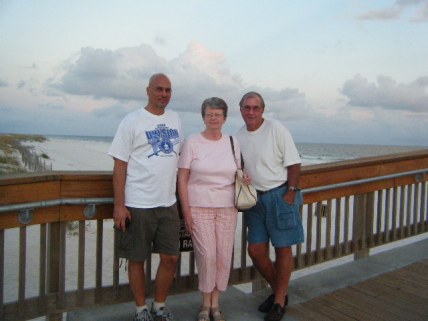 My Grandpa even told a story at Dad’s funeral about his love for always being the last one up. On occasion, my family would take vacations with our extended family, which included my Grandpa Vern, Grandma Sharon, my Uncle Lee, my Aunt Beth, and my two cousins Jake and Megan. Those were always wonderful vacations, and every day, my Grandpa and my Dad were always the last ones up to the condo. But even my Grandpa couldn’t hang with my Dad.
 Standing there at the beach, I told Steve how much I missed my Dad. I really didn’t have to say anything, because Steve knew—and he was experiencing the grief himself. Steve had been tremendously close with my entire family, and my Dad treated him just like he would treat his own son. Instead of only crying, though, I was able to share tremendous memories and stories of my Dad, telling Steve all about the funny things he had done at the beach on our family vacations. I shared stories about Dad’s Banana Boat expedition, his wave-runner sandbar collision, and how he was always the last one up for dinner. Little by little, the tears were slowly replaced with a smile and laughter. I didn’t miss him any less; I just had a different focus. Instead of focusing on the loss, I was able to focus on his life. Instead of focusing on the time we didn’t have together, I focused on all the wonderful times we did.
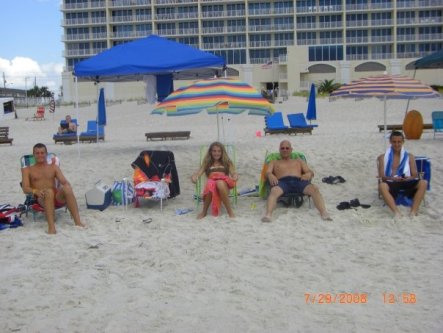 I spend a lot of time on the beach during dusk as many of the families on the shore will begin to retreat to their condos. And I do this for a simple reason: that’s what Dad would have done. I’ve learned why he loved it so much. As the beach starts to quiet down from a busy day of frivolity and fun, there’s a quiet stillness that begins to wash across the shore. That stillness is enticing and comforting, and it’s in those moments that I often feel closest to God. And I think about how peaceful those moments must have been to a man who struggled with depression. Dad treasured that peace. And now, I treasure the memory of his life during those peaceful moments, and I try to live it out every chance I get.
 Dad, there has never been a time when I’ve gone to the beach without thinking of you—and there never will be. You made our time at the beach together so memorable, but more than that, you taught me so many important life lessons while we were there. You taught me to slow down and relax. You taught me to soak in God’s beautiful creation. You taught me to be kind to people and get to know them, because God created them, too. You taught me to let go of all the busy things from back home and simply enjoy the life that was in front of me in that moment. I take these lessons with me everywhere I go, but especially when I go to the beach. Even though I’m still able to have fun when I go, it just isn’t the same without you. I miss our throwing sessions, and sometimes I’ll just carry a baseball in my backpack to turn over and over in my hands and think of the time we spent together. I miss trying to see who could swim the furthest out, and watching you beckon me further even when I felt like I couldn’t keep swimming. I miss walking along the shoreline with you and listening to your stories about oil rigs in the distance or planes flying overhead. You had an inquisitive, appreciative spirit for all life had to offer. And more than anything, I miss watching you enjoy those moments on the shore by yourself being the last one up. It’s strange, but sometimes it’s like I look down from the balcony and I can still see you sitting there. Dad, I know you’re still with me. I know that you’re guiding me and watching over me in everything that I do. Thank you for always being my best teacher. Thank you for being a Dad unlike any other. And thank you for always teaching me that the last one up wins. I love you, Dad. I miss you tremendously. I sure hope there are beaches in heaven, because if there are, I promise I’m going to swim further out than you. Until that day when we can be beachside together again, seeya Bub.
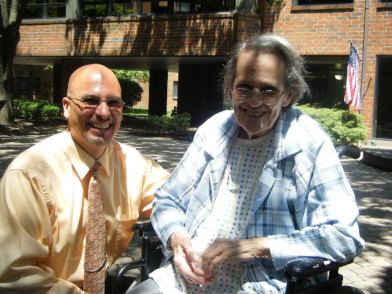
 And my Dad was a completely selfless Father. As a child, he spent every minute he had making sure I was entertained and happy in life, even on days when he was likely tired and exhausted from work. When I was in high school, my Mom and Dad took an entire weekend to redo my bedroom to make it more appropriate for a young man in adolescence (the motif went from childhood baseball to vintage baseball—and I loved it!). If my truck broke down in high school (which was a semi-regular occurrence), my Dad was the first person there to help me. And although I’m sure there were many other exciting places he would have rather been, he was always in the stands anytime I announced a basketball or baseball game.
 Dad, It hurts my heart tremendously when I think that there are people out there who think your death is selfish. It pains me when I hear individuals say that death from suicide is selfish because they didn’t understand your pain. They didn’t see the despair in your eyes on that last day. They didn’t see the years that you suffered. They didn’t see how badly you wanted to be healthy. They didn’t live with the unnecessary shame that you lived with for so long. Dad, none of this makes your death and absence any easier. None of this makes the pain of losing you any less real. And yes, I wish things had gone differently on the morning of July 24, 2013—for you, for me, and for all of us. But you suffered from a disease that you didn’t understand. A disease that not even medical professionals completely understand. You died because this disease took over your brain, and I hope you know that I understand this. It doesn’t make your death right, and more than anything I wish you were still here, living the life you always lived to the fullest. But I’ve never been angry with you for your death. I’ve never loved you any less—and I never will. Dad, you are not defined by your death, but by the tremendously selfless life you led. I’m so sorry if you ever felt like you weren’t enough for us, Dad. You were always enough. You lived a completely selfless life, and I wish I was able to remind you of that. Until that day, I’ll keep fighting for your legacy. I’ll keep fighting, alongside God, to redeem the pain of losing you in an effort to try and prevent this pain in the lives of others. And until that day when I can tell you just how selfless you were, seeya Bub.
 Dad, I wish you could have read Reverend Walters’ book and heard his story, because I think you felt many of the things he did. I know you struggled with how to share your hurt and your pain because you didn’t want to appear weak. You didn’t want people to think you were a failure. Dad, you never failed any of us—ever. You had an illness that you couldn’t understand, and I wish we had done more to help you escape the trap that forced you into silent suffering. But Dad, I know that our Heavenly Father has welcome you into His loving arms. I know that He is redeeming your story day by day with each individual who loves you and learns from you. Dad, I will never stop loving you. I will never stop trying to find ways to help those who are hurting like you were. Keep watching over me, because I can feel it. Until I can tell you how much you are loved face-to-face, seeya Bub.
  Reverend Dan Walters
 Seeya Bub