Words Matter

“How do you tell people…how your Dad died?”

I sat across the table at a Panera from a good friend of mine. Unfortunately, we sat at that table together as victims of a similar tragedy, having each lost a parent to suicide. We talked that night about many things, especially the difficulties we encountered as grief stayed constant while life moved on.

I closed my eyes and nodded my head, because I remember asking myself this same question. I remember struggling to find the words when people asked why my Dad died so young. When I looked across that table, I saw a man walking through the same horrible questions and doubt that I had been dealing with. I would have done anything in that moment to take his pain away, because living a life after suicide makes even the most simple moments ridiculously complex. It’s hard to find the words to describe the death of a loved one when suicide enters the picture.

I thank God that, although eventually and painfully, I found the words I needed.


“My Dad committed suicide.”

“My Dad took his own life.”

“My Dad died from a suicide.”

I just didn’t know how to say it.

In the week or so after my Dad died, as crazy as this might sound, I would stand in front of my mirror at home and I would practice saying these things aloud. I would look at my own eyes, often swollen and tear-stained, and say these words to myself. Each and every time, they would break my heart.

No matter what variation I came up with, however, I just couldn’t find a way to do this. I couldn’t bring myself to say these words, mainly because they felt so unnatural. I never, never convicted my Dad of his death. I never, at any moment, held my Dad responsible for what happened to him in his battle with depression. I know that every survivor of suicide can’t say this (and that’s completely okay), but I was never at any moment mad at my Dad for what happened to him. He was not responsible for his death—depression was. Depression, a horrible and difficult to comprehend illness, stole him from his family and everything he loved. My Dad didn’t “commit” anything.

During my years in graduate school, I learned many things about life that extended far beyond the training I was receiving for a career as a college educator. One of the lessons that our faculty members constantly tried to drive home is a rather simple one: words matter. The words we choose to use each day matter. The words we use to define other people and their identities are important. It seems like a simple lesson, but I don’t think I realized just how meaningful this truth was until it hit home with my Dad’s death.

Now, in the midst of the greatest turmoil of my life, I found myself struggling each and every day to tell people how my Dad died.

I didn’t want people who didn’t know my Dad to have a wrong impression of the man he was. I didn’t want all the negative stereotypes and stigmas typically associated with suicide to discolor my Dad’s memory and legacy. If anything, I wanted people to know that even the strongest amongst our midst still suffer and still succumb. I wanted to convey this in a simple phrase—and like I do in so many areas of my life, I turned to a good book to help.

The gift of a good book is one of the most precious things you can give someone, in my opinion. I’m thankful that members of my family feel the same way. My grandmother, Pat, is an avid reader like me, and a thoughtful reader at that. Pat was my Dad’s step-mother, and in the aftermath of my Dad’s passing, Pat was extremely gracious and loving as my Mom and I continued to grieve. At the same time that she was suffering, she made sure to watch over my Mom and I, helping any way she could.

Grieving a Suicide BookOne of her most thoughtful gestures during that time came in the form of a book that has helped me in more ways than I’ll ever be able to thank her for. In an attempt to cope with her own sadness after losing my Dad, Pat came across an amazing book written by Albert Y. Hsu called Grieving a Suicide: A Loved One’s Search for Comfort, Answers & Hope. Pat was kind enough to read the book and recognize how helpful it was, and she bought two more copies: one for me, and one for my Mom. (For this book and others that helped me cope with my Dad’s death, visit the “Library” section of Seeya Bub.)

As soon as I received the book, I stopped reading what I currently had on the docket and made this my priority—and I’m so thankful that I did. This book was sent from Pat, but I know that it was also sent from God. I received the book from Grandma Pat right in the midst of my struggle to verbalize my Dad’s death. Like all good books, it came at just the right time.

In the understatement of the century, I’ll say this: Albert Hsu’s book is a real blessing and an inspiration—especially for everything I do on this blog. Hsu lost his father, Terry, to suicide. On an everyday Thursday morning, Albert received a call from his mother that is all too familiar for so many families in our country. Albert’s Mom had discovered Terry’s body, cold and lifeless, in their family home. In such a perfect way in the pages that follow, Albert describes each and every emotion that he felt and still feels and all the unique struggles he encounters as a survivor of suicide. His story is one of the most helpful things I encountered in the aftermath of my Dad’s death, for so many reasons.

And just as I was struggling with how to describe my Dad’s death, I came across a section in the book titled “How To Talk About Suicide”. It was like a message sent directly from God through another loyal follower. It was exactly, exactly what I needed in that exact moment.

Forgive the long passage, but understand how vitally important these words were for me in my struggle to grieve. Hsu wrote:

Survivors are hypersensitive to the topic of suicide. It punches us in the gut if someone jokes, “If this doesn’t work out, I’m going to kill myself!” One survivor told me that she challenges coworkers who say things like that, asking them if they’ve ever considered how painful those flip comments might be to others. Suicide is no laughing matter.

How should people describe the act of suicide? This has been an ongoing debate for some years. The traditional phrase has been to say that someone “committed suicide.” Survivors reacted against this, saying that it implies criminality, as one would commit murder. Is suicide a crime that is committed, like a burglary? In some cases, perhaps, but in many cases, no.

In the past few decades, psychologists and suicide survivor groups have moved toward saying that someone “completed suicide.” In this parlance, suicide is not a single act but the final episode in what may have been a period of self-destructive tendencies.

The problem is that in many cases, suicide is a single act, not one of a series of attempts or part of a larger pattern. Furthermore, to say that someone “completed” suicide sounds like noting a laudatory accomplishment, like completing a term paper or college degree. It also comes across as somewhat clinical and cold.

So more recently, grief organizations and counselors have suggested that we use more neutral terms: for example, someone “died of suicide” or “died by suicide.” The Compassionate Friends, an organization dedicated to helping families who have lost children, officially changed its language in 199 so that all its materials reflect this. Executive Director Diana Cunningham said, “Both expressions [‘committed suicide’ and ‘completed suicide’] perpetuate a stigma that is neither accurate nor relevant in today’s society.”

I resonate with this. I find it difficult to form the phrase “My dad committed suicide.” And it seems wholly unnatural to say that “my dad completed suicide.” It is somewhat easier to tell someone that “my dad died from suicide”… (Hsu, 2002, pp. 145-146)

I put the book down, and in that very moment I knew that I would never say the phrase “committed suicide” when describing my Dad or other people who suffered the same fate he did. I just couldn’t do it, because it didn’t accurately describe what happened to my Dad. “Committed” gave the impression that my Dad did what he did willingly and with a sound mind. That he welcomed death, even though I knew he fought against it each and every day of his life. Even though I have many questions about his death, I knew this was not the case.

I wanted to find language that reflected the fact that my Dad’s life was stolen. Stolen by a terrible disease that attacked his mind and his well-being. People don’t commit death by cancer. They don’t commit death via car accidents or strange and inexplicable illnesses. And they don’t commit suicide either. They suffer, and there’s no guilt to be felt by those who suffer from diseases that we don’t quite understand—whether physical or mental. I liked these phrases that Hsu suggested, but I still found myself searching for the perfect phrase.

And then, in the midst of all these thoughts, I heard someone say it for the first time. I don’t remember where, and I don’t even remember who said, but I heard someone refer to their loved one as a “victim of suicide.” Their loved one was a victim. A victim of a horrible illness that attacks and hijacks our thought processes to make life appear unlivable.

I knew, in that moment, that would be the phrase I used to describe my Dad’s death. I knew that that particular phrase captured the way I felt about my Dad’s death. It would send the most accurate message about my Dad’s death—that his life was cut short by a terrible disease and illness that stole his life prematurely. That I didn’t hold him responsible for that July morning in 2013. That I never, in any moment, blamed him for what happened.

So, whenever I would speak publicly about my Dad or talk to someone who asked why he died, my phrasing was always consistent and purposeful. My Dad, a strong, sturdy, and stable man was a victim. A victim of suicide. It didn’t remove the tears or the hurt, but using that phrase helped me honor my Dad each time I shared his story.


Sitting in Panera a few years after my Dad’s death, I found myself speaking passionately and purposefully to another young suicide survivor about this very topic. And I realized, in that moment, that God led me down that journey to describe my Dad’s death for a reason. I realized that words, no matter how innocuous or mundane, matter more than anything.

I admit, both selfishly and with regret, that before suicide impacted my life I never gave a second thought to how this language might bother or hurt those who were suffering. Before Dad’s death, I had a very different understanding of suicide. I would have willingly and readily used the phrase “commit suicide” without giving it a second thought.

But now, in this new life of mine, just hearing the word “suicide” causes me to stop dead in my tracks. I get goosebumps, still, every time I hear it. Because suicide has touched my life. And now, those words are personal.

To some people, this is nothing more than semantics and mental gymnastics. A meaningless attempt for someone who is hurting to cover their wounds with a bandage until the next wound surfaces. But to me, it’s everything. I believe words hold a unique power, because both the richest and poorest people in our world, separated by miles of inequality, still have stories and still have words to describe them. The psychologist Sigmund Freud said “Words have a magical power. They can bring either the greatest happiness or deepest despair; they can transfer knowledge from teacher to student; words enable the orator to sway his audience and dictate its decisions. Words are capable of arousing the strongest emotions and prompting all men’s actions.”

And I hope, with the words I choose, that I can sway someone else from meeting the same unfortunate end that my Dad found. I hope that the words I use, even those so seemingly simple as the way in which I describe his death, will cause someone to think differently about suicide, mental illness, and the need to fight against depression with everything we have.

This may sound simple, but the fight begins with the words we choose regarding suicide and mental illness. Our biggest obstacle in this battle, one that I hope you’ll join me in, is helping fight the shame and stigma of mental illness—and in order to get people to talk about how they feel, we have to make them feel that it’s okay to talk.

My words, your words, the words of hurting people—our words matter.

Dad and Lucy at Pumpkin PatchDad, Each day I wrestle with telling your story and making sure people who never knew you know the type of man you were. I want them to know you were strong. I want them to know you were thoughtful. I want them to know you were caring and loving and everything a Father should be. I hope that the words I choose to use convey the love I have for you and the love you gave to all of us each and every day here on Earth. You never inflicted pain with the words you chose. You built people up by telling them and showing them how important they were to you. You and I had many wonderful conversations together, and we shared so many words. I’m sorry for the moments that my words may have hurt you. I wish I had spent more time telling you the words you deserved to hear—that I loved you, that I was proud of you, and that I was always there to listen when you were hurting. I know that we will have these conversations again. I wait longingly for that day. But until our words meet each other’s ears again, seeya Bub.

“May these words of my mouth and this meditation of my heart be pleasing in your sight, Lord, my Rock and my Redeemer.” Psalm 19:14 (NIV)


Happy Birthday, Dad

On Sunday May 21, 2017, my Dad would have celebrated his 54th birthday.

It tears me up inside to have to say “would have”.

My Dad never made a big deal out of his birthday. He was always happy if Mom made one of his favorite home cooked meals and a tasty dessert. We would all get him a few gifts, and we would usually spend the night at home together. We would usually get one of his favorites—a Graeter’s black raspberry chip ice cream cake—and he would eat one big piece. And then another. And then usually another before bed. My Dad enjoyed the simple moments in his life, and a birthday didn’t need to have a bunch of extravagance to enjoy the day any more. A good meal, good family, and good cake and ice cream. I love that my Dad loved life’s simplicity. I strive to be more like him in this way.

Now that those moments are gone forever, I would give anything to go back to those days and make a ridiculously big deal out of his birthday. I would give anything to have another birthday to celebrate with him. I don’t know if it’s even what he would have wanted, because he really enjoyed life at a low-key pace and volume. Extravagant to Dad would have been two Graeter’s cakes instead of one. No matter what we did, I would have wished we had a huge blowout on his birthday. Looking back, that’s probably more about me than it is about him, and I’m ashamed to say that, but it’s all about the love I feel for him.

I’m sure this is a common sentiment to anyone who has lost a loved one, and it probably isn’t relegated to just birthdays. Christmas feels emptier. Thanksgiving feels emptier. Mother’s or Father’s days feel emptier. Yes, every day will feel a certain level of emptiness, but that emptiness is really magnified on those “big days”.

Losing a loved one to suicide (or losing a loved one prematurely) also brings on a new layer of feeling: the feeling of being robbed. The feeling of having one of life’s greatest treasures stolen prematurely.

My Dad deserved more birthdays. He deserved birthdays into his eighties and nineties and triple-digits. He deserved to celebrate his birthdays not just with me and Mom, but with his grandkids and maybe even great grandkids. He deserved more.

I experience a whole host of emotions on my Dad’s birthday, and it’s hard to predict what I might feel in any given moment throughout the day.

I feel sadness. Sadness that I can no longer say “Happy Birthday” to my Dad face to face. Or give him a gift or buy him a card. Sadness that I’ll never get to see the smile on his face or hear his familiar chuckle when he opens up a birthday card that I bought to poke fun at his age. Sadness that I’ll never be able to eat another birthday meal with him. Sadness that I’ll never be able to rub his bald head and make a joke about him having nothing else to lose since his hair was already gone years before. There’s so much sadness now on a day that was once all about being happy. It’s difficult to fathom.

I also feel distance. As each year passes by, I feel more and more distance from my Dad—and it scares me. Instead of celebrating his 52nd or 53rd or 54th birthday, I find myself celebrating the second, or third, or fourth birthday since he’s gone. I find myself dividing my life into Before Dad and After Dad, and there’s a pain that invades my heart as I accumulate more birthdays and big days without him. I feel like the further away I get from the last conversation he and I shared, the more of him I’m losing. I feel like the more years that rack up since he’s been gone, the more I will forget. I don’t want my Dad to become a memory, but I’m worried that all I have left of him are memories which I’m bound to someday forget. The distance between then and now scares me tremendously.

I feel guilt. Tremendous guilt. Guilt for all of his birthdays that I took for granted. Guilt for all the birthdays of his that I likely treated as just another day. Guilt for all the birthdays where I scrambled at the last minute for a gift when I should have spent more time being thoughtful and considerate. Guilt for all the birthdays where I had something on my calendar other than spending time with the man who deserved it. I know, I know. It’s easy to be a Monday Morning Quarterback. It’s easy to have these feelings in retrospect, and I’d likely have them regardless of how I acted while he was here. I would always want more. But that doesn’t negate those feelings. That will never erase them. They are there, and they likely always will be.

I feel, oddly enough, like the victim of a robbery. Because my Dad died when he was only 50, I feel like something irreplaceable has been stolen from me. I never, ever, imagined that my Dad would be so overcome by his depression that it would threaten the existence of his life. I never thought that my family would join the unfortunate group of millions of Americans who are affected and impacted by suicide. My Dad’s life and my family’s life were not on course for this. This was not meant for us. But it happened anyway. And now, I’m left dealing with the repercussions of not having him here. I’m not trying to make this about me. It’s about my Dad’s life being stolen by a terrible disease—not mine. And that’s what I feel was stolen.

And yes, I feel anger. Immense anger. Not at my Dad—never at my Dad. I feel anger at the pressures that caused him to think life wasn’t worth living. I’m angry at depression, a disease that stole my Dad. I’m angry at all the things that shortened my Dad’s life unnecessarily. I’ve never felt anger at my Dad—something that not every survivor of suicide can say honestly. I’m not saying they shouldn’t be angry at the victim in their situation—I’m just sharing that I’ve never felt that way. Every situation is just so unique and so different. I’m fortunate that I can say this honestly, but I do have anger. Anger at the things that caused my Dad’s life to end and mine to change so dramatically. But I’ll never, ever be mad at my Dad.

I’ll admit—I haven’t yet found a good way to deal with losing my Dad on his birthday. I’ve tried different things every single year. I’ve tried writing him a letter. I’ve thought about visiting his grave site. I’ve thought about trying to do something he would have enjoyed, like eating a great meal or spending time outdoors in the park. Or eating an entire Graeter’s ice cream cake by myself—I think he would have advocated for this option. I’ve tried to ignore the magnitude of the date entirely (unsuccessfully I might add).

It’s a day on the calendar that will always be there for me, regardless of whether my Dad is here to celebrate or not. And honestly, I don’t know that these emotions that I feel today will ever subside. I will always miss my Dad, and that date will always be there. As a result, I think I’ll always experience all of these emotions—some years more, and other years less. I’ll always long to spend just one more birthday with him—knowing darn well that at the end of that birthday I would have still been asking for more. I’ll always dream of how he would have looked on his 60th, 70th, 80th, and 90th birthday. I’ll always long for the moments that were stolen from our family—the moments he should have had but never will.

But, I guess, there’s an alternative that I don’t wish for either. I could have lived a life without a father like the one I had. I could have been free from the pain of losing him, but that would have meant I would have had to been free of the love and joy that it was to spend 26 years with him here in this world. It’s so hard and so difficult to say goodbye to those we love, but it’s only hard and difficult if those people made a tremendous impact on our lives before they left. And I would choose the pain any day over if it means I can have the joy and love.

And boy, did my Dad do that. Not just on birthdays, but each and every day. He made me feel loved. He told me he was proud of me. He spent time with me when his busy workload and schedule offered him thousands of other alternatives. He did everything a Father should do, each and every day.

I wish I could give him more birthdays. I wish I could go back and redo the birthdays I did give him. I wish I had the perspective then that I do now so I could show my Dad how much he meant to me while he was here to experience it.

But, as I have to remind myself, he is experiencing it—just from a distance. Although I don’t always live this way, I know that my Dad is watching over me in heaven. I know that he knows my heart and that he doesn’t want me to experience any of these feelings I’m feeling on his birthday. I know that he’s watching over me, saying gently, “Bub, we will have plenty more birthdays to celebrate in Eternity—and they’ll be even better than anything we’ve ever had before.”

I don’t know what I’ll do this year. I don’t know how I’ll remember my Dad, and I don’t know what feelings I will feel.

But I can guarantee this. Even if it’s clouded in sadness, I will feel love. And appreciation. Love and appreciation for a Father who deserves it. Love and appreciation for a Father who gave everything he had, each and every day, to make people feel valued. Love and appreciation for a Dad whose absence brings a pain I never thought I could feel.

And love and appreciation for a man who had great taste in ice cream cakes.

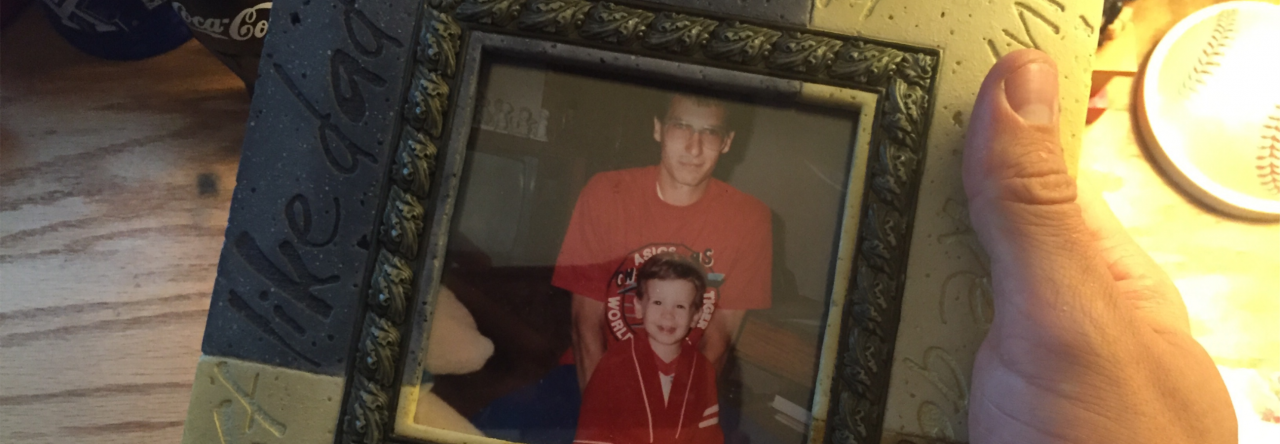
Dad Smiling Against StairsDad, It still doesn’t seem right that this is the fourth birthday that’s passed since you left us. It doesn’t feel right that life is going on without you. There are times when my heart feels so much pain that I can’t imagine ever celebrating anything without you again. But, in a weird way, I’m thankful for this pain because it reminds me how special you made life feel while you were here. You brought a vivid color and energy to my life each and every day that I don’t know I’ll ever be able to experience until I see you again. But I will see you again. I’ll make up for all those birthdays that I wished I could do over. You and I will, one day, celebrate our new birthdays in heaven. And fortunately, we will never, ever, see those birthdays come to an end. Happy birthday, Bub. You live on in my heart each and every day. Until I can tell you this face to face once again, seeya Bub.
“I tell you the truth, anyone who believes has eternal life.” John 6:47 (NLT)

A Mother’s Heart: Guest Blog by Becky Bradshaw

Ty: From the time I was little, I’ve always felt like a bit of a Momma’s boy.

And I’m completely okay with that.

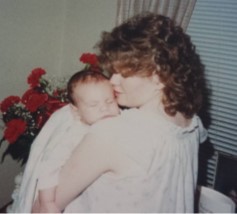
Mom Holding Me - CroppedGod has given me so many wonderful blessings in this life, but none greater than the two loving parents that have been with me since before I took my first breath. I’ve always had a special connection with my Mom since I was little. As an only child, I was fortunate to have all of her love and attention. I’m thankful that even though I’m growing older, I’ve never stopped receiving that.
From the time I was little and would run up to her or lay my head on her lap, I always knew my Mom was special. I don’t think I realized just how special she was, however, until my Dad passed away.

My Mom loved my Dad dearly and deeply, and just as he relied on her, she also relied on him. In the aftermath of my Dad’s death, I remember worrying about what Mom’s life would look like now that Dad was no longer around. I was worried about everything. How would she afford to keep the house? Would she even want to live in the house anymore? How would she pull herself out of bed every morning, knowing Dad wasn’t there?

You know how God tells us about a million times in the Bible not to worry? I understand that now.

Because my Mom is ridiculously strong.

All of the fears and doubts that I had in the initial aftermath of Dad’s death have dissipated as I’ve watched her navigate the complexities of her new life with grace, compassion, and a determination to never give up.

Don’t get me wrong—this hasn’t been easy on her. No wife should ever have to go through what my Mom has experienced. No wife should ever get the call that my Mom got on that fateful July day. No wife should ever have to wake up at the age of [NO, I’M NOT GOING TO MENTION HER AGE] and have her life partner stolen from her so unexpectedly and unnecessarily.

But my Mom has dealt with the scary moments, and in the same way she’s never quit being a Mom to me. There have been nights where I can’t sleep and where I’m racked with nightmares about losing Dad, and I know that I can still call her. There have been moments where life has felt too overwhelming, and I always knew that I could share my anxieties with her and be reassured and strengthened again. Just as I ran to her as a young boy, I’m still running to her now that I’m grown (and significantly taller than she is). On this Mother’s Day weekend, I’ve invited my Mom to share her memories of my Dad. Although our experiences have been so different, I’m so thankful that we’ve had each other throughout this heartache. We suffer differently, but thank God we are suffering together.


Becky: As Mother’s Day approaches, I started thinking back about all the Mother’s Days that I have had—especially my very first Mother’s Day as a mother myself.  Scott and I were so excited, as we would be spending my first Mother’s Day with our new two-week-old son, Tyler.  We went to church together that morning, and then we went and bought flowers to plant in our yard.  As I look back I realize how special that Mother’s Day of 1987 was.  Scott and I spent many more Mother’s Days together, but lots of other times together making memories throughout each year.

When you lose someone you love you try to hang on to every memory you made together, and I wanted to share a few of those special memories we had as a family.

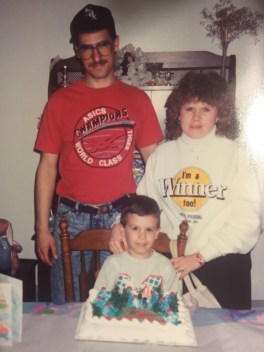
From the time Tyler was a little boy, we tried to do fun things with him.  Trips to Fantasy Birthday PhotoFarm (for those of you who are old enough to remember this place), picnics, movies, making crafts, zoo trips and much more.  Birthdays and holidays were also special times at the Bradshaw house.  Scott and I always wanted to make Tyler’s birthdays special.  Every year we would plan a big birthday party for him, and Scott was always excited and would always try to plan something different each year.

Scott was also willing to step into my mom role when I couldn’t be available.  I remember one particular field trip that he went on.  Tyler was in the 3rd grade and they were going to Wright Patterson Air Force Base.  I guess the laughing and jokes started as they loaded the bus because of Scott’s hair…or, I should say, the lack thereof.

On the same trip Scott was in charge of a group of students.  That was probably the first mistake because he truly was a kid at heart.  I remember Tyler telling me how they got yelled at by employees for going in areas of the museum they weren’t supposed to and for touching items they weren’t supposed to. I don’t recall him going on any more field trips after that.

There are just so many great times we spent together playing with our dogs, building our addition to our family home, spending time at our pool, fun at Hamilton Joes’ games, beach vacations, hanging out with family and friends.  I really think I could write a book about all these memories.

On June 30, 1984 Scott and I started building our lives together and I honestly knew we would play with our grandchildren and grow old together, but on July 24, 2013 all that changed.

The next days and weeks were a blur and I just could not imagine him not with me.  I would hear him calling my name and wait for him to come home from work. As painful as that day was, I try to focus on all of the memories.  Scott, I cannot wait to see you again some day and we can reminisce about old times.

Thank you for the memories I will always have in my heart, even though my life has forever changed.

I love you always and forever and until we meet again!


Ty: A day or so after my Dad’s death, I remember sitting on the back patio of our family home on a park bench with my Mom, each of us starting endlessly across the lawn of our backyard. That patio and that lawn and had been home to so many wonderful memories. We stared at the fire pit where my Dad had spent so many summer nights—burning brush, running out of brush, and cutting things down so he could have more brush to burn. We saw the pool where we had played and splashed and floated on rafts in the warm sun. Everything was still there, but it felt like everything was gone.

I remember feeling so very scared in that moment. I had no idea how we were going to keep up with everything. The house, the pool, the yard, the flowerbeds—there was so much work to do, and the man who had helped us keep our family home perfect wasn’t there any more.

“I don’t know how we are going to do this, Mom,” I said to her in a moment of desperation.

She looked at me, with tear-filled eyes, and gave me an honest and loving response.

“I don’t know either, Ty,” she said.

And my heart completely broke.

I realized, in that exact moment, that neither one of us had the answers to help us navigate this new and unfamiliar territory. And I also realized that just as I was suffering, she was too. It wasn’t a contest—we were both hurting, in different ways and for different reasons.

For that reason, we would need each other. I would need Mom to help bolster my spirit when I missed my Dad, and she would need me to bolster hers when she missed her husband.

We can’t help each other with everything, because the reality is that there are certain voids that only my Dad could have filled. Life is just emptier without him, and that will never change. And I’m glad that’s the case. My Dad’s death left a huge void in our hearts because he occupied so much of our hearts to begin with. We feel so empty because my Dad was such a wonderful presence in our lives.

Mom and I didn’t have the answers to how we would get through life on that day, and I don’t know that we’ve always had them ever since—but we’ve found ways to cope with this terrible tragedy by relying on one another. We sat together, just the two of us, on that bench for quite some time that day. We didn’t have to say anything, but if we felt the need to, we did.

But at some point, we got up. My Mom held onto my arm, and we walked across the yard to my house where our friends and family were waiting to help us grieve.

We got up from that bench. And we walked together. And although we haven’t done it perfectly, we’ve been doing it ever since.

On this Mother’s Day, I’m thankful to have not just any Mom, but my Mom. A woman who has stared Satan in the face and said “You might think you’ve got me beat, but I can assure you that you’re wrong.” This is a woman who, while grieving, has shown unbelievable peace and calm as the storm rages around her. I never envisioned that instead of going on long walks with our family dog, Mom would be spending time at her husband’s gravesite. I never envisioned my Mom without my Dad at family picnics and get-togethers. I never saw my Mom cooking dinner for one or having to manage the landscaping. But she’s defied every expectation of her that I’ve ever had—not just since my Dad died, but since the day I was born.

Happy Mother’s Day, Mom. Thanks for being there—to love me, to grieve with me, and to walk with me throughout this life.

I am always proud of you, and know this:

Dad is too.

Mom and Dad on BusDad, I always pictured you growing old with Mom. I knew you would make a tremendous Grandpa, but just as importantly I know that Mom will be an amazing Grandma someday. I hate that you didn’t get to enjoy this chapter of life here on this Earth with her. But I know that you are so unbelievably proud of her as you watch how she’s handled the troubles of this life without you. I know that you are watching over her each and every day. She is lucky to have such an amazing guardian angel. It doesn’t change the fact that we would rather have you here with us, but it does make life easier to handle knowing that, someday, we will all be reunited—a family again. Although we don’t have you here with us, we will always cherish and hold near to our hearts the memories that you gave us. You gave us so many. Thank you for always doing that. Thank you for being a wonderful Father, and thank you for choosing the best Mother any kid could ever hope for. Until we get to relive those wonderful memories together again, seeya Bub.

“Listen, my son, to your Father’s instruction and do not forsake your mother’s teaching. They are a garland to grace your head and a chain to adorn your neck.” Proverbs 1:8-9 (NIV)

MomBecky Bradshaw

Becky is Ty’s Mom. She works at Envision Partnerships in Butler County, Ohio, specifically working with substance abuse and driver intervention programs that keep our communities safe. She is involved at her church, and loves spending time with her dog, Sadie.


Just Talk

When I spoke in public, I rarely stood behind a podium. I’m a roamer. I’m pretty animated and I like to have free range of the stage.

But on this particular day, I had never gripped a podium more tightly in my entire life. My knees were buckling and my legs felt weak, and I had a white knuckle grip on the lectern to prevent myself from collapsing. I felt like I could fall over at any moment because every time I looked down from that particular podium, I didn’t see the 500 faces in the audience.

Instead, I saw a casket. A casket which carried my Dad’s body.

It was Monday, July 29, 2013—the day of my Dad’s funeral.

I wanted to speak at the funeral, even though every physical sign told me that I probably shouldn’t. I hadn’t been able to eat regularly since finding out my Dad was dead. My nights were tormented with sleeplessness and nightmares, reliving the sights and sounds of that tragic day. A short time standing caused me to feel lightheaded. My body reflected the way my mind and my heart felt—everything was completely broken. But I knew I had to speak.

Since college, I had overcome a fear of public speaking that had once paralyzed me. In high school, I dreaded public speaking. My hands would shake and my voice would quiver. Thank goodness for Miami University and an amazing public speaking professor named Carol Shulman. She gave me the confidence I needed during each and every class, even entering me in a public speaking competition where I had to present to a jam-packed auditorium on campus. In my first year of college, I grew to love any opportunity to speak in public. It became my modus operandi. I loved it. I craved it.

But on this day, I despised it. I would have done anything to avoid it.

Even the best college courses in public speaking don’t always prepare for the magnitude of speaking at a eulogy—especially for a parent. I knew that, if our lives had played out naturally, I would someday have to pay tribute to my Father after he passed. But I never imagined I would be delivering his eulogy before I hit the age of 30. I imagined I would be old and gray (hopefully not bald like my Dad), delivering a tribute to a man who would live into his eighties or nineties. But life didn’t play out naturally. Everything about this moment was unnatural. Real life, but completely unnatural.

I knew why I was speaking. I wasn’t going to the pulpit in an effort to console people, because I was hurting too much myself to do that. I wasn’t going to the pulpit to answer anyone’s questions about why this had happened, because I was struggling with those same questions and still am today. I wasn’t going to the pulpit that morning for any reason but this—I wanted to honor my Dad. I wanted to tell him I loved him, even though he wasn’t there to hear it. I wanted to say thank you for all the times he had sacrificed for me and loved me when I didn’t deserve it. I wanted to say thank you to a man who had given me everything and who had exemplified every aspect of strong fatherhood.

My motivation was clear, but my notes weren’t. Actually, they didn’t exist. For better or for worse, I decided to go to the pulpit that day and speak from the heart. I attempted to sit down and map out my thoughts many times, but I just couldn’t do it. I would sob uncontrollably every time I thought about having to deliver his eulogy. It seemed impossible—mainly because I didn’t want to admit that I would have to say goodbye.

But how do you prepare to eulogize your Father? I might have been prepared if he had died at a ripe old age of natural causes, but in the blink of an eye at a beautiful season in his life, my Father was tragically and suddenly gone. I couldn’t prepare for his death, and as such, I couldn’t prepare for his eulogy. I’m not saying it’s easier to give a eulogy in particular circumstances—saying goodbye at any age is no fun at all. But I envisioned something like this happening many years down the road. I knew I would eventually have to say goodbye to my Dad—but not when he was 50 and I was 26. That just didn’t seem right. Again, it felt unnatural.

But deaths rarely seem right or natural. In fact, they usually always seem wrong. And they should. We should desire for Eternity. God has put that longing in our hearts. But in an imperfect world, we try and take horrible messes, with God’s hand over us, and turn them into something useful.

I hoped I would be able to do that at my Dad’s funeral.

Flanked by my cousins, I made my way to the front of the church. I walked up the carpeted stairs in the dimly lit sanctuary, with a chorus of sniffles behind me from the family members, friends, coworkers, and loved ones who had come to say goodbye and support my family. Everything in my line of vision seemed somewhat blurred. I didn’t feel like myself. I was living a life that was now mine, but my mind refused to accept it.

I was able to give a somewhat coherent eulogy, telling a few stories about my Dad’s humor and thanking the people who had loved him over his life and who had loved Mom and I when they heard the news of his death. I don’t remember much of what I said that day, but I do remember feeling like God was calling me to say something to the folks who had gathered to say goodbye to my Dad. I didn’t know who or what, but I knew there had to be people gathered in that church—just like my Dad—who were suffering from mental illness or depression but were just too ashamed or too embarrassed to ask for help. I didn’t want my Dad to have to be the sacrificial lamb, but I also didn’t want him to die in vain. Although I would have done anything to have him back, I wanted his death to be a reminder that mental illness is a really, really debilitating disease. And I wanted people to know that their fate could be different.

“Just talk,” I said. “If you’re suffering or if you’re hurting, just talk to someone. To anyone. You don’t have to suffer like this.”

It wasn’t profound, but it was heartfelt. A heartfelt plea to anyone sitting in those pews who, like my Dad had done for so long, put on a mask to try and hide their own depression, anxiety, and fear. I wanted those people to see a heartbroken family torn apart by a disease that can be treated but often isn’t. I wanted those individuals to feel compelled to fight back against the dark thoughts they might have. I wanted those individuals to live a different ending than the one that stole my Father.

Oftentimes, the best solutions are not the profound ones, but instead are the solutions that are so simple we often don’t do them. And when it comes to fighting mental illness, we all just need to talk.

We need to talk about how we are feeling. We need to ask for help when we need it—both from friends and professionals. We need to talk about what we are feeling, no matter how irrational, without fear of embarrassment or shame.

One of the best weapons in the fight against suicide is talking to someone when we are feeling suicidal. And although we know this and acknowledge its truth, it’s often much more difficult for us to live this out.

I don’t pretend to have a crystal ball, and I’m not naïve enough to believe that had my Dad simply talked that everything would have been different. I simply don’t know the answer to that question, and I never will. But I know this:

It couldn’t have hurt.

It couldn’t have been any worse than how it ended.

It might have been different.

I pray that I never experience another tragedy as heartbreaking as the death of my Father because it has completely torn me apart. There have been sleepless nights where I can’t quit thinking of him, and sleep-filled days where I’m so paralyzed by hurt that I can’t function normally. There have been moments of regret filled with a desperate longing to talk with him just one more time. I miss him more and more every single day.

So today, and in everything that I do, I’ll honor the talkers. The people who aren’t afraid to come forward and say “I need help,” “I’m hurting,” or “I just don’t understand.”

People like Prince Harry. Yes, that Prince Harry—the royal one. It’s fitting that I’m writing this post as a Dateline episode plays about the death of Harry’s mother, Princess Diana. I remember watching the news coverage with my Mom when I was a young boy. I remember my Mom’s sadness, and I remember watching those two little boys at their Mom’s funeral—not knowing someday I would experience a similar pain of tragic and inexplicable loss.

Diana’s death was the impetus of a very dark period in Harry’s life—a period that has gone on for 20 years. Diana died 20 years ago when Harry was only 12. Now, at age 32, he’s just beginning to talk. But he’s talking nonetheless. And he’s inspiring millions.

A recent article in USA Today recapped an amazingly candid and recent interview when Harry began to talk about his own struggles with mental illness spurred by his mother’s death. Here’s an important excerpt from the article that I’d like to share with you:

“I can safely say that losing my mum at the age of 12, and therefore shutting down all of my emotions for the last 20 years, has had a quite serious effect on not only my personal life but my work as well,” Prince Harry said. “And it was only three years ago — funny enough — from the support around, and my brother and other people saying that, ‘You really need to deal with this. It’s not normal to think that nothing’s affected you.'”

Harry said instead of processing his grief for The People’s Princess, he stifled his emotions.

“My way of dealing with it was sticking my head in the sand, refusing to ever think about my mum, because why would that help?” he shared. “It’s only going to make you sad; it’s not going to bring her back. So, from an emotional side, I was like ‘Right, don’t ever let your emotions be part of anything.’ So, I was a typical sort of 20, 25, 28-year-old running around going ‘Life is great’, or ‘Life is fine’ and that was exactly it.”

Harry said that when he began having the conversations he previously avoided he began to understand, “‘There’s actually a lot of stuff here I need to deal with…’”

“It was 20 years of not thinking about it and then two years of total chaos,” Harry recalled. “I just couldn’t put my finger on it. I just didn’t know what was wrong with me.”

Harry also revealed he’s “probably been very close to a complete breakdown on numerous occasions” which he attributed to “all sorts of grief and sort of lies and misconceptions” that come with his royal title and public platform. He said during his trying years he began boxing, which he shared “really saved me because I was on the verge of punching someone, so being able to punch someone who had pads was certainly easier.”

During the interview, Harry said he is now “in a good place” and seemed grateful that he was finally able to process his mother’s death in a healthy way.

“… Because of the process that I’ve been through over the last two-and-a-half to 3 years,” he said, “I’ve now been able to take my work seriously, be able to take my private life seriously as well, and be able to put blood, sweat and tears into the things that really make a difference…”[1]

I commend Prince Harry for what he’s doing, especially his founding of a mental health advocacy group called Heads Together. But more than the public work he is doing, I am thankful that he is vulnerable enough to share his own story. It’s making life easier on a lot of people, and it’s making me feel even more normal as I continue to grieve for my Father.

When you’re a Prince, I would imagine people of many expectations of you. Expectations of perfection. As a Prince, everyone’s eyes are constantly on you and they are expecting you to make the right step, every step.

But Prince Harry is giving the rest of us the freedom to make mistakes when we grieve. I’ve said it numerous times, but there’s no manual on how to grieve because everyone grieves differently. Because there’s no manual, there’s also a strong likelihood that those who grieve won’t get it right every single time. Prince Harry’s story proves that.

And he’s also proving that when we talk, we begin to heal.

Prince Harry’s story reinforces an important point that has helped me come to terms with my own Father’s death: Depression is an illness that can invade our lives at any point, even when things are seemingly perfect.

Imagine the life that Prince Harry most likely leads. As a member of Britain’s royal class, there’s never a concern about money. Want a vacation? You can take one. Anywhere at any time. Want to buy a car? Why stick with just one when you could buy 47? You have influence over anyone. Unmistakable power and fame. Every material thing that most people dream of is right at his fingertips. And you can walk around in a crown and no one will think you’re dressing up. They know you’re a prince. And I’m sure they treat you like one.

But in the midst of a seemingly happy existence, there is a level of grief and depression that invaded Prince Harry’s life because he bottled up his emotions. No matter what cultural definitions of happiness were met, “sticking his head in the sand” led to a place of darkness and inescapable grief. Depression, then, has a unique and extremely frightening way of clouding and contorting our lives into something that seems completely overwhelming.

That is, until, he began to talk.

Once he began to talk, he began to be freed from the tight grasp depression held on his life. The stranglehold was loosened. And it probably saved his life.

I don’t fault my Dad for his death—I never have. My Dad suffered from a terrible disease that took over his mind, clouded his thoughts, and made the worries of this life seem inescapable. I would never blame him for his death, but that doesn’t mean that there aren’t things I wish we could have changed about this experience. I would give or do anything to change the outcome of that fateful July morning. Chief among those? Just talking with my Dad in the hopes that he might talk when he needed help.

Whether it was fear of embarrassment or trying to attain an unattainable societal expectation of perfection, my Dad couldn’t bring himself to talk about his struggles with depression. He did exactly what Prince Harry has admitted to doing. He bottled up his feelings. He stuck his head in the sand. He felt that showing weakness wouldn’t have helped. And I hate that, in his final moments on this Earth, he probably felt more alone than anyone.

I wish there was more I could’ve done. And ultimately, I wish I had done more to encourage him to talk.

But now, I’m in an unfortunate but redeemable place. It’s too late for me to talk to my Dad and encourage him to talk. He’s no longer here. So, instead, I am trying my best to encourage others to talk. In a sense, it’s my way of trying to change the lives of others, since I can’t change my Dad’s. I may not have the influence of Prince Harry, but I’m not concerned with numbers here. If I can impact one person—just one person—and encourage them to talk with someone, it will all be worth it in the end. If I can change one life, I will have made the difference God is calling me to make. We will suffer, yes—but we are never expected to suffer alone.

My Dad’s funeral was over three years ago, yet I find myself saying the same thing now that I said that day:

Just talk.

To someone.

To anyone.

About anything. And any feeling.

Because you matter. Your life matters. And you are loved.

But please, for your life and the lives of those who love you…just talk.

Dad at Beach with SB LogoDad, I wish each and every day that you were here with me still. I wish that I could hug your neck. I wish that I could ride in the truck with you. I wish, each day, that I could hear your laugh again. But more than anything, I wish I had done more to help you feel like it was okay to talk. I wish I had encouraged you, even forced you, to get the help that you deserved. In lieu of being able to tell you that now, however, I’m trying my best to use your story to save other people. I’m trying to do what you always did—help those who are down on their luck and need it most. Dad, you may not be here with me, but I hope you know that your story is making a tremendous impact. I can’t wait to just talk with you again. Until that day, seeya Bub.

“Not only so, but we also glory in our sufferings, because we know that suffering produces perseverance; perseverance, character; and character, hope.” Romans 5:3-4 (NIV)

[1] https://www.usatoday.com/story/life/2017/04/17/prince-harry-talked-about-his-grief-following-princess-dianas-death/100556842/