
Ty: It’s hard to understand the suicidal mind—both for those who are experiencing the suicidal ideations, and for those of us who have loved ones who die from suicide or suffer from mental illness.
Thanks to the bravery, courage, and unbelievable faith of my next guest blogger, we now have that opportunity.
For the longest time after his death, I really wanted to get inside of my Dad’s head at the time leading up to his death from suicide—no matter how dark and depressed it might have been. When you lose a loved one to suicide, there’s an innate desire to feel what they felt, see what they saw, and try your best to answer questions that are largely unanswerable. I knew that one of the only ways to grasp the severity and pain of the depression that catalyzed my Father’s death would be to search out first hand experiences of individuals who attempted and survived a suicidal catastrophe. I read books (Kevin Hines Cracked, Not Broken is one of my favorites), listened to podcasts and videos, and devoured the writings of psychologists and psychiatrists who did their best to capture and share the true nature of mental illness that can lead to such a drastic end.
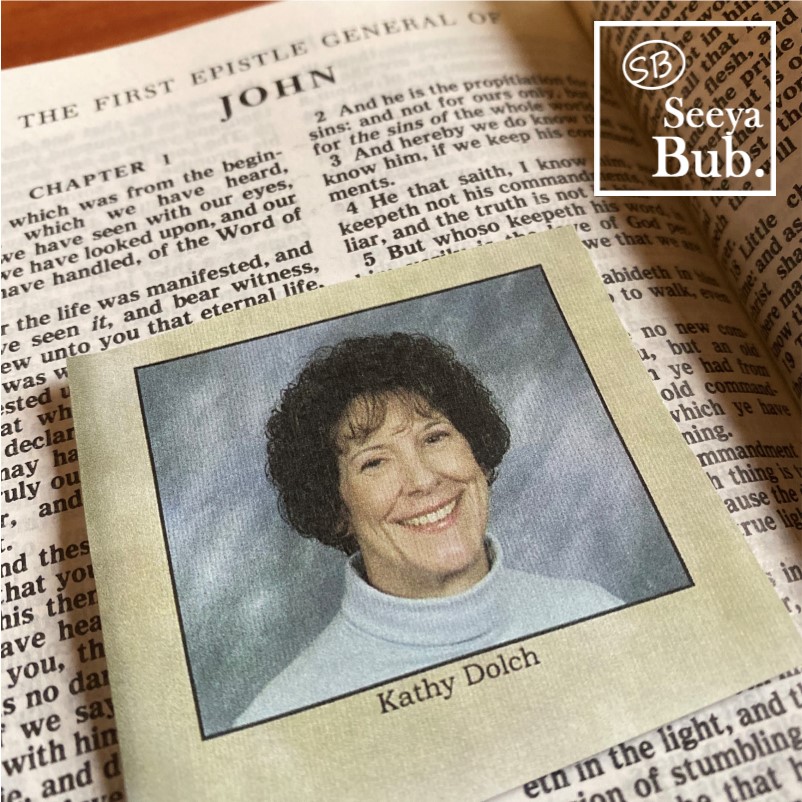
But a few evenings ago, I found someone better and more powerful than anything I’ve ever read before. I found Kathy Dolch.
While speaking at the inaugural Butler County Walk To Remember event, a woman sat next to me at a table near where I stood. As I talked, I could see the pain on her face, but I also sensed tremendous hope. A hope that can only come from someone who has seen the valley, scaled the mountain, and is ready to face life’s darkest moments head on.
After I finished speaking, Kathy made her way over to me, shook my hand, and then told me her story—a story that I was so privileged to hear from one of God’s most faithful servants. I knew, in that moment, that Kathy was put here in that moment, to help me understand the severe and unyielding pain my Dad must have been experiencing in the moments leading up to his death; but I also knew that God put her in front of me so she could have an opportunity to share her story with the world.
On that night, I invited Kathy to share her story of hurt, resilience, forgiveness, and love at Seeya Bub, and she accepted without hesitation. It is the honor of a lifetime for me to share her words with you now.
Kathy: In 2002 (seventeen years ago), my husband and I were planning to go out for dinner; but for some reason, my husband did not arrive home. I called his office, friends, emergency rooms and finally the police trying to find out where he was. No one had any answers, and the police would not do anything until midnight, telling me he would eventually call and finally come home. To my surprise, the police also suggested he was with another woman. It was a shock to think that could ever be true.
I was unable to eat dinner and also unable to sleep on that night. Finally, the police called at midnight and filed a missing person report for both Ohio and Indiana. After a painful and sleepless night, my husband called and left a message for me to return phone call. I was glad to know that he was okay, but worried about what he might say to me from the other end of the line.
I had no idea how earth-shattering his message to me on that day might be.
My husband told me he was not coming home and said that he had been with another woman for eight or nine months. He also encouraged me to see a psychiatrist. I ended the conversation quickly, unable to comprehend how the man I had been married to for decades could turn his back on our life together. He tried to call back, but I refused to answer the phone.
There was nothing he would be able to say to me on the other end of the line to prevent me from the only desperate path I could envision.
I put my dogs in their crates. I removed the gun from the dresser drawer and walked to the basement. The news my husband had given me left me no alternative—at least none that I could see through my heartache and pain. I did not want to suffer through the pain that my husband had inflicted upon me.
Holding the gun in my hand, I looked up and said “Father please let me be with you. Please take me home.” With what I thought would be my final words ever spoken, I shot myself in the right temple.
After he was unable to reach me and he began to grow suspicious about what I might have done, my husband called the police and told them I had received a little bad news on the phone. He asked if they would perform a welfare check to ensure I was safe, letting them know where the hide-a-key was hidden at our home. At the same time, my husband was in Indiana with the other woman and decided to drive back to our house with her.
After entering the home, the police found me clinging to life in our basement with a nearly-fatal gunshot wound. They immediately called the paramedics, who rushed me to the hospital.
I eventually arrived at the hospital, where I had surgery and remained in recovery for ten days. I do not remember any of that time. My entire memory is completely wiped clean because of the physical and emotional trauma of that moment.
My husband did not visit at all during those ten days. He did arrive to take me home once my recovery was complete, and he placed me in psychiatric therapy. The second week in psychiatric care, I was moved to lock down. My neighbor visited me, and I asked him to find a way for me to leave, as I desperately wanted to go home. My neighbor was told that I would have to sign myself out in order to be released, which I did the next day. On the day I was released, my neighbor drove me to the home that my husband and I had once lived in together—the same home where my life had almost ended as a result of my suicide attempt.
In the time that I was gone in recovery and recuperation, my husband had given my seven dogs to another home, and in that moment I knew that I was all alone. The house felt so empty, and I was alone with my thoughts and a mountain ahead of me that I knew I had to climb.
That mountain of recovery was not easy, but I committed myself to overcome the physical challenges that I was now facing. After the suicide attempt, I was diagnosed as legally blind. I have a hole in the back of each eye and all the direct vision cells and most of the optic nerve in my right eye were completely destroyed. I had surgery on the left eye a few weeks after the attempt to improve my vision. I went to the Cincinnati Academy for the Blind & Visually Impaired (CABVI) and was introduced to a large number of things to help me be more independent, and each and every day since then I’ve been working at this ever since.
The emotional hurdles were just as daunting. A few months after the incident, I was served divorce papers. I was completely shocked. The divorce proceedings were complicated and painful because of my husband’s self-centeredness. We spent an entire year in divorce court and after seemingly coming to an initial agreement, my husband tried to make many changes to the agreement in the final moments before the divorce was declared final—changes which would have left me in an even worse position than the one I was currently in.
Finally it was over. We have been back to court many times because my husband did not want to pay alimony. Unfortunately, my husband stopped paying alimony for a while just three years after my suicide attempt, and the bank foreclosed on my home and I lost the home. We had been married for thirty-one years, and it was hard to come to terms with how a man who said he had loved me and would take care of me could inflict so much pain upon me. In fact, in the aftermath of my suicide attempt, I learned that my husband had committed adultery throughout our entire marriage. None of this made sense with what I thought my marriage was and could be.
In that moment, trying to rebound from a suicide attempt, economic ruin, and a crumbled marriage, I knew that my only way to recover would be God. In the immediate aftermath of my suicide attempt, God talked to me one day and I heard that quiet, still voice say to me “Start attending Mass again, come home.”
I’m glad I listened.
I was given a ride to St. Francis de Sales by another member of the congregation. I walked up the stairs, opened the door, and having suffered unbelievable vision loss, I was so overjoyed that I was able to see the stained glass window in front of me. Standing in front of that window with tears, I heard chorus from all in heaven saying “Welcome home.”
I’ve been a member of St. Francis de Sales ever since coming home on that day, and now I am a member of the church prayer chain, a Lector, and an Extraordinary Minister of Holy Communion. My story is a painful one, but it is also a story of hope—God led me through one of the deepest, darkest valleys that has ever existed. He literally reached down His mighty hand and rescued me from the grips of death and my own despair, and I’ll never, ever stop loving him because He loved me at my weakest.
Throughout this experience, unfortunately, I felt I couldn’t trust anybody. My husband had lied to me for thirty-one years, and it left me in a place in which I felt like I could never trust anyone again. But God has shown me that there are still trustworthy, loving people in this broken world. I was amazed at how many people at CABVI wanted to help me cope with my blindness after the suicide attempt. My church has become my family, and they have given me such unbelievable support and encouragement. And everyone in heaven is my family. I know that those looking down on me will always love me, and feeling that love makes a huge difference.
But most importantly, knowing that God loves me has been my steady support since that awful day in 2002. Once I discovered I was alive after the attempt, my first words to my neighbor were “Even God doesn’t want me.” My life felt so hopeless, but after saying that to my neighbor, she simply responded, “Kathy, God does want you—just not yet.” I know that God has a purpose for my life, which is why he refused to let me die on that day. I pray for help all the time and I realize I should not have attempted to commit suicide. Even though I feel the pain of my suicide attempt and the vision and health issues it created, more than anything I feel the hope and love of God Almighty, whose love is everlasting in a world where too much pain exists.
Ty: On the night I first heard her story, I cried; and now, having read it many times in preparation for publication here, I find myself crying still.
I’m crying because, in her story, Kathy helps us understand just how desperate the world can seem to someone with a suicidal mind. To someone suffering from depression or any other mental illness, life’s obstacles (and life in general) can feel so overwhelming and painful that there seems to be no other escape but death. My heart breaks when I think about the hurt that Kathy must have felt when hearing about her husband’s infidelity. How alone Kathy must have felt in that moment. I am full of sorrow when I think about how isolated and hopeless Kathy must have felt if death seemed to be the only acceptable alternative.
But Kathy Dolch’s story, more than anything else, is a story of hope. Kathy’s story is not defined by her near-death experience, but by courage, determination, and sheer will she showed to survive and thrive in the years after. Kathy has not had an easy road at all. Imagine yourself in her shoes. As if surviving a life-threatening, self-inflicted gunshot wound isn’t enough, Kathy then had to learn how to live and function as a individual afflicted with blindness. She had to deal with the mental and spiritual anguish of unanswered questions, doubts, and guilt. And on top of all this, she had to make her journey towards recovery without her husband—a man who had pledged to stand by her side through sickness and in health, but had instead chose adultery.
Make no mistake though—Kathy was never, never alone. All throughout her recovery walk, Kathy was walking arm in arm with our Lord and Savior, Jesus Christ. Kathy had the power of the God who has known her since before she took her first breath, and in her most critical moment for reasons we may never know on this side of Eternity, God refused to let death win. I’m thankful for His grace in watching over Kathy, even when she felt like there was no one there to support her.
On the night I met Kathy, I told her that God had kept her on this planet for a reason, and I really believe that that reason is to share her story with those who are hurting. In my conversations with Kathy, I could tell how remorseful she was for what happened on that fateful day when her life almost ended; but more than anything, I was inspired by Kathy’s hope and resiliency. I commend Kathy for so many things, and I am so proud of her for sharing her story here.
After reading Kathy’s story, it’s only logical for you to feel more empathetic for those who are hurting and struggling with mental illness. Our world is broken, and the difficulties of this life can take quite a toll on our mental health and well-being. Kathy’s story is a heartbreaking example of a how a life well-lived can be attacked by sin. Her story shows how powerful and real suicidal temptations and ideations can truly be. Kathy had lived her life well and, by all accounts, had lived a life that bears many resemblances to me and you; which should be a warning that suicide isn’t just an epidemic that affects individuals on the fringes of society. Unfortunately, suicide isn’t an irregular incident; it’s an all-too-regular occurrence happening to all-too-regular friends, families, neighbors, and others that we love.
Kathy’s story has helped to give me perspective about how my Dad—a man who loved life—was driven to death by such tragic and avoidable means. In sharing her painful story, Kathy has helped me see how life circumstances coupled with mental distortions and drive someone, like my Father, to feel full of desperation.
But in her remorse, Kathy speaks directly to those individuals who may be reading and contemplating suicide themselves. When the dust settled, and to this day, Kathy felt extreme regret and wished to live. I imagine that every individual who dies from suicide, in their final moments, regrets the decision.
Finally, and maybe most importantly, I believe Kathy’s story is a reminder of the value of life and our actions towards our fellow man and woman. Don’t get me wrong—suicide is never, never anyone’s fault. It is always the fault of mental illness. However, it’s easy to see in Kathy’s story how the selfish, hateful actions of her husband led her down a path towards suicide. Each and every day, we all have an opportunity to either build people up or tear them down with our words and actions; on this particular day, and on all the days that he committed adultery, this individual chose to destroy rather than encourage. If we want to build a world where suicide and mental illness are eradicated, kindness and decency towards our fellow man and woman is the ultimate foundation.
Kathy has shown all of us kindness by sharing her story so powerfully. I’m proud of her for sharing, and Kathy, all of us are proud of you for overcoming this tragedy and living a life defined by courage.
 Dad, For so long, I’ve tried to understand the level of despair you were feeling in the moment that your life ended. For the longest time, I wasn’t able to empathize with your pain. But individuals like Kathy have come into my life since losing you and have helped me gain that level of empathy. Dad, I am so sorry that you were hurting for so long. I’m so sorry that I wasn’t more forgiving in the times when you were hurting. I wish we had been able to help you find the healing that you needed and that you deserved. Dad, you had so much more to accomplish in this life. You had so many talents to contribute, and so many people left to love. I don’t know that I’ll ever understand how someone with such an unbelievable level of kindness, skill, and grace could feel as helpless as you did. But Dad, I promise to you that you will never be defined by your death. I will do everything I can to make sure that people remember you for the vivid life you lived, and I’ll make sure that your death (like Kathy’s story) gives people a hopeful reminder that life is worth living. Dad, thank you for equipping me with the courage to face life head-on in the aftermath of your death. It’s amazing to think that you were always teaching me the skills I would eventually need to deal with life after you. I’ll never stop learning from you, and I can’t wait to thank you for always giving me that inspiration. Until the day when I see your face again, seeya Bub.
“And so we know and rely on the love God has for us. God is love. Whoever lives in love lives in God, and God in them.” 1 John 4:16 (NIV)
 Kathy Dolch
Kathy Dolch is a survivor of suicide, having overcome a self-inflicted gunshot wound in 2002 which rendered her legally blind. Kathy is a member of St. Francis de Sales Church where she serves as a member of the church prayer chain, a Lector, and an Extraordinary Minister of Holy Communion. Kathy was a middle school math teacher for five years, having earned her Bachelor of Science in Mathematics Education from State of University of New York Oneonta. Kathy showed cairn terriers in the United States and Canada for obedience and confirmation prior to her suicide attempt. Kathy is now a resident of Lebanon, Ohio.

 Dad, You lived a big and vibrant life while you were here with all of us, and your absence is even more noticeable and painful because the void left behind is so great. You deserved to live a fuller life than the one you experienced, and I’m sorry I didn’t do more to make that dream reality. Dad, I would have loved watching you grow old—even though it might not have been as much fun for you as it would have been for me. I would have loved seeing you on my wedding day, and you have no idea how much I would have appreciated your wisdom about navigating this new chapter in my life because you were such an amazing husband for Mom. And yes, I would have loved watching you become a grandpa more than anything else. I know you would have been silly and goofy and ridiculous—and completely adored by your grandchildren. But Dad, as much as I wanted to watch those things for myself, I’m ultimately saddened because you earned the right to experience all of those wonderful things. I hate mental illness and suicide for robbing you of these life chapters. Mental illness separated you from us and from many wonderful, beautiful moments that awaited your future. And although I won’t get to watch you enjoy life, and although I’ll always have questions about why this happened to you, I do find peace knowing that you’re not suffering any longer. I find a sense of comfort knowing that the unjustified feelings of shame and embarrassment that you experienced in this world are completely gone and fully redeemed. And I know that as great as any experience you could have had here with us might have been, you’re experiencing a joy and beauty beyond any other as you bask in the glory of Heaven and God’s everlasting love and paradise. Dad, keep watching over me, and keep reassuring me that you were called Home for a reason. I love you, and I wish we could have experienced more of this life together; but I know there’s a greater reward and an unbelievable reunion awaiting us. Thank you Dad, and until the day when we are reunited forever, seeya Bub.
 Dad, I’m sorry for all of those moments that we should have spent together. I’m sorry for all of those times that I wasted when we had the opportunity to just be together, but I didn’t realize the value of those moments. Ultimately, I’m just sorry we didn’t have more time. Dad, you brought such joy to my life—and to everyone’s life that you interacted with. Any amount of time with you would have failed to be enough. There are so many things we should have done together, and I’m sorry I didn’t make a more genuine effort to make those things happen. Dad, I hope that I’m still learning from your life. I hope that I am taking the time that God has given me and using it more wisely than I did before you died. It still doesn’t erase the pain of losing you and the desire to have more of you in my life, but I hope that I’m realizing the fragility of life and the need to invest my time in the things that matter—the things associated with loving God and loving other people. Dad, please continue teaching me. Thank you for living a vivid life that still feels important each and every day. And Dad, I’m keeping a list of all those things we should have done. Someday, we will have the opportunity to do them all, and I can’t wait. Until that day and the glorious reunion that awaits, seeya Bub.
 Every single day is difficult—all 1,827 of them; but every single year, July 24 is a date that stares at me from the calendar. It looms in the distance for months, and when it passes, I always breathe a sigh of relief that it’s come and gone. But I know, deep down, that it’s coming again. It will always be there. No particular July 24 has been more or less difficult—just different. But because of the nice, round number, this one feels like a milestone. A milestone I wish I didn’t have to reach.
 But guess what? No amount of procrastination could stop that date from coming. No amount of denial could stop me from thinking about what this day represents. This day would come—and yes, it would eventually pass—but the second it did, the clock just begin counting down towards another unfortunate milestone. The next Christmas. The next birthday. The next Father’s Day.
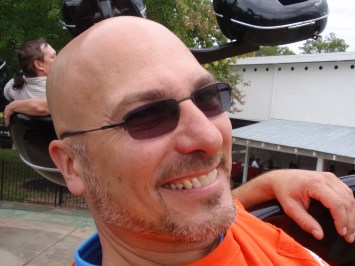 On the other side of all that grief and sadness, there will be an everlasting love made whole again. On the other side of that grief, there will be a man whom I recognize, smiling and welcoming me into his arms. In that moment, I’ll love never having to say “seeya, Bub” again. That day is coming, although it’s very far off.
 Dad, I cry so much when I think that it’s been five years since you and I last talked. Sometimes, those tears are unstoppable. We never even went five days in this life without talking to one another. Dad, it really has felt like an eternity—but sometimes your memory is so real and so vivid that it seems like it was just yesterday when we lost you. But I know the real time. I know that it’s been five whole years since we’ve been able to be in your presence. And life simply isn’t the same without you. We all cling to your memory. We marvel at the things you built and the way you provided for our family. We laugh about the funny things you did to make life more fun. But I also weep when I think about how much life you had left to live. Dad, I’m so sorry that you were sick. I feel horrible that we couldn’t do more to help you find the cure you deserved. I’m sorry that you were robbed of the life you deserved to enjoy. I’ve felt so much guilt in losing you Dad. I know that you don’t want me to feel this way, but I just wish there was more I could have done. You deserved that, Dad. You deserved more, because you gave everything. As painful as these five years have been, Dad, I find peace in the truth of Eternity. I find comfort knowing that you are enjoying God’s eternal glory in a paradise that I can’t even begin to fathom. Dad, thank you for watching over me for these past five years. Thank you for never giving up on me—both in this life, and in the next. Thank you for giving me a lifetime of memories and an example of what fatherhood should be. I love you, Dad. I always did, and I always will. Thank you for loving me back. Until I see you again, seeya Bub.

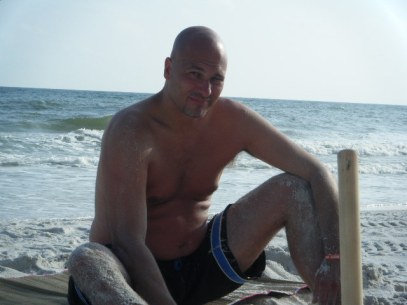 When I was extremely young, my family never took beach vacations. To this day, I’m not sure why because we all loved the beach so much. My very first time seeing the ocean was on a family trip to Panama City, Florida as an eighth grader. Our entire family (grandparents and cousins included) spent a wonderful week on the Gulf Coast, and I remember the momentous nature of that trip, even as a middle schooler. A 12-hour, multi-day car ride had finally concluded, and my Mom and Dad walked me out towards the ocean once we arrived. With my parents, I saw the ocean for the very first time and I got to experience its magnitude. I got to touch sand, and taste saltwater, and splash in the world’s largest pool. Even as a young kid, I appreciated the significance of this experience.
 After a really, really long drive, my family finally arrived to our condo in Gulf Shores. Shortly after arriving, I think we all knew then that we had found our family vacation spot. There was something about it that made us feel like we were home.
 As I’ve written before, Dad was a tremendous athlete. And also as I’ve written before, I was a horrible one. But Dad never let my lack of athleticism curb an opportunity to play. At the beach, Dad and I could throw a frisbee for hours—as long as the wind cooperated. We would warm up close to one another and gradually step back as we threw until we would finally hit a point where we had to wind our torsos like a corkscrew to get the frisbee to sail over the white sand. Dad and I would leap and dive into the sand to catch a frisbee—his leaps and dives always significantly more graceful than mine—and we would yell at each other for not being able to properly hit our target. “Did you actually expect me to catch that?!” we would yell across the beach at one another. “You’re gonna kill a kid with that thing if you don’t learn how to throw it!”
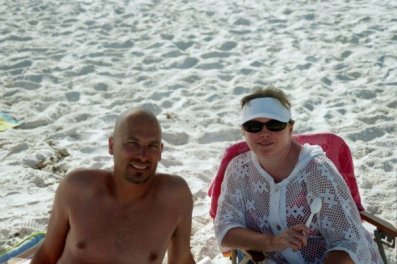 And at the beach, Dad never played it safe. More than anything, I think Dad and I probably got the most enjoyment of our daily game of “See Who Can Swim the Furthest Out from the Shore and Make Mom Freak Out the Most” (catchy, no?). Much to my Mom’s displeasure, Dad and I were notorious for jumping into the water and swimming straight ahead until our arms gave out. The water would grow colder and colder the further we would swim, and periodically Dad would stick his arms high above his head and straight-dive down to see if he could still touch the bottom. If he could, we still weren’t out far enough. All the while, my poor Mother would sit anxiously in her beach chair watching our bobbing heads grow smaller and smaller in the waves. The best version of the game was on the beaches where there were life guards on duty, and in those scenarios, we tried to see how loud we could get them to blow their whistles at us! We knew we were really killing the game if we could swim far enough to encounter a deeper sandbar, and if we did, we would sit out on the sandbar and rest until it was time to swim back in. Dad would wave to Mom on occasion from the depths of the mighty ocean, and it was amazing how peaceful the deep ocean water can be. All the ambient noises of the beach fade away when you’re that far out (you especially can’t hear life guard whistles or motherly-shrieks).
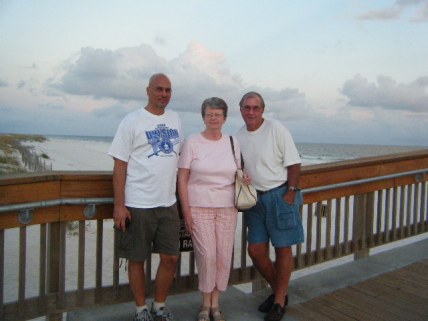 My Grandpa even told a story at Dad’s funeral about his love for always being the last one up. On occasion, my family would take vacations with our extended family, which included my Grandpa Vern, Grandma Sharon, my Uncle Lee, my Aunt Beth, and my two cousins Jake and Megan. Those were always wonderful vacations, and every day, my Grandpa and my Dad were always the last ones up to the condo. But even my Grandpa couldn’t hang with my Dad.
 Standing there at the beach, I told Steve how much I missed my Dad. I really didn’t have to say anything, because Steve knew—and he was experiencing the grief himself. Steve had been tremendously close with my entire family, and my Dad treated him just like he would treat his own son. Instead of only crying, though, I was able to share tremendous memories and stories of my Dad, telling Steve all about the funny things he had done at the beach on our family vacations. I shared stories about Dad’s Banana Boat expedition, his wave-runner sandbar collision, and how he was always the last one up for dinner. Little by little, the tears were slowly replaced with a smile and laughter. I didn’t miss him any less; I just had a different focus. Instead of focusing on the loss, I was able to focus on his life. Instead of focusing on the time we didn’t have together, I focused on all the wonderful times we did.
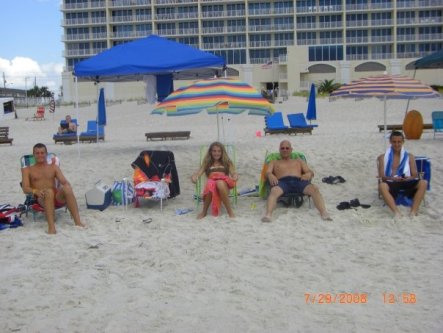 I spend a lot of time on the beach during dusk as many of the families on the shore will begin to retreat to their condos. And I do this for a simple reason: that’s what Dad would have done. I’ve learned why he loved it so much. As the beach starts to quiet down from a busy day of frivolity and fun, there’s a quiet stillness that begins to wash across the shore. That stillness is enticing and comforting, and it’s in those moments that I often feel closest to God. And I think about how peaceful those moments must have been to a man who struggled with depression. Dad treasured that peace. And now, I treasure the memory of his life during those peaceful moments, and I try to live it out every chance I get.
 Dad, there has never been a time when I’ve gone to the beach without thinking of you—and there never will be. You made our time at the beach together so memorable, but more than that, you taught me so many important life lessons while we were there. You taught me to slow down and relax. You taught me to soak in God’s beautiful creation. You taught me to be kind to people and get to know them, because God created them, too. You taught me to let go of all the busy things from back home and simply enjoy the life that was in front of me in that moment. I take these lessons with me everywhere I go, but especially when I go to the beach. Even though I’m still able to have fun when I go, it just isn’t the same without you. I miss our throwing sessions, and sometimes I’ll just carry a baseball in my backpack to turn over and over in my hands and think of the time we spent together. I miss trying to see who could swim the furthest out, and watching you beckon me further even when I felt like I couldn’t keep swimming. I miss walking along the shoreline with you and listening to your stories about oil rigs in the distance or planes flying overhead. You had an inquisitive, appreciative spirit for all life had to offer. And more than anything, I miss watching you enjoy those moments on the shore by yourself being the last one up. It’s strange, but sometimes it’s like I look down from the balcony and I can still see you sitting there. Dad, I know you’re still with me. I know that you’re guiding me and watching over me in everything that I do. Thank you for always being my best teacher. Thank you for being a Dad unlike any other. And thank you for always teaching me that the last one up wins. I love you, Dad. I miss you tremendously. I sure hope there are beaches in heaven, because if there are, I promise I’m going to swim further out than you. Until that day when we can be beachside together again, seeya Bub.
 Dad, I wish you could have read Reverend Walters’ book and heard his story, because I think you felt many of the things he did. I know you struggled with how to share your hurt and your pain because you didn’t want to appear weak. You didn’t want people to think you were a failure. Dad, you never failed any of us—ever. You had an illness that you couldn’t understand, and I wish we had done more to help you escape the trap that forced you into silent suffering. But Dad, I know that our Heavenly Father has welcome you into His loving arms. I know that He is redeeming your story day by day with each individual who loves you and learns from you. Dad, I will never stop loving you. I will never stop trying to find ways to help those who are hurting like you were. Keep watching over me, because I can feel it. Until I can tell you how much you are loved face-to-face, seeya Bub.
  Reverend Dan Walters
 Seeya Bub