
“ONE!”
Slam!
“TWO!”
Slam!
“TWO-AND-A-HALF!”
Slam!
“TWO-AND-THREE-QUARTERS!”
Slam!
“TWO-AND-SEVEN-EIGHTHS!”
Slam!
“TWO-AND-THIRTY-FIVE-THIRTY-SIXTHS!”
“Dad, I don’t even think that’s a real thing!”
Slam!
“THREE!” Slam! “Pinned you again!”
“Alright, let’s go again,” I’d respond, knowing that there wasn’t a chance I’d ever win.
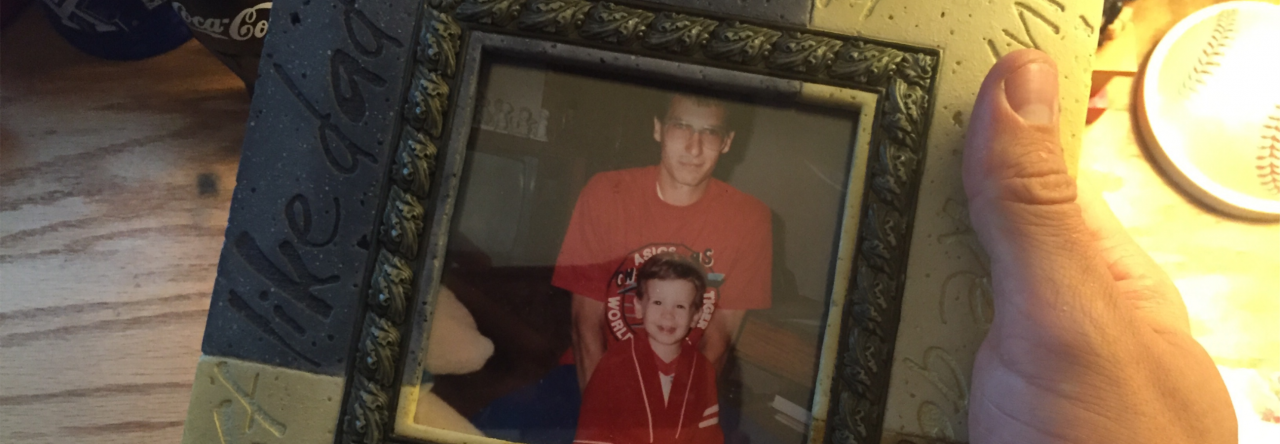
This was the common refrain that echoed through the Bradshaw family room after dinner on an almost-nightly basis, drifting up the stairs into the kitchen where my Mom was likely cleaning up after another delicious, home-cooked meal that she had crafted. Dad always said he needed time to digest, but I’d pester and bug him until he’d rise up out of the recliner acting like he was too full, and then in a super sneaky sweep, he’d catch me off guard and the evening wrestling match would begin—no entrance music or bell needed.
For a little, skinny kid who realistically had no chance at ever winning a wrestling match (or any physical competition for that matter), it’s perplexing to think that I actually challenged my Dad to wrestle so frequently. Must have been early-onset-Napoleon-complex. A board game would have been more of an even battle, and even then I’d still be at a disadvantage; but a wrestling match between a seven year old and a 30-something year old wasn’t that evenly matched. While I was wrestling against my Dad, I’d try to emulate the moves that I had seen from my all-time favorite WWF superstars….even though I wasn’t supposed to know what a WWF superstar was.
Mom never let me watch wrestling—rightfully so. Have you seen what happens on an episode of Monday Night Raw? Wait, is Raw still a thing? The name might have changed, but the lack of actual “wrestling” likely has not. The stuff is pure trash. There’s rarely a punch that lands within three feet of someone’s face (I will applaud the acting, however), and there’s more time spent talking into a microphone than there is jumping off the turnbuckles. It’s essentially a soap opera with simulated violence and more fake blood.
Although, a few of those steel-chair-smashes to the cranium did look awfully life-like…
Yes, I have to admit that against my Mother’s absolutely-justified and entirely-well-advised orders, I did sneak in a few episodes of WWF* wrestling from time to time (*that’s right, I liked wrestling when it was a “Federation” in the days before they admitted it was pure entertainment and changed the name). I’d quickly flip the channel if I saw her come into the room, but then it’d be right back to The Undertaker getting stunned by Stone Cold Steve Austin, or The Rock delivering a dramatic People’s Elbow to the solar plexus of Triple H with Good Ole JR screaming “OH MY GOD! HE’S KILLED HIM!” from the ringside announcer’s table.
Okay…maybe it was more than just a few episodes.
On occasion, I’d watch Monday Night Raw in my bedroom with the door shut, telling myself that I’d need to keep quiet if I wanted to throw Mom off the scent of the electric mayhem and debauchery on the 14-inch television set atop the dresser in my bedroom. Around 9pm, the festivities would begin, and I’d be able to keep quiet until about 9:07. By then, some ridiculous plotline would have been introduced (I SWEAR I SAW VINCE MCMAHON EXPLODE INSIDE THAT LIMO!!!), and I’d be jumping up and down on the bed from pure excitement trying my best to hold in the shrieks of enthusiasm.
Panic would set in as I’d hear Mom coming up the stairs. “What are you doing in there?!” Mom would yell through the closed door.
“READING DR. SUESS!!!” I’d scream back as I jumped up and down on the twin box spring, just as Mankind shoved Mr. Socko down the throat of a guy who was definitely going to need some Listerine.
I’d always, inevitably, get caught and I’d be banned from watching wrestling again. Fortunately, I was able to recreate my own matches in the basement with Dad (minus any steel chairs, ringside graves, or beer trucks equipped with firehoses of course…). Looking back, I enjoyed those matches way more than any match I ever watched on television. No ridiculous WWF plotline could ever entertain me more than a wrestling match with my Dad. Our family room floor was better than any sold out arena because my Dad was a supreme entertainer.
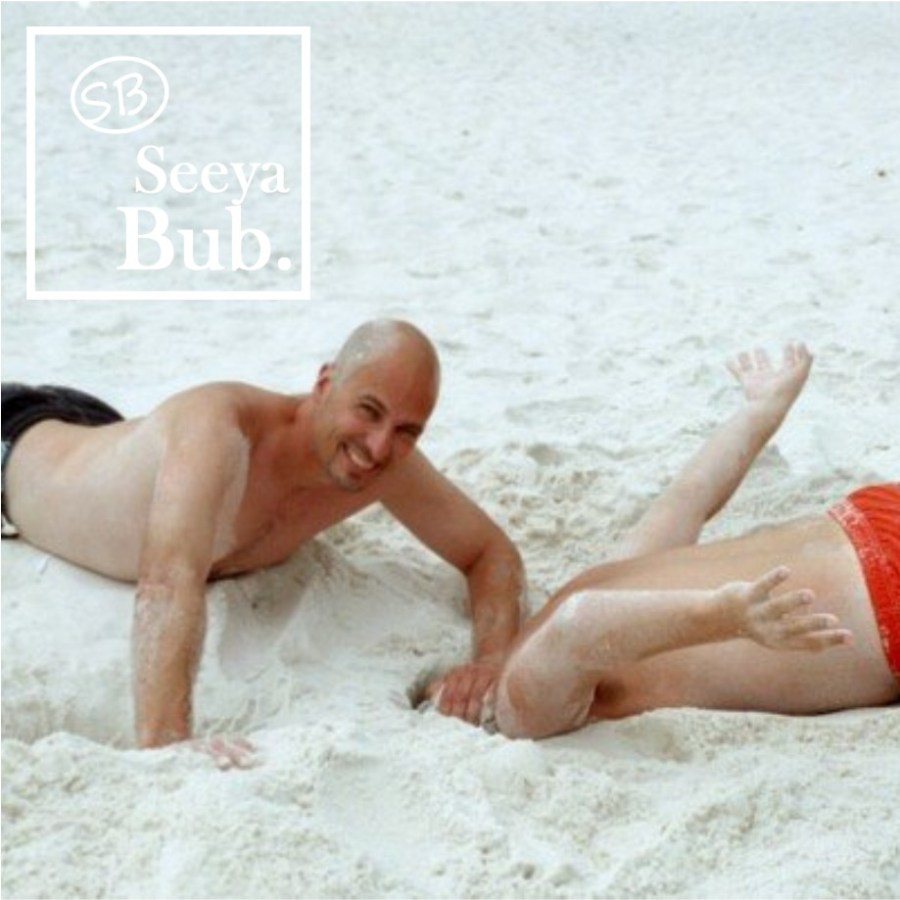
I can always remember the laughter when Dad would have me jump off the couch like I was jumping off of a turnbuckle (sorry Mom, but this is why the armrest cushion padding was always a bit smushed on that one side…). He’d pretend like he was asleep or mortally wounded until the very last second before I would jump. Somehow, he’d spring up and catch me in his arms, spin me upside down, and pin me on the ground without doing too much cranial damage. I’d laugh, even though I was losing—frequently.
Aside from the fun, Dad would also challenge me to “get mean” and toughen up while I was wrestling with him, making sure that I never gave up even though he rarely (if ever) let me win. I wasn’t a very “mean” kid, and I think in some respect, my Dad never let me win because he wanted to toughen me up and have me prepare to wrestle in bigger battles that would inevitably come my way throughout life. When all was so seemingly perfect in my childhood, I don’t think either one of use could have ever envisioned the toughness we would both need to build to face what was looming for our family on the horizon.
I couldn’t have guessed that wrestling would define so much of our lives—both my Dad’s and my own. And it wasn’t the physical wrestling that ended up defining us. It was mental wrestling—and it’s still going on to this day.
It wasn’t until I learned that my Dad suffered from severe, clinical depression that I realized how much he struggled and grappled with his own emotions. He was constantly wrestling inside his head with fears of inadequacy and doubt. In his darkest moments, he was plagued with questions of whether or not he was enough, even though God and everyone in his life tried to encourage him. Mental illness is a unique enemy. I won’t say it’s any more or less difficult than other things we all face in life; I’m just acknowledging that it’s unique. If you’re struggling at work or school, you can go home and find rest. If you’re struggling with a friend, you can distance yourself. But our heads are always with us, and for the individual who is mentally ill, there’s no off switch. Those feelings can be so unrelenting, and at times, it can feel like there’s no escape. I honestly believe that’s why my Dad’s response when his depression reached its peak was to physically escape from the world around him—even though that approach offered little hope of long-term success or wellness.
I believe the most difficult part of my Dad’s wrestling stemmed from the fact that he was facing off against an invisible enemy and he didn’t always ask for a partner to tag in and help. As I grew older, I learned not to blame my Dad for his mental illness, and I was fortunate that at the time of his death, I never dealt with feelings of blame towards my Dad for the way he died. Don’t get me wrong—I was angry. But not at my Dad. I was angry at depression, mental illness, and a disease that cut his life entirely too short.
But just because I didn’t blame my Dad doesn’t mean that I wouldn’t do things differently if given the opportunity, and at the top of the list is a wish for my Dad to have reached out to get the help that he needed and deserved. My Dad would take medication to help with his depression, and then when he would start feeling well again, he believed he no longer needed the medication to help him (a vicious cycle that many, many individuals struggling with mental illness deal with). Because my Dad was a strong guy who could fix just about anything, he also didn’t seem to have it in his DNA to go and see a therapist or professional counselor who could help him talk and work through his illness. My Dad was a helper in every area of his life, and I think that led to him not being able to ask for help himself when he needed it most.
I hate that my Dad often wrestled behind the curtain. I hate that he felt such unbelievable shame that he couldn’t bring it upon himself to share his struggles with others or seek professional help in the form of counseling or psychological therapy. It’s like watching that tag team wrestling match in which the guy in the middle of the ring clearly needs to tag his partner, but he just can’t bring himself to admit that he might need the assistance.
Watching my Dad wrestle has taught me a lesson—a lesson I never thought I’d need to learn about how we deal with mental illness, but also how we deal with grief.
Since losing Dad, I’ve spent a lot of time wrestling as well. Unfortunately, I think it’s the burden that many of us who lose a loved one to suicide are dealt. Could we have done more? Could we have said more? Could we have loved more? What could we have done to build a shelter for the storm forming on the horizon? It’s a difficult place to be that’s riddled with guilt, sadness, and perpetual questions.
However, I believe there’s great growth in the wrestling that happens in our lives. It isn’t always pleasant, and we often leave bloodied and bruised, but time and life circumstances can provide perspective if we are willing to seek it out.
I firmly believe that when it comes to our thoughts and beliefs, we have to wrestle with them in order to understand why we believe them in the first place. That’s why I think so many people struggle with Christianity in America—it’s always been something that’s just there and accepted, which means we often take it for granted and don’t wrestle with the deep tenets of our faith to understand what they mean and why they are important. I’ve seen this principle play out in my life in so many different areas. I firmly believe that the best lessons I’ve learned in the college classroom have been the ones that I’ve had to fight hard with to comprehend. The best books I’ve read have been the ones that have challenged me with complex characters, extensive vocabulary, and elaborate plotlines. And even when I think back to my own childhood, my Dad was my greatest wrestling partner because he was stronger than me and because he didn’t let me win. I learned something in the struggle.
And wow, have I wrestled with my Dad’s death. In the dark night of the soul that often accompanies our weightiest grief, I’ve struggled to come to terms with how a loving God—in control of every aspect of the universe He created and every son or daughter who lives in it—could allow mental illness and suicide to defeat my Father. There are some moments of wrestling in which I can answer that question quickly. I can accept the fact that God loves me, loves my Dad, and in no way intended for this to be the way his life on Earth ended.
But I’d be lying if I didn’t admit to more difficult moments of wrestling. Sleepless nights full of tears when the answers are elusive have been a regularity in the months and years since losing Dad. Maybe you’ve been there too. Maybe you’re there now.
God, in my opinion, calls us to take those burdens that we wrestle with and let Him carry the weight. That doesn’t mean that we stop wrestling. It doesn’t mean that we stop the questions with the clasp of our hands in prayer, but it does mean that we trust Him to eventually help us find the answer, and we believe that there’s a purpose to our confusion, grief, and lack of understanding. The answer may not come when we want it, and it may not come in the form we hope for—and we should be grateful for that. It will come in a way and at a time that is more perfect than we could ever imagine.
The result of our wrestling is not automatic or instantaneous peace—it’s a path forward. That path may look difficult and be quite unwelcome. That path might include regular counseling, medication, a dedicated health regimen, forgiveness (both for ourselves and others), or confession. But any path towards health is better than a wrestling match that never has a resolution. I’d rather risk a loss or misstep here or there, or even brief momentary pain, than to be caught in a perpetual state of not-knowing.
When it comes to mental struggling or emotional wrestling, God never puts us in a tap-out position. We might be in pain. We might be hurting. We might need to reach out and tag in a partner to help us. We might have to ask our ringside coach for a bit of advice or wisdom. But God never wants us to tap out. He gives us all the strength and resources we need in those instances if we are just willing to admit that we need it.
For those of us who struggle with mental illness in any of its forms and manifestations, we must believe that there is a purpose to the wrestling. We don’t need to welcome the pain with an ever-present smile, because that’s phony. I don’t trust people who act like they embrace pain—there’s a whole different set of clinical disorders to describe that. But even though wrestling can be painful and might not yield an immediate victory, we realize and recognize that there’s a deeper purpose and more intricate plan tied to every aspect of our lives that will, eventually, reveal itself to us. With that perspective, like any good athlete, we learn to welcome the wrestling even if it’s difficult work. We learn that our greatest beliefs will only be strengthened if they are challenged and grappled with. Most importantly, however, we acknowledge that wrestling is worth it when our teammate—God—always provides a way out, even if we can’t see it in the midst of our struggle. The wrestling isn’t always fun, but it’s worth it.
When we wrestle well—meaning that when we recognize that in our struggles we are never on our own and when we are willing to admit our difficulties and ask for help—we learn and we grow tremendously. We build spiritual and emotional muscle that helps us to overcome some of life’s greatest difficulties. Even though my Dad might have eventually been overtaken by his mental illness, I’m confident that he did wrestle well throughout his life. He is not defined by that one failure, but he is defined by all the years within which he lived healthy and happily. He is defined by the wife he loved, the son he raised, the people he helped, and the God he served. One day on my Dad’s record of life cannot and will not erase the fact that for fifty years before that, he wrestled victoriously. And as long as I live, I’ll remember those lessons that my Dad taught me in his everyday life, as well as in our mock family room Wrestlemanias.
And even thought you might not always win, never forget….jumping off of a couch “turnbuckle” is a ton of fun. When your significant other or parent isn’t home, give this one a try.
 Dad, Remember how much fun we used to have wrestling on the family room floor and laughing as you constantly beat up on me?! It doesn’t sound like as much fun as it really was, now that I write that. Dad, I appreciate that in wrestling, and in a lot of areas of my life, you never just let me win. You always made me earn it, which made me value the struggle and see the purpose of it. I’m glad that, for so long, you wrestled well. I know there were probably many days when you felt like your depression would overtake you but, somehow, you found the strength and the purpose to fight on. I’m grateful that you modeled that kind of strength, and I want you to know that when I think about your life, I think about these types of victories—not the way in which you died. I think about how proud I am of you for fighting as hard as you did for so long. Thank you for always allowing me to see the purpose in wrestling well and fighting through those difficult moments. It’s ironic that the lessons you taught me were preparing me to navigate life after losing you. I don’t always do it perfectly—I fall well short on most days, in fact. But even in your death, you have been a great Father to me. Thank you for loving me enough to teach me how to wrestle well. I miss you terribly, Dad. There have been so many moments where I just wish I could be back to those moments of being your young son again. But I know, in my heart, that we will have those days again. Until that day, seeya Bub.
“We can rejoice, too, when we run into problems and trials, for we know that they are good for us—they help us learn to be patient. And patience develops strength of character in us and helps us trust God more each time we use it until finally our hope and faith are strong and steady. Then, when that happens, we are able to hold our heads high no matter what happens and know that all is well, for we know how dearly God loves us, and we feel this warm love everywhere within us because God has given us the Holy Spirit to fill out hearts with his love.” Romans 5:3-5 (TLB)

 Dad, At times, Christmas has felt so empty without you. My heart has been enraptured with pain when I think about what was stolen from you and us by mental illness. You deserved many more Christmases. You deserved to celebrate with our growing family, and to eventually be a Grandfather who were spoiled with your generosity and sense of childlike wonder. The holidays had a special sparkle when you were here to celebrate them, and since you’ve been gone, we’ve all felt an overwhelming sense of loss, guilt, and sadness. But the gift that was given to us was the reassuring truth of knowing that you are safe in God’s arms—free of pain, distress, and all the unfair difficulties that haunted you in this life. Dad, there is no question in my mind where your Eternal mailing address is. I know you are in Heaven, watching down over all of us and telling us that life is going to work out even on the days when the pain of losing you makes it hard to believe. I think of you all the time, but even more so on Christmas. Christmas was a happy time because you provided so much joy to those you loved. Watching the way you enjoyed spending time with your family has been an inspiration to me, and I wish you and I could sit around, share a glass of punch, and laugh again the way we always did. Dad, thank you for teaching me what it means to be a man who loves his family not just at Christmas, but every day of the year. I have many more Christmases to go without you, but I’m looking forward to that first one we can spend together in Eternity. Until that day, I love you. Merry Christmas, Bub.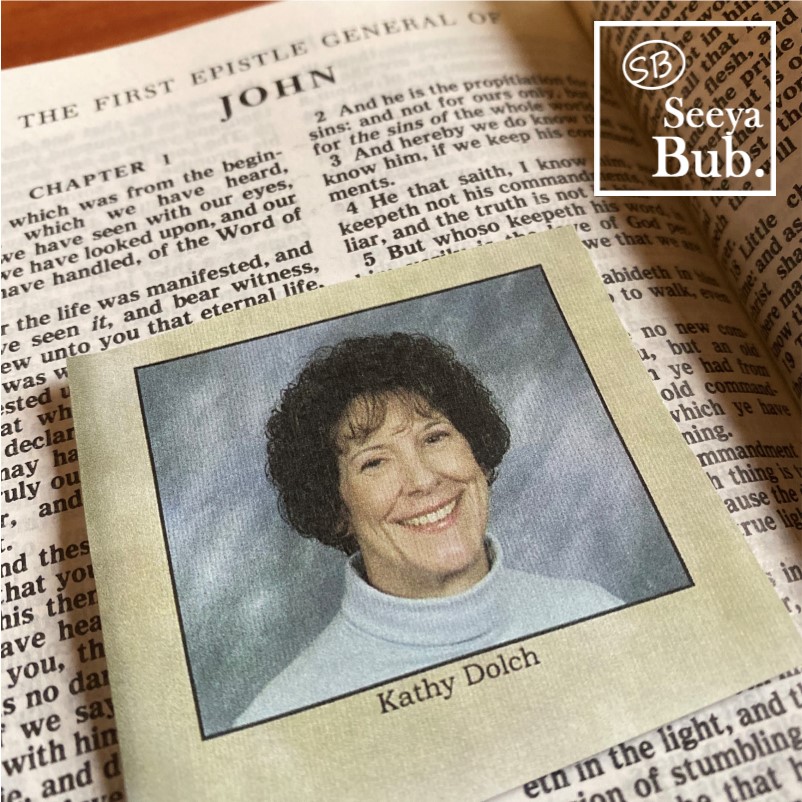
 Dad, For so long, I’ve tried to understand the level of despair you were feeling in the moment that your life ended. For the longest time, I wasn’t able to empathize with your pain. But individuals like Kathy have come into my life since losing you and have helped me gain that level of empathy. Dad, I am so sorry that you were hurting for so long. I’m so sorry that I wasn’t more forgiving in the times when you were hurting. I wish we had been able to help you find the healing that you needed and that you deserved. Dad, you had so much more to accomplish in this life. You had so many talents to contribute, and so many people left to love. I don’t know that I’ll ever understand how someone with such an unbelievable level of kindness, skill, and grace could feel as helpless as you did. But Dad, I promise to you that you will never be defined by your death. I will do everything I can to make sure that people remember you for the vivid life you lived, and I’ll make sure that your death (like Kathy’s story) gives people a hopeful reminder that life is worth living. Dad, thank you for equipping me with the courage to face life head-on in the aftermath of your death. It’s amazing to think that you were always teaching me the skills I would eventually need to deal with life after you. I’ll never stop learning from you, and I can’t wait to thank you for always giving me that inspiration. Until the day when I see your face again, seeya Bub.
  Kathy Dolch
 In
In  The books and bobbleheads had been removed months earlier, but the chair molding and paint were still on the walls, and I couldn’t help but run my hands across the work Dad had done and feel like I was right there next to him again. His work put breath to his memory even though he had taken his final breath many years ago. He treated that job, like every job he had, with an obsessive attention to detail, making sure the chair molding ran into the closet, ended at a perfect angle, and didn’t impede the closet door’s ability to close. It was exactly what I wanted.
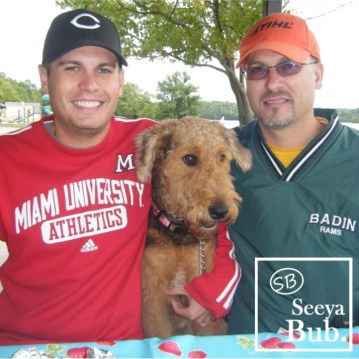 Dad, Leaving my house on Gateway Drive for the last time felt like I was leaving another piece of you behind. It’s so easy for me to associate you with that house because you were so instrumental in making my first home a reality. You were there, step by step, as I faced the challenges of becoming a new homeowner, and you helped me face those head-on….or shell-on in the case of that vicious snapping turtle in the pond! I have so many positive memories of the year that we lived right next door to one another. I miss you showing up at the backdoor and hanging out just because you wanted to say hello. There were moments in that home after losing you that were so difficult—but they were also so important. They were moments where I could picture you and see you and hear your voice again, and as the years wear on, part of me worries that I’ll lose some of those memories. But Dad, you’re always with me—whether I own that home or not. You’re always walking right alongside of me guiding and directing me, and I’ll never, ever forget that. I’m glad for that year we spent as neighbors, but I’m even more grateful for the 26 years we spent as Father and Son. Dad, I’ll never quit loving you. I’ll never quit wishing you were still here with us, and that the pain you felt on this Earth had never existed. But I’ll also never stop thinking about the moment that you and I will be reunited again in Heaven. We will be neighbors in an Eternal Kingdom, and I’ll look forward to more-than-a-lifetime of laughter and love again. But until that day, seeya Bub.
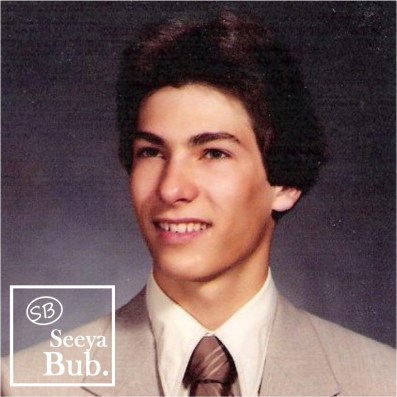 Dad, You lived a big and vibrant life while you were here with all of us, and your absence is even more noticeable and painful because the void left behind is so great. You deserved to live a fuller life than the one you experienced, and I’m sorry I didn’t do more to make that dream reality. Dad, I would have loved watching you grow old—even though it might not have been as much fun for you as it would have been for me. I would have loved seeing you on my wedding day, and you have no idea how much I would have appreciated your wisdom about navigating this new chapter in my life because you were such an amazing husband for Mom. And yes, I would have loved watching you become a grandpa more than anything else. I know you would have been silly and goofy and ridiculous—and completely adored by your grandchildren. But Dad, as much as I wanted to watch those things for myself, I’m ultimately saddened because you earned the right to experience all of those wonderful things. I hate mental illness and suicide for robbing you of these life chapters. Mental illness separated you from us and from many wonderful, beautiful moments that awaited your future. And although I won’t get to watch you enjoy life, and although I’ll always have questions about why this happened to you, I do find peace knowing that you’re not suffering any longer. I find a sense of comfort knowing that the unjustified feelings of shame and embarrassment that you experienced in this world are completely gone and fully redeemed. And I know that as great as any experience you could have had here with us might have been, you’re experiencing a joy and beauty beyond any other as you bask in the glory of Heaven and God’s everlasting love and paradise. Dad, keep watching over me, and keep reassuring me that you were called Home for a reason. I love you, and I wish we could have experienced more of this life together; but I know there’s a greater reward and an unbelievable reunion awaiting us. Thank you Dad, and until the day when we are reunited forever, seeya Bub.
 Most nights, Lucy would make her way into my room, usually at just the right moment. She would push the door open with her snout, tail wagging feverishly, and climb up onto the bed. After arriving, Lucy would place a paw on either side of my shoulders and lick my face until I begged her to stop. A twin mattress doesn’t provide much room for a grown man and a 70-pound dog, but Lucy made a way. She would curl up alongside me and lay her head across my chest. And in those moments, even though she was a dog and might not have understood human emotions, Lucy soothed my heart in ways I’ll never be able to describe.
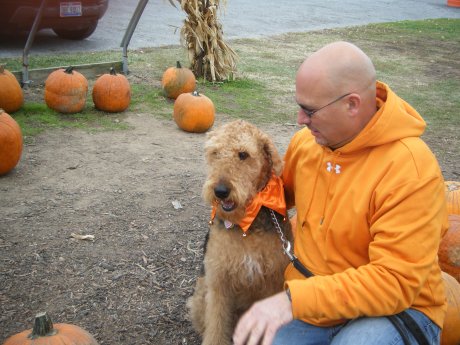 Lucy also helped soothe my pain because of the fact that
  It was that puppy companionship, along with many other wonderful people and things, that helped me heal and grieve my Dad properly. I had so many wonderful people who knew exactly how to minister to me after losing Dad—my Mom, my grandparents, my church family, my friends, my coworkers, my neighbors, and even complete strangers. I also found little things I could do to help me grieve for Dad properly—things to help me forget about the pain of losing him. I read my Bible frequently in my study. I wrote feverishly—some of those scrawlings eventually turning into the foundations of this project. I exercised frequently, although the Ryan Gosling physique (or anything
  remotely close) still eluded me.
 On other days, I would let Lucy hop up into the passenger seat of my car and we would take a drive together. Lucy really enjoyed driving around town, and her excitement created smiles and laughter in neighboring vehicles as she sat calmly next to me in the car with her seatbelt on. I would make a conscious effort to go through drive-thrus with Lucy to show her off to anyone who would remark about what a cute pup she was. She was cute—she deserved the adoration!
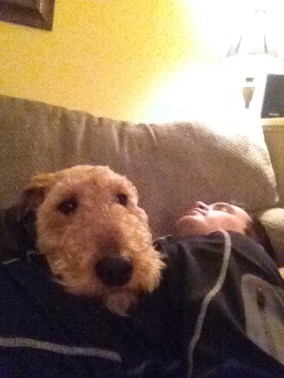 It’s hard to describe, but in those moments, Lucy would nervously saunter up to my side when she knew I was hurting. It was like she understood that she needed to be by my side. And that’s what she would do. She would hop on the couch and lay her head in my lap. She would leave all her toys (and boy did she love toys) to just lay near me. I would gently pat her head or her back, and slowly, her presence would help me escape from that immediate terror. She did more for me in those moments than I could ever tell her. Lucy showed me what it meant to be “man’s best friend.”
 That sadness would often give way to anger. Lucy’s death was completely avoidable and unnecessary. A groomer that we had trusted—a groomer who knew the despair of our family situation—had cared so little about our family and our pet that he let her die as a result of his negligence. As you might imagine, the story of Lucy’s death attracted the attention of a local news station.
  I bought a pound of the licorice dogs (and a few other goodies, of course), and the second Paige and I got into the truck, I opened the bags and started chowing down. I tasted the licorice, and it brought back all the memories of Lucy and how funny it was to watch her eat licorice. I began recounting the story to Paige, and before I knew it, I was flashing back to the moment I lost her. All of the sadness and despair of her death was as real then as it was on the day I lost her—all because of a piece of licorice that reminded me of her.
 On occasion, I’ll put on that
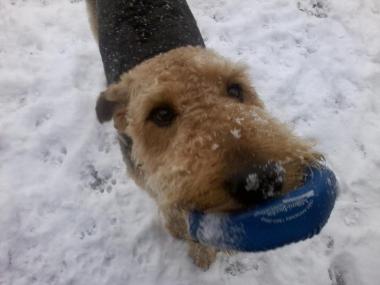
 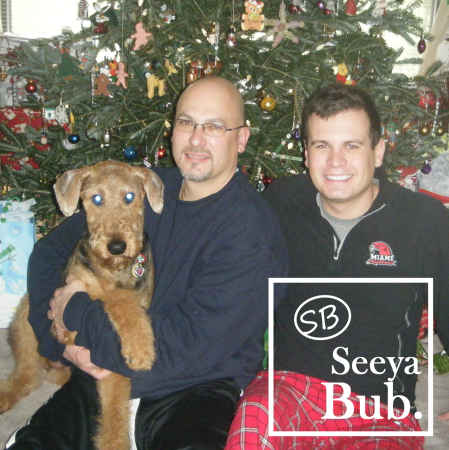 Dad, I need to tell you that I’m sorry and that I’m thankful. I’m sorry that I acted so stubborn when you chose to bring Lucy into our family. I’m sorry that I acted like a “little jerk” (your words…and mine) when you were just doing what was best for us. Ultimately, I’m so grateful that you chose Lucy. I’m grateful that you raised her and trained her and taught her to be a fun, family dog. We had no idea how much we were going to need her fun-loving, thoughtful companionship after losing her. In a way, I feel like Lucy carried on so many of your personality traits after you were gone. She was a constant reminder of the zest and excitement you had for life. She was there to help us grieve in so many ways after you left us. I think Lucy was your angel here on Earth for us. I think that she was your way of telling us that life, even when it’s painful, can still have a lot of joy and happiness. Losing her was like losing you all over again. It was as if another piece of you—a very important piece—was gone forever. But Dad, I know that we will never lose you entirely. Your memory will always live on in our hearts and in our minds because you made such an indelible mark on all of us. Dad, thank you for Lucy. Thank you for teaching her to love us when we needed it most. Although I miss you both dearly, I hope that you are together again in heaven—and I hope there are plenty of Frisbees to toss. You deserve paradise, Dad. You deserve the greatest things that God can offer, and I can’t wait to experience that joy alongside you. Until that day where you and I are together again in a life that knows no end, seeya Bub.
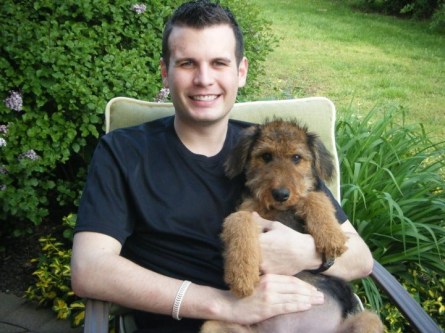
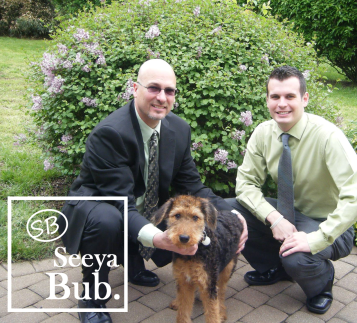
 From the moment she came home, Lucy was impossible to resist. I have a weak-constitution for puppy cuteness, and Lucy melted my defenses rather quickly. Airedale terriers are adorable puppies. What will eventually grow into a 60 or 70-pound dog starts out as an eight-pound ball of fur with a shortened snout and gangly legs. Lucy looked like most Airedale pups I had seen in photographs, but there was one defining characteristic that was different. Lucy had a tiny little white patch of fur right on the middle of her chest. I had never seen an Airedale with any color fur other than black and brown. Immediately, she was different from the rest; and the more I got to know her, the more wonderfully different I discovered she was.
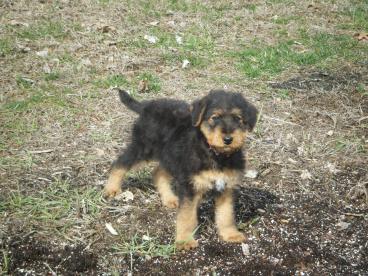 Dad sat the blanket bundle down on his lap, and Lucy poked her head out from the blanket mound and peered around our family room. She looked straight at me with her dark eyes, and when she made her way down onto the carpet and slowly meandered towards me, I knew that I was done. My resistance would have to fall, because this pup was just too cute. With the pain of losing Willow momentarily fading, I reached down and scooped Lucy into my arms. For the rest of the night, she and I spent our time on the couch as she adjusted to her new surroundings. A few times, I glanced at Mom and Dad and saw them giving one another that familiar “I told you he’d cave” look. I tried my best to not let them get any satisfaction from defying my gutless order to not bring home another family dog, but it was useless.
 And from that moment on, I don’t think I ever quit loving Lucy. Even if my stubborn pride wouldn’t let me admit it.
 Lucy had that in abundance. Lucy’s calm demeanor during the first 24 hours of her life in my family was a well-executed mirage delivered by a sneaky infiltrator. When I came home on Lucy’s second day in the Bradshaw house, the docile, pleasant pup that I had left that morning was replaced with a rambunctious, mischievous, four-legged fur-covered peddler of destruction. When I came home that day, my poor Mother looked like she had barely survived a hurricane. She looked at me with a frazzled exasperation as Lucy, with toys strewn all across our normally-clean family room, bounced and barked and bolted to every corner of the house. She was worse than a baby because she was faster. I couldn’t believe she had fooled us! Lucy had spunk—and a whole lot of it.
 But with Lucy, it was different from the start. She was immediately allowed onto the couch—and I was shocked! And then, the unthinkable happened; Mom actually let Lucy sleep in the bed with her! What world was I living in?! Who had abducted my Mom and who was this woman that now gladly beckoned the dog onto the furniture?
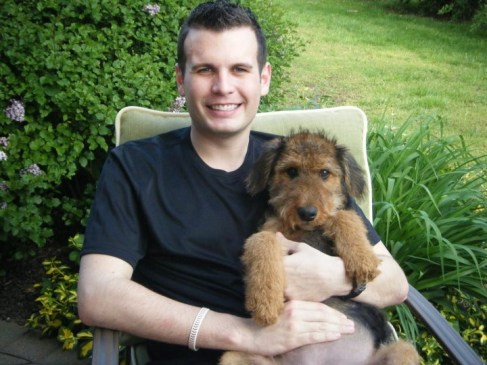 When Lucy was little, I used to carry her around the house quite often. And unlike most dogs, she really enjoyed being carried! After a little while, it got more and more difficult to carry her around as she continued to grow. And by the time she reached 40 pounds, our little puppy, who I affectionately called “Monkey”, was a bit to heavy to carry with one arm. So I did what any normal person would do.
 I would actually pick Lucy up by her front legs and toss them over my shoulder. Then, Lucy would wrap her hind legs around my waist, and I would comfortably carry her around as she nuzzled her snout on my shoulder. Looking back, it’s the most ridiculous thing I could ever imagine doing as a dog owner.
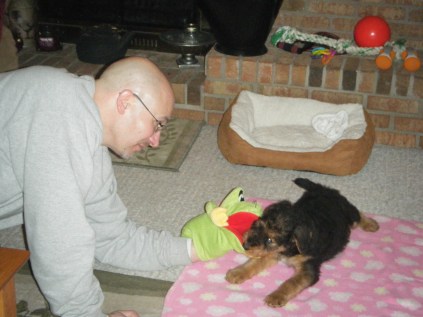 Thankfully, my Dad, our dog-whisperer-in-residence, was there to take care of most of the discipline and direction when we first got Lucy. My Dad loved working with animals, even when the animals weren’t easy to work with. I think he saw teaching pets as a challenge that he wanted to conquer, and he had a way of showing love through firmness. Quickly and efficiently, Lucy was housebroken and learning how to sit, lay down, and yes…play hide and seek with Dad. My Dad had a special talent, and we all benefited from it.
 Dad, being a playful guy, did everything with Lucy. If he was home, he wanted to be near her. If he had a bonfire in the backyard, Lucy was with him. If he was eating dinner, she was patiently waiting for a scrap nearby. If he was taking a nap, she was on the couch cuddled next to him. There were hour-long walks to the park, trips to the dog beach at Hueston Woods, and countless other memories that the two of them created together. They are memories filled with laughter and companionship, but joy more than anything else.
 And Lucy was there to help me—and all of us—find a small ray of light in the midst of the dark clouds that enveloped our family. Lucy—sweet Lucy—would help to save us as best she could.

 Every single day is difficult—all 1,827 of them; but every single year, July 24 is a date that stares at me from the calendar. It looms in the distance for months, and when it passes, I always breathe a sigh of relief that it’s come and gone. But I know, deep down, that it’s coming again. It will always be there. No particular July 24 has been more or less difficult—just different. But because of the nice, round number, this one feels like a milestone. A milestone I wish I didn’t have to reach.
 But guess what? No amount of procrastination could stop that date from coming. No amount of denial could stop me from thinking about what this day represents. This day would come—and yes, it would eventually pass—but the second it did, the clock just begin counting down towards another unfortunate milestone. The next Christmas. The next birthday. The next Father’s Day.
 On the other side of all that grief and sadness, there will be an everlasting love made whole again. On the other side of that grief, there will be a man whom I recognize, smiling and welcoming me into his arms. In that moment, I’ll love never having to say “seeya, Bub” again. That day is coming, although it’s very far off.
 Dad, I cry so much when I think that it’s been five years since you and I last talked. Sometimes, those tears are unstoppable. We never even went five days in this life without talking to one another. Dad, it really has felt like an eternity—but sometimes your memory is so real and so vivid that it seems like it was just yesterday when we lost you. But I know the real time. I know that it’s been five whole years since we’ve been able to be in your presence. And life simply isn’t the same without you. We all cling to your memory. We marvel at the things you built and the way you provided for our family. We laugh about the funny things you did to make life more fun. But I also weep when I think about how much life you had left to live. Dad, I’m so sorry that you were sick. I feel horrible that we couldn’t do more to help you find the cure you deserved. I’m sorry that you were robbed of the life you deserved to enjoy. I’ve felt so much guilt in losing you Dad. I know that you don’t want me to feel this way, but I just wish there was more I could have done. You deserved that, Dad. You deserved more, because you gave everything. As painful as these five years have been, Dad, I find peace in the truth of Eternity. I find comfort knowing that you are enjoying God’s eternal glory in a paradise that I can’t even begin to fathom. Dad, thank you for watching over me for these past five years. Thank you for never giving up on me—both in this life, and in the next. Thank you for giving me a lifetime of memories and an example of what fatherhood should be. I love you, Dad. I always did, and I always will. Thank you for loving me back. Until I see you again, seeya Bub.
 Dad, There have been so many times when I’ve thought about the fear you must have experienced in your life. You were always my Superman—that strong rock and foundation in my life when everything else seemed dangerous. On the outside, you were always “Mr. Fix It,” and I know it bothered you that you couldn’t solve your own struggles with depression. On the surface, you always held everything together—for your family, for your friends, and especially for Mom and I. But Dad, I wish I could have told you that your struggles with mental illness were never a disappointment to any of us. We never thought less of you when you battled with your depression. Sick or healthy, we always loved you and wanted to be near you. You were never a failure to us, Dad. You never failed us, and I wish you had known that more. I am afraid of doing life without you. I have a fear that I can’t do what God is calling me to do to tell your story. But I know that He is with me, and I know that you are with me. I know that you are watching down and pushing me and urging me onward, just as you always did when you were here with us. We all miss you, Dad. We will never stop missing you. You never let me down, and I can’t wait to tell you that in person. Until that day, seeya Bub.
 Reverend Dan Walters
 Seeya Bub