
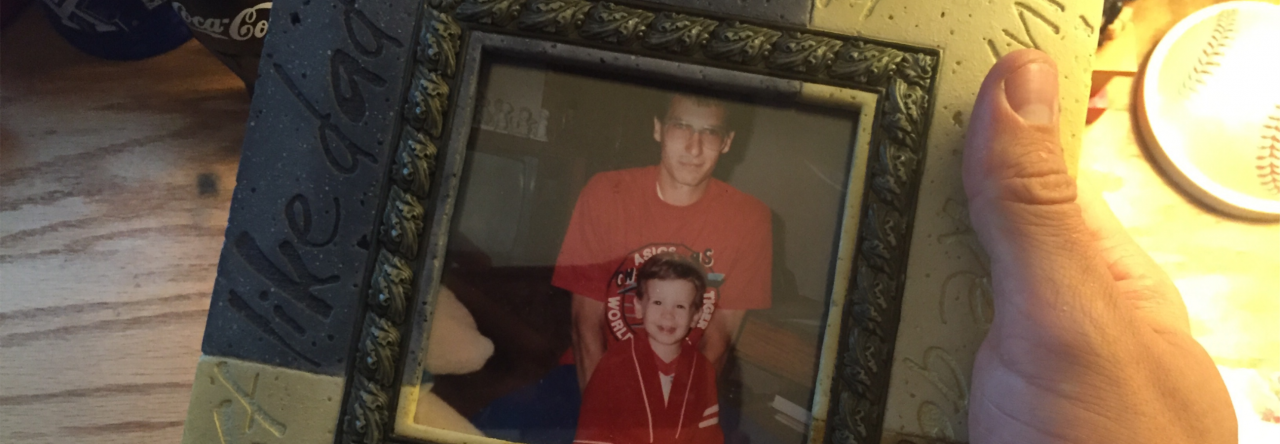

“I just don’t know if I can go back. How I can go back…”
My Dad died in late July, and I was set to go back to classes for the final year of my Master’s program in education—but I just didn’t know how I could do that. Full-time work and part-time school was taxing enough under normal circumstances, and my life was anything but normal after losing my Dad to suicide. On top of that, everything in life that wasn’t related to my Dad just felt sort of trivial. I wondered if it might be wise to take the year off, but I knew the dangers. Take a year off, and it’s easier to turn that into another year, and then another. Deep down, I knew that my Dad would not have wanted me to stall my progress towards my degree, but I felt extremely guilty getting back to the normal things in life because it felt like I was betraying my Dad’s death.
As I was contemplating what to do for this upcoming year, I got an e-mail from Dr. Kathy Goodman, the professor who would be teaching the Foundations of Research course that I had enrolled in. If I was nervous about continuing my studies while grieving, I was terrified of having to do it while learning about research principles and practices. Research was not my strong suit. I felt as if my classmates were all a few standard deviations ahead of me on their knowledge in this area (lame attempt at research humor, I know). On top of that, I had never taken a class with Dr. Goodman before. I didn’t know her teaching style, and I severely doubted my capacity to find success.
Then came Kathy’s e-mail. “I know that we haven’t been in class together yet during your time in the program,” Kathy said, “but I want you to know that I will do whatever I possibly can to help you be successful this semester.” Kathy expressed her condolences for my family’s loss, and she offered to help me with material, be flexible with deadlines, and allow me the space to grieve when it unexpectedly hit me. I just remember mouthing the word “Wow,” as I sat at my computer. This was a teacher who knew me only tangentially but clearly understood the pain that I was feeling.
I stayed in the course. And I completed it. And in May of 2014, I graduated with my Master’s degree. And getting there was partly possible because Kathy Goodman showed me grace.
I took a month off from work after losing my Dad. Unlike so many others who find themselves in my situation, I was fortunate to work for an employer that (a) understood I would need some time off, and (b) had given me the vacation and sick time necessary to do it. After having that month to grieve, spend time with my family, and adjust to a new normal of life after losing my Dad, I went back to work on the Monday before classes were set to resume for the Fall semester. My day was moderately productive, as I would weave in and out of being able to concentrate on my work and finding myself spiraling into my grief while trying my best to hold it all together.
I woke up on Tuesday morning after a largely sleepless night, and I just knew I didn’t have it in me. I knew that I was not going to have the mental energy to go in and slog through the day like I had done the day before. I grabbed my phone, and I texted my boss, Megan. I had known Megan since my undergraduate days at Miami University Regionals, and she had always done so much to support me—especially in the month since losing my Dad. I told Megan that I felt guilty because I had just been off for an entire month, but I didn’t know if I could come into the office today.
“Tyler,” she responded “Take the time you need. And take care of yourself.” Megan shared how much she was thinking of me and our entire family, and told me over and over again that she was willing to help in any way she could. She reinforced that she knew what I was dealing with was not easy, and she didn’t try to minimize my pain. And that level of care and compassion that she and our entire team at Miami’s Regional Campuses shared with me never ceded, even as the months after Dad died wore on. My colleagues were always, always there, and they always gave me the room to do what I needed to do to be okay.
I did take that day off of work. And over time, I found the courage to continue doing my job and taking care of myself. And it was because Megan and so many of my coworkers at Miami showed me grace.
After losing my Dad, Father’s Day has turned into a particularly painful recurrence. I have difficulty being able to celebrate the fathers that make our community special, but in the years after losing Dad, I was also on staff at our church as an outreach and connections pastor. I had responsibilities during every Sunday service to get up and offer the announcements and our opening prayer. I wanted to try and persevere on this particular Father’s Day and celebrate my own Dad by putting on a brave face and being at church that morning, but I knew it was an impossibility. My Dad’s funeral had been held in that same exact sanctuary, and every time I looked to the front of the room near the stage, I didn’t see the pulpit. Just as if it were still there, I still saw my Dad’s casket. I wondered if I’d ever stop seeing it.
I talked with my Mom about being scared to go to church on Father’s Day. I talked with my pastors, Harville and Dave. I talked with my therapist, Jeff. I talked with friends. In every conversation, I shared my concern about not wanting to be in church on Father’s Day, and the guilt I felt for having that feeling. Every person I talked to reassured me and told me that it was absolutely okay to not be there.
All of these people—every single one of them—gave me the freedom to grieve in my own way. And I did grieve, and eventually I did start going to church on Father’s Day again.
And it was all because the world and the people I loved showed me grace.
Grace, in my opinion, is the firm cornerstone of the grieving process, but more importantly than that, it’s the cornerstone of the human experience in general. When I reflect on the healing I went through during my own bouts with mental illness, my Dad’s struggles, and his eventual death from suicide, the common thread that weaves through the tapestry of those moments is grace. It was grace that always redeemed and carried me through—both the grace given to me by those in my life, and ultimately as a result of the grace given to all of us by God.
I’m confident that, in the months and years leading up to the loss of my Father, God positioned people full of grace into my life to serve as a shelter from the storm. I look back on how God moved people into my life that only He knew would need to be there when everything went dark. Those people, all in their own unique ways, let me know that it was okay to be grieving, okay to be hurting, and okay to have questions that would never receive answers. I’m thankful that they were all there to let me make mistakes and experience unpleasant emotions without ever judging me or expecting more of me than I could give. All of these individuals gave me the grace to grieve. The grace to take a moment and breathe. The grace to make mistakes, to cry unexpectedly and uncontrollably, and to do whatever was helpful for me to be well again.
I think especially of Paige. It can’t be easy living with a spouse who is grieving the traumatic and unexpected loss of a Father; but every single day, I know that it will be a bit easier to grieve because Paige will show me the grace I need to do it successfully. She will be there to hold my hand when I can’t explain how I feel. She will help find creative ways to honor my Dad and to celebrate the life he lived, even though she never met him. She is a living example of God’s grace in my life, and I’m thankful he blessed me with her.
My Mom. My grandparents. My cousins. My colleagues. My neighbors. My Dad’s coworkers. My church family. My classmates. The list goes on and on. It feels like I have a grace-inspired team that’s constantly in my corner, and I know I have God to thank for them.
And what makes this grace from God and those in my life even greater is that I had done absolutely nothing to deserve it. I can’t help but see that the same grace that was given and continues to be granted to me throughout the grieving process is the exact same grace that God calls us to embody and live out when we interact with those who are suffering from mental illness—a grace that I was unwilling to extend when it mattered most.
It’s not lost on me that, the first time I had the opportunity to show my Dad that grace when he revealed his mental illness, I failed the test. It’s not lost on me that, on the night my Father came home after being missing for three days while I was in high school, I had an opportunity to extend him grace but instead chose to be judgmental. I chose blame as my weapon. And accusation. And hurtful words and unnecessary threats. And self-righteousness. Instead of offering a hug, I offered a clenched fist. I reacted in anger when I should have responded with compassion. It’s the greatest regret of my entire life, and even though God has forgiven me for that severe misstep, I don’t know that I’ve often forgiven myself.
So, even if I don’t do it well all the time and often do it imperfectly, I’m working harder to realize the role that grace has played in my life, and I’m doing all I can to give it out more freely.
 As we’ve unfortunately seen over the past few months and years, we live in a world where grace is a rarity. It’s as rare to find grace as it is a full shelf of toilet paper or hand sanitizer (this joke will make absolutely no sense to people reading this fifty years from now, which makes it even more fun). We live in a world where grace is an exception to the rule rather than the expectation of it. We live in a world where grace towards others that we dislike, disagree with, or even despise is a gift we are simply unwilling to give. We decide to dole out grace in a different way than God directed us to. God gives out grace freely, but we ration it like it’s a resource that only deserving people deserve.
God just doesn’t see it that way.
We are all hurting in our own unique, unrecognizable ways—especially those struggling with mental illness. And if we know that everyone around us is hurting, we have to do more to extend grace their way—even when they don’t ask for it, and especially when they don’t deserve it. God doesn’t unequally administer grace, and I’m grateful for that. He doesn’t only administer grace to rich people, or good-looking people, or people who can tell funny jokes, or people who live in certain countries. No matter your hurts or struggles, no matter your missteps or mishaps, no matter your most sinister and evil thoughts, actions, or desires, God’s gift of grace waits for you each and every day.
When it comes to mental illness, we have to do more to be grace-filled healers to those who are hurting. We have to find ways to let people know that, if they are suffering, it is not their fault. We have to be able to let those who are hurting know that their struggles with depression, anxiety, schizophrenia, bipolar disorder, suicidal ideations, or any other host of mental illness is not a reflection of their character. It’s easy to cognitively believe that this is true, but the way we live our lives must also reflect that we accept it. That’s why, from day one, the motto of this blog has always been “It’s okay for you to not be okay, but it’s not okay for you to stay that way.” It’s a grace-filled mantra, and one that I repeat to myself often on days where I feel inadequate or unworthy. As much as I might be saying that to others, I’m also saying it to myself regularly, even if I imperfectly execute it.
And if you are struggling with mental illness or suicidal ideations, you have to do more than just receive grace from others. You have to be willing to extend grace to yourself. You must be willing to forgive yourself for any mistakes you’ve made, while also understanding that the way you feel is not always a result of what you’ve done or haven’t done. It’s that grace given to oneself that opens up a roadmap to healing—one that might include any regimen of treatments. To go and talk to a therapist or mental health professional, you must give yourself grace to escape the expectation of perfection. To regularly take medication, you must give yourself grace to accept your body and its unique physical/psychological processes. To exercise regularly, you must give yourself grace to realize you don’t have to be chiseled to set foot in a gym for the first time (if that was the case, they wouldn’t even let me set foot in the parking lot). Our ability to pursue any path towards healing requires that we accept that we are doing things to get better because we are worthy of being better.
And perhaps most importantly, if we are in the midst of a grief-filled period of life, grace will be the tool in the toolbox that we must rely on (and give to others) most frequently. Grace got me through my grief. Grace got me through the most difficult days. Grace got me through the days when all I wanted to do was sit in the bed and cry. Grace got me through those seasons of life within which all I could think about was how much I was falling short. Grace got me through all of that. And the only thing that will sustain me in the years to come will be receiving that grace from God over and over and giving it to everyone else in my life in return.
We don’t have to be perfect to receive that grace—I’m thankful for that!—and we also can’t hold back in extending grace to only people who get it right all the time. In fact, if people got life right all the time, there’d be no need for grace at all, and ultimately there would have been no need for a Savior. But because the world is imperfect and the people who inhabit the world are just as broken, we all need to find a way to both give grace and accept it. We have to be able to live with our mistakes and missteps while not keeping a permanent score of the same missteps of others.
I’m thankful that the God I serve is one who doesn’t expect perfection, but instead is in the business of redeeming lost children, like me. If God expected perfection, I would have had to throw in the towel a long, long time ago. Unfortunately, I had to learn the hard way. I’m thankful that God has forgiven me for all the things I’ve gotten wrong, because it’s allowed me (over time) to not expect that same perfection of others. My faith has taught me that grace, not perfection, but grace is the key to being loved by God and being able to love one another.
Just like my Dad was, grace has been one of my greatest teachers.
 Dad, I’m sorry that I did not extend you more grace when you needed it. I’m really sorry that, on that first bad day when you were hurting and suffering and feeling inadequate, I didn’t do more to make you feel loved. If I’m being truthful, it still haunts me when I think about the way I reacted to you with anger and judgement. It was ugly. It was unbecoming of a son who loved his father. I’m glad that I had other opportunities to be more kind and compassionate to you when you were hurting. Perhaps more than anything, I’m thankful that you were a Dad who didn’t expect perfection out of your son. You were a Father who helped me learn through my failures. You were a Father who taught me because you believed I could learn. Dad, I don’t judge you for your death and the way you left us. I’m not angry at you or bitter because you left too soon. I’m sad, and there are days when I’m devastated, and I miss you like crazy, but I don’t blame you for those things. I blame depression and mental illness and processes that, in our limited human understanding, we can’t make sense of. And that’s why, in your memory, I do my best to extend grace to everyone around me because I know, in their own ways, they are hurting too. Thank you for reminding me why this is important through the way you lived your life. Thank you for always living out grace in your own life. I so desperately wish you had been able to extend that grace to yourself in those last moments, but I know you’ve received it now in the full glory of Eternity. I’m looking forward to the day when we can experience that together. Until that day, seeya Bub.
“Each time He said, ‘My grace is all you need. My power works best in weakness.’ So now I am glad to boast about my weaknesses, so that the power of Christ can work through me.” 2 Corinthians 12:9 (NLT)

 Dad, At times, Christmas has felt so empty without you. My heart has been enraptured with pain when I think about what was stolen from you and us by mental illness. You deserved many more Christmases. You deserved to celebrate with our growing family, and to eventually be a Grandfather who were spoiled with your generosity and sense of childlike wonder. The holidays had a special sparkle when you were here to celebrate them, and since you’ve been gone, we’ve all felt an overwhelming sense of loss, guilt, and sadness. But the gift that was given to us was the reassuring truth of knowing that you are safe in God’s arms—free of pain, distress, and all the unfair difficulties that haunted you in this life. Dad, there is no question in my mind where your Eternal mailing address is. I know you are in Heaven, watching down over all of us and telling us that life is going to work out even on the days when the pain of losing you makes it hard to believe. I think of you all the time, but even more so on Christmas. Christmas was a happy time because you provided so much joy to those you loved. Watching the way you enjoyed spending time with your family has been an inspiration to me, and I wish you and I could sit around, share a glass of punch, and laugh again the way we always did. Dad, thank you for teaching me what it means to be a man who loves his family not just at Christmas, but every day of the year. I have many more Christmases to go without you, but I’m looking forward to that first one we can spend together in Eternity. Until that day, I love you. Merry Christmas, Bub.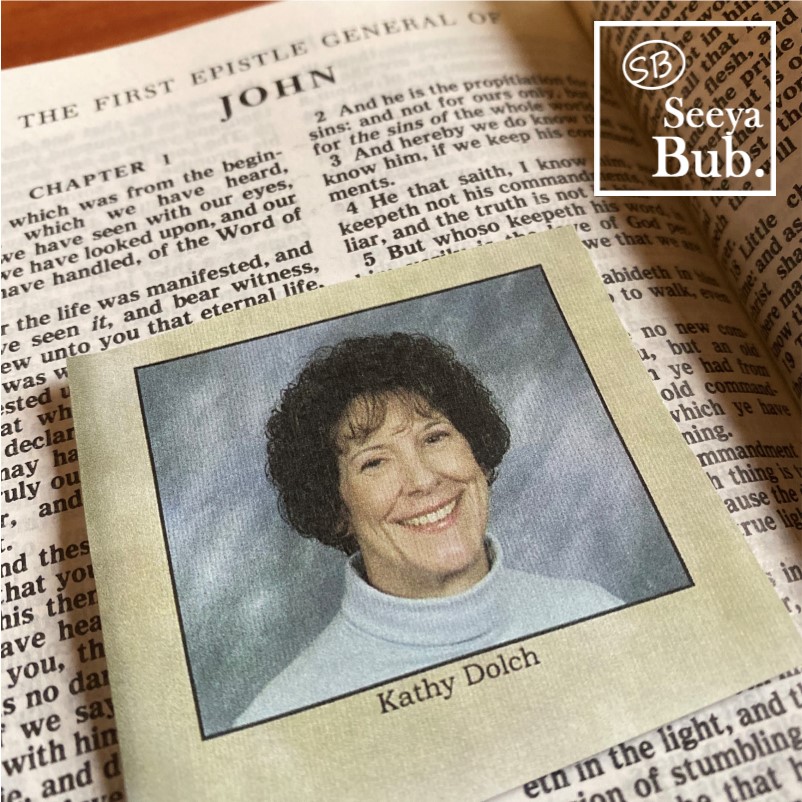
 Dad, For so long, I’ve tried to understand the level of despair you were feeling in the moment that your life ended. For the longest time, I wasn’t able to empathize with your pain. But individuals like Kathy have come into my life since losing you and have helped me gain that level of empathy. Dad, I am so sorry that you were hurting for so long. I’m so sorry that I wasn’t more forgiving in the times when you were hurting. I wish we had been able to help you find the healing that you needed and that you deserved. Dad, you had so much more to accomplish in this life. You had so many talents to contribute, and so many people left to love. I don’t know that I’ll ever understand how someone with such an unbelievable level of kindness, skill, and grace could feel as helpless as you did. But Dad, I promise to you that you will never be defined by your death. I will do everything I can to make sure that people remember you for the vivid life you lived, and I’ll make sure that your death (like Kathy’s story) gives people a hopeful reminder that life is worth living. Dad, thank you for equipping me with the courage to face life head-on in the aftermath of your death. It’s amazing to think that you were always teaching me the skills I would eventually need to deal with life after you. I’ll never stop learning from you, and I can’t wait to thank you for always giving me that inspiration. Until the day when I see your face again, seeya Bub.
  Kathy Dolch
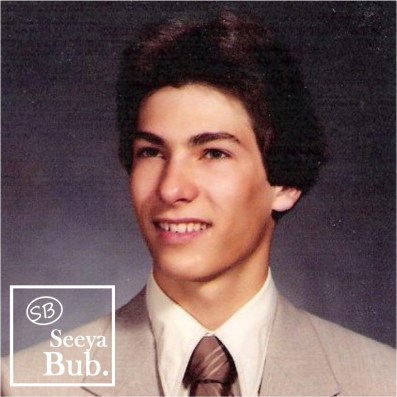 Dad, You lived a big and vibrant life while you were here with all of us, and your absence is even more noticeable and painful because the void left behind is so great. You deserved to live a fuller life than the one you experienced, and I’m sorry I didn’t do more to make that dream reality. Dad, I would have loved watching you grow old—even though it might not have been as much fun for you as it would have been for me. I would have loved seeing you on my wedding day, and you have no idea how much I would have appreciated your wisdom about navigating this new chapter in my life because you were such an amazing husband for Mom. And yes, I would have loved watching you become a grandpa more than anything else. I know you would have been silly and goofy and ridiculous—and completely adored by your grandchildren. But Dad, as much as I wanted to watch those things for myself, I’m ultimately saddened because you earned the right to experience all of those wonderful things. I hate mental illness and suicide for robbing you of these life chapters. Mental illness separated you from us and from many wonderful, beautiful moments that awaited your future. And although I won’t get to watch you enjoy life, and although I’ll always have questions about why this happened to you, I do find peace knowing that you’re not suffering any longer. I find a sense of comfort knowing that the unjustified feelings of shame and embarrassment that you experienced in this world are completely gone and fully redeemed. And I know that as great as any experience you could have had here with us might have been, you’re experiencing a joy and beauty beyond any other as you bask in the glory of Heaven and God’s everlasting love and paradise. Dad, keep watching over me, and keep reassuring me that you were called Home for a reason. I love you, and I wish we could have experienced more of this life together; but I know there’s a greater reward and an unbelievable reunion awaiting us. Thank you Dad, and until the day when we are reunited forever, seeya Bub.
 From the moment she came home, Lucy was impossible to resist. I have a weak-constitution for puppy cuteness, and Lucy melted my defenses rather quickly. Airedale terriers are adorable puppies. What will eventually grow into a 60 or 70-pound dog starts out as an eight-pound ball of fur with a shortened snout and gangly legs. Lucy looked like most Airedale pups I had seen in photographs, but there was one defining characteristic that was different. Lucy had a tiny little white patch of fur right on the middle of her chest. I had never seen an Airedale with any color fur other than black and brown. Immediately, she was different from the rest; and the more I got to know her, the more wonderfully different I discovered she was.
 Dad sat the blanket bundle down on his lap, and Lucy poked her head out from the blanket mound and peered around our family room. She looked straight at me with her dark eyes, and when she made her way down onto the carpet and slowly meandered towards me, I knew that I was done. My resistance would have to fall, because this pup was just too cute. With the pain of losing Willow momentarily fading, I reached down and scooped Lucy into my arms. For the rest of the night, she and I spent our time on the couch as she adjusted to her new surroundings. A few times, I glanced at Mom and Dad and saw them giving one another that familiar “I told you he’d cave” look. I tried my best to not let them get any satisfaction from defying my gutless order to not bring home another family dog, but it was useless.
 And from that moment on, I don’t think I ever quit loving Lucy. Even if my stubborn pride wouldn’t let me admit it.
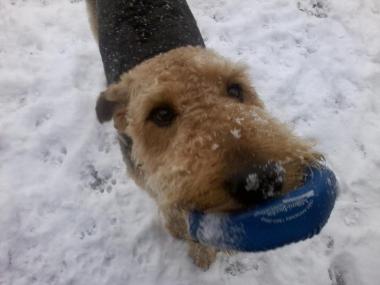 Lucy had that in abundance. Lucy’s calm demeanor during the first 24 hours of her life in my family was a well-executed mirage delivered by a sneaky infiltrator. When I came home on Lucy’s second day in the Bradshaw house, the docile, pleasant pup that I had left that morning was replaced with a rambunctious, mischievous, four-legged fur-covered peddler of destruction. When I came home that day, my poor Mother looked like she had barely survived a hurricane. She looked at me with a frazzled exasperation as Lucy, with toys strewn all across our normally-clean family room, bounced and barked and bolted to every corner of the house. She was worse than a baby because she was faster. I couldn’t believe she had fooled us! Lucy had spunk—and a whole lot of it.
 But with Lucy, it was different from the start. She was immediately allowed onto the couch—and I was shocked! And then, the unthinkable happened; Mom actually let Lucy sleep in the bed with her! What world was I living in?! Who had abducted my Mom and who was this woman that now gladly beckoned the dog onto the furniture?
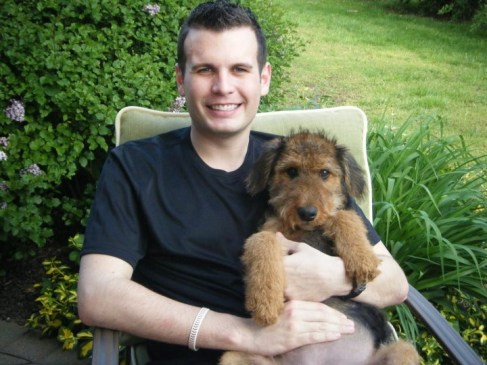 When Lucy was little, I used to carry her around the house quite often. And unlike most dogs, she really enjoyed being carried! After a little while, it got more and more difficult to carry her around as she continued to grow. And by the time she reached 40 pounds, our little puppy, who I affectionately called “Monkey”, was a bit to heavy to carry with one arm. So I did what any normal person would do.
 I would actually pick Lucy up by her front legs and toss them over my shoulder. Then, Lucy would wrap her hind legs around my waist, and I would comfortably carry her around as she nuzzled her snout on my shoulder. Looking back, it’s the most ridiculous thing I could ever imagine doing as a dog owner.
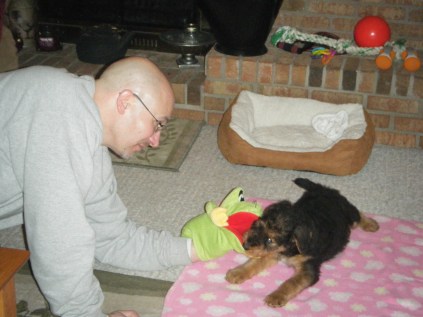 Thankfully, my Dad, our dog-whisperer-in-residence, was there to take care of most of the discipline and direction when we first got Lucy. My Dad loved working with animals, even when the animals weren’t easy to work with. I think he saw teaching pets as a challenge that he wanted to conquer, and he had a way of showing love through firmness. Quickly and efficiently, Lucy was housebroken and learning how to sit, lay down, and yes…play hide and seek with Dad. My Dad had a special talent, and we all benefited from it.
 Dad, being a playful guy, did everything with Lucy. If he was home, he wanted to be near her. If he had a bonfire in the backyard, Lucy was with him. If he was eating dinner, she was patiently waiting for a scrap nearby. If he was taking a nap, she was on the couch cuddled next to him. There were hour-long walks to the park, trips to the dog beach at Hueston Woods, and countless other memories that the two of them created together. They are memories filled with laughter and companionship, but joy more than anything else.
 And Lucy was there to help me—and all of us—find a small ray of light in the midst of the dark clouds that enveloped our family. Lucy—sweet Lucy—would help to save us as best she could.
 Every single day is difficult—all 1,827 of them; but every single year, July 24 is a date that stares at me from the calendar. It looms in the distance for months, and when it passes, I always breathe a sigh of relief that it’s come and gone. But I know, deep down, that it’s coming again. It will always be there. No particular July 24 has been more or less difficult—just different. But because of the nice, round number, this one feels like a milestone. A milestone I wish I didn’t have to reach.
 But guess what? No amount of procrastination could stop that date from coming. No amount of denial could stop me from thinking about what this day represents. This day would come—and yes, it would eventually pass—but the second it did, the clock just begin counting down towards another unfortunate milestone. The next Christmas. The next birthday. The next Father’s Day.
 On the other side of all that grief and sadness, there will be an everlasting love made whole again. On the other side of that grief, there will be a man whom I recognize, smiling and welcoming me into his arms. In that moment, I’ll love never having to say “seeya, Bub” again. That day is coming, although it’s very far off.
 Dad, I cry so much when I think that it’s been five years since you and I last talked. Sometimes, those tears are unstoppable. We never even went five days in this life without talking to one another. Dad, it really has felt like an eternity—but sometimes your memory is so real and so vivid that it seems like it was just yesterday when we lost you. But I know the real time. I know that it’s been five whole years since we’ve been able to be in your presence. And life simply isn’t the same without you. We all cling to your memory. We marvel at the things you built and the way you provided for our family. We laugh about the funny things you did to make life more fun. But I also weep when I think about how much life you had left to live. Dad, I’m so sorry that you were sick. I feel horrible that we couldn’t do more to help you find the cure you deserved. I’m sorry that you were robbed of the life you deserved to enjoy. I’ve felt so much guilt in losing you Dad. I know that you don’t want me to feel this way, but I just wish there was more I could have done. You deserved that, Dad. You deserved more, because you gave everything. As painful as these five years have been, Dad, I find peace in the truth of Eternity. I find comfort knowing that you are enjoying God’s eternal glory in a paradise that I can’t even begin to fathom. Dad, thank you for watching over me for these past five years. Thank you for never giving up on me—both in this life, and in the next. Thank you for giving me a lifetime of memories and an example of what fatherhood should be. I love you, Dad. I always did, and I always will. Thank you for loving me back. Until I see you again, seeya Bub.
 Dad, There have been so many times when I’ve thought about the fear you must have experienced in your life. You were always my Superman—that strong rock and foundation in my life when everything else seemed dangerous. On the outside, you were always “Mr. Fix It,” and I know it bothered you that you couldn’t solve your own struggles with depression. On the surface, you always held everything together—for your family, for your friends, and especially for Mom and I. But Dad, I wish I could have told you that your struggles with mental illness were never a disappointment to any of us. We never thought less of you when you battled with your depression. Sick or healthy, we always loved you and wanted to be near you. You were never a failure to us, Dad. You never failed us, and I wish you had known that more. I am afraid of doing life without you. I have a fear that I can’t do what God is calling me to do to tell your story. But I know that He is with me, and I know that you are with me. I know that you are watching down and pushing me and urging me onward, just as you always did when you were here with us. We all miss you, Dad. We will never stop missing you. You never let me down, and I can’t wait to tell you that in person. Until that day, seeya Bub.
 Reverend Dan Walters

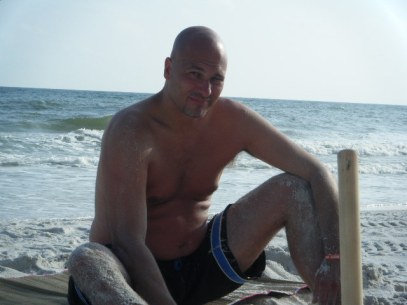 When I was extremely young, my family never took beach vacations. To this day, I’m not sure why because we all loved the beach so much. My very first time seeing the ocean was on a family trip to Panama City, Florida as an eighth grader. Our entire family (grandparents and cousins included) spent a wonderful week on the Gulf Coast, and I remember the momentous nature of that trip, even as a middle schooler. A 12-hour, multi-day car ride had finally concluded, and my Mom and Dad walked me out towards the ocean once we arrived. With my parents, I saw the ocean for the very first time and I got to experience its magnitude. I got to touch sand, and taste saltwater, and splash in the world’s largest pool. Even as a young kid, I appreciated the significance of this experience.
 After a really, really long drive, my family finally arrived to our condo in Gulf Shores. Shortly after arriving, I think we all knew then that we had found our family vacation spot. There was something about it that made us feel like we were home.
 As I’ve written before, Dad was a tremendous athlete. And also as I’ve written before, I was a horrible one. But Dad never let my lack of athleticism curb an opportunity to play. At the beach, Dad and I could throw a frisbee for hours—as long as the wind cooperated. We would warm up close to one another and gradually step back as we threw until we would finally hit a point where we had to wind our torsos like a corkscrew to get the frisbee to sail over the white sand. Dad and I would leap and dive into the sand to catch a frisbee—his leaps and dives always significantly more graceful than mine—and we would yell at each other for not being able to properly hit our target. “Did you actually expect me to catch that?!” we would yell across the beach at one another. “You’re gonna kill a kid with that thing if you don’t learn how to throw it!”
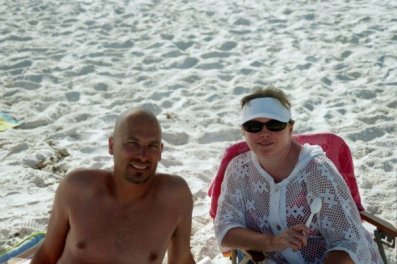 And at the beach, Dad never played it safe. More than anything, I think Dad and I probably got the most enjoyment of our daily game of “See Who Can Swim the Furthest Out from the Shore and Make Mom Freak Out the Most” (catchy, no?). Much to my Mom’s displeasure, Dad and I were notorious for jumping into the water and swimming straight ahead until our arms gave out. The water would grow colder and colder the further we would swim, and periodically Dad would stick his arms high above his head and straight-dive down to see if he could still touch the bottom. If he could, we still weren’t out far enough. All the while, my poor Mother would sit anxiously in her beach chair watching our bobbing heads grow smaller and smaller in the waves. The best version of the game was on the beaches where there were life guards on duty, and in those scenarios, we tried to see how loud we could get them to blow their whistles at us! We knew we were really killing the game if we could swim far enough to encounter a deeper sandbar, and if we did, we would sit out on the sandbar and rest until it was time to swim back in. Dad would wave to Mom on occasion from the depths of the mighty ocean, and it was amazing how peaceful the deep ocean water can be. All the ambient noises of the beach fade away when you’re that far out (you especially can’t hear life guard whistles or motherly-shrieks).
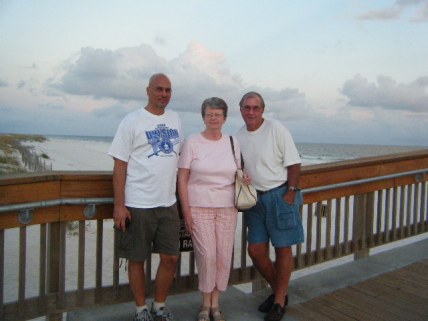 My Grandpa even told a story at Dad’s funeral about his love for always being the last one up. On occasion, my family would take vacations with our extended family, which included my Grandpa Vern, Grandma Sharon, my Uncle Lee, my Aunt Beth, and my two cousins Jake and Megan. Those were always wonderful vacations, and every day, my Grandpa and my Dad were always the last ones up to the condo. But even my Grandpa couldn’t hang with my Dad.
 Standing there at the beach, I told Steve how much I missed my Dad. I really didn’t have to say anything, because Steve knew—and he was experiencing the grief himself. Steve had been tremendously close with my entire family, and my Dad treated him just like he would treat his own son. Instead of only crying, though, I was able to share tremendous memories and stories of my Dad, telling Steve all about the funny things he had done at the beach on our family vacations. I shared stories about Dad’s Banana Boat expedition, his wave-runner sandbar collision, and how he was always the last one up for dinner. Little by little, the tears were slowly replaced with a smile and laughter. I didn’t miss him any less; I just had a different focus. Instead of focusing on the loss, I was able to focus on his life. Instead of focusing on the time we didn’t have together, I focused on all the wonderful times we did.
 I spend a lot of time on the beach during dusk as many of the families on the shore will begin to retreat to their condos. And I do this for a simple reason: that’s what Dad would have done. I’ve learned why he loved it so much. As the beach starts to quiet down from a busy day of frivolity and fun, there’s a quiet stillness that begins to wash across the shore. That stillness is enticing and comforting, and it’s in those moments that I often feel closest to God. And I think about how peaceful those moments must have been to a man who struggled with depression. Dad treasured that peace. And now, I treasure the memory of his life during those peaceful moments, and I try to live it out every chance I get.
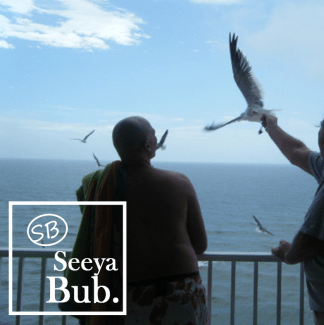
 Dad, there has never been a time when I’ve gone to the beach without thinking of you—and there never will be. You made our time at the beach together so memorable, but more than that, you taught me so many important life lessons while we were there. You taught me to slow down and relax. You taught me to soak in God’s beautiful creation. You taught me to be kind to people and get to know them, because God created them, too. You taught me to let go of all the busy things from back home and simply enjoy the life that was in front of me in that moment. I take these lessons with me everywhere I go, but especially when I go to the beach. Even though I’m still able to have fun when I go, it just isn’t the same without you. I miss our throwing sessions, and sometimes I’ll just carry a baseball in my backpack to turn over and over in my hands and think of the time we spent together. I miss trying to see who could swim the furthest out, and watching you beckon me further even when I felt like I couldn’t keep swimming. I miss walking along the shoreline with you and listening to your stories about oil rigs in the distance or planes flying overhead. You had an inquisitive, appreciative spirit for all life had to offer. And more than anything, I miss watching you enjoy those moments on the shore by yourself being the last one up. It’s strange, but sometimes it’s like I look down from the balcony and I can still see you sitting there. Dad, I know you’re still with me. I know that you’re guiding me and watching over me in everything that I do. Thank you for always being my best teacher. Thank you for being a Dad unlike any other. And thank you for always teaching me that the last one up wins. I love you, Dad. I miss you tremendously. I sure hope there are beaches in heaven, because if there are, I promise I’m going to swim further out than you. Until that day when we can be beachside together again, seeya Bub.
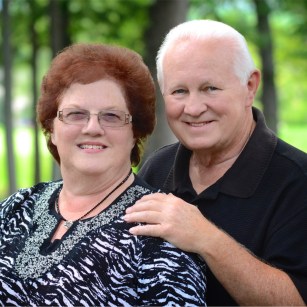
 Dad, I wish you could have read Reverend Walters’ book and heard his story, because I think you felt many of the things he did. I know you struggled with how to share your hurt and your pain because you didn’t want to appear weak. You didn’t want people to think you were a failure. Dad, you never failed any of us—ever. You had an illness that you couldn’t understand, and I wish we had done more to help you escape the trap that forced you into silent suffering. But Dad, I know that our Heavenly Father has welcome you into His loving arms. I know that He is redeeming your story day by day with each individual who loves you and learns from you. Dad, I will never stop loving you. I will never stop trying to find ways to help those who are hurting like you were. Keep watching over me, because I can feel it. Until I can tell you how much you are loved face-to-face, seeya Bub.
  Reverend Dan Walters
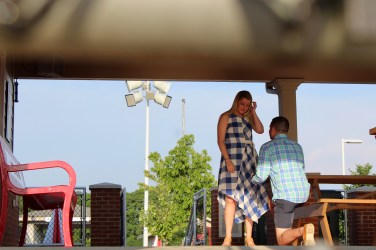 The greatest miracle? She said yes! And I’m the luckiest man alive to know that I’ll get to spend the rest of my life loving her.
 I cherish the unexpected when it comes to the way our paths crossed with one another. I know that God has been orchestrating little life moments all throughout my 31 years with the knowledge of eventually bringing us together. I know that God had a master plan, slowly but surely fitting all the puzzle pieces together at exactly the right moment.
 Both Paige and my Dad have a mutual love and appreciation for all things nature. From parks to puppies, Paige has always loved being surrounded by God’s creation. Secretly, I have a fear that I am going to be that husband who comes home and finds that his wife has picked up six puppies on her way home from work because she “just couldn’t say no to them!” (Note to Paige: Mentioning this on the blog is not an endorsement for you to actually do this.) My Dad had a way with animals that I’ve never seen before. Our family dogs always looked to my Dad as their favorite human. My Dad was able to befriend dogs in our neighborhood, horses on nearby farms, and I even have one picture of him petting—yes petting—a baby deer in the park close to our family home. Both Paige and my Dad just loved being in nature. My third date with Paige was at Sharon Woods, and I remember watching an indescribable sense of peace wash over her as we navigated the trails, creeks, and waterfalls (I tell myself it was my presence, not the natural surroundings, that provided this peace, but I digress…). My Dad had that same sense of calm and wonder any time he was in nature—which was often. My Dad would find any excuse to be outdoors, even if his son would claim it was “too hot” or “too sticky” or “too-not-television”. I think my Dad, and Paige, both feel that they are at their best when they are taking in God’s creation—and I’m thankful that they both remind me to slow down, look around, and join in the wonder.
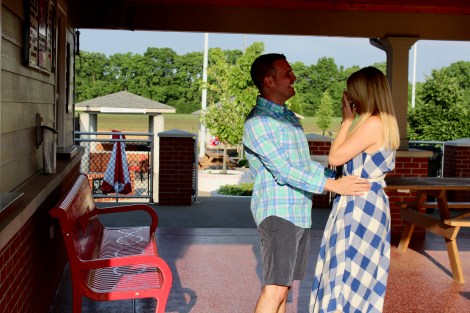 All throughout this journey, from the moment I decided I wanted to marry Paige to the moment she said yes, I felt tremendous joy; but it was a joy accompanied by sadness because I really, really wanted to have my Dad there for everything. In each and every moment, I wanted him there right alongside me. In moments like this, a boy needs his father. My Dad deserved to be there for all of it.
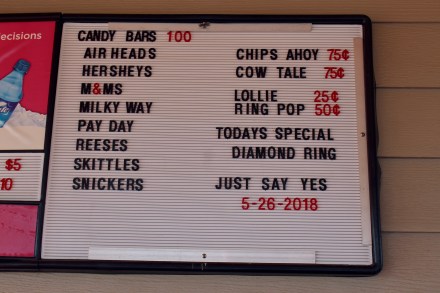 “Why does it say diamond ring?” she said to me nervously, and then, I placed my hands on her shoulders, and I told her how I felt about her. As I did this, photos of us together began to scroll on the video boards at the fields. Then, I got down on one knee (one very nervous, shaky knee) and asked her to marry me. She said yes, and all the promise of the next chapter of my life overwhelmed me with earth-shattering joy. I was able to envision our life together and see years into the future—and I absolutely loved what I saw.
 As our family members started to trickle out to the after-party, our dear friend Megan took some amazing pictures of us at the fields. As we smiled and posed for shot after shot, Megan asked us if there were any other pictures we would like to get before we left.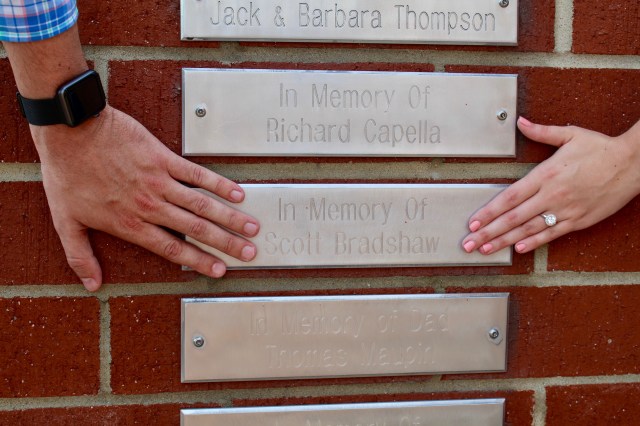
 Of all the things I’m fortunate to have in this life, I’ve always said I’m most fortunate to be the son of Scott and Becky Bradshaw. Now, I can add one more title to the list. I’m the luckiest man alive because I’ll get to call Paige Garber my wife. Although she never met my Dad, I know that she still loves him—and that’s the greatest type of love anyone could ever give. It’s unconditional, Christ-centered, and life-changing. It’s the same type of love that my Dad gave to everyone he knew. It’s the love I still feel him providing from Heaven. It’s the type of love that sustains, builds up, and encourages in spite of difficult circumstances. It’s a love I wish I could have reminded my Dad of on his last day here with us.
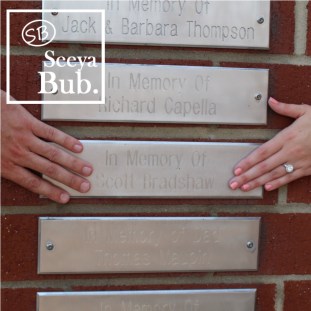 Dad, You would have absolutely loved Paige. You are so alike in so many ways. I often think about what it would have been like to watch the two of you interact with one another—laughing at the same jokes, enjoying sitting around a bonfire together, and just generally appreciating the beauty and simplicity that life together affords. It would have been one of the greatest honors of my life to introduce her to you, but I would have felt that same honor in introducing you to her. Dad, I desperately wish that you could have been here for our relationship. I wish that you could have given me the wisdom and guidance that only a father can provide to a son when it comes to love and marriage. But even though you aren’t here with us right now, I can still feel your presence. I can still feel you prodding me along and helping me make the right moves in this life. I can imagine you would have said to me soon after meeting Paige, “You better hurry up and propose before she wises up!” And Dad, you’re exactly right. She is more than I deserve and more than I could ever hope for, and I thank God for that. On the night I proposed, and every night for that matter, I’ve wanted to have you in our life and in our relationship. You may not be here with us, but in so many ways you are here with us. Your memory lives on in everything I will do as a husband, and I’m thankful that I could watch your patient, kind example over the many years that you loved Mom and me. You are here with me, and you always will be. I promise that no matter how life might change, I’ll never, ever let your memory go. Thanks for loving me from afar, Dad. Thanks for loving us—all of us. I love you, and wish we were here together. Until that day when we are united again, seeya Bub.
  Seeya Bub