
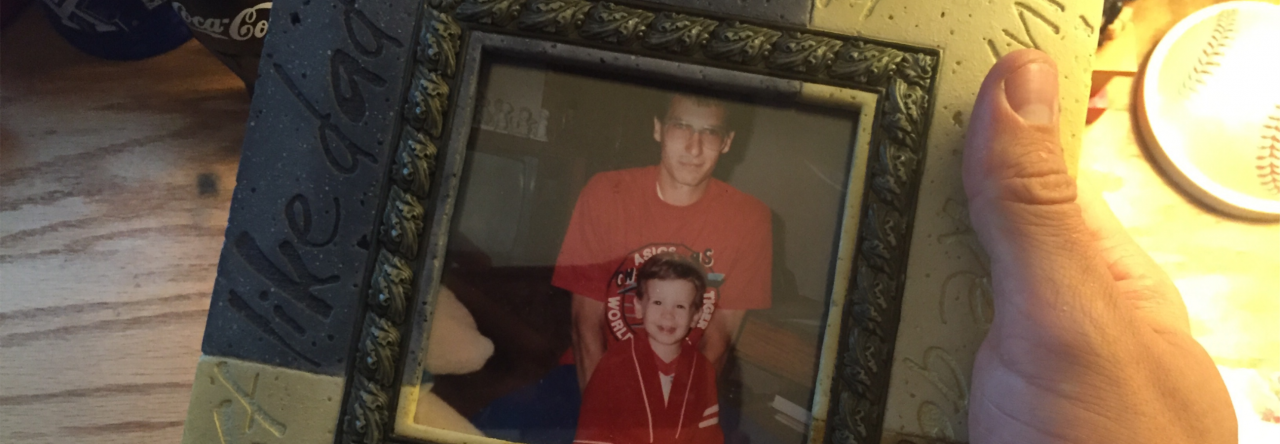
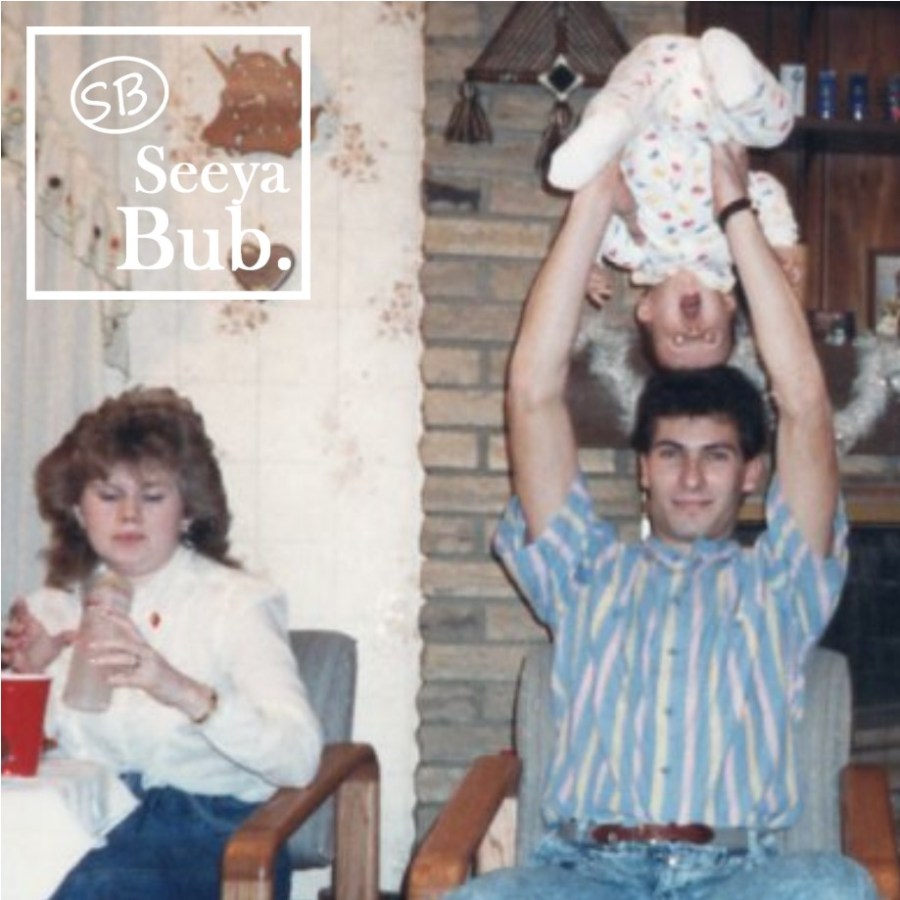
Believe it or not, my Dad did not want to name me Tyler.
As I’m sure most males do after watching their wives go through hours and hours of tremendous pain during delivery, Dad lost out on the infamous parental game of “Name Your Offspring.” Family legend has it that Dad wanted to name me “Kurt.”
Kurt? Really?
Maybe it was just an 80’s thing, or maybe it was a desire to give his son a name that gave off a certain coolness. Kurt does give off a particular air of confidence, smoothness, unshakableness. Or maybe Kurt Bradshaw had an athlete’s ring to it (and for those who have seen me take part in athletic activity, you know that name would have been a horrible choice). Either way, “Kurt” had a lot of potential. Dad liked it.
Alas, my name is Tyler. As is the case in most baby-naming situations, the Mother can pull the trump card of “I carried this baby inside me for nine months thanks to you,” cutting her spouse off at the knees and taking away any say he might have in the naming of his child. Maybe by child three or four, after the promise of a future generation has been secured, the mother might be willing to let her husband try his hand at this whole “baby-naming game.” But on the first child (and in my case the only child), the husband‘s life is much more comfortable if he learns to step back and let his wife select the moniker. My Dad was 0-1.
At the desire of my mother, I became Tyler—and I’ve been Tyler ever since. According to most baby-naming books and websites, the name means dominance, historic beauty, and is typically bestowed upon one with a God-like physique.
Just kidding. It means “maker of tiles”. I couldn’t make this up, and I also can’t make a tile. I’ve never even installed a tile, let alone make one from…what do you even make a tile from anyway?!
Don’t get me wrong, I like my name. It’s a good name, which my family and closest friends eventually shortened to “Ty”. Maybe they shortened it to avoid the embarrassment over my lack of tile-making-ability. Or maybe because they had an obsession for beanie babies. Either way, I became “Ty” to most everyone I knew.
Everyone except my Dad, that is. Yes, he would call me “Ty” as often as anyone else, but most of the time, he called me something else—“Bub”. Hence the name of the blog you’re visiting. And nearly every time I saw him, talked to him on the phone, or received a text message from him, the conversations he initiated started with the same familiar salutation: “Hey, bub.”
I’m not really sure where it started, or why he chose those particular words. But I was glad he did. So many parents can choose nicknames for their children that humiliate them as they grow into adulthood. Nothing humiliates a child more than being dropped off at middle school by his Mother, who in that moment forgets her little man is growing up and accidentally says goodbye to “her little pookie bear”. Or that angsty adolescent being dropped off at the mall for a night of teenage semi-debauchery and hearing her Dad bid farewell to his “little sweetums”. Early on in a child’s life, they ought to have the ability to sit down and negotiate with their parents, choosing a nickname that is both affection-laden but not detrimental to the child’s social possibilities. “Little buddy? Okay, I can deal with that. Sugar butt? No. Absolutely not. Baby boy? Okay, but only at family get-togethers. My wittle cuddle monster? You’ve got to be kidding me. Aren’t you people supposed to be mature?”
I even saw an article online where a fellow Tyler was given the nickname of “Booby Cakes” by his Mother. Is this real life?
I’d like to think that Dad was very intentional when he chose “Bub” for me. I’d like to think that he sat down, trying his hardest to think of a word that would not induce embarrassment or public humiliation, but would also show a deep-seated affection for his son. I’d like to think he went through hundreds of potential nicknames, discarding each one for its lack of manliness and potential for damaging my delicate social standing. And then, in a moment of frustration, Dad realized he was overthinking the entire thing, making it more complicated than it needed to be. And in a desire for simplicity, he settled on “Bub”, the perfect combination of love and social respectability.
But in reality, it probably just came naturally when he first saw me—which, in all actuality, is just as beautiful as the process I just envisioned. Like most expecting parents who say they just won’t know what name is right until they actually see the baby, most nicknames probably are created organically. I wonder what it was about me that made my Dad think I had “Bub” qualities? Maybe as Dad got to know me, I just had a “Bub-worthy” personality. Or maybe it was one of the babbling phrases I uttered as a baby toddling around our little house. Maybe Dad just started calling me that without giving it a moment’s thought. Or maybe it was his revenge—his way of renaming me since he hadn’t picked the name Tyler. Either way, the nickname stuck. To me, Scott Bradshaw was “Dad”, and to him, I was “Bub”, and everything in the world was right.
Dad would call me Bub no matter the situation—good or bad. That reliability, that dependability became something that was warm and authentic. He could be angry or joyful, distressed or at ease, nervous or cool as a cucumber. No matter the emotions, his feelings towards me never changed. He was a Father who never grew tired of being one, and it showed in the way he treated me, even down to the ever-present nickname.
Even when he was upset with me, which happens even in the rosiest of parent-child relationships, he rarely called me anything but Bub. My Mom and Dad always said I was a “good kid”—the type of kid who gave his parents very little trouble. The kind of kid who doesn’t give his parents a lot of reason to worry. I was typically home by 10 or 11 every night (usually not by choice, but by a lack of social options, but hey…I was okay watching Letterman every night instead of making friends). But every kid pushes the envelope and tests the waters of disobedience—even the well-behaved and socially anxious. And on occasion, those tempting waters felt warm enough to dive right in.
If Dad was forced to identify my most frustrating behavior, it would have probably been my lack of organization (Mom would be able to name this in a heartbeat, as she’s one of the cleanest people I know). I was a pretty creative kid, and organization is often an impediment to the creative mind…at least that’s what I told my Mom when I didn’t want to clean my room. My parents were often fans of putting the right things in the right places where they belonged, which makes sense to most. I, on the other hand, took a more artistic, free-range approach. I was a fan of throwing and scattering toys all over the place, giving them the freedom to not be defined by a particular box or shelf. I admired the sometimes apocalyptic view of my toys and belongings.
In reality, no amount of word-wrangling is going to justify this—plain and simple, I was a messy kid.
To my Dad’s distress, my messiness wasn’t just limited to the confines of our impeccable home. My toy terror, many times, would spread to the yard. I had all the toys and outdoor playthings a boy needed. Buckets, dumptrucks, shovels, sand molds, baseballs, sidewalk chalk, and water balloons. I would use the freedom of the wild outdoors as an excuse to go crazy in our spacious backyard in the middle of Suburbia, and when it was time to call it a night, I rarely worried about putting these toys back where they belonged.
My Dad, on the other hand, always kept a well-maintained yard. Like most Dads, he fought an ongoing war with crabgrass and dandelions. He was constantly mulching or trimming or mowing. Planting and weeding were standard activities. Our yard was always beautiful. Mom and Dad did a tremendous job of selecting pots and vibrant flowers to bring personality and cheerfulness to our house. I chose to decorate the yard with toys instead. And as much as those toys may have reminded Dad of the fun-loving nature of his adorable son, they were also a distraction or impediment to the yardwork he often needed to complete.
He didn’t like the fact that I couldn’t put those toys in a bin in the garage or underneath the deck, but it never got through to me that I should start cleaning these things up on a regular basis without being asked. I always remember that Dad had a huge, black lockbox in our carport/eventual garage where I was supposed to put all of my toys and other outdoor belongings every night as the sun began to set. I don’t know what it is, but my personality just wasn’t hardwired to follow this command, and I rarely put my yard toys away.
And although I thought I could really wear Dad down, I don’t think I ever did. I was a pretty crafty kid, so I would even monitor where Dad was in the yard as the sun would start to set, thinking I could go in one of the other doors in the house, hop in the shower, and use that as an excuse to not have to go back out and pick up the toys.
Alas, he persisted.
Even if I was freshly-showered and pajama-clad, Dad would come in the house to locate the perpetrator. And where most parents might yell or explode at their child’s lack of organizational capacity, my Dad, calmly yet sternly, would tell me it was time to go out back and pick up the yard so he could mow or landscape. He never shrieked hysterically about my thoughtlessness or lack of concern. He never lost his mind, like most Dads on TV sitcoms. He never ridiculed me for being a thoughtless little punk whose playfulness was an impediment to his calling to be a master caretaker and gardener. Instead, he would look down the stairs, and greet me the way he would any other time “Hey bub, I need you to get out back and clean up those toys.”
I’m sure I grumbled. I’m sure I rolled my eyes. I’m sure I put up a fight, and in some scenarios even acted like the bratty stereotypical teen you envision in these scenarios. And yes, there were even times where I’m sure I shrieked like an insolent little brat who deserved much less respect than my Dad gave me.
But to my Dad, I was Bub—and I always would be. And you don’t give up on your Bub. You don’t give up on your child. And my Dad never did.
Even if the sun had set.
There were times where my elusiveness worked to avoid Dad, who often worked late into the night in our yard, and then continued his work in the garage even after the lights had gone out on the world.
On a few occasions, albeit rare, I remember Dad making me go into the yard with a flash light to pick up the toys I left in the yard. He never raised his voice. He never threatened me with physical violence. But he stood his ground. Or, on the occasion that he didn’t want to make me go in the yard, he would work out an alternate compromise.
“Okay, Bub. So you didn’t pick up your toys tonight, but I need to cut grass first thing in the morning. So even though it’s Saturday, you’re going to get up at 8 and go outside first thing and pick them up so I can mow. Okay?”
I would pleasantly agree, and then when Dad would come to wake me up at 8am, I would try to feign every illness in the world, including the plague, to get Dad to let me out of the chore. But he wouldn’t. He would sit on the bed next to me and continue to try and wake me up, until I eventually realized that he was never going to cave. I would then lumber out into the yard and grumble and call my Dad all kinds of horrible names while I picked up toys and slammed them with a childlike fury into the lockbox.
But even though I called him names, Dad never called me anything but Bub. He never let my poor attitude or actions frustrate him—and I’m ashamed of the way I acted. No matter how bratty I became, Dad had this cool-under-pressure consistency that, to this day, I’m still envious of. He’s one of very few parents I know of that could actually discipline his child through being disappointed in them—has that ever worked in the history of parenting?! Well, it did for my Dad, because he was the type of man whose disappointment spoke more than any anger he might have felt.
Dad’s decision to call me “Bub” in nearly every situation, pleasant or unpleasant, says something amazing about his parenting skill. Frustration and anger could not deter his goal of raising a son the way he knew that boy should be raised. Dad got more out of me because of his high expectation. He didn’t need anger to parent, and somehow it worked.
Looking back, I appreciate my Dad’s consistency more and more each day, and it’s a trait I admire in him. He didn’t have a dual view of his son. He didn’t see me as Bub when I was doing things right and Tyler when I was doing things wrong. I was Bub no matter what, because he understood that kids need to be taught—they need direction, guidance, and more than anything, they need a consistent and reliable father figure to push me down this road of maturity. And the fact that he greeted me the same way, no matter the circumstances, was refreshing, sending a subtle signal that he loved me unconditionally. My Dad was the dictionary definition of unconditional love—and I miss this about him tremendously.
Ultimately, in light of his death from suicide, I wish Dad could have had this same, consistent, unconditional view of himself. As I’ve tried to make sense of my Dad’s death (and I’ll never be able to actually “make sense” of it), I’ve speculated about what might have been going on inside my Dad’s head at different points in his life. Although I can’t be certain, and because of his mental illness, I think my Dad saw himself in two different lights. At times, I think he was able to see the positive impact he made on others; and at other times, unfortunately, I think he saw himself through an unlovable lens. I think he saw his imagined weaknesses as things that people defined him by.
But that was simply not the case—and it still isn’t the case today. My Dad, whether he was mentally healthy or mentally ill, was always, always worthy of love. His mental illness did not define him, and most importantly, it did not change the way anyone felt about him. I wish I could have shown him more of that unconditional love throughout his life. I wish I would have told him, more often, that he mattered. That I loved him. That in the good times, and in the bad, he was important to me.
My middle name, thankfully, is Scott. And I’m tremendously proud of that fact. In a sense, I feel like I’m carrying on a piece of my Dad just by carrying on his name. And because of that, I’ll continue to hold myself to those high standards that my Dad had for me. I’ll do my best to show unconditional love, like he did, to everyone I encounter. I’ll carry on the piece of him that was fun-loving and childlike and strong, and because I have a part of his name, I’ll continue to tell his story, and to spread his message. I’ll continue to define others by the good in their hearts. I’ll try my best to be patient and kind and even-keeled, just like he was. At times, it feels like a heavy burden to carry because my Dad truly was a great, great man; but if he believed in me enough to give me part of his name, I’ll trust that he knew what he was doing. He always did.
There’s a lot in a name, and I’m glad a third of mine is also my Dad’s.
And I’m thankful that Mom didn’t let him name me Kurt.
 Dad, I’m sorry that you didn’t get to name me Kurt. Just kidding. I’m really glad you didn’t win that fight, because I don’t seem like much of a Kurt—even though I’m still not a maker of tiles. But to you, I was Bub, and I’ll always be that. You called me Bub all the time—whether I was an angel or a brat—and I don’t think I ever told you how much I appreciated that consistency. I want to tell you now. Bub was a term of endearment and affection to you, and the fact that you called me that—no matter the situation—meant you always, always loved me. I don’t know how you did it, but you always kept your patience with me, even when I tried to test it to the limits. Even though you’ve been gone for five years now, I can still hear you saying “Hey, Bub” and “Seeya, Bub” in that calm, familiar voice of yours; and the fact that I can still hear it is a reminder that, even though you’re gone, you still love me. You still love all of us. And you’re still helping us grow and love one another more through the example you left for us. I wish you were still here with us, though. I wish I could hear you call me Bub just once more—but I know, deep down, that I’ll hear it again, Dad. It’s going to be a tremendous greeting in Eternity when I see you again for the first time. I’m thankful to know that you’ll be there, and I’m thankful to know that you’ll still be calling me “Bub,” even in Heaven. Until then, there’s a lot of work to be done and love to be spread down here in your name, Dad. Keep watching over us, and in your subtle reminders, keep telling us that you loved us. We need it more and more. I love you, Dad. I’ll see you again someday—and until that glorious day, seeya Bub.
“A good name is rather to be chosen than great riches, and loving favor rather than silver and gold.” Proverbs 22:1 (KJV)

 Dad, There are many moments when I think about your last day here on Earth and wish, desperately, that it would have ended differently. I can’t even begin to fathom or understand the pain and despair you must have felt in those moments. You loved life so much, which shows me how much hopelessness you were experiencing to believe that life wasn’t worth living any longer. I cry when I think of those moments because, Dad, you were so loved by so many. You should be here, right now, living life and loving every step along the way. You deserved that type of hope. But Dad, even in the midst of the pain you probably felt in those last few minutes, I’m grateful that you aren’t experiencing that pain any longer. You now reside in an everlasting paradise of joy, hope, comfort, and eternal fellowship with the God who loves you and loves all of us. Dad, I wake up every day wishing I could see you again. I picture your face and I can see your smile, and I just want you to be back here with us. But because you’re not, I’ll take comfort in the fact that I know where you are. And that I know I’ll see you again. I love you Dad. Until that wonderful reunion, seeya Bub.
  Reverend Dan Walters
 Most nights, Lucy would make her way into my room, usually at just the right moment. She would push the door open with her snout, tail wagging feverishly, and climb up onto the bed. After arriving, Lucy would place a paw on either side of my shoulders and lick my face until I begged her to stop. A twin mattress doesn’t provide much room for a grown man and a 70-pound dog, but Lucy made a way. She would curl up alongside me and lay her head across my chest. And in those moments, even though she was a dog and might not have understood human emotions, Lucy soothed my heart in ways I’ll never be able to describe.
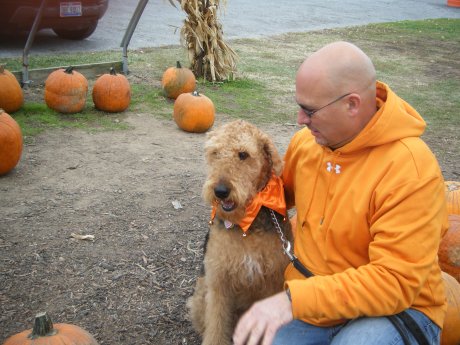 Lucy also helped soothe my pain because of the fact that
 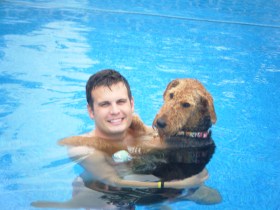 It was that puppy companionship, along with many other wonderful people and things, that helped me heal and grieve my Dad properly. I had so many wonderful people who knew exactly how to minister to me after losing Dad—my Mom, my grandparents, my church family, my friends, my coworkers, my neighbors, and even complete strangers. I also found little things I could do to help me grieve for Dad properly—things to help me forget about the pain of losing him. I read my Bible frequently in my study. I wrote feverishly—some of those scrawlings eventually turning into the foundations of this project. I exercised frequently, although the Ryan Gosling physique (or anything
  remotely close) still eluded me.
 On other days, I would let Lucy hop up into the passenger seat of my car and we would take a drive together. Lucy really enjoyed driving around town, and her excitement created smiles and laughter in neighboring vehicles as she sat calmly next to me in the car with her seatbelt on. I would make a conscious effort to go through drive-thrus with Lucy to show her off to anyone who would remark about what a cute pup she was. She was cute—she deserved the adoration!
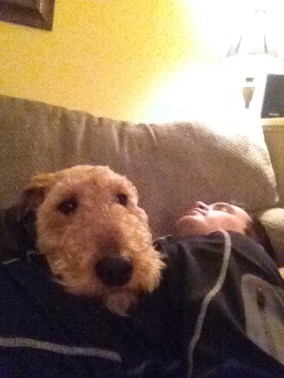 It’s hard to describe, but in those moments, Lucy would nervously saunter up to my side when she knew I was hurting. It was like she understood that she needed to be by my side. And that’s what she would do. She would hop on the couch and lay her head in my lap. She would leave all her toys (and boy did she love toys) to just lay near me. I would gently pat her head or her back, and slowly, her presence would help me escape from that immediate terror. She did more for me in those moments than I could ever tell her. Lucy showed me what it meant to be “man’s best friend.”
 That sadness would often give way to anger. Lucy’s death was completely avoidable and unnecessary. A groomer that we had trusted—a groomer who knew the despair of our family situation—had cared so little about our family and our pet that he let her die as a result of his negligence. As you might imagine, the story of Lucy’s death attracted the attention of a local news station.
 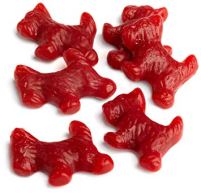 I bought a pound of the licorice dogs (and a few other goodies, of course), and the second Paige and I got into the truck, I opened the bags and started chowing down. I tasted the licorice, and it brought back all the memories of Lucy and how funny it was to watch her eat licorice. I began recounting the story to Paige, and before I knew it, I was flashing back to the moment I lost her. All of the sadness and despair of her death was as real then as it was on the day I lost her—all because of a piece of licorice that reminded me of her.
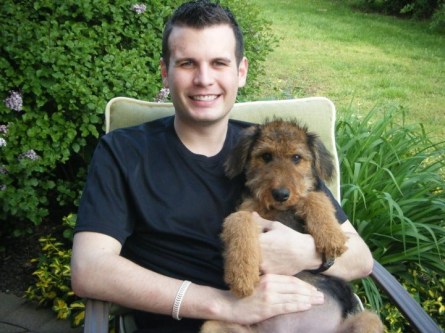 On occasion, I’ll put on that
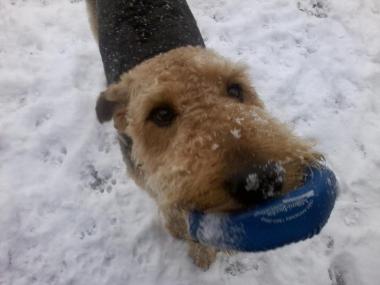
 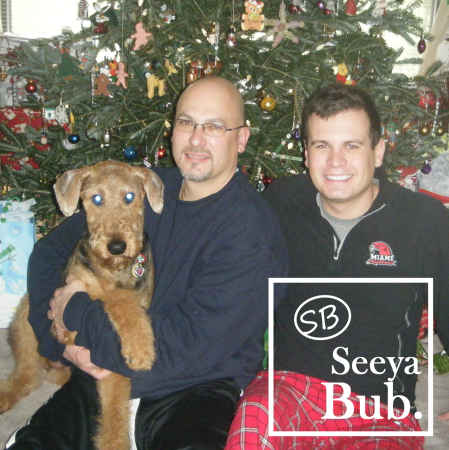 Dad, I need to tell you that I’m sorry and that I’m thankful. I’m sorry that I acted so stubborn when you chose to bring Lucy into our family. I’m sorry that I acted like a “little jerk” (your words…and mine) when you were just doing what was best for us. Ultimately, I’m so grateful that you chose Lucy. I’m grateful that you raised her and trained her and taught her to be a fun, family dog. We had no idea how much we were going to need her fun-loving, thoughtful companionship after losing her. In a way, I feel like Lucy carried on so many of your personality traits after you were gone. She was a constant reminder of the zest and excitement you had for life. She was there to help us grieve in so many ways after you left us. I think Lucy was your angel here on Earth for us. I think that she was your way of telling us that life, even when it’s painful, can still have a lot of joy and happiness. Losing her was like losing you all over again. It was as if another piece of you—a very important piece—was gone forever. But Dad, I know that we will never lose you entirely. Your memory will always live on in our hearts and in our minds because you made such an indelible mark on all of us. Dad, thank you for Lucy. Thank you for teaching her to love us when we needed it most. Although I miss you both dearly, I hope that you are together again in heaven—and I hope there are plenty of Frisbees to toss. You deserve paradise, Dad. You deserve the greatest things that God can offer, and I can’t wait to experience that joy alongside you. Until that day where you and I are together again in a life that knows no end, seeya Bub.
 From the moment she came home, Lucy was impossible to resist. I have a weak-constitution for puppy cuteness, and Lucy melted my defenses rather quickly. Airedale terriers are adorable puppies. What will eventually grow into a 60 or 70-pound dog starts out as an eight-pound ball of fur with a shortened snout and gangly legs. Lucy looked like most Airedale pups I had seen in photographs, but there was one defining characteristic that was different. Lucy had a tiny little white patch of fur right on the middle of her chest. I had never seen an Airedale with any color fur other than black and brown. Immediately, she was different from the rest; and the more I got to know her, the more wonderfully different I discovered she was.
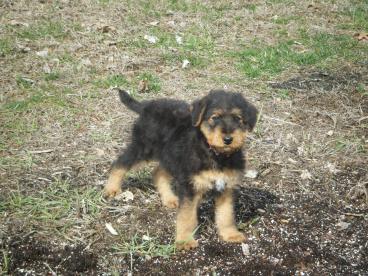 Dad sat the blanket bundle down on his lap, and Lucy poked her head out from the blanket mound and peered around our family room. She looked straight at me with her dark eyes, and when she made her way down onto the carpet and slowly meandered towards me, I knew that I was done. My resistance would have to fall, because this pup was just too cute. With the pain of losing Willow momentarily fading, I reached down and scooped Lucy into my arms. For the rest of the night, she and I spent our time on the couch as she adjusted to her new surroundings. A few times, I glanced at Mom and Dad and saw them giving one another that familiar “I told you he’d cave” look. I tried my best to not let them get any satisfaction from defying my gutless order to not bring home another family dog, but it was useless.
 And from that moment on, I don’t think I ever quit loving Lucy. Even if my stubborn pride wouldn’t let me admit it.
 Lucy had that in abundance. Lucy’s calm demeanor during the first 24 hours of her life in my family was a well-executed mirage delivered by a sneaky infiltrator. When I came home on Lucy’s second day in the Bradshaw house, the docile, pleasant pup that I had left that morning was replaced with a rambunctious, mischievous, four-legged fur-covered peddler of destruction. When I came home that day, my poor Mother looked like she had barely survived a hurricane. She looked at me with a frazzled exasperation as Lucy, with toys strewn all across our normally-clean family room, bounced and barked and bolted to every corner of the house. She was worse than a baby because she was faster. I couldn’t believe she had fooled us! Lucy had spunk—and a whole lot of it.
 But with Lucy, it was different from the start. She was immediately allowed onto the couch—and I was shocked! And then, the unthinkable happened; Mom actually let Lucy sleep in the bed with her! What world was I living in?! Who had abducted my Mom and who was this woman that now gladly beckoned the dog onto the furniture?
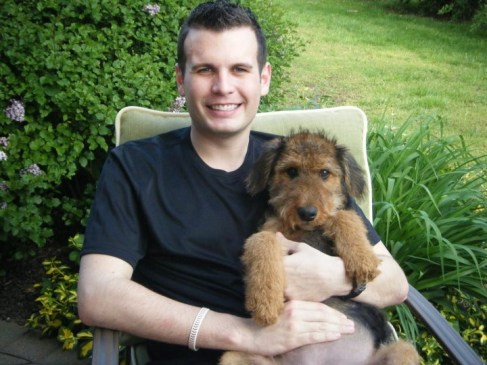 When Lucy was little, I used to carry her around the house quite often. And unlike most dogs, she really enjoyed being carried! After a little while, it got more and more difficult to carry her around as she continued to grow. And by the time she reached 40 pounds, our little puppy, who I affectionately called “Monkey”, was a bit to heavy to carry with one arm. So I did what any normal person would do.
 I would actually pick Lucy up by her front legs and toss them over my shoulder. Then, Lucy would wrap her hind legs around my waist, and I would comfortably carry her around as she nuzzled her snout on my shoulder. Looking back, it’s the most ridiculous thing I could ever imagine doing as a dog owner.
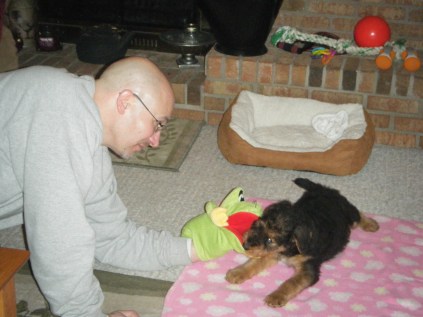 Thankfully, my Dad, our dog-whisperer-in-residence, was there to take care of most of the discipline and direction when we first got Lucy. My Dad loved working with animals, even when the animals weren’t easy to work with. I think he saw teaching pets as a challenge that he wanted to conquer, and he had a way of showing love through firmness. Quickly and efficiently, Lucy was housebroken and learning how to sit, lay down, and yes…play hide and seek with Dad. My Dad had a special talent, and we all benefited from it.
 Dad, being a playful guy, did everything with Lucy. If he was home, he wanted to be near her. If he had a bonfire in the backyard, Lucy was with him. If he was eating dinner, she was patiently waiting for a scrap nearby. If he was taking a nap, she was on the couch cuddled next to him. There were hour-long walks to the park, trips to the dog beach at Hueston Woods, and countless other memories that the two of them created together. They are memories filled with laughter and companionship, but joy more than anything else.
 And Lucy was there to help me—and all of us—find a small ray of light in the midst of the dark clouds that enveloped our family. Lucy—sweet Lucy—would help to save us as best she could.
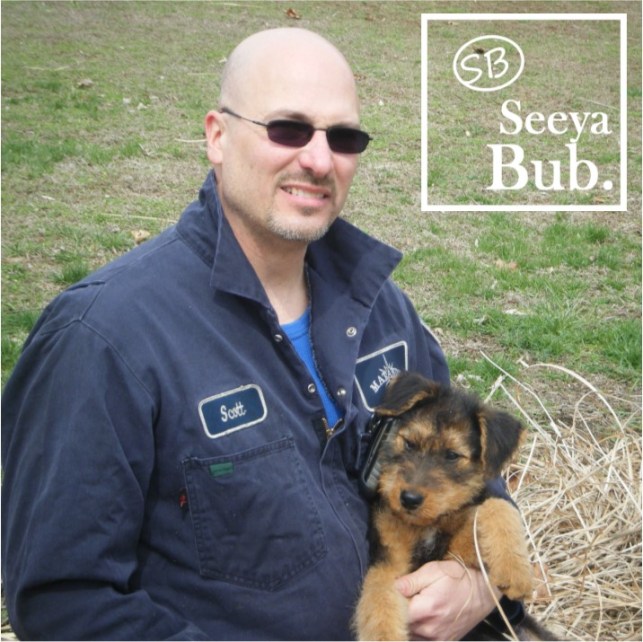
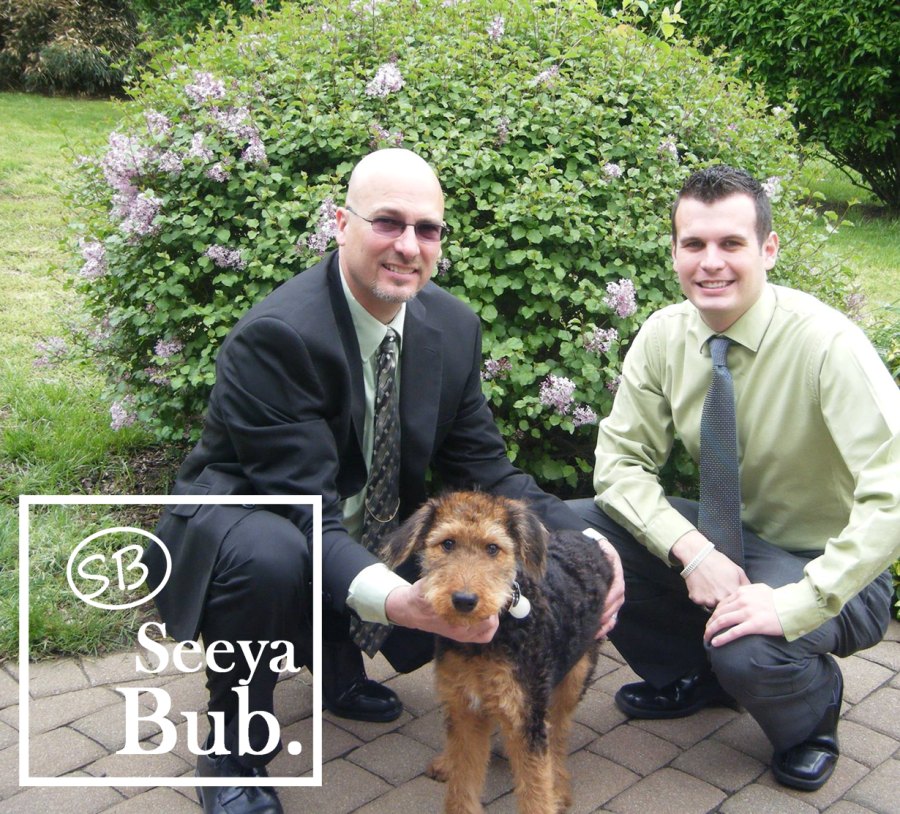
 Every single day is difficult—all 1,827 of them; but every single year, July 24 is a date that stares at me from the calendar. It looms in the distance for months, and when it passes, I always breathe a sigh of relief that it’s come and gone. But I know, deep down, that it’s coming again. It will always be there. No particular July 24 has been more or less difficult—just different. But because of the nice, round number, this one feels like a milestone. A milestone I wish I didn’t have to reach.
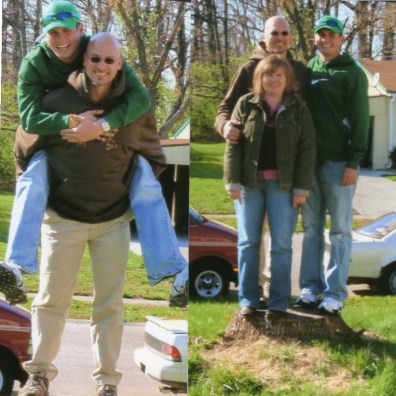 But guess what? No amount of procrastination could stop that date from coming. No amount of denial could stop me from thinking about what this day represents. This day would come—and yes, it would eventually pass—but the second it did, the clock just begin counting down towards another unfortunate milestone. The next Christmas. The next birthday. The next Father’s Day.
 On the other side of all that grief and sadness, there will be an everlasting love made whole again. On the other side of that grief, there will be a man whom I recognize, smiling and welcoming me into his arms. In that moment, I’ll love never having to say “seeya, Bub” again. That day is coming, although it’s very far off.
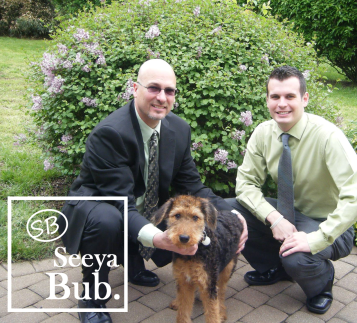 Dad, I cry so much when I think that it’s been five years since you and I last talked. Sometimes, those tears are unstoppable. We never even went five days in this life without talking to one another. Dad, it really has felt like an eternity—but sometimes your memory is so real and so vivid that it seems like it was just yesterday when we lost you. But I know the real time. I know that it’s been five whole years since we’ve been able to be in your presence. And life simply isn’t the same without you. We all cling to your memory. We marvel at the things you built and the way you provided for our family. We laugh about the funny things you did to make life more fun. But I also weep when I think about how much life you had left to live. Dad, I’m so sorry that you were sick. I feel horrible that we couldn’t do more to help you find the cure you deserved. I’m sorry that you were robbed of the life you deserved to enjoy. I’ve felt so much guilt in losing you Dad. I know that you don’t want me to feel this way, but I just wish there was more I could have done. You deserved that, Dad. You deserved more, because you gave everything. As painful as these five years have been, Dad, I find peace in the truth of Eternity. I find comfort knowing that you are enjoying God’s eternal glory in a paradise that I can’t even begin to fathom. Dad, thank you for watching over me for these past five years. Thank you for never giving up on me—both in this life, and in the next. Thank you for giving me a lifetime of memories and an example of what fatherhood should be. I love you, Dad. I always did, and I always will. Thank you for loving me back. Until I see you again, seeya Bub.
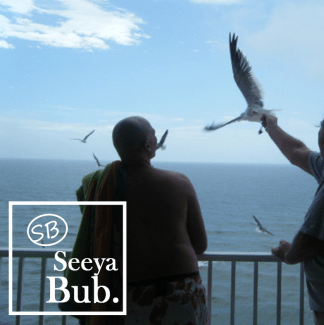 Dad, There have been so many times when I’ve thought about the fear you must have experienced in your life. You were always my Superman—that strong rock and foundation in my life when everything else seemed dangerous. On the outside, you were always “Mr. Fix It,” and I know it bothered you that you couldn’t solve your own struggles with depression. On the surface, you always held everything together—for your family, for your friends, and especially for Mom and I. But Dad, I wish I could have told you that your struggles with mental illness were never a disappointment to any of us. We never thought less of you when you battled with your depression. Sick or healthy, we always loved you and wanted to be near you. You were never a failure to us, Dad. You never failed us, and I wish you had known that more. I am afraid of doing life without you. I have a fear that I can’t do what God is calling me to do to tell your story. But I know that He is with me, and I know that you are with me. I know that you are watching down and pushing me and urging me onward, just as you always did when you were here with us. We all miss you, Dad. We will never stop missing you. You never let me down, and I can’t wait to tell you that in person. Until that day, seeya Bub.
 Reverend Dan Walters

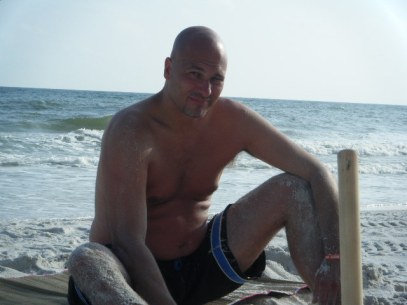 When I was extremely young, my family never took beach vacations. To this day, I’m not sure why because we all loved the beach so much. My very first time seeing the ocean was on a family trip to Panama City, Florida as an eighth grader. Our entire family (grandparents and cousins included) spent a wonderful week on the Gulf Coast, and I remember the momentous nature of that trip, even as a middle schooler. A 12-hour, multi-day car ride had finally concluded, and my Mom and Dad walked me out towards the ocean once we arrived. With my parents, I saw the ocean for the very first time and I got to experience its magnitude. I got to touch sand, and taste saltwater, and splash in the world’s largest pool. Even as a young kid, I appreciated the significance of this experience.
 After a really, really long drive, my family finally arrived to our condo in Gulf Shores. Shortly after arriving, I think we all knew then that we had found our family vacation spot. There was something about it that made us feel like we were home.
 As I’ve written before, Dad was a tremendous athlete. And also as I’ve written before, I was a horrible one. But Dad never let my lack of athleticism curb an opportunity to play. At the beach, Dad and I could throw a frisbee for hours—as long as the wind cooperated. We would warm up close to one another and gradually step back as we threw until we would finally hit a point where we had to wind our torsos like a corkscrew to get the frisbee to sail over the white sand. Dad and I would leap and dive into the sand to catch a frisbee—his leaps and dives always significantly more graceful than mine—and we would yell at each other for not being able to properly hit our target. “Did you actually expect me to catch that?!” we would yell across the beach at one another. “You’re gonna kill a kid with that thing if you don’t learn how to throw it!”
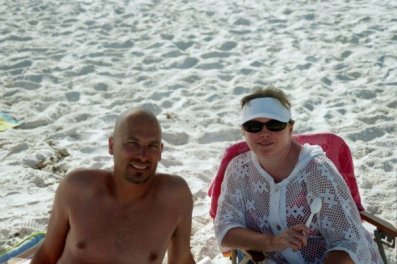 And at the beach, Dad never played it safe. More than anything, I think Dad and I probably got the most enjoyment of our daily game of “See Who Can Swim the Furthest Out from the Shore and Make Mom Freak Out the Most” (catchy, no?). Much to my Mom’s displeasure, Dad and I were notorious for jumping into the water and swimming straight ahead until our arms gave out. The water would grow colder and colder the further we would swim, and periodically Dad would stick his arms high above his head and straight-dive down to see if he could still touch the bottom. If he could, we still weren’t out far enough. All the while, my poor Mother would sit anxiously in her beach chair watching our bobbing heads grow smaller and smaller in the waves. The best version of the game was on the beaches where there were life guards on duty, and in those scenarios, we tried to see how loud we could get them to blow their whistles at us! We knew we were really killing the game if we could swim far enough to encounter a deeper sandbar, and if we did, we would sit out on the sandbar and rest until it was time to swim back in. Dad would wave to Mom on occasion from the depths of the mighty ocean, and it was amazing how peaceful the deep ocean water can be. All the ambient noises of the beach fade away when you’re that far out (you especially can’t hear life guard whistles or motherly-shrieks).
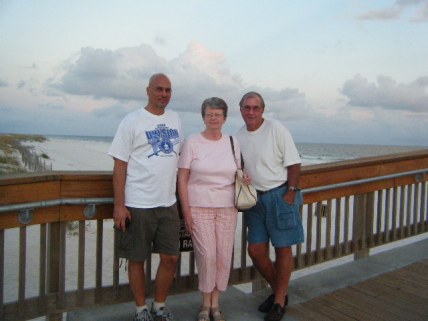 My Grandpa even told a story at Dad’s funeral about his love for always being the last one up. On occasion, my family would take vacations with our extended family, which included my Grandpa Vern, Grandma Sharon, my Uncle Lee, my Aunt Beth, and my two cousins Jake and Megan. Those were always wonderful vacations, and every day, my Grandpa and my Dad were always the last ones up to the condo. But even my Grandpa couldn’t hang with my Dad.
 Standing there at the beach, I told Steve how much I missed my Dad. I really didn’t have to say anything, because Steve knew—and he was experiencing the grief himself. Steve had been tremendously close with my entire family, and my Dad treated him just like he would treat his own son. Instead of only crying, though, I was able to share tremendous memories and stories of my Dad, telling Steve all about the funny things he had done at the beach on our family vacations. I shared stories about Dad’s Banana Boat expedition, his wave-runner sandbar collision, and how he was always the last one up for dinner. Little by little, the tears were slowly replaced with a smile and laughter. I didn’t miss him any less; I just had a different focus. Instead of focusing on the loss, I was able to focus on his life. Instead of focusing on the time we didn’t have together, I focused on all the wonderful times we did.
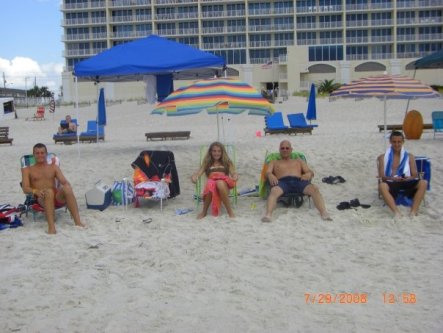 I spend a lot of time on the beach during dusk as many of the families on the shore will begin to retreat to their condos. And I do this for a simple reason: that’s what Dad would have done. I’ve learned why he loved it so much. As the beach starts to quiet down from a busy day of frivolity and fun, there’s a quiet stillness that begins to wash across the shore. That stillness is enticing and comforting, and it’s in those moments that I often feel closest to God. And I think about how peaceful those moments must have been to a man who struggled with depression. Dad treasured that peace. And now, I treasure the memory of his life during those peaceful moments, and I try to live it out every chance I get.
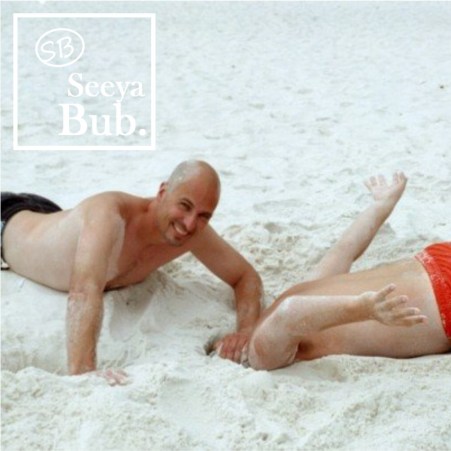 Dad, there has never been a time when I’ve gone to the beach without thinking of you—and there never will be. You made our time at the beach together so memorable, but more than that, you taught me so many important life lessons while we were there. You taught me to slow down and relax. You taught me to soak in God’s beautiful creation. You taught me to be kind to people and get to know them, because God created them, too. You taught me to let go of all the busy things from back home and simply enjoy the life that was in front of me in that moment. I take these lessons with me everywhere I go, but especially when I go to the beach. Even though I’m still able to have fun when I go, it just isn’t the same without you. I miss our throwing sessions, and sometimes I’ll just carry a baseball in my backpack to turn over and over in my hands and think of the time we spent together. I miss trying to see who could swim the furthest out, and watching you beckon me further even when I felt like I couldn’t keep swimming. I miss walking along the shoreline with you and listening to your stories about oil rigs in the distance or planes flying overhead. You had an inquisitive, appreciative spirit for all life had to offer. And more than anything, I miss watching you enjoy those moments on the shore by yourself being the last one up. It’s strange, but sometimes it’s like I look down from the balcony and I can still see you sitting there. Dad, I know you’re still with me. I know that you’re guiding me and watching over me in everything that I do. Thank you for always being my best teacher. Thank you for being a Dad unlike any other. And thank you for always teaching me that the last one up wins. I love you, Dad. I miss you tremendously. I sure hope there are beaches in heaven, because if there are, I promise I’m going to swim further out than you. Until that day when we can be beachside together again, seeya Bub.
 And my Dad was a completely selfless Father. As a child, he spent every minute he had making sure I was entertained and happy in life, even on days when he was likely tired and exhausted from work. When I was in high school, my Mom and Dad took an entire weekend to redo my bedroom to make it more appropriate for a young man in adolescence (the motif went from childhood baseball to vintage baseball—and I loved it!). If my truck broke down in high school (which was a semi-regular occurrence), my Dad was the first person there to help me. And although I’m sure there were many other exciting places he would have rather been, he was always in the stands anytime I announced a basketball or baseball game.
 Dad, It hurts my heart tremendously when I think that there are people out there who think your death is selfish. It pains me when I hear individuals say that death from suicide is selfish because they didn’t understand your pain. They didn’t see the despair in your eyes on that last day. They didn’t see the years that you suffered. They didn’t see how badly you wanted to be healthy. They didn’t live with the unnecessary shame that you lived with for so long. Dad, none of this makes your death and absence any easier. None of this makes the pain of losing you any less real. And yes, I wish things had gone differently on the morning of July 24, 2013—for you, for me, and for all of us. But you suffered from a disease that you didn’t understand. A disease that not even medical professionals completely understand. You died because this disease took over your brain, and I hope you know that I understand this. It doesn’t make your death right, and more than anything I wish you were still here, living the life you always lived to the fullest. But I’ve never been angry with you for your death. I’ve never loved you any less—and I never will. Dad, you are not defined by your death, but by the tremendously selfless life you led. I’m so sorry if you ever felt like you weren’t enough for us, Dad. You were always enough. You lived a completely selfless life, and I wish I was able to remind you of that. Until that day, I’ll keep fighting for your legacy. I’ll keep fighting, alongside God, to redeem the pain of losing you in an effort to try and prevent this pain in the lives of others. And until that day when I can tell you just how selfless you were, seeya Bub.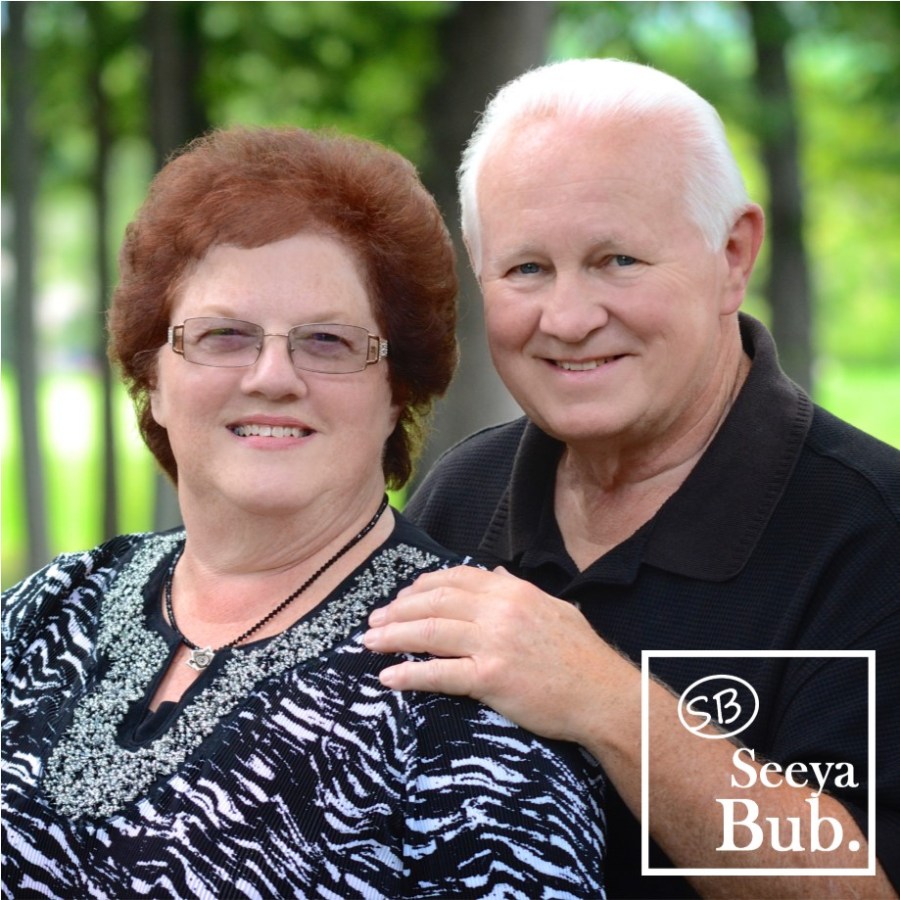
 Dad, I wish you could have read Reverend Walters’ book and heard his story, because I think you felt many of the things he did. I know you struggled with how to share your hurt and your pain because you didn’t want to appear weak. You didn’t want people to think you were a failure. Dad, you never failed any of us—ever. You had an illness that you couldn’t understand, and I wish we had done more to help you escape the trap that forced you into silent suffering. But Dad, I know that our Heavenly Father has welcome you into His loving arms. I know that He is redeeming your story day by day with each individual who loves you and learns from you. Dad, I will never stop loving you. I will never stop trying to find ways to help those who are hurting like you were. Keep watching over me, because I can feel it. Until I can tell you how much you are loved face-to-face, seeya Bub.
  Reverend Dan Walters
 Seeya Bub