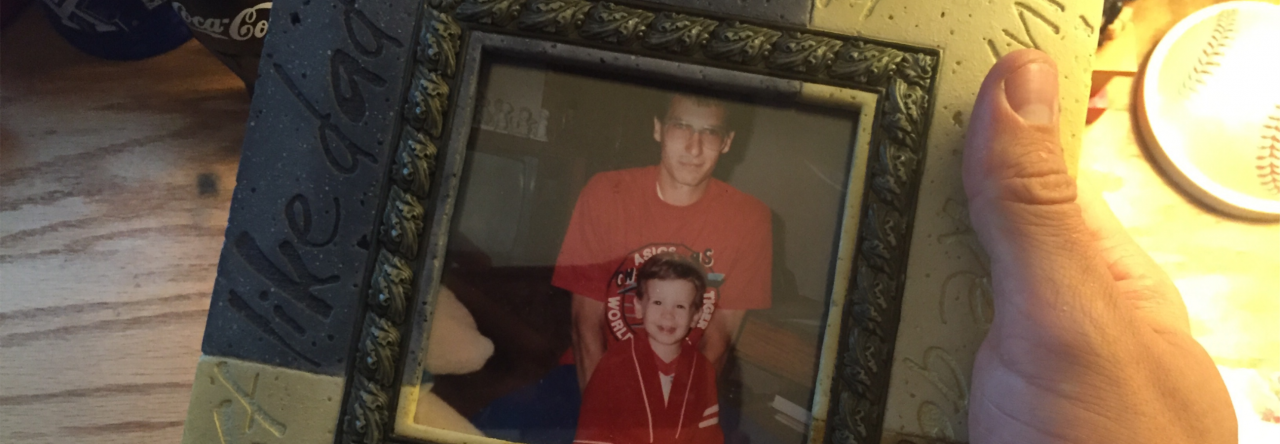
“Let The Young Guys Play: Guest Blog by Dave Hicks

Ty: There is a deep mystery in my life. One that plagues me to this day…

How is it possible that my Dad could raise a son who was such a terrible, horrible athlete?

I’ve written on this topic in a number of different posts, mainly because so many of my childhood exploits involve my failures as an athlete. I should probably link to a post so you can sample it, but it’s impossible to link to so many different stories, because my lack of athleticism has been a frequent topic of conversation on this forum.

This probably surprises you if you knew my Dad, because he was a naturally gifted athlete. My Dad was a super-speedy runner, which served him well at about any sport he tried. My Dad absolutely loved playing basketball. Even as he aged, he could beat most of the younger players up and down the court at our weekly church pick-up games on Monday night. He was a natural wide-receiver for backyard football games because he could outrun any coverage. Even when he played kickball with my neighborhood friends, it was easy to see just how fast he really was. He could scoot around the basepaths quicker than anyone. I guess the moniker “Scooter” was well earned.

More than any sport, however, I think my Dad excelled at baseball and, later in life, softball. I will always remember my Dad as a softball player. From the time I was little, I remember tagging along with him to the North End softball diamonds on Joe Nuxhall Boulevard and watching him play with our church teams. I remember the countless weekend tournaments he played in, usually always playing for a team that had a legitimate shot to win. At least once a week, and usually multiple nights, my Dad was having fun at the softball diamonds: playing in some games, and usually talking with his teammates for hours after.

I, on the other hand, just hoped that if I went with him as a little boy that he would take me for a Flubb’s ice cream afterwards.

Most guys who play softball annoy me beyond belief because they think that being good at softball means being able to hit a ball over the fence (even though it’s an underhand pitch, but I digress…). My Dad, however, took a different approach to the game of softball. Never the power hitter, my Dad learned how to “hit it where they ain’t.” He could place his hits, which is extremely valuable in softball when defense really isn’t a popular option. Then, my Dad would speed around the bases, legging out doubles and triples on a regular basis. In fact, my Dad never hit a homerun over the fence one time in his entire career…but he had a few inside-the-parkers which, in my opinion, is even more impressive.

Where most softball players begin to tire out as they age, my Dad just got better and better. Always wearing an 11 across his back (he only wore numbers that were “symmetrical”), Dad continued to play softball until the week he died. I made it a regular habit to go and watch his games as often as I could (still, secretly, hoping for that ice cream). I look back on the times that I didn’t go to his games for one reason or another, and I wish that I could turn back the clock and see him play once more.

As he got older, however, my Dad did a curious thing. He would take himself out of the lineup. I would show up to his games, knowing he was just as talented as anyone on the field, and I would see him sitting on the bench with his hands by his side in his uniform, watching the game intensely.

When that was the case, I would always go and sit next to him and ask him why he wasn’t playing, and I would always get the same answer from him:

“I’d rather let the young guys play.”

I would shake my head at my Dad and get mad at him when he gave me this answer. Oftentimes, I would look out onto the field and see the player who had taken his position in left center. And usually on cue, that particular player would misplay a routine fly ball or miss the cut-off man on a throw to the infield. It was infuriating because I knew my Dad, even as he aged, was better in every aspect of the game.

Late last week, right when I needed it most, my pastor, Dave Hicks of Walden Ponds Community Church, sent in a story about my Dad using the “Scott Stories” feature at SeeyaBub.com. It gave me a different perspective on why my Dad did what he did, and it reminded me of why he was such a special person. I’d like to let Dave share that memory with you.


Dave: I met Scott Bradshaw in 1987 at a softball tournament in Hamilton, Ohio. I was asked to play with a bunch of guys from his church. It was the first time I played with that team before, so I was a little nervous. I remember being casually introduced to the team by the guy who asked me to play (coincidentally, he was the same guy who set my wife and I up on a date for the first time) and I put my stuff on the bench. I hadn’t warmed up yet, but was too shy to ask any of those guys to throw before the game started. My plan was to just to pretend that my shoes needed to be re-tied so I could keep my head down and wait for the first pitch.

As I was trying to be inconspicuous, Scott came over, introduced himself, and asked if I needed to warm up. I accepted his offer and, at that moment, began a friendship that would last for decades to come.

As I got to know Scott more and more, I noticed that his friendliness to me that summer day was just another day in the life of Scott Bradshaw. I know it sounds like a cliche, but Scott literally never met a stranger. And if you remained in his presence for more than a few minutes, he quickly became someone you wanted to know better.

Scott has his mischievous side, as well. One time, I attempted to install a piece of linoleum in the kitchen of my in-laws’ house. I am not a handy guy at all, but I gave it a shot. When I finished, it couldn’t have been more of a disaster if I had done it blindfolded. My father-in-law called Scott and he came over to help salvage the project. As soon as he arrived, Scott started laughing, along with my father-in-law, at the mess that I had created. And, because it was Scott, I laughed along with him.

You see, a person couldn’t get mad at Scott because you knew it was never malicious. It always came from a place of love. So, from that failed project on, Scott managed to work that story into conversation as often as possible. And, as I did that day, I would laugh with him every time he told it.

Normally, people don’t enjoy being teased. But, today as I remember those moments with Scott, I would give just about anything to laugh with you again, even if it is at my expense. And, I would give anything to be able to say to you, as you always said to your son, Tyler, “Seeya, bub.”


Ty: I look at Dave, who is now the pastor of my church and someone who challenges me to be a better follower of Jesus each and every day, and I see the impact that my Dad made on him. I see how a simple gesture, like saying hello to the new guy on the softball team, could make a huge difference. And it makes me feel bad about ever questioning why he would voluntarily sit out of a game.

To my Dad, softball was fun; but life was always bigger.

My Dad made a habit of letting the young guys play and making them feel welcome on the team because he knew how much it would mean to them to have somebody as good as my Dad give up his spot for them. He was validating them. He was making them feel that they mattered. And he knew that, even if they made mistakes, they needed to play and learn to get better.

But my Dad didn’t just give up his spot for that player. You could watch him and you knew right away that he was making an effort to support and coach that player from the dugout as he sat and watched. If they made a good play, Dad would run out of the dugout during the middle of the inning and give them a high five and a pat on the butt. If they made a mistake, he would talk to them when they came in the dugout and give them some pointers—but people always took his criticism well because they knew it came from a heart that wanted to make them better, not a heart that wanted to show off how much he knew. Dad would shout base-running instructions or coach third base, and even though he wasn’t technically in the lineup, he was still in the game.

I have many words I use to describe my Dad: thoughtful, considerate, kind, loving, hardworking, faithful, hilarious, and many, many more. But if I had to pick just one word, I think that word would be humble. My Dad was well-liked by so many people because he was one of the most humble individuals I’ve ever met. And although there were many places throughout our community where my Dad was well-liked, he was extremely admired by those who played softball with him—and even those he competed against.

The beautiful part about all of this is that my Dad found a way to be humble while never losing his competitive spirit—and never failing to teach those younger players. One of my favorite memories of my Dad is when he played on a church team that had a number of young players (mostly high schoolers) who were some of the most egotistical athletes I have ever seen. They thought that softball would be easy because they had some athletic ability, but time and time again at the plate and in the field they showed athletic ability was not enough to outweigh stupidity (yes, I said it). They swung for the fences every single time…and 90% of the time their swings would end in an easy fly ball for the opposing outfielders. They would make simple base running errors, and my scoresheet was absolutely littered with “E’s” from their mistakes in the field. And they would often violate one of my Dad’s cardinal rules by failing to run out a ball in play regardless of whether or not you were likely to reach first base.

There was one player in particular (I’ll call him Shawn here) who had a sense of arrogance about every single thing he ever did. My Dad would often get frustrated with him because he was living in a dream world in which he thought he was God’s gift to softball. Oftentimes, he was God’s gift to the other team.

One night, Shawn made a comment about how he could outrun my Dad. My Dad just smiled, but then Shawn continued to make the comment. So, having heard enough, my Dad told Shawn he would race him down the line after the game was over. The team gathered eagerly, and I said a quick prayer that Dad wouldn’t injure himself. Shawn ran harder than I had ever see him run in his life once we said “Go!”, but he was still a good two lengths behind my Dad when they crossed the finish line. Shawn’s face was red and strained, but my Dad looked like he was just getting started. He made it look effortless. He did a little strutting and a dance I can still picture today, gave out some high fives, grabbed his ball bag, and we got in the truck. I’ll admit (and ask for forgiveness) that I probably said a few “non-Christian” things about that little jerk adversary on our ride home. But Dad just smiled, knowing he had proven his point without completely humiliating his competitor.

I think my Dad did this, to show that young punk…I mean, child of God, that he wasn’t all he thought he was. My Dad did this not to show him up, but to show him humility. To show him that in life, there is always room for improvement.

My Dad really was playing some of the best softball of his entire life right up until his death. He played with Dave on the Walden Ponds Community Church team, Dave often in left field with my Dad next to him in left center. When the team got word of my Dad’s death, the coach of the team, Mel, went out and bought a bunch of white sweatbands, just like the ones my Dad always used to wear on his arms. Mel sat down and drew the number “11” on each of those sweatbands, and with a heavy heart, the team went out and played for the first time without my Dad—each player wearing those handmade sweatbands.

I have one of those sweatbands that I’ll cherish forever. I have trouble going to softball games now, because it’s just too hard for me to go and look into the outfield and not see my Dad. But I hear memories from people like Dave, and I think back to the numerous people that Dad came in contact with, and I know that he played the game the way it was meant to be played. And I’m not talking about softball. I’m talking about the game of life.

Dad's Softball CollageDad, Even though you weren’t able to mold me into a terrific athlete (yes, I’m going to blame this on you), you never quit teaching me that athletic competition was just a vehicle to deliver some of life’s most important lessons. You taught me about humility, hard work, dedication, courage, and competition. You knew that, when you compete, there are lots of people watching how you react to adverse situations. And you always, always made sure that your character was on display. I wish I had been a better athlete because I wanted to make you proud, but I hope you know how much I enjoyed watching you compete…and how much I desperately wanted to be like you. Dad, you made a tremendous impact on people each and every time you played. Thank you for being a character-giant in my life. Thank you for always giving me a solid example of Christ-centered love to look up to. And thank you, seriously, for putting up with my pathetic arm when we would toss. When I’m perfected in Heaven, our games of toss will be a lot more fun. And until that day, seeya Bub.

“Nevertheless, the one who receives instruction in the Word should share all good things with their instructor.” Galatians 6:6 (NIV)

 

Dave HicksDave Hicks

Senior Pastor, Walden Ponds Community Church of the Nazarene

Dave serves as the Pastor of Walden Ponds Community Church of the Nazarene, located in Fairfield Township. For decades, Dave has served in youth and adult ministry at the local and district level, preparing the hearts and minds of young Christians, and encouraging them to serve others. Dave’s belief that “God is good, all the time” drives his work in the church, as he continues to grow and serve the local congregation at Walden Ponds with an innovative approach to Christian ministry.

Father’s Day

From about mid-May until the middle of June, I take a different route through my local Target.

On a normal visit to Target (which I make all too frequently), I’ll always head to the hardlines side of the store before I go check out the clothes. I stroll through the everyday home products, then to the groceries, through the home goods, and then back to the electronics.

Okay, fine. Yes, I also go through the toys. Because I still feel like I’m a six year old in many respects.

But during this particular season of the year, I reverse my route. I’ll usually go through the clothes first. Not because I’m looking for something to wear. I actually do this for what I’m trying to avoid.

If I follow my traditional path during this particular time of the year, I’m hit in the face with the grief of my loss. If I make the familiar turn in the store, the first thing I’ll see for that entire month is a large rack of Father’s Day cards.

My eyes usually fixate on a bright, multi-colored banner that screams “Happy Father’s Day! Buy a card for Dad!” Families flock around the display and comb through cards, from the humorous to the serious, trying to find the perfect message for their Dad.

As they are looking at cards, however, I look at the display and my chest starts to feel tight. My eyes well up, and I can feel my heart begin to race. No matter how hard I try to ignore the display, it jumps out at me and reignites my grief and sorrow.

I remember that first Father’s Day without him, and seeing the display of cards. It hadn’t even occurred to me that I would no longer have a Father to celebrate with. I froze as I walked into the store on that day. When I realized what was going on, I actually turned and walked out of the store, got in my car, and started sobbing. I couldn’t stop the uncontrollable wave of emotions. I couldn’t stop thinking about how my Dad deserved another Father’s Day. Many, many more…

I’ve written many times about the difficulty of holidays in the aftermath of a traumatic loss or death, and out of all the pain I feel, I don’t know if I feel any pain more severe or crippling as the pain I feel on Father’s day. This is a day built to honor Dads, but what do you feel when you don’t have your Dad by your side? When you can’t tell him, face to face, exactly how you feel about him?

I feel deep sorrow because I still want to buy him a card. Sometimes, I walk past that display and think that this has all just been a bad dream. I think that my Dad has been here all along, and that losing him on that July day couldn’t have really happened. But I know it happened and I’m reminded of it every single day—but especially on this day.

On Father’s Day every year, I wish for one simple thing: I wish to have my Dad back. I know that it can’t happen in this life, but like a little kid I long for the thing that I know I can’t have.

I haven’t been able to look at that card display without crying ever since losing him. My heart hurts every time this time of the year comes rolling around. And I get angry because my Dad deserved to be here. He deserved a card this year, and he deserved a card for many years to come. He was robbed of his day by a disease and a sickness we don’t yet understand like we should. It hurts to know that he’s not here today even more than it does every day when I wake up and think about losing him.

I feel this pain coupled with regret for the years that I didn’t make a big deal out of Dad’s day. One of the challenges of growing up is learning to care for others while still caring for yourself. As we learn this delicate balance, we are prone to look back over our lives and see that we’ve made mistakes. When I look back over my life and the mistakes I’ve made, my wrongdoings are amplified on the Father’s Days of years gone by. And I feel tremendous, gut-wrenching guilt.

I can think of so many years, especially during those tumultuous teenage years, where Father’s Day was a mere afterthought for me. Wow, is that hard to admit—but it’s painfully true. I think of the years when I remembered, usually at the last moment, that the upcoming Sunday was Father’s Day. I would scramble to get my Dad a last-minute gift and a card, and there were so many years when I put such little thought into his gift that it embarrasses me when I think about it today.

I think of so many years when I should have planned something spectacular to celebrate my Dad, but I didn’t. I think of all the years when I should have cooked him lunch on the grill, or planned an outdoor trip for him to enjoy. I look back at those years with the pangs of regret, because I know that they were wasted opportunities. It’s almost cruel that I have so many ideas now for how to properly celebrate Father’s Day, but I have no Father to celebrate them with.

I look back on those years and wish desperately, more than anything, that I could go back and redo them. I wish that I could have abandoned my selfishness and let go of my self-centeredness to celebrate the man who gave me everything good in this life. I wish I could go back and tell him, face to face, how much he meant to me on that day—and every day.

I feel joy when I remember the Father’s Days that I did right. In spite of my failings, I’m glad that there were a handful of years when I celebrated my Dad on Father’s Day with the level of excitement and significance that he deserved. I think of one year in particular when my friend Steve and I decided to do a joint Father’s Day gift for our Dads. We decided to purchase a zip-lining trip for each of them, and we planned a day at Camp Kern in Oregonia, Ohio for the four of us to zip through the trees of the beautiful forest there.

I’m confident that when my days on this Earth are numbered, I will look back on the day of that zip-lining trip as one of my absolute best. It was such a wonderful, wonderful day—from start to finish. We had a perfect day to zip line—a little hot, but a slight overcast to keep us cool enough to enjoy our trip. None of the four of us in our group had ever been zip-lining before. This was an entirely new experience, and we had a great guide who helped us understand the mechanics and safety components of the activity, while still letting us have a tremendous amount of fun.

I remember one line in particular on that day—the River Line. A 1,300 foot line stretches across the rushing water that cuts through a canyon-like setting of trees. For over a minute, you fly down the line, landing in a tree stand on the other side of the riverbank. I remember going first, and I couldn’t quit smiling! But what was even more rewarding was standing on the tree stand and watching my Dad sail in from across the water. My Dad knew how to have fun and he knew how to appreciate the joyous moments of life with a sense of wonder and appreciation. Dad was so very happy when he finished that line. He got unhooked and came up and high-fived me as he laughed. “That’s what I’m talking about! That was awesome!” he said in a goofy voice. He so loved that trip, and I so loved watching him enjoy it.

I wish I had made every Father’s Day like that one. I desperately wish I had started thinking about a great gift for him every single June, giving it the foresight it deserved. But I’m thankful that on that year, and a few others, I gave Dad a special day. He deserved so many more.

I feel that regret because I know that I didn’t always make it a priority to tell my Dad how I felt about him. A card is a tremendous gesture, but what’s even more powerful than a card are words straight from the heart. I love getting cards, but more than anything I love getting a tender, handwritten message that usually accompanies it.

Let’s face it—emotions are tough. They are uncomfortable at times. Vulnerability is so very difficult. There are so many times in our lives when we know what we should tell someone, but we don’t have the courage to say it to them—even when it’s a compliment or a tender and encouraging word. Especially for men, it’s difficult to share how we truly feel with one another. I’ve lived through the awkwardness of not telling people how I truly feel about them, and as I look back on my life I know that I never want to live like that again.

There were so many things I should have told my Dad. Honestly, that’s one of the reasons I’ve started this blog. In lieu of being able to tell him in person, I’ll tell him here.

On Father’s Day every year, I should have told my Dad how much I loved him. I should have told him how thankful I was to have a Father who I could confide in when life was difficult to understand. I should have told him how lucky I was to always be provided for and to never have to worry about the material things in life. I should have told him how I appreciated the zest he had for life because it made life all the more fun. I should have told him that I was in awe of his talents and skills, especially when it came to building or constructing things. I should have told him that I appreciated that he was more concerned with being a good Father than a good friend. That, even though I didn’t always act like it, I was thankful that he wasn’t afraid to teach me right from wrong, even when it wasn’t “cool” to do so. I should have told him that every day, I strove to be more like him. That I wanted to emulate his humility and love of serving other people. That (other than having a shiny bald head), every day, I wished I could be just like him.

And that every single day, I still do want to be more like him.

My Dad was my hero—and he still is. I wish I had made him feel like the hero he was each and every day.

I feel and experience the pain of jealousy. As I walk by that card display at Target, I often see young boys and teenagers picking out cards for their Dads. I will watch some who, just like me a few years ago, will search frantically for a card and grab the first one they see. I’ll watch them as they do the same things I once did, and I desperately want to warn them.

It takes everything in me not to go up to those young men and tell them how lucky they are to have a Father and how they should cherish every single moment with him. I want to grab them by the shoulders and let them know that they should do something really, really special for the man who gives them everything in this life.

I think I feel this way because of regret, but I’m also extremely jealous of them. I’m jealous that they will get to hand that card to their Dad. I’m jealous that they will get to do something special with their Dad on that day. Or even something so seemingly-everyday as taking a walk together or tossing a baseball in the yard. Yes, I miss the big moments like Father’s Day, but I also miss the small, everyday interactions. The phone calls and texts. The dinners at LaRosa’s. The nights around the bonfire. The peaceful moments in the water at the beach. The wave he would give from his truck window as he drove by. I miss every single moment. Every one. Everything. And I’m jealous of those sons who still get to buy that card for their Dad.

Ultimately, there’s no card that I could ever buy that would accurately sum up how much I loved my Dad and how important he was—and still is—to me. On this Father’s Day, I’m reminded of the joy that it was to have Scott Bradshaw as a Father. My Dad was an amazing man, and his memory still inspires me each and every day. On this Father’s Day, and on the many more that will inevitably come, I will be thankful and grateful that for so many years I had a Father so good and so wholesome. A Father who told me how much he loved me and that he was proud of me.

And when I see him again, I won’t need to buy him a card. Because I’ll just tell him, face to face, exactly how I feel about him. Who needs Hallmark anyway?

dad-and-me-in-pool-with-sb-logoDad, There isn’t a single day that goes by when I don’t think about you, but on Father’s Day I miss you even more. You were everything a Father should be. You taught me so much about life and how to live it, but I think the true testament to your life is that you’re still teaching me what it means to be a great man even after your gone. I learned something from you every day when you were here with us, and I’m still learning something from you every single day as I think back over the life you led. Dad, there were so many Father’s Days that I would redo if I had the option. There are so many moments and things I said (or didn’t say) that I would take back and change if I had the ability to do it. I wish that I had made you feel as special as you truly were on every Father’s Day and every other day. You deserved more, because you were the most loving, thoughtful, caring, and generous man I’ve ever known. And although I feel so much hurt when I can’t celebrate Father’s Day with you now, I rest easy knowing that we will get to celebrate together again someday, together with our Heavenly Father. Thank you, Dad. Thank you for everything. I’ll never be able to say thank you enough for all you’ve given me in this life. Happy Father’s Day, Bub.

“The righteous man walks in his integrity; His children are blessed after him.” Proverbs 20:7 (NKJV)

When You Aren’t Here

“We had no idea.”

It was a constant refrain in the days and weeks after my Dad’s death. People had no idea he was suffering. People had no idea how much he was hurting. People had no idea that my Dad was so sick that his life could be in danger.

I was one of those people, too.

Families that are unfamiliar or untouched by suicide often have misconceptions about depression and mental illness—I know that I did before it hit home for me.

Those who are unfamiliar with suicide often believe that there are unmistakable warning signs. They believe that family members must have missed something along the way, or that they weren’t paying attention to the needs of their loved one. Wrongly, they believe that in circumstances involving suicide, there are always major and apparent signals that should send up a red flag.

Well I’ve been there, and I can say this with the utmost certainty. There may be instances where warning signs are there, but in my scenario, there were none. There was no red flag. There were no sirens and flashing lights saying “Save your loved one before something terrible happens.”

And this might be hard to understand, but I firmly believe this: my Dad didn’t see them either.


When I bought my home at the age of 25 (there’s more stories about this experience in earlier posts here and here), I knew that there would be some significant do-it-yourself projects that I would need to take care of. Virtually every room needed to be painted. Television sets needed to be hung. Furniture needed to be assembled. The pond needed to be cleaned out and the pumps needed to be repaired.

There was one problem (big is an understatement). You see, I bought the house knowing that these things needed to be done…but I didn’t know how to do any of these things. I didn’t know how to paint rooms. I didn’t know how to hang television sets. I didn’t know how to assemble furniture. And I wasn’t crazy about the idea of cleaning out a pond that hadn’t been touched in nine years.

But I bought the house knowing this because I had an ace in the hole: my Dad. My Dad knew how to do all these things—and a whole lot more. I’m confident that I’m a terrible do-it-yourselfer because my Dad inherited all the genes necessary for home repair and a builder’s mindset, leaving none of those genes left for his only son. My Dad could do anything—and I really mean anything. Small projects were easy for him, like hanging a shelf or assembling a piece of furniture. The shelves in my room as a child that hung on the walls were actually handcrafted and built by him. No childhood toy was victim to complete destruction, because Dad always had a way to repair them. Christmas morning was always a joy because the “some assembly required” warning that frustrates and frightens so many Dads was a welcome challenge to mine.

But he made the big projects look easy too. He constructed a beautiful deck that entirely surrounded our backyard swimming pool that was the envy of our neighborhood. The deck had a beautiful grand staircase and meticulously-arranged spindles all around it. He built a garage and foyer addition onto our house, completely changing the look, feel, and functionality of my childhood home. From drawing plans and pouring concrete, to constructing frames and roofing the addition, Dad knew how to do it all. When it came to building and repairing, my Dad was a true Renaissance man.

For my entire life, I had really relied on my Dad (sometimes unfairly) to just take care of all these things for me. I took for granted that I had a live-in Bob Vila at my home who could fix anything I needed. But when I bought my own home, something in my soul changed that told me I needed to start taking some responsibility. No, I didn’t know how to do…well, anything. But my Dad did. And I could learn from him.

Upon a closer review of the house after I took ownership of it, more and more problems began to appear. One day, I noticed a rather large crack down the wall above the sliding glass door in my family room. I called Dad one day to tell him about the crack, and he used a bunch of words that I didn’t understand to basically tell me that he could fix it. He said he would come over later that night to fix everything. Not only was Dad talented, but he was always reliable.

Dad came over later that night with his toolbelt on—it was a look that he wore well and had been wearing for as long as he’d been my Dad. Whenever I picture my Dad, I usually picture him in that outfit—a dark blue work t-shirt with his name above the pocket, light and worn carpenter’s jeans, steel toed work boots, and a rugged brown toolbelt. That toolbelt had everything he needed—and if he needed something else, he could easily buy another pouch to fasten onto the belt.

Dad looked at the crack, ran his hands over it a few times, and then ran back to his truck to get all the additional items he would need to fix it. He came back with a ladder, a jar of drywall patch, and a smile on his face—“This is an easy one. I’ll have it fixed in no time.”

Dad climbed up on the ladder and began to work, and I sat behind him watching intensely. I watched him work in a way that I never had before. I wanted to watch him closely, because I knew there were going to be other drywall cracks in the years to come, and I wanted to be able to fix them on my own.

After a while, Dad could feel the glare of my stare, and he looked over his shoulder hesitantly. I think he was a bit surprised because, and I’m ashamed to admit this, I had never really taken a big interest in his work and any type of physical labor before this. I just smiled at him, and Dad just kept on working.

He sanded the portions of the wall that were near the crack, and then he took out a netting material to…well, I really don’t know what he was going to do with it. So, I asked him.

“So, what are you going to do with that netting stuff you’ve got there?”

At that point, Dad must have thought I had been drinking or that his son had been abducted by aliens and replaced with a Tyler-twin who was actually interested in carpentry and home repair.

He told me what he was going to do, as my Dad was always a great teacher. But then, his curiosity got the best of him.

“Why are you asking me that?”

“Well, I want to know how to fix it on my own, you know…in case you’re not here.”

Dad smirked, shook his head, and turned around and went back to his work. As he resumed the job at hand, I’ll always remember his response:

“I’ll always be here to help with stuff like this.”

That moment stands out to me for so many reasons, but I always think about this simple fact: When my Dad promised made that statement, it was less than one year from the day that his life would end from suicide. Less than a year.

You see, people might think there are warning signs for loved ones and close friends to observe, and in some cases those signs may be there. But they aren’t there in every case. Even the person at the heart of the storm can believe that suicide will never affect them. Even the person who is suffering most might not see the warning signs. Even the victim of suicide believes with all their heart that suicide will never be their end.

I firmly believe that my Dad honestly believed he would always be here. My Dad had plans for his life that stretched long after July 24, 2013. This wasn’t something that he put on a calendar or contemplated. This was something that, I’m sure, shocked him as much as it shocked everyone who loved him.

We must start realizing that suicide is a decision made when the mind is in a malfunctioning state. Those who die from suicide do not make this decision in the right frame of mind. They want to be here with us forever, but something in their mind tells them that being here forever will bring tremendous pain—not just for themselves, but for the loved ones they feel they will be a burden to. There is a malfunction at the brain level that warps the thought process so severely that rational thought seems irrational.

Had we known my Dad was hurting so severely that it would threaten his life, we would have moved heaven and earth to save him. My Mom and I would have done anything we could to help him weather that storm and the ones that might have followed. We never would have left him alone at the house that day. But we never would have thought that suicide was within the realm of possibility for my Dad.

And I believe this: Had my Dad thought that his life was seriously in danger, he would have done everything he could to save it. For himself. For me. For my Mom. For everyone he loved.

That’s why I can’t, and I never will, hold my Dad responsible for his death. I know his true heart. I know where he wanted to be. I know he wanted to be here with all of us. He told me that he would. And my Dad never lied to me. He told me on that night, and so many others, that he would always be there to help me when I needed him. He told me how much he was looking forward to me finding someone to spend the rest of my life with…and how much he wanted to be a Grandpa. He had plans for things he was going to do to our house and for things he wanted to do, like going to certain concerts or going on unique trips. Do these sound like the plans of a man who welcome death? No, they don’t. Because my Dad didn’t want to die. He wanted to be here for as long as God would allow him too.

Even though I strongly believe that my Dad gave no indication that he was suffering so severely that it could lead to suicide, I still feel tremendous guilt. Guilt for not knowing what could happen. Guilt for not seeing what was happening in his mind and heart. Guilt for not doing more to protect the man who had always been my protector.

I know this “survivor’s guilt” is irrational, but it’s there and it’s real. There are days when it weighs me down so severely that I can’t function. It hurts me that I couldn’t do more.

But maybe, just like the crack in the wall and the other home repairs, I wasn’t equipped to fix that problem. I wasn’t prepared to heal the hurt and illness my Dad suffered from. Either way, I’ve struggled to come to terms with the fact that my Dad is no longer here, even though he should be. The tremendous guilt and the overwhelming sorrow are a hallmark of the survivor’s life, and I never quite understood just how intense this was until it affected my life. It’s expanded my heart to be more empathetic to others. It’s made me feel better prepared to help other people.

And even though I still can’t fix any cracks that appear in my wall, I’ve got the memory of an inspiration and a great Father that will motivate me to pay attention to my own emotions.

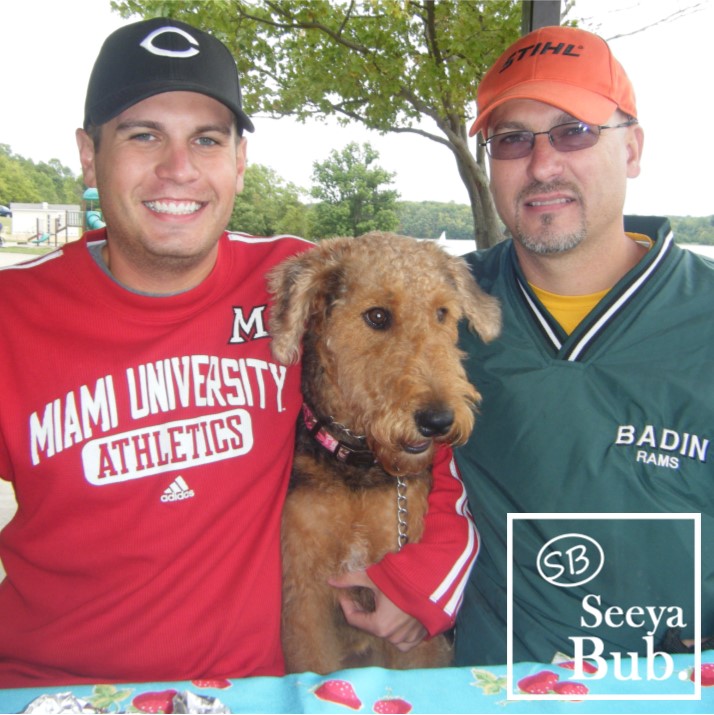
Dad with Baby Lucy and SB LogoDad, I never thought I’d have to experience life without you so soon. I had images of you growing old, and I was excited to see you enter new chapters of your life, because you always had a sense of adventure. There are days, many days, when I feel helplessly lost without you. It always feels like something is missing when you aren’t around—it’s like there’s a gaping hole that can never be filled perfectly, even though good things are happening all around me. You brought such life to my life, and now I try to use your memory to fulfill that. I look forward to life in Eternity when the “you aren’t here” times are simply a thing of the past. Until that day, I’ll continue honoring your memory and loving you with all my heart. Seeya, Bub.
“My grace is sufficient for you, for my power is made perfect in weakness.” 2 Corinthians 12:9 (NIV)

Yes, He Loves Me

The tiniest, simplest books are often the best books.

Love Is CoverWhen I was a kid, one of my favorite books was one that my Mom bought for me at a library book sale called “Love Is Walking Hand in Hand.” The 1965 book is about as simple as you can get. Written by the famous illustrator Charles Schulz, the book features the Peanuts gang (Charlie Brown and Snoopy and all your other favorites) with simple but practical examples of what love can look like in our everyday lives. Each page features a new example: “Love is walking hand in hand,” “Love is having a special song,” “Love is messing up someone’s hair,” “Love is wishing you had nerve enough to go over and talk with that little girl with the red hair,” “Love is letting him win even though you know you could slaughter him” (There’s more awesome gems from this book at brainpickings.org).

I loved that book because it was easy. I loved that book because it took a complex and nebulous idea, like love, and made it easy for me to see and understand. That book put hands and feet on love for me. That book didn’t just tell me what love was—it taught me how to love other people.

Isn’t it funny how we often come back to those simple little lessons as we age to deal with some of life’s most complex issues?

It’s true, my life after Dad’s death has been vastly more complicated, but the answers to those complicated questions can sometimes be beautifully, wonderfully simple.

Lately, I’ve been reading and revisiting a number of different books and articles written by survivors of suicide. Some of these books resonate really deeply with me, but others describe scenarios that I’m truly unfamiliar with. And it should be that way. The experience of each survivor of suicide is entirely different, and we all struggle with different feelings at different seasons. There’s no manual or “right way” to grieve. There’s no perfect way to do this because each person who suffers is imperfect in their own way.

One thing that we all have in common as survivors of suicide loss, however, is dealing with questions. And one of the worst ramifications of a suicide involves the many unanswered (and sometimes unanswerable) questions it creates in the lives of those left behind.

There is one question in the “life after your loved one” that is particularly haunting. It’s a question that gets to the roots and the motivations of suicide in general.

Oftentimes, whether reasonable or not, suicide survivors often wonder “If my loved one died by suicide, did they ever really love me?”

It’s heartbreaking for me to even write these questions down, mainly because this is a question that I’ve always been able to answer easily. Yes, I know that my Dad loved me. I know that he suffered from a debilitating brain illness that warped his mind and hacked his thought processes. I know that his decision was not a reflection of his love or lack thereof. It was uncontrollable. It was out of his ability to handle. He loved me so much that he couldn’t bear the thought of letting me (and the rest of his friends and family) down.

But even the most rock-solid faith in God and love can be subject to temptation and doubt. No matter how strong my belief, I have to admit…there have been moments in the three-and-more years since Dad passed where Satan has gotten the best of me. There have been moments so sad and heartbreaking that it’s made it hard to function, physically and emotionally. And yes, although I hate to admit it, there have been moments where (even temporarily) the pain of losing my Dad so suddenly and tragically have called into question everything I believe.

Alright, I’ll say it…I’ve always been the guy who rolls my eyes a bit at a wedding whenever the minister says “Our reading is from the 13th chapter of the book of 1st Corinthians…” Mainly, I used to think that people chose this particular passage because it’s the easiest one to understand. It’s easy to reprint on a coffee mug or desk sign. (Don’t act like I’m the only one who’s thought this.)

But suicide changed my life in dramatic ways, and that particular passage of Scripture took on a whole new meaning after Dad died. You’ve heard it before, and just to help you prepare for the Summer wedding season, you’ll hear it again here:

“Love is patient and kind; love does not envy or boast; it is not arrogant or rude. It does not insist on its own way; it is not irritable or resentful; it does not rejoice at wrongdoing but rejoices with the truth. Love bears all things, believes all things, hopes all things, endures all things. Love never ends.” 1 Corinthians 13:4-8 (ESV)

I think people love this verse because, just like my Charlie Brown book from my childhood, it makes love a tangible thing. It puts hands and feet to love. We can look at any scenario in our life, evaluate it against these standards, and judge accurately whether or not love is there.

For this reason, I often go to the version in The Message (MSG) that I think puts a perfect “Charlie Brown” picture with the original text:

“Love never gives up. Love cares more for others than for self. Love doesn’t want what it doesn’t have. Love doesn’t strut, doesn’t have a swelled head, doesn’t force itself on others, isn’t always ‘me first,’ doesn’t fly off the handle, doesn’t keep score of the sins of others, doesn’t revel when others grovel, takes pleasure in the flowering of truth, puts up with anything, trusts God always, always looks for the best, never looks back, but keeps going to the end. Love never dies.” 1 Corinthians 13: 4-8 (MSG)

So, like I’ve done so many times when the storms have come upon my soul after Dad died, I did just that to help reaffirm and strengthen my beliefs. Did my Dad really, really love me? Of course he did. Did he love me even though he died from suicide? Yes, undoubtedly. Even though life might have seemed unlivable to him, did he still love me?

Yes, yes, yes. I can answer that question with the firmest of faith. And it’s not just a whim or a feeling. It’s a fact. I can evaluate my Dad and his actions as a father against this beautiful, poetic Scripture, and I can know beyond a shadow of a doubt that he loved me…and loves me still.

“Love is patient…” (v. 4) Boy, was my Dad ever patient…with me and with everything in life. All throughout my childhood, my Dad never tired of doing things that I’m sure weren’t all that exciting for him. I think specifically of the hours we used to spend each night wrestling on the floor of our family room. Much to Mom’s chagrin, I would often jump off of the stairs or the arm of a couch and Dad would catch me and body slam me. I think of all the times that Dad would take me to the playground or toss me off the deck of our backyard swimming pool. I’m sure that there were other things he would have rather done as an adult. But he always took the time to let me be a child. He was always patient with my constant pleas for entertainment. He was patient in everything he did, but I never once felt like I was a burden or distraction for my Dad.

“Love is kind.” (v. 4) I remember from a very young age, that my Dad always taught me how to be gentle. He didn’t tell me what being gentle was; he simply showed me in the way he lived his life. My Dad had a heart for other people. In my opinion, kindness is often judged by how you treat people who can’t ever pay you back for your kindness. My Dad had a heart for those people—especially the physically disabled. I remember how special his relationship was with Madelyn, a young girl from our church who suffered from Down’s Syndrome. He loved seeing her and each time, he would bend his neck to let her rub his bald head as she smiled. My Dad also loved pets and animals of all kinds. Dad was never too busy to pet a dog or play fetch with it. He got so much enjoyment giving joy to other people (and many four-legged creatures as well).

Whenever I think of my Dad’s kindness, I think most about the times when I was hurt or injured as a child, and how he could make me feel safe, secure, and steady again. Dad often took me and my friends on bike rides to Rentschler Park when we were kids. My friends and I loved it, because Dad would often take us on the most challenging trails, encouraging us to pop wheelies, ramp small hills, and navigate particularly treacherous trails. One evening, I rode down a very steep hill, and the overgrown grass had concealed a rather large and raised manhole cover. I hit the manhole cover hard, went head over handlebars, and landed on top of the manhole cover on my back as the bike slammed down hard into my chest. I got the wind knocked out of me, and I had a lot of cuts and bruises to show for it. Without blinking, my Dad threw his bike down, came and scooped me up in his arms, and carried me all the way home. He enlisted my friends to help push our bikes so he could carry me. That’s kindness. That’s love. That’s my Dad. I miss feeling the kindness of his hug.

“Love does not envy or boast. It is not arrogant or rude.” (v. 4) The message translation of this portion says “Love doesn’t strut, doesn’t have a swelled head” (v. 4-5). I love that! My Dad was one of the most humble men I’ve ever met, and his entire life was centered around telling people how proud he was of me—sometimes to the point that it embarrassed me! Although he didn’t have much to brag on when it came to athletic achievements, there were the few miraculous Saturdays where I had a good day in the net as the keeper and he would tell everyone about my achievement. Whether it was a great report card, an award I won at the school, or a particularly strong drawing I had made as a child, I always knew that Dad was my biggest fan. He loved me for who I was, and he loved telling people about the things I was doing. It made me feel important. It made me feel special. My Dad’s love was always, always about other people.

“It does not insist on its own way.” (v. 5) My Dad always gave me the freedom to figure things out on my own. He loved me by letting me make mistakes. Ultimately, he loved me by letting me be me. Dad and I were similar in many ways, but we were also very different. Dad was a stellar athlete. I was…less than stellar. Dad was a builder and knew how to work with his hands. I complained about most physical labor and threatened to call Children’s Protective Services if he forced me to work. Dad enjoyed riding dirtbikes and motorcycles, and although he bought me my own to ride many times, I was often too nervous to ride them well. But Dad, in spite of all these differences, always loved me. He never made me feel inadequate because I enjoyed books or puppet shows or coloring or things that I’m sure he didn’t have an interest in. I think Dad loved that I was like him in many ways, but I know that he also loved me because I wasn’t a carbon copy of him.

“It is not irritable or resentful.” (v. 5) I am a lucky child in that I can’t really remember my Dad ever losing his temper with me. I look back on my life, and yes there were times where he was upset with me, but I never felt unloved. For the most part, I was a pretty good kid—but even the best of kids do something every now and then to send their parents into the stratosphere. Even when I made mistakes, Dad never let those mistakes influence how he felt about me or how he perceived my character. My Dad was the parent who could get his point across just by saying he was disappointed in me and the way I behaved. He loved me, and yes he disciplined me when I needed and deserved it, but he never lost his temper. I strive to be more like him in many ways, but especially in this way. I know I need more of his coolheadedness.

“It does not rejoice at wrongdoing but rejoices with the truth.” (v. 6) In everything he did and taught me, my Dad encouraged me to be a good person. I know that sounds simple, but because he loved me, he wanted me to love other people and do what was right by them. Dad’s actions were always evaluated in the context of how it might affect other people. It might sound like a minor lesson to some people, but my Dad refused to litter. And he also refused to let his son do the same thing. At the time, I didn’t understand how throwing a gum wrapper out the car window could be a big deal, but Dad cared too much about the planet and other people to make his garbage their problem. And yes, if I threw down a candy wrapper or Coke can behind my Dad’s back, he would make me walk all the way back and pick it up. In even the minor, day-to-day actions of life, my Dad taught me to think about other people. He loved me by helping me love others and care for their well being.

“Love bears all things, believes all things, hopes all things…” (v. 7) The Message translation from this portion of the passage says that love “always looks for the best” and “never looks back.” My Dad was an eternal optimist, especially when it came to seeing the goodness in other people. I’m thankful that my Dad always saw the best in me, even when I didn’t always show him my best. When it came to emotions and arguments that happen between a father and son, my Dad had an unbelievably short memory. If Dad and I had a disagreement on Friday night, Dad would be completely back to his normal, smiling self by that Saturday morning. He never, ever withheld his love, because he knew love could solve all of our problems. He knew that he could reach me by loving me, not by shunning me. He let love cover every interaction we ever had. I wish I had always done the same.

“Love endures all things.” (v. 7) I can think of few things that could have devastated my life more than losing one of my parents, but strangely enough I still felt that the love my Dad showed me each and every day could carry me through the pain of losing him. Strangely, the love he showed me helped prepare me for eventually losing him. I watched the way my Dad treated me when I was hurting, and in turn I learned how to better comfort my Mom and other family members when they were grieving. My Dad had the uncanny ability to nurture me authentically, and when he died I knew that one of the central callings of my life would be to love people the way he did.

“Love never ends.” (v. 8) My Dad’s life here on Earth might have ended, but I know that his love never has. It’s still with me. I feel it every single day. On certain days, I can still feel him talking to me. I don’t know if it’s Scripturally or theologically sound, but I’ve felt messages of love from my Dad numerous times since he died—especially in the dark moments where I needed them most. I think this is the greatest reflection of a person’s capacity to love—the body may be gone, but the heart and the soul are still here when you need them. When I lack confidence or feel nervous, I can still picture my Dad standing there with a huge smile on his face saying “I’m proud of you, Bub.” That’s all I need. That’s all I’ll ever need.

I’ve often heard that the best way to fight the Devil and the doubt he creates is to attack him with Scripture. This battle tactic isn’t a speculation…it’s directly evidenced when Jesus was tempted in the wilderness (Matthew 4 or Luke 4). When Satan tempted Jesus with food or power, and even pushed him to test God’s love for him by jumping from the Temple and calling on Angels to rescue him, Jesus fought back by quoting the word of God. Satan tried to create doubt, but Jesus relied on the unfailing truth of God’s Word to bolster his spirit. And it worked.

Doubt is, unfortunately, natural in the life of a suicide survivor. When something as unthinkable as a suicide happens to someone we love, it’s easy to question everything that previously seemed to be real or true. “If that could happen,” the suicide survivor says, “then how can I trust anything else I’ve ever believed?” It sounds dramatic, but I’ve experienced it myself…as have millions of others who are left behind with this heartache.

I’m so thankful, though, that in the midst of all my heartache and doubt and confusion I can know without question that, yes, my Dad loved me and that, yes, he still loves me.

My Dad’s death from suicide was not a conscious decision, but one that occurred in the middle of a terrible storm and illness that took over his thought processes. If anything, I think my Dad’s love for us might have been so strong that he didn’t want his illness to be a burden to me or Mom or the rest of our family. I wish that I had told him that he would never be a burden, and that one of the greatest gifts in my life was receiving his love.

Why would I ever let one defeat like my Dad’s death erase a lifetime of evidence that proves he was loving and caring and kind? One moment does not define a person’s entirety. Suicide, although permanent and irreversible in this situation, does not tell my Dad’s story. The love he showed is what defines him. The love he gave made him the man he was. It’s making me into a better man even though he’s gone.

So yes, amidst all the doubt and confusion that a suicide creates, I know my Dad loved me. I know that he still loves me. It’s there in the pages of my Bible. It’s reflected in the moments of my life. It’s in everything I do, and it always will be.

Me Dad and Lucy at Picnic with SB LogoDad, I hate that the confusion over your death would even lead to any doubt about whether or not you loved me, but I’m glad that I can quickly rely on the truth of God’s Word and the example you gave me each and every day to reaffirm your love. You were the epitome of a loving Father. I try each day to love people the way you did, and no matter how hard I try I know that I’ll always fall short—that’s how high you set the bar. You made love your mission. You made love your calling. You let God show you how to love, and then you showed God’s people how to love in everything you did. I pray that I’m able to become more and more like you as days go by. As those days pass, I rest assured knowing I will get to see you again. I’ll get to feel your hug and see your smile and know that everything about you is right, even though your circumstances here on Earth weren’t. Keep loving me, Dad. Keep watching over me and pushing me to be a better man. I’ll never stop loving you. Until I can tell you in person, seeya Bub.

“And now these three remain: faith, hope and love. But the greatest of these is love.” 1 Corinthians 13:13 (NIV)

Words Matter

“How do you tell people…how your Dad died?”

I sat across the table at a Panera from a good friend of mine. Unfortunately, we sat at that table together as victims of a similar tragedy, having each lost a parent to suicide. We talked that night about many things, especially the difficulties we encountered as grief stayed constant while life moved on.

I closed my eyes and nodded my head, because I remember asking myself this same question. I remember struggling to find the words when people asked why my Dad died so young. When I looked across that table, I saw a man walking through the same horrible questions and doubt that I had been dealing with. I would have done anything in that moment to take his pain away, because living a life after suicide makes even the most simple moments ridiculously complex. It’s hard to find the words to describe the death of a loved one when suicide enters the picture.

I thank God that, although eventually and painfully, I found the words I needed.


“My Dad committed suicide.”

“My Dad took his own life.”

“My Dad died from a suicide.”

I just didn’t know how to say it.

In the week or so after my Dad died, as crazy as this might sound, I would stand in front of my mirror at home and I would practice saying these things aloud. I would look at my own eyes, often swollen and tear-stained, and say these words to myself. Each and every time, they would break my heart.

No matter what variation I came up with, however, I just couldn’t find a way to do this. I couldn’t bring myself to say these words, mainly because they felt so unnatural. I never, never convicted my Dad of his death. I never, at any moment, held my Dad responsible for what happened to him in his battle with depression. I know that every survivor of suicide can’t say this (and that’s completely okay), but I was never at any moment mad at my Dad for what happened to him. He was not responsible for his death—depression was. Depression, a horrible and difficult to comprehend illness, stole him from his family and everything he loved. My Dad didn’t “commit” anything.

During my years in graduate school, I learned many things about life that extended far beyond the training I was receiving for a career as a college educator. One of the lessons that our faculty members constantly tried to drive home is a rather simple one: words matter. The words we choose to use each day matter. The words we use to define other people and their identities are important. It seems like a simple lesson, but I don’t think I realized just how meaningful this truth was until it hit home with my Dad’s death.

Now, in the midst of the greatest turmoil of my life, I found myself struggling each and every day to tell people how my Dad died.

I didn’t want people who didn’t know my Dad to have a wrong impression of the man he was. I didn’t want all the negative stereotypes and stigmas typically associated with suicide to discolor my Dad’s memory and legacy. If anything, I wanted people to know that even the strongest amongst our midst still suffer and still succumb. I wanted to convey this in a simple phrase—and like I do in so many areas of my life, I turned to a good book to help.

The gift of a good book is one of the most precious things you can give someone, in my opinion. I’m thankful that members of my family feel the same way. My grandmother, Pat, is an avid reader like me, and a thoughtful reader at that. Pat was my Dad’s step-mother, and in the aftermath of my Dad’s passing, Pat was extremely gracious and loving as my Mom and I continued to grieve. At the same time that she was suffering, she made sure to watch over my Mom and I, helping any way she could.

Grieving a Suicide BookOne of her most thoughtful gestures during that time came in the form of a book that has helped me in more ways than I’ll ever be able to thank her for. In an attempt to cope with her own sadness after losing my Dad, Pat came across an amazing book written by Albert Y. Hsu called Grieving a Suicide: A Loved One’s Search for Comfort, Answers & Hope. Pat was kind enough to read the book and recognize how helpful it was, and she bought two more copies: one for me, and one for my Mom. (For this book and others that helped me cope with my Dad’s death, visit the “Library” section of Seeya Bub.)

As soon as I received the book, I stopped reading what I currently had on the docket and made this my priority—and I’m so thankful that I did. This book was sent from Pat, but I know that it was also sent from God. I received the book from Grandma Pat right in the midst of my struggle to verbalize my Dad’s death. Like all good books, it came at just the right time.

In the understatement of the century, I’ll say this: Albert Hsu’s book is a real blessing and an inspiration—especially for everything I do on this blog. Hsu lost his father, Terry, to suicide. On an everyday Thursday morning, Albert received a call from his mother that is all too familiar for so many families in our country. Albert’s Mom had discovered Terry’s body, cold and lifeless, in their family home. In such a perfect way in the pages that follow, Albert describes each and every emotion that he felt and still feels and all the unique struggles he encounters as a survivor of suicide. His story is one of the most helpful things I encountered in the aftermath of my Dad’s death, for so many reasons.

And just as I was struggling with how to describe my Dad’s death, I came across a section in the book titled “How To Talk About Suicide”. It was like a message sent directly from God through another loyal follower. It was exactly, exactly what I needed in that exact moment.

Forgive the long passage, but understand how vitally important these words were for me in my struggle to grieve. Hsu wrote:

Survivors are hypersensitive to the topic of suicide. It punches us in the gut if someone jokes, “If this doesn’t work out, I’m going to kill myself!” One survivor told me that she challenges coworkers who say things like that, asking them if they’ve ever considered how painful those flip comments might be to others. Suicide is no laughing matter.

How should people describe the act of suicide? This has been an ongoing debate for some years. The traditional phrase has been to say that someone “committed suicide.” Survivors reacted against this, saying that it implies criminality, as one would commit murder. Is suicide a crime that is committed, like a burglary? In some cases, perhaps, but in many cases, no.

In the past few decades, psychologists and suicide survivor groups have moved toward saying that someone “completed suicide.” In this parlance, suicide is not a single act but the final episode in what may have been a period of self-destructive tendencies.

The problem is that in many cases, suicide is a single act, not one of a series of attempts or part of a larger pattern. Furthermore, to say that someone “completed” suicide sounds like noting a laudatory accomplishment, like completing a term paper or college degree. It also comes across as somewhat clinical and cold.

So more recently, grief organizations and counselors have suggested that we use more neutral terms: for example, someone “died of suicide” or “died by suicide.” The Compassionate Friends, an organization dedicated to helping families who have lost children, officially changed its language in 199 so that all its materials reflect this. Executive Director Diana Cunningham said, “Both expressions [‘committed suicide’ and ‘completed suicide’] perpetuate a stigma that is neither accurate nor relevant in today’s society.”

I resonate with this. I find it difficult to form the phrase “My dad committed suicide.” And it seems wholly unnatural to say that “my dad completed suicide.” It is somewhat easier to tell someone that “my dad died from suicide”… (Hsu, 2002, pp. 145-146)

I put the book down, and in that very moment I knew that I would never say the phrase “committed suicide” when describing my Dad or other people who suffered the same fate he did. I just couldn’t do it, because it didn’t accurately describe what happened to my Dad. “Committed” gave the impression that my Dad did what he did willingly and with a sound mind. That he welcomed death, even though I knew he fought against it each and every day of his life. Even though I have many questions about his death, I knew this was not the case.

I wanted to find language that reflected the fact that my Dad’s life was stolen. Stolen by a terrible disease that attacked his mind and his well-being. People don’t commit death by cancer. They don’t commit death via car accidents or strange and inexplicable illnesses. And they don’t commit suicide either. They suffer, and there’s no guilt to be felt by those who suffer from diseases that we don’t quite understand—whether physical or mental. I liked these phrases that Hsu suggested, but I still found myself searching for the perfect phrase.

And then, in the midst of all these thoughts, I heard someone say it for the first time. I don’t remember where, and I don’t even remember who said, but I heard someone refer to their loved one as a “victim of suicide.” Their loved one was a victim. A victim of a horrible illness that attacks and hijacks our thought processes to make life appear unlivable.

I knew, in that moment, that would be the phrase I used to describe my Dad’s death. I knew that that particular phrase captured the way I felt about my Dad’s death. It would send the most accurate message about my Dad’s death—that his life was cut short by a terrible disease and illness that stole his life prematurely. That I didn’t hold him responsible for that July morning in 2013. That I never, in any moment, blamed him for what happened.

So, whenever I would speak publicly about my Dad or talk to someone who asked why he died, my phrasing was always consistent and purposeful. My Dad, a strong, sturdy, and stable man was a victim. A victim of suicide. It didn’t remove the tears or the hurt, but using that phrase helped me honor my Dad each time I shared his story.


Sitting in Panera a few years after my Dad’s death, I found myself speaking passionately and purposefully to another young suicide survivor about this very topic. And I realized, in that moment, that God led me down that journey to describe my Dad’s death for a reason. I realized that words, no matter how innocuous or mundane, matter more than anything.

I admit, both selfishly and with regret, that before suicide impacted my life I never gave a second thought to how this language might bother or hurt those who were suffering. Before Dad’s death, I had a very different understanding of suicide. I would have willingly and readily used the phrase “commit suicide” without giving it a second thought.

But now, in this new life of mine, just hearing the word “suicide” causes me to stop dead in my tracks. I get goosebumps, still, every time I hear it. Because suicide has touched my life. And now, those words are personal.

To some people, this is nothing more than semantics and mental gymnastics. A meaningless attempt for someone who is hurting to cover their wounds with a bandage until the next wound surfaces. But to me, it’s everything. I believe words hold a unique power, because both the richest and poorest people in our world, separated by miles of inequality, still have stories and still have words to describe them. The psychologist Sigmund Freud said “Words have a magical power. They can bring either the greatest happiness or deepest despair; they can transfer knowledge from teacher to student; words enable the orator to sway his audience and dictate its decisions. Words are capable of arousing the strongest emotions and prompting all men’s actions.”

And I hope, with the words I choose, that I can sway someone else from meeting the same unfortunate end that my Dad found. I hope that the words I use, even those so seemingly simple as the way in which I describe his death, will cause someone to think differently about suicide, mental illness, and the need to fight against depression with everything we have.

This may sound simple, but the fight begins with the words we choose regarding suicide and mental illness. Our biggest obstacle in this battle, one that I hope you’ll join me in, is helping fight the shame and stigma of mental illness—and in order to get people to talk about how they feel, we have to make them feel that it’s okay to talk.

My words, your words, the words of hurting people—our words matter.

Dad and Lucy at Pumpkin PatchDad, Each day I wrestle with telling your story and making sure people who never knew you know the type of man you were. I want them to know you were strong. I want them to know you were thoughtful. I want them to know you were caring and loving and everything a Father should be. I hope that the words I choose to use convey the love I have for you and the love you gave to all of us each and every day here on Earth. You never inflicted pain with the words you chose. You built people up by telling them and showing them how important they were to you. You and I had many wonderful conversations together, and we shared so many words. I’m sorry for the moments that my words may have hurt you. I wish I had spent more time telling you the words you deserved to hear—that I loved you, that I was proud of you, and that I was always there to listen when you were hurting. I know that we will have these conversations again. I wait longingly for that day. But until our words meet each other’s ears again, seeya Bub.

“May these words of my mouth and this meditation of my heart be pleasing in your sight, Lord, my Rock and my Redeemer.” Psalm 19:14 (NIV)

Happy Birthday, Dad

On Sunday May 21, 2017, my Dad would have celebrated his 54th birthday.

It tears me up inside to have to say “would have”.

My Dad never made a big deal out of his birthday. He was always happy if Mom made one of his favorite home cooked meals and a tasty dessert. We would all get him a few gifts, and we would usually spend the night at home together. We would usually get one of his favorites—a Graeter’s black raspberry chip ice cream cake—and he would eat one big piece. And then another. And then usually another before bed. My Dad enjoyed the simple moments in his life, and a birthday didn’t need to have a bunch of extravagance to enjoy the day any more. A good meal, good family, and good cake and ice cream. I love that my Dad loved life’s simplicity. I strive to be more like him in this way.

Now that those moments are gone forever, I would give anything to go back to those days and make a ridiculously big deal out of his birthday. I would give anything to have another birthday to celebrate with him. I don’t know if it’s even what he would have wanted, because he really enjoyed life at a low-key pace and volume. Extravagant to Dad would have been two Graeter’s cakes instead of one. No matter what we did, I would have wished we had a huge blowout on his birthday. Looking back, that’s probably more about me than it is about him, and I’m ashamed to say that, but it’s all about the love I feel for him.

I’m sure this is a common sentiment to anyone who has lost a loved one, and it probably isn’t relegated to just birthdays. Christmas feels emptier. Thanksgiving feels emptier. Mother’s or Father’s days feel emptier. Yes, every day will feel a certain level of emptiness, but that emptiness is really magnified on those “big days”.

Losing a loved one to suicide (or losing a loved one prematurely) also brings on a new layer of feeling: the feeling of being robbed. The feeling of having one of life’s greatest treasures stolen prematurely.

My Dad deserved more birthdays. He deserved birthdays into his eighties and nineties and triple-digits. He deserved to celebrate his birthdays not just with me and Mom, but with his grandkids and maybe even great grandkids. He deserved more.

I experience a whole host of emotions on my Dad’s birthday, and it’s hard to predict what I might feel in any given moment throughout the day.

I feel sadness. Sadness that I can no longer say “Happy Birthday” to my Dad face to face. Or give him a gift or buy him a card. Sadness that I’ll never get to see the smile on his face or hear his familiar chuckle when he opens up a birthday card that I bought to poke fun at his age. Sadness that I’ll never be able to eat another birthday meal with him. Sadness that I’ll never be able to rub his bald head and make a joke about him having nothing else to lose since his hair was already gone years before. There’s so much sadness now on a day that was once all about being happy. It’s difficult to fathom.

I also feel distance. As each year passes by, I feel more and more distance from my Dad—and it scares me. Instead of celebrating his 52nd or 53rd or 54th birthday, I find myself celebrating the second, or third, or fourth birthday since he’s gone. I find myself dividing my life into Before Dad and After Dad, and there’s a pain that invades my heart as I accumulate more birthdays and big days without him. I feel like the further away I get from the last conversation he and I shared, the more of him I’m losing. I feel like the more years that rack up since he’s been gone, the more I will forget. I don’t want my Dad to become a memory, but I’m worried that all I have left of him are memories which I’m bound to someday forget. The distance between then and now scares me tremendously.

I feel guilt. Tremendous guilt. Guilt for all of his birthdays that I took for granted. Guilt for all the birthdays of his that I likely treated as just another day. Guilt for all the birthdays where I scrambled at the last minute for a gift when I should have spent more time being thoughtful and considerate. Guilt for all the birthdays where I had something on my calendar other than spending time with the man who deserved it. I know, I know. It’s easy to be a Monday Morning Quarterback. It’s easy to have these feelings in retrospect, and I’d likely have them regardless of how I acted while he was here. I would always want more. But that doesn’t negate those feelings. That will never erase them. They are there, and they likely always will be.

I feel, oddly enough, like the victim of a robbery. Because my Dad died when he was only 50, I feel like something irreplaceable has been stolen from me. I never, ever, imagined that my Dad would be so overcome by his depression that it would threaten the existence of his life. I never thought that my family would join the unfortunate group of millions of Americans who are affected and impacted by suicide. My Dad’s life and my family’s life were not on course for this. This was not meant for us. But it happened anyway. And now, I’m left dealing with the repercussions of not having him here. I’m not trying to make this about me. It’s about my Dad’s life being stolen by a terrible disease—not mine. And that’s what I feel was stolen.

And yes, I feel anger. Immense anger. Not at my Dad—never at my Dad. I feel anger at the pressures that caused him to think life wasn’t worth living. I’m angry at depression, a disease that stole my Dad. I’m angry at all the things that shortened my Dad’s life unnecessarily. I’ve never felt anger at my Dad—something that not every survivor of suicide can say honestly. I’m not saying they shouldn’t be angry at the victim in their situation—I’m just sharing that I’ve never felt that way. Every situation is just so unique and so different. I’m fortunate that I can say this honestly, but I do have anger. Anger at the things that caused my Dad’s life to end and mine to change so dramatically. But I’ll never, ever be mad at my Dad.

I’ll admit—I haven’t yet found a good way to deal with losing my Dad on his birthday. I’ve tried different things every single year. I’ve tried writing him a letter. I’ve thought about visiting his grave site. I’ve thought about trying to do something he would have enjoyed, like eating a great meal or spending time outdoors in the park. Or eating an entire Graeter’s ice cream cake by myself—I think he would have advocated for this option. I’ve tried to ignore the magnitude of the date entirely (unsuccessfully I might add).

It’s a day on the calendar that will always be there for me, regardless of whether my Dad is here to celebrate or not. And honestly, I don’t know that these emotions that I feel today will ever subside. I will always miss my Dad, and that date will always be there. As a result, I think I’ll always experience all of these emotions—some years more, and other years less. I’ll always long to spend just one more birthday with him—knowing darn well that at the end of that birthday I would have still been asking for more. I’ll always dream of how he would have looked on his 60th, 70th, 80th, and 90th birthday. I’ll always long for the moments that were stolen from our family—the moments he should have had but never will.

But, I guess, there’s an alternative that I don’t wish for either. I could have lived a life without a father like the one I had. I could have been free from the pain of losing him, but that would have meant I would have had to been free of the love and joy that it was to spend 26 years with him here in this world. It’s so hard and so difficult to say goodbye to those we love, but it’s only hard and difficult if those people made a tremendous impact on our lives before they left. And I would choose the pain any day over if it means I can have the joy and love.

And boy, did my Dad do that. Not just on birthdays, but each and every day. He made me feel loved. He told me he was proud of me. He spent time with me when his busy workload and schedule offered him thousands of other alternatives. He did everything a Father should do, each and every day.

I wish I could give him more birthdays. I wish I could go back and redo the birthdays I did give him. I wish I had the perspective then that I do now so I could show my Dad how much he meant to me while he was here to experience it.

But, as I have to remind myself, he is experiencing it—just from a distance. Although I don’t always live this way, I know that my Dad is watching over me in heaven. I know that he knows my heart and that he doesn’t want me to experience any of these feelings I’m feeling on his birthday. I know that he’s watching over me, saying gently, “Bub, we will have plenty more birthdays to celebrate in Eternity—and they’ll be even better than anything we’ve ever had before.”

I don’t know what I’ll do this year. I don’t know how I’ll remember my Dad, and I don’t know what feelings I will feel.

But I can guarantee this. Even if it’s clouded in sadness, I will feel love. And appreciation. Love and appreciation for a Father who deserves it. Love and appreciation for a Father who gave everything he had, each and every day, to make people feel valued. Love and appreciation for a Dad whose absence brings a pain I never thought I could feel.

And love and appreciation for a man who had great taste in ice cream cakes.

Dad Smiling Against StairsDad, It still doesn’t seem right that this is the fourth birthday that’s passed since you left us. It doesn’t feel right that life is going on without you. There are times when my heart feels so much pain that I can’t imagine ever celebrating anything without you again. But, in a weird way, I’m thankful for this pain because it reminds me how special you made life feel while you were here. You brought a vivid color and energy to my life each and every day that I don’t know I’ll ever be able to experience until I see you again. But I will see you again. I’ll make up for all those birthdays that I wished I could do over. You and I will, one day, celebrate our new birthdays in heaven. And fortunately, we will never, ever, see those birthdays come to an end. Happy birthday, Bub. You live on in my heart each and every day. Until I can tell you this face to face once again, seeya Bub.
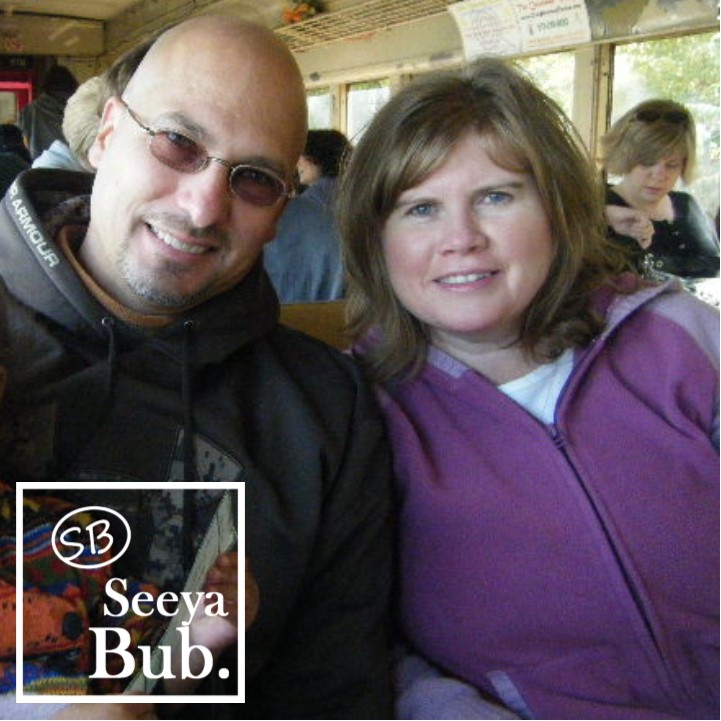
“I tell you the truth, anyone who believes has eternal life.” John 6:47 (NLT)

A Mother’s Heart: Guest Blog by Becky Bradshaw

Ty: From the time I was little, I’ve always felt like a bit of a Momma’s boy.

And I’m completely okay with that.

Mom Holding Me - CroppedGod has given me so many wonderful blessings in this life, but none greater than the two loving parents that have been with me since before I took my first breath. I’ve always had a special connection with my Mom since I was little. As an only child, I was fortunate to have all of her love and attention. I’m thankful that even though I’m growing older, I’ve never stopped receiving that.
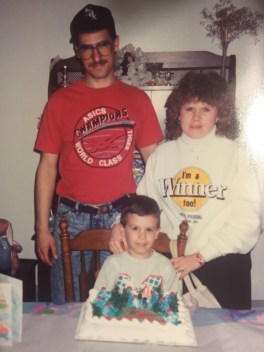
From the time I was little and would run up to her or lay my head on her lap, I always knew my Mom was special. I don’t think I realized just how special she was, however, until my Dad passed away.

My Mom loved my Dad dearly and deeply, and just as he relied on her, she also relied on him. In the aftermath of my Dad’s death, I remember worrying about what Mom’s life would look like now that Dad was no longer around. I was worried about everything. How would she afford to keep the house? Would she even want to live in the house anymore? How would she pull herself out of bed every morning, knowing Dad wasn’t there?

You know how God tells us about a million times in the Bible not to worry? I understand that now.

Because my Mom is ridiculously strong.

All of the fears and doubts that I had in the initial aftermath of Dad’s death have dissipated as I’ve watched her navigate the complexities of her new life with grace, compassion, and a determination to never give up.

Don’t get me wrong—this hasn’t been easy on her. No wife should ever have to go through what my Mom has experienced. No wife should ever get the call that my Mom got on that fateful July day. No wife should ever have to wake up at the age of [NO, I’M NOT GOING TO MENTION HER AGE] and have her life partner stolen from her so unexpectedly and unnecessarily.

But my Mom has dealt with the scary moments, and in the same way she’s never quit being a Mom to me. There have been nights where I can’t sleep and where I’m racked with nightmares about losing Dad, and I know that I can still call her. There have been moments where life has felt too overwhelming, and I always knew that I could share my anxieties with her and be reassured and strengthened again. Just as I ran to her as a young boy, I’m still running to her now that I’m grown (and significantly taller than she is). On this Mother’s Day weekend, I’ve invited my Mom to share her memories of my Dad. Although our experiences have been so different, I’m so thankful that we’ve had each other throughout this heartache. We suffer differently, but thank God we are suffering together.


Becky: As Mother’s Day approaches, I started thinking back about all the Mother’s Days that I have had—especially my very first Mother’s Day as a mother myself.  Scott and I were so excited, as we would be spending my first Mother’s Day with our new two-week-old son, Tyler.  We went to church together that morning, and then we went and bought flowers to plant in our yard.  As I look back I realize how special that Mother’s Day of 1987 was.  Scott and I spent many more Mother’s Days together, but lots of other times together making memories throughout each year.

When you lose someone you love you try to hang on to every memory you made together, and I wanted to share a few of those special memories we had as a family.

From the time Tyler was a little boy, we tried to do fun things with him.  Trips to Fantasy Birthday PhotoFarm (for those of you who are old enough to remember this place), picnics, movies, making crafts, zoo trips and much more.  Birthdays and holidays were also special times at the Bradshaw house.  Scott and I always wanted to make Tyler’s birthdays special.  Every year we would plan a big birthday party for him, and Scott was always excited and would always try to plan something different each year.

Scott was also willing to step into my mom role when I couldn’t be available.  I remember one particular field trip that he went on.  Tyler was in the 3rd grade and they were going to Wright Patterson Air Force Base.  I guess the laughing and jokes started as they loaded the bus because of Scott’s hair…or, I should say, the lack thereof.

On the same trip Scott was in charge of a group of students.  That was probably the first mistake because he truly was a kid at heart.  I remember Tyler telling me how they got yelled at by employees for going in areas of the museum they weren’t supposed to and for touching items they weren’t supposed to. I don’t recall him going on any more field trips after that.

There are just so many great times we spent together playing with our dogs, building our addition to our family home, spending time at our pool, fun at Hamilton Joes’ games, beach vacations, hanging out with family and friends.  I really think I could write a book about all these memories.

On June 30, 1984 Scott and I started building our lives together and I honestly knew we would play with our grandchildren and grow old together, but on July 24, 2013 all that changed.

The next days and weeks were a blur and I just could not imagine him not with me.  I would hear him calling my name and wait for him to come home from work. As painful as that day was, I try to focus on all of the memories.  Scott, I cannot wait to see you again some day and we can reminisce about old times.

Thank you for the memories I will always have in my heart, even though my life has forever changed.

I love you always and forever and until we meet again!


Ty: A day or so after my Dad’s death, I remember sitting on the back patio of our family home on a park bench with my Mom, each of us starting endlessly across the lawn of our backyard. That patio and that lawn and had been home to so many wonderful memories. We stared at the fire pit where my Dad had spent so many summer nights—burning brush, running out of brush, and cutting things down so he could have more brush to burn. We saw the pool where we had played and splashed and floated on rafts in the warm sun. Everything was still there, but it felt like everything was gone.

I remember feeling so very scared in that moment. I had no idea how we were going to keep up with everything. The house, the pool, the yard, the flowerbeds—there was so much work to do, and the man who had helped us keep our family home perfect wasn’t there any more.

“I don’t know how we are going to do this, Mom,” I said to her in a moment of desperation.

She looked at me, with tear-filled eyes, and gave me an honest and loving response.

“I don’t know either, Ty,” she said.

And my heart completely broke.

I realized, in that exact moment, that neither one of us had the answers to help us navigate this new and unfamiliar territory. And I also realized that just as I was suffering, she was too. It wasn’t a contest—we were both hurting, in different ways and for different reasons.

For that reason, we would need each other. I would need Mom to help bolster my spirit when I missed my Dad, and she would need me to bolster hers when she missed her husband.

We can’t help each other with everything, because the reality is that there are certain voids that only my Dad could have filled. Life is just emptier without him, and that will never change. And I’m glad that’s the case. My Dad’s death left a huge void in our hearts because he occupied so much of our hearts to begin with. We feel so empty because my Dad was such a wonderful presence in our lives.

Mom and I didn’t have the answers to how we would get through life on that day, and I don’t know that we’ve always had them ever since—but we’ve found ways to cope with this terrible tragedy by relying on one another. We sat together, just the two of us, on that bench for quite some time that day. We didn’t have to say anything, but if we felt the need to, we did.

But at some point, we got up. My Mom held onto my arm, and we walked across the yard to my house where our friends and family were waiting to help us grieve.

We got up from that bench. And we walked together. And although we haven’t done it perfectly, we’ve been doing it ever since.

On this Mother’s Day, I’m thankful to have not just any Mom, but my Mom. A woman who has stared Satan in the face and said “You might think you’ve got me beat, but I can assure you that you’re wrong.” This is a woman who, while grieving, has shown unbelievable peace and calm as the storm rages around her. I never envisioned that instead of going on long walks with our family dog, Mom would be spending time at her husband’s gravesite. I never envisioned my Mom without my Dad at family picnics and get-togethers. I never saw my Mom cooking dinner for one or having to manage the landscaping. But she’s defied every expectation of her that I’ve ever had—not just since my Dad died, but since the day I was born.

Happy Mother’s Day, Mom. Thanks for being there—to love me, to grieve with me, and to walk with me throughout this life.

I am always proud of you, and know this:

Dad is too.

Mom and Dad on BusDad, I always pictured you growing old with Mom. I knew you would make a tremendous Grandpa, but just as importantly I know that Mom will be an amazing Grandma someday. I hate that you didn’t get to enjoy this chapter of life here on this Earth with her. But I know that you are so unbelievably proud of her as you watch how she’s handled the troubles of this life without you. I know that you are watching over her each and every day. She is lucky to have such an amazing guardian angel. It doesn’t change the fact that we would rather have you here with us, but it does make life easier to handle knowing that, someday, we will all be reunited—a family again. Although we don’t have you here with us, we will always cherish and hold near to our hearts the memories that you gave us. You gave us so many. Thank you for always doing that. Thank you for being a wonderful Father, and thank you for choosing the best Mother any kid could ever hope for. Until we get to relive those wonderful memories together again, seeya Bub.

“Listen, my son, to your Father’s instruction and do not forsake your mother’s teaching. They are a garland to grace your head and a chain to adorn your neck.” Proverbs 1:8-9 (NIV)

MomBecky Bradshaw

Becky is Ty’s Mom. She works at Envision Partnerships in Butler County, Ohio, specifically working with substance abuse and driver intervention programs that keep our communities safe. She is involved at her church, and loves spending time with her dog, Sadie.


Birthdays & Big Days

Yesterday, I hit a milestone…and I hit it begrudgingly.

I turned 30.

I say “turned 30” because “celebrated my 30th birthday” doesn’t properly capture my emotions towards this momentous occasion. It doesn’t properly reflect the terror I feel in my heart. The terror that…like my Father….I might start losing my hair at 30. Not to mention all the other age-induced physical changes one goes through as they get a bit older.

When people ask me if I’m turning 30 and I sadly tell them that I am, they often gush and glow and tell me that my thirties are going to be the best years of my life. They tell me this because their thirties must have been great….and most of the time they aren’t in their thirties anymore. I guess I would think my thirties were pretty darn great if I was sixty. And hairless.

I know, I know. I should be really, really, really grateful that God has blessed me with an amazing thirty years. And that he’s given me a mostly healthy life so that these years will likely continue to accumulate. I am thankful for those things, and I guess that it’s mainly vanity that is keeping me from turning 30 with a smile on my face.

Vanity, yes, but also the fact that every year that passes on is a year spent without my Dad.


My Mom and Dad always made birthdays a very exciting time around our house. Part of this good fortune was likely a result of my only child status, but most of it likely came from the fact that I just had really awesome and amazingly thoughtful parents. I look back on my life and I’m thankful for this: I never had to think about whether or not my parents loved me. I knew they loved me. And they showed it every single day. But birthdays were extra-special.

I remember the birthday parties as I was growing up. A handful of my friends would always join us for a special day, and Mom did most of the planning and execution, but Dad was always there to help and have fun. Some years it involved a trip to a fun spot in our town, like Discovery Zone or Sports Zone. We would chow down on pizza, play arcade games, and run through tunnels and ball pits until our socks wore out. Other times, my parents would turn our backyard into a fun zone all its own, with Mom cooking lots of food and Dad setting up games or piñatas for everyone to have fun with. No matter the locale, it always felt like a special day; and all the while, my parents never failed to tell me they loved me.

I remember the elaborate gifts that my parents would buy for me. Like the year they purchased me a Sega Genesis (every 90’s kid is reading this and saying the “SEY-GAAAAA” jingle). I played Sonic & Tales and Aladdin until my eyes crossed. There was the year I got a CD player for the first time…and I thanked my heavenly Father that I would no longer have to rewind cassette tapes anymore! Okay, I am really starting to feel older than 30 now…

There was the year that my Mom and Dad had bought me a bike and stowed it at a neighbor’s house for safe-keeping until a surprise gifting planned for later that night. Already having dressed for dinner, I sat in the living room in front of our windows waiting for my Mom and Dad to get ready. Suddenly, I saw my Dad hoofing it across our front lawn, pushing a flashy new yellow and blue 21-speed Mongoose. I pointed out the window and looked at Mom with a quizzical face, saying “Hey Mom, am I going crazy or did I just see Dad run across the front yard with a bike? Is that my birthday present?!”

Mom and Dad had a brief “discussion” about how he should have brought the bike over sooner and how he shouldn’t try to hide a surprise by running it in front of our huge front windows, but it was eventually confirmed that, yes, the bike was mine. I remember running my hands across the sleek new frame, grasping the stiff and unused brakes, and pedaling up and down the street where we lived before Mom told me we absolutely had to leave for dinner right then. She promised me I could ride the bike when I got home, and I remember riding the bike that night as Mom and Dad sat on lawn chairs in our front driveway, making sure I got off the bike and stood in the grass every time they saw headlights. That bike and I traversed the trails of Rentschler Park hundreds of times of the years, and it eventually came to Oxford with me, helping me get from class to class and back to my apartment. It was a special gift. Special, and also built tough—I still have it, and it still looks brand new. My Dad always had a knack for picking out high-quality, durable, and usually brand-name gifts. Unfortunately, I’ve inherited his taste for nice (and more expensive) things.

As birthdays accumulated, the childlike whimsy and fun that I remembered was always harder to recapture—but my parents always did everything they could to try and make me feel special. Mom always offered to cook my favorite meal and make me a cake or dessert that I enjoyed. The favorite tastes of my childhood, especially my Mom’s cooking, always have a way to bring me back to a happier place. Both of my parents would always make sure they wished me a happy birthday before I left the house that day, each giving me a big hug. Some years we would go out to a nice restaurant, like the year we went to the Montgomery Inn Boathouse in Cincinnati. And they kept buying me gifts—like the year I turned 18 when they helped me buy a brand new set of golf clubs. The gifts and the meals were nice, of course, but they never outranked the importance of having a wonderful set of parents to celebrate with.

It’s hard for me to think about those great birthdays of the past without thinking of how hard it is to celebrate in a new way now. Without my Dad, it’s just harder to smile on my birthday.

This is my fourth birthday without my Dad being here with me. This is my fourth birthday without having him give me a hug and telling me that he loved me. This is my fourth birthday without receiving a text from him, usually in all caps, that reads “HAPPY BIRTHDAY BOY”. This is my fourth birthday without seeing him at my birthday dinner and sharing a cake or dessert together. My fourth birthday without a card that he thought was funny and without a laugh as he told stories from when I was little.

Birthdays just aren’t the same without my Dad, and there are lots of big days that aren’t the same without him. When I graduated from Miami with my Master’s degree, I was excited to have my family cheering me on in the stands, but I was so deeply saddened that Dad wasn’t there to watch. It was really hard to stop thinking about him that day, no matter how hard I tried to put on a brave face. When I got my current job at the Oxford Campus, I really wanted to call him and tell him all about it and hear his encouragement over the phone. I constantly wish I had the opportunity to introduce him to my girlfriend, but I can’t. There have been so many big moments that I haven’t been able to share with him. It’s amazing how your hurt can simultaneously be filled with happiness and hurt in those moments. This complexity is brand new for me, and it’s hard to understand.

There are big days coming in the future—big days where I know his absence will be even more profound. I think about getting married and not having him sitting in the first row with a big smile on his face. As happy as that day will be, it will also be terribly hard for me because he should be there. He should be there to talk to me right before the wedding and tell me all the important truths he’s learned about marriage. He should be there to tell jokes about how he thought this day would never come. He should be there to dance foolishly and laugh with all those in attendance. But he won’t be.

I think about big games and events that I’ve announced. My Dad was always there for those types of things, but he isn’t there to cheer me on anymore. He isn’t sitting in his typical seat at Foundation Field when I announce. He isn’t there taping and recording games that I’ve broadcasted, showing them to people and telling them how proud he is. My Dad was my biggest supporter, my best cheerleader. But he’s not here to do it anymore.

And of course, I think about having children. If you knew my Dad, you know he would have made a tremendous Grandpa. I can’t begin to tell you how much he was loved by kids of all ages. He was goofy and playful and hilarious. He knew how to make people smile, and he never tired of playing with children when he knew they were having fun. I struggle with this one the most. My Dad deserved to be a Grandpa. He deserved to have a set of little feet run up to him and wrap their arms around his shins. I can’t imagine my Dad being an even better Grandpa than he was a Father—but he would have been. But he won’t be now.

There is a sense of finality that is terribly painful as every year moves on. There are times when I can think about him and smile, but there are just as many moments when I think about his absence and all I can do is cry. As a Christian, I am thankful that I know I’ll be reunited with my Dad in Eternity—but it doesn’t erase the pain I feel right now from our temporary separation.

Since Dad’s death, my “big moments” in life have taken on an entirely new complexity. Those moments that should be happy are often constant reminders of the person who isn’t there anymore. Those big moments signal a new chapter in life, but it’s tough to come to terms with the fact that those new chapters are missing a very important character.

But I’m also reminded that even though he isn’t “here”, my Dad is still with me in these big moments—and he always will be. I can eat birthday cake until I’m sick and laugh because my Dad taught me to enjoy life and eat every piece of cake that is put in front of you. I can show my love for another person because my Dad taught me how to put the needs of others before my own. I will someday have the ability to be a good Father because my Dad taught me how to love unconditionally and parent with a purpose. My Dad isn’t physically here with me anymore, but I try and live the way he did—and in that way, he’s still here. And he always will be.

There are some things that I may have inherited from my Dad that I will gladly surrender—chief among those being the gene for hair loss that begins at the age of 30. But I’m proud to be Scott Bradshaw’s son. I’m proud that he taught me how to overcome life’s biggest trials and tragedies. I just wish I didn’t have to lose him to test those skills.

The little moments without him hurt, but so do the big ones. I will continue to live my life, even though I’d rather live it with him here. I’ll continue to blow out the candles on my birthday, wishing more than anything that he could come back. I will continue aging with grace, just like he always did. And I will continue to vigorously and nervously apply copious amounts of preventative Rogaine, because, after all, I will always be my Father’s Son.

Birthday Photo with SB LogoDad, A birthday just isn’t a birthday without you here to celebrate. I often think about the great jokes you would have had worked up for me now that I’ve turned 30. I guarantee that there would have been some hair growth treatments involved—you should know that better than anyone. As painful as it’s been to blow out the candles on a cake without you for the fourth year, I’m thankful that I got to spend 26 wonderful birthdays with you here. You always made birthdays so special for me, and I’ll always be thankful for your unbelievably fun-loving attitude towards life. You have a new birthday in Heaven now. One that represents the start of your eternal life in paradise. As much as I hate aging, I’m thankful that with every passing day I’m one step close to hugging your neck again and telling you how much I’ve missed you. I long for that first hug, because I know it will be even better than the last one we shared. We are going to have a lot of birthdays to catch up on! And I can’t wait to tell you about every day that you’ve been gone. You’ll always be here with me, even when you aren’t. And I’ll always be grateful that on this day 30 years ago, I received one of the greatest birthday gifts God could ever give me. The gift of loving parents, and a Father who made life worth living. Thanks for giving me life, and thanks for always adding love to it. Until I can thank you in person, seeya Bub.
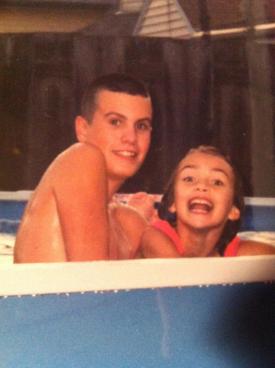
“It is beautiful how God has done everything at the right time. He has put a sense of eternity in people’s minds. Yet, mortals still can’t grasp what God is doing from the beginning to the end of time.” Ecclesiastes 3:11 (GW)

Hi Meggie: Guest Blog by Megan Turner

Ty: “Quit wooking at me!” was all she ever yelled when we were little. I must have heard it a thousand times, but we always kept looking.

Megan and Ty in PoolShe is my little cousin, Megan—and she’s more than a little cousin. I’m an only child. I always imagine that my parents took one look at me when I was born, realized they couldn’t possibly create another child as perfect and naturally adorable, and abandoned their plans for any additional little ones. Hey, at least I said I imagined it…
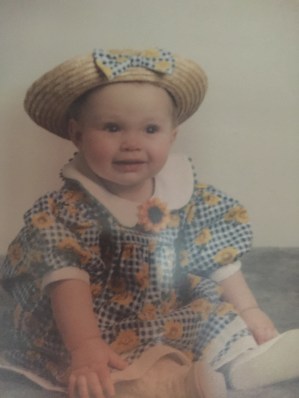
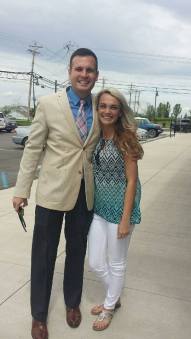
Although I grew up without any technical siblings, I was blessed with my cousin Jake when I was four. The son of my Aunt Beth and Uncle Lee came into the picture, and I immediately took a liking to him…which is not easy because I was constantly obsessed with how ginormous his baby head was.

Jake must not have been perfect enough, because his parents decided to give him a sister, and that’s when Megan came into the picture. I remember thinking she was always so cute, and our family constantly told her that even though she would constantly yell at us as a youngster and tell us to “Quit wooking” or looking at her.

Megan's Baby Photo

But no matter how loud she yelled, my Dad never quit looking at her because she was always so very special to him. I think that Megan was the daughter that my Dad never got to have. She was always a really playful child, and my Dad loved that about her. He had an uncanny ability to make children laugh, most of the time as he made a complete fool of himself, and Megan was no exception. I still have so many childhood memories that are flooded with the sound of Megan’s laughter as she watched my Dad do something ridiculous.

And I also remember Megan’s tears on the day she found out that he was gone. I remember her trying to simultaneously comfort my Mom and I while grieving herself. And I remember, in those moments, looking at a young girl that I was tremendously proud of and watching her mature in the midst of a terrible tragedy.

When Megan sent me an essay that she had to write in one of her college classes about a life-changing experience, I was moved to tears as I read. It reminded me that I lost a Dad, but in losing my Dad there were also many other people who lost someone special to them—a husband, an uncle, a friend, a coworker. My Dad is no longer here, and neither is Megan’s uncle. Her words remind me that we all lose when we lose someone special, and that we all suffer uniquely and in our own way. And thankfully, God puts the people in our lives that we need most to carry us through the storm.

Megan Jake Ty and Dad at Beach


Megan: I never imagined, at the age of eighteen, my small, extremely close family could change so drastically, in one day, so unexpectedly. It was summer, around the end of July. I had been driving around with my Dad all that morning and everything seemed fine. Little did I know that day was getting ready to completely turn for the worse.  I was about to receive some horrible news about someone I dearly cared for. Though I thought my Uncle Scott was one of the happiest men around; I was not completely aware of what he struggled with, as well as what several others do too. Never assume that just because someone is outwardly happy that they are not struggling with something bad on the inside.

As I got back into the car from receiving an important job, I knew everything was about to go downhill and change right away. I buckled my seat belt and as I glanced at my Dad, I saw he had the saddest look in his eyes.  I knew something was not right at that very moment. My Dad was a tough, strong, hardworking man that never showed any signs of weakness or sadness. This time it was different; he had tears running down his face.

“What’s going on Dad?” I instantly said to him.

“Megan I have something I need to tell you,” my dad replied “Something really bad happened a little bit ago. Uncle Scott attempted to take his own life, and they weren’t able to save him. He’s passed away.”

I could not believe what I was hearing. “What do you mean passed away?” I could not even imagine my outgoing, always happy, funny Uncle Scott doing something like that.

“Honey, your uncle Scott has been suffering from depression for a while now. I know he never showed any signs, but the past few weeks he has really been in a depressed state.”

I did not want to believe a word I was hearing. There are a lot of things in life I do not quite always understand, but this was something I knew for the rest of my life I would never understand. We instantly started driving to my Aunt’s house where all my family was waiting for us.

While the sun was shining warmly on my face through the window on the drive there, a handful of memories were rushing through my mind. Every time I would see my Uncle, the very first thing he would do is give me a huge hug and smile, saying, “Hi Meggie, how are you?” How was I going to be able to go to family events and be around my family not being able to hear those five words every time like I always did? Right away I began to think about all the memories I shared with him. My Uncle Scott was adventurous and always up to doing something. A few summers before, he spent hours and hours with me at the pool teaching me how to dive. I continued to get frustrated every time I could not get it right, but Scott never gave up on me. He pushed me and told me to try again, and eventually, I was able to do a dive in the swimming pool just like he had shown me. There were so many things he was talented at. He had a huge heart and would do almost anything for anyone. He was a hard worker who could fix almost anything, enjoyable to be around, great with animals, and most importantly a huge part of our family.

When we finally got closer to my Aunt’s I could not even think straight about how upsetting everything was getting ready to become. There were quite a few cars parked around the street. I noticed my Mom was there, as well as my Grandparents. As I got out of the car, I saw my Grandpa standing there talking with a detective. My skin, right away, had chills going down my arms as I realized that something terrible like this really just happened.

I rushed into the neighbor’s house, where my Aunt was at the time with my Mother and Grandmother. I dramatically threw myself in my Aunt’s arms, with tears dripping down my face. She held on tight, squeezing me tighter every few seconds and whispered in my ear, “I love you so much, Megan.” My heart started beating faster as the tears from both mine and my Aunt’s eyes continued to tremble down our faces. As my Brother approached us, while standing there, she grabbed him close to her and I both, and the tears began coming out faster. “Your Uncle Scott loved the both of you so much and don’t ever forget that. He thought the absolute world about you.”

Walking next door to the house that my cousin Ty lived in, I could not put the puzzle pieces together in my mind that this tragedy in my family really just happened. What were we going to do the next time we gathered for family events and without him there? How were my Aunt Becky and cousin going to be strong enough to get past this? How was I going to be able to hold up at his funeral?

I never imagined seeing my cousin the way I did. His face was pale, and he sat on the couch as if he was deer in headlights. Only blinking a few times every minute, he had nothing to say. My cousin was just as outgoing as my uncle and always had a smile on his face. This time it was different. It seemed as if a different person was inside my cousin. Sitting in the living room for hours and hours letting it all sink in was the most hurtful and painful thing my family had to do.

Time has gone by now and the thought of my uncle no longer being with us crosses my mind first thing every morning and last thing every night. The day was here that I was dreading all along. It was the day that my family and I gathered around and had to set up the arrangements for the devastating loss of my wonderful Uncle Scott.

That was one of the most challenging days my family and I had to face with one another. Nothing about it was easy, and the thought of that day crosses my mind over and over again. Death is a very common thing that everyone goes through at some point in their life, several times. Everyone handles the death of loved ones differently. It is important to be close to those that you love and care for, and know whether or not they are struggling inside with something. Depression is a very common disorder that many people have and face on a daily basis. It’s important for those to get help and see the doctor when they are feeling that way. Never believe that you could never lose someone that you love unexpectedly. Cherish the memories you share with the ones that mean the most and always be there for your family. This day was a very difficult day for my family and I that we all still deal with the pain of my Uncle being gone every day. My Uncle Scott was a strong man that could not fight any longer. He is an amazing man that is truly missed by so many, and I’ll never stop loving him.


Ty: I knew that I wanted to speak at my Dad’s funeral, but I didn’t know if I could. I tried numerous times to write down notes in the days leading up to the funeral, but every time I sat down my mind would fog or I would start sobbing uncontrollably. I wondered if I’d be able to give my Dad the proper eulogy that he deserved.

I remember talking with my Grandpa and him asking me whether or not he thought I would be able to speak. I told him that I was going to try, but that I honestly didn’t know if I would have the strength or the emotional stability.

And then, he told me “I’ve talked with Jake and Megan, and if you’d like, they would like to stand next to you at the pulpit when you speak.”

Immediately, I felt a new sense of courage. I wasn’t going through this alone. I was suffering with people who loved me. I was suffering with family members who were heartbroken, too. I was suffering with two individuals that I loved like a brother and a sister. Two very special people who would be there next to the pulpit.

And if they were there to suffer with me, I knew they would also be there to help me heal.

They weren’t leaving. They weren’t going anywhere. I was never in this alone, even though my Dad’s death made me feel so lonely.

Megan and Ty EasterI don’t remember everything I said that day at my Dad’s funeral, but I remember turning to Jake and Megan, telling each one of them how proud I was of them. I’ll admit, I don’t often do that enough to those I love, and I’ve been trying to do it more ever since my Dad’s death. I am tremendously proud of them for the love and care they showed to my Mom and I when Dad died. In that tragedy, Megan grew from a little girl to a courageous young woman. She still grieves, like we all do. She is still suffering, too. But her experience reminds me that although we suffer uniquely, we never suffer alone. There will always be someone there, even in the moments where it doesn’t feel like it, to stand next to you when you can’t stand on your own.

She doesn’t yell at me anymore, but I’ll always be “wooking at her” with the admiration of a proud big cousin brother.

Megan and Dad with SB LogoDad, You would be so proud of the young woman that Megan has become. I know I am. She is intelligent and beautiful and caring—all the things you valued in life. I know you are watching over all of us and smiling, but it just isn’t the same without you here next to us. Family get-togethers just seem to lack the same fun and excitement that they had when you were at them. We all lost a piece of our heart when we lost you on that July morning, but we’ve never lost your memory. I pray that every day, God will help me live the type of life that you lived, and I pray that I can treat my family with the same amount of love and dedication that you always did. We miss you terribly, and until we are all together again, seeya Bub.

“My health may fail, and my spirit may grow weak, but God remains the strength of my heart; He is mine forever.” Psalm 73:26 (NLT)

Megan TurnerMegan Turner

Megan is Ty’s younger cousin, and she currently works as a medical assistant at the office of an Allergest. Megan enjoys watching sports, being outdoors, and spending time with her family. Megan is currently planning to return to college to pursue a degree in Special Education, as one of her passions is working with the mentally and physically impaired.

A Jar of Sand

I opened my desk drawer at work and pulled out a jar of sand.

To the outsider looking in, the jar is nothing special. It’s a simple mason jar filled with gray sand. On top of the sand, there rests a handful of seashells. The seashells range in color, shape, and size.

But to me, that jar is a truly cherished possession. A gesture of love and compassion. Something that means more to me than most people would ever know. This unsuspecting jar of sand was a treasure that helped me get through some of the most difficult emotional obstacles of my life.

And it came from a student I’ll never forget.


Swimming trunks? Check. Sunscreen? Check. Shades? Check.

I ran through the list as I had done so many times before, as my family geared up for our summer vacation to Gulf Shores, Alabama. Mom, Dad, and I were heading down to the beach for a week. We hadn’t been in a few years as a family, so we were all looking forward to the opportunity to get away for a week and soak up the sun in our favorite seaside haven.

It was July of 2013.

In a week or so, my family would be leaving for our beach vacation, and we couldn’t be more excited. We all needed a break from the everyday routines we had established, and in my family nothing was more peaceful than parking a chair in the sand along the coast and staring out into the endless waves.

We were anticipating so many great times together in Gulf Shores, and we were also anticipating a very long and very uncomfortable ride in the truck. My Dad’s truck may have comfortably sat four riders, but that was without luggage. But even a family of three should have been able to fit in the truck somewhat-comfortably with plenty of luggage to last throughout the week.

Not my family. Specifically, not my Mom. Although Dad and I were pretty efficient packers, Mom always believed that we should bring anything and everything that we would possibly need or want during that week—and to be safe we should probably bring two of them.

The night leading up to our departure was always interesting, as Dad would try to solve the most complex game of Tetris he had ever encountered—piecing all of our luggage into the back of the truck without obstructing his view out of the rear window. I would always help my Dad as he put the luggage into the vehicle we were driving, and we would both shake our heads and bite our lips when we saw how much stuff we had packed. Dad would typically find at least one thing to grow endlessly frustrated about that my Mom had packed.

“Becky, do we really need to take a gallon sized plastic pitcher with us?” he would yell through the door.

“What am I going to make lemonade in if we don’t?” she would yell back.

Dad would turn around, mumble under his breath about how there were pitchers in the condo kitchen that she could probably use, and then he would do what any good husband would do. He put the pitcher back in the truck and packed it anyway.

But this summer, Dad had his new truck. In an effort to make us all a little more comfortable, he was scouring the Web for a new cap or toolbox he could put in the bed of his truck so we could store all of the luggage in there instead of cramming everything into the cab. Each night, Dad would spend some time looking at the newest name-brand contraptions that would turn the bed of his truck into the premium luggage hauler for our nearly 700 mile drive. He would slowly read things on the Internet, pondering reviews and printing out possible solutions.

He did this all the way up until the night before his death. I would like to think that my Dad was looking forward to that trip. I have no idea whether the suicidal thoughts he would feel the next day had already invaded his mind, but it’s very hard to imagine that my Dad would have been looking at options to increase his packing capacity had he not envisioned going to the beach.

What a great trip it would have been. Dad absolutely loved the beach. We had spent so many summer vacations sitting shore-side in chairs under umbrellas soaking in the sun and admiring what we thought was God’s most beautiful creation. My Dad always seemed to be at peace at the beach. He would lay calmly on a beach towel in the sand as the sun beat down on his back. He would dig holes and build sand sculptures. He would swim out as far as he possibly could into the ocean while my Mom looked on nervously from her chair.

But he was never isolated at the beach. He and my Mom would take long walks along the shore, talking and looking at the sea gulls as they flew by. He and I would toss a baseball back and forth until our arms got tired or we overheated, and then we would jump into the waves and toss a ball there instead. And Dad, always the chatterbox, would make friends with the strangers who had set up camp near us on the beach. He would get to know people from all over the country and learn about their lives. If he met them early on in the trip, he would be sure to get to say hello to them every day of the trip.

Dad just seemed so happy at the beach. It was his little slice of heaven on earth. And I often wonder if he’d still be sitting here next to me today had that trip been a week or so earlier. I can’t help but imagine…


Instead of spending that week on the beach, it was more than a month after my Dad’s death and I was sitting in my office chair at Miami University Middletown, staring aimlessly at my computer and pondering my new life. My work days, when I could actually get the strength to go in, were full of daydreaming, pondering, and distraction. I would try to commit my mind to projects and tasks before the start of the semester, but it was nearly impossible. I could only seem to think about my Dad and how desperately I missed him.

Mom and I hadn’t seriously entertained the idea of going on vacation without Dad after his funeral, even though many people had encouraged us to go anyway as a way to escape the reality of our new life. We both knew that it was just too early to go on a family vacation when we felt like our family wasn’t whole. Going to the beach without Dad was just too much for us to take on so soon. So, we stayed home and eventually tried to get back to normal life—or our new normal. I knew I couldn’t go so soon, and seriously wondered whether I would ever be able to go back again without him.

As I sat at my desk one afternoon trying not to cry, I heard a knock at my office door. It was Gillian Maxfield, one of my campus tour guides and a student I had grown to adore during her time at Miami.

“Hi there, Gillian,” I said, pronouncing her name with a hard “G” (like Gilligan), an inside joke between she and I that traced back to the first time I met her. I had read her name off of a roster of campus tour guides shortly after I took over the role at Miami, and when I pronounced her name the way I did, everyone laughed as she corrected me.

“It’s Gillian! Like with a ‘J’!” she laughed.

“But it doesn’t have a ‘J’,” I said with a look of mock confusion on my face. Honestly, I had never seen that name spelled that way! “It has a ‘G.’ Therefore, I’ll call you Gill-ee-en.

Everyone laughed, including Gillian, and for as long as I worked at Miami I nearly always pronounced her name that way.

Gillian was the type of student that every educator dreams of—resilient, willing to take chances, and always appreciative of the opportunities she was given in life. Gillian came to Miami with a healthy dose of nervousness towards college, but she immediately started to embrace leadership opportunities all across the campus. She started participating in the wealth of student activities that were offered, and eventually joined the student organization that planned all of them. She held a campus job as an administrative assistant in the Dean of Students’ office. She was a dynamic student leader for the new student orientation programs held at the campus. And she became one of my most reliable, dependable, and engaging campus tour guides during her time there—not to mention a favorite for many of the families who came to explore.

Gillian always seemed a little nervous when she started giving tours on a regular basis after I began supervising the tour guides, but she was courageous and took every opportunity she could to improve her communication skills. She did it with great success, because her tour groups would always return from their stroll around campus with big smiles on their faces and plenty of compliments for their guide.

“Gillian was absolutely tremendous! She did a great job!” This was a common refrain from the visitors who would come to our campus. Gillian, always humble and never boasting, would smile, blush, and laugh nervously. She never failed to disappoint.

Seeing Gillian stand in my office doorway shortly after my return to work after Dad’s death was so comforting. She walked around my desk as I rose from my chair.

“I am so sorry to hear about your Dad, Tyler,” she said as she gave me a hug. “I know this must be a very difficult time for you.”

Her words were filled with compassion and generosity. She was always so genuine, and I appreciated this most. We both sat down and talked about how kind and supportive everyone had been during my return, and how I was slowly but surely learning to cope with a new world that my Dad was absent from.

Then, Gillian gave me one of the most genuine memories from that difficult chapter of my life that I still hold near and dear to my heart to this day. Gillian reached into her bag and pulled out a mason jar, handing it to me across the desk.

“I know that you weren’t able to go the beach this summer,” Gillian said, “and I know how much you were looking forward to going with your Mom and Dad. I wanted to bring you some sand and seashells from one of my family vacations as a way for you to remember the good times you had with your Dad at the beach.”

Jar of Sand

I looked at the mason jar as tears filled my eyes. I got up from my desk again, giving Gillian another hug as I attempted (unsuccessfully) not to break down. We sat back down as I turned the jar around in my hand, appreciating the beauty of the seashells and sand in front of me. Gillian was right—having that jar in my hand did bring back so many wonderful memories of the times that my family and I had spent together on the beach. I shared some of those stories with Gillian, and she sat in my office helping me grieve in ways that she never even knew. We talked for a while, and she let me express my feelings with the patience and maturity of someone far beyond her years. As we neared the end of our conversation, I got up to give her another hug as she left the office.

“Thank you, Gillian,” I said, pronouncing her name correctly for the first time in many years. “You have no idea how much this means to me.”


Just a few weeks ago, I was looking at that same jar of sand, yet again with tears in my eyes but for a very different reason.

I sat the jar down on the table, and walked out of my house in a black suit and shirt. After a short drive, I walked into the funeral home. I was there to attend Gillian’s funeral.

Gillian MaxfieldHealth complications had taken her too soon. We hadn’t seen each other in a few years after I left the job at the Middletown Campus, a fact that I now felt very guilty about. It’s so easy to say that we will all stay in touch when jobs or other circumstances change, and I hate that time makes these promises so difficult to maintain.
I used to have such difficulty attending funerals, but being on the receiving end of one changes everything. Thousands of people came out to show their love and support for my Dad during his funeral, and it made my Mom and I feel so loved and cared for. Ever since then, I’ve learned how wonderful it can feel to have people attend a funeral and tell stories about their loved ones.

I went for Gillian, but I also went for her family. Before approaching the casket, I had a chance to share the story of the jar of sand with Gillian’s heartbroken parents, once again with tears in my eyes. I told them how that gesture of love had warmed my heart and helped me survive the most difficult loss of my life. I told them how proud I was of all Gillian had done at Miami.

“I’ve kept that jar in my desk ever since that day,” I told them. “Every now and then, I pull it out and think about that day when she came to my office and gave it to me. She is the type of student every educator dreams of. Thank you for sharing her with all of us.” We discussed all of the memories we both shared of her, and Gillian’s Dad even remembered the day she had gathered the materials for the jar. We smiled together through tears—a reflection of a life well lived.

We hugged, and I approached her casket, preparing to say my respects one last time. Although her body was in front of me, I could only see the Gillian in my memories, full of life and flashing that familiar smile that had warmed so many hearts on our campus during her time there.

“Thank you, Gillian, for the jar of sand,” I said to her in my final goodbyes. “Thank you for being you.”

That jar of sand will always be one of my most treasured possession—not because of the shells and sand it contains, but because of the love it represents. More than I could ever express to her in person, Gillian went out of her way to help me grieve. But when I attended the funeral that day, everyone had their own “jar of sand” story about Gillian. We could all recollect moments when Gillian had touched our hearts so deeply in completely extraordinary ways.

I hope I can be more like Gillian as I go through this life. I hope I can exude the same zest for life she showed each and every day. Tragedy is inevitable, and I hope that in someone else’s moment of distress I can provide a “jar of sand” for them. I will never, ever forget how much that loving gesture strengthened my courage and resolve to deal with tragedy, and I’ll always be grateful for Gillian—a student who, just like a seashell, was truly one of a kind.

dad-and-seagulls-with-seeya-bub-logoDad, I often envy the fact that you are meeting so many wonderful people who are in Heaven, and I hope you’ve had an opportunity to meet Gillian. She helped me remember all the wonderful moments you and I had shared together with Mom and our family at the beach. She was one of God’s angels here on Earth who helped me cope with your loss, and I have no doubt that you are thanking her in person for that jar of sand she gave me. Thank you for giving me so many great memories. Until we can share all of those memories again together, seeya Bub.

“So, encourage each other and build each other up…” 1 Thessalonians 5:11 (NIV)