Masks

“We had no idea.”

When you’re standing next to a casket at a visitation, you hear lots of comments over and over again. “We will be praying for you.” “Is there anything we can do?” “If you need anything at all, please let us know.” “You’ll be in our thoughts and prayers.”

In reality, who knows what to say? Is there anything you can actually say to take the pain of losing a loved one away? I find myself saying the same things to grieving friends when I attend funerals or visitations. I don’t like that I say it, but I don’t know what else I could possibly say in its place. It’s what we do to show that we love.

My Dad’s visitation, however, was a bit different. My Dad had passed from suicide, and there was a certain shock of losing someone suddenly who, just a few days prior, had seemed completely healthy. I heard one particular comment more than any other from the more than 1,000 people who came to pay their respects to my Dad.

“We had no idea.”

Over and over and over again, friends and loved ones and coworkers and neighbors and childhood acquaintances made their way through the line, some waiting upwards of a few hours (which still touches my heart in ways I can’t possibly describe). Just a few minutes after the service had started, I remember looking up and being completely overwhelmed by what I saw. Our extremely spacious sanctuary had a line that clung to the entirety of the wall, streaming through the back doors and into the foyer. Who knows how far it went from that point, which was beyond my vision. There were folks sitting in the pews, catching up with one another but I’m sure also trying to figure out why this gathering had even needed to occur.

I tried sincerely to look into the faces of those who came. I tried to assess how people were feeling. I looked out at the other people who had known my Dad—other people who were hurting, too—and I saw the same look on their eyes. Shock. Confusion. Pain. Bewilderment.

My Father had died from suicide, and the flabbergasted looks I saw the night of my Dad’s visitation were justified. Although my Mother and I (along with a close circle of family members) had known of my Dad’s struggle with depression, neither of us thought it would ever get this bad. Neither of us believed that my Dad was hurting as bad as he was. Neither of us believed that the depression could create a stranglehold strong enough to make my Dad feel that life wasn’t livable.

Unlike those folks, we knew; but like those folks, we didn’t.

Many of the people who loved my Dad didn’t know because my Dad wore a mask. I’ve heard that phrase used so many times to describe the coping mechanism that individuals suffering from mental illness will use. They hide their true feelings. They bury the anguish down deep below the surface. They put on a happy face when happiness eludes their heart. That mask metaphor has helped me understand how my Dad was able to hide his depression from those he loved. But more importantly, it’s helped me understand why he would feel the need to hide his depression in the first place.

I anticipated the shock of my Dad’s death in the hearts of those who knew him because so many people knew my Dad as a happy, jovial man. That’s how I knew him, too, even though I would occasionally see into the dark egresses of his depression. Those were usually brief moments confined to a short amount of time. Eventually, that depression would pass—or at least I thought it did. As I reflect on those moments, I am beginning to understand that the depression never truly disappeared. My Dad just got better at coping with it at times. And sometimes, unfortunately, he got better at hiding it.

But most of the time, he was happy.

It’s more than that though. My Dad wasn’t just happy. He was one of the happiest men I’ve ever known. Happy to the point where, as a kid, I just wanted to see him get mad about things to know that he could. My Dad was the guy who could keep a smile on his face in any situation. The man who, in the most difficult moments, could tell the perfectly timed joked to make people laugh. In every circumstance, dark or light, my Dad was cheerful when he interacted with those around him. He had a bright smile, a twinkling eye, and a glistening personality that could instantly comfort other individuals and cheer them up.

Which is why depression confuses me so much. How could a man who could so instantly and effortlessly encourage and lift up others not do it for himself?

His entire life, my Dad worked in labor-intensive jobs. He worked in plants that were often entirely too hot during the summer and entirely too cold during the winter. He built things, and he fixed complex machines, and he worked long hours (a gene for which I have yet to inherit). And no matter the job, my Dad was always happy. He always had a smile on his face. His coworkers absolutely adored him. He was the guy you hoped would join you on a project because you knew you would not only get the job done but have fun while doing it. I wish I could tell him how much he meant to those he worked with.

Then, he would come home. And although he would find ways to relax, he would also find work to do there. He would spend hours sweating in the yard planting flowers and repairing the house. He loved gardening and outdoor work (once again, a gene I have not inherited). He would remodel bathrooms and fix electrical issues. And all the while, Dad would have a smile on his face. All the while, Dad would tell you that he was good, and that he was enjoying life. I wish I could tell him how much that meant to Mom and I. I wish I could go back and tell him that he didn’t have to work so hard.

And it wasn’t just work—his happiness invaded every corner of his life and his soul. Dad would go to church, and he would have a smile on his face while he stood around and chatted with folks for 45 minutes after the service as I rolled my eyes and tugged on his sleeve in an impatient effort to beat the Baptists to Frisch’s for lunch. He would go to my soccer games, which offered very few opportunities for smiles during my short-lived athletic career; but he would smile, and cheer, and even admit to other people that the horrible right fullback was actually his son. When we would go out to dinner and the food or service left something to be desired, Dad would smile and find ways to enjoy the time with his family. It was a contagious happiness that my Dad embodied. And it’s that contagious happiness of his that I miss every single day.

I don’t doubt that in many cases my Dad was simply happier than other people. I think he just had an appreciation for life and the simple things that make it wonderful which few of us are able to truly appreciate. This may sound strange considering that he eventually died from suicide, but my Dad found ways to appreciate life that I’ve yet to tap into.

However, I am also confident that there were likely times in my Dad’s life when he was extremely unhappy underneath the surface but felt as if he couldn’t let people see him in a state of weakness. I know that in the midst of his own personal turmoil, Dad was probably afraid to let people know that he just didn’t feel like himself. He was afraid to let them know that his depression was getting the best of him. He wanted to be a happy, smiling Superman to everyone at all times…and that is an unattainable expectation for anyone, even for my Dad, as great a man as he was.

My Dad was the man who was able to bring joy to other peoples’ lives whenever they needed it most. After his death, I heard countless stories of my Dad’s ability to help others find happiness. I heard stories about times when my Dad would take time out of his day to visit people, to talk with them, and to generally make them feel like someone cared. I heard stories about lunches that he bought for folks, repairs that he made at their homes, and silly things he had done to just get others to laugh a little.

I heard those stories and I believed them. Every single one. I believed them because he did the same thing with me in my life each and every day. There were so many times when I would feel down and my Dad would pick me up. Oftentimes, he didn’t even have to know I was down. I think he could simply sense it. Dad never made me feel ashamed or weak if I wasn’t feeling happy. Dad never judged me or told me to “snap out of it.” Dad gave me compassion. My Dad gave me unconditional and unabated love every single day.

More than anything, I think this is why I hated the fact that my Dad felt as if he couldn’t share his mental illness with the folks around him who loved him. Those folks loved him deeply, and had he shared his struggles, I’m confident that they still would have loved him. And they would have helped him. And they never, ever would have given up on him.

Instead, my Dad felt it was necessary to wear a mask. My Dad felt that he should hide the feelings he couldn’t explain from those he loved most. My Dad wore that mask because he couldn’t bear to let people see the depths of his depression, which he perceived as a personal weakness.

I wish I could tell him that he wasn’t weak. I wish I could tell them that he had no reason to be ashamed. And I wish, more than anything, I could tell him that he didn’t have to wear that mask anymore.

The mask, however, is not a tool of deception; it’s a weapon against embarrassment and shame. My Dad was not a deceitful man, and that’s the point I try to get across to individuals when I talk about depression or mental illness. He didn’t hide his depression because he was attempting to lie or mislead people. He hid his depression because he loved them. He masked his depression because he didn’t want others to worry about them. He buried his depression because he was ashamed of it. And unfortunately, it’s that very shame that led us to bury him.

Dear people, we must arrive at a point in this world where there is no shame surrounding depression and mental illness. And we should do this because…there is no reason for those individuals to feel ashamed. There is no reason for us to wear those masks, and there are other survival mechanisms that actually lead to true healing.

When I think of my Dad on the morning of July 24, 2013 (his last day on this Earth), my heart breaks when I picture how broken he was. He stared at the floor, unable to make eye contact with me. He looked disconnected and detached from everything around him. When I asked him about all of the pressures he was dealing with in life—and boy did he have a lot to deal with—he was even ashamed to admit he couldn’t handle all of those things. At one point, he even said to me, “Yeah, but I should be able to deal with this.”

No, Dad. You shouldn’t have been expected to deal with everything easily. You shouldn’t have been expected to be Superman in every moment of every day.

As much as it tears me apart to think of my Dad on that last day, it also causes me deep pain to think of the weight that must have burdened my Dad’s life from wearing that mask each and every day. This is a heavy mask that those with mental illness are wearing. This is a difficult load that they carry. That mask may hide fear and shame, but it doesn’t eradicate it.

I also know this from personal experience. Although much less severe than my Father’s struggle, my own struggles with anxiety have helped me understand this principle. Dealing with anxiety (or any mental illness) on its own is difficult enough; feeling like you have to lie and convince everyone around you that you’re fine when you’re really not takes that exhaustion to a whole new level. And that exhaustion just continues to fuel the mental illness in a vicious cycle, and before you know it the mask is not merely a coping tactic but a necessary tool for survival.

My Dad’s life may be finished, but his story is not. And what can we do about it? What can I do? What can you do? What can all of those shocked, hurting people who attended my Father’s visitation and funeral do to redeem his story?

Let people know that it’s okay to take off their mask. When individuals are suffering from mental illness, we have to let them know that it’s okay to let down their defenses. We have to let them know that taking off their mask is an act of bravery, not an admission of weakness. We have to let them know that their inexplicable feelings of sadness, despair, nervousness, or guilt are real but remediable. We have to make them feel that there are so, so many more solutions to ease their pain than suicide. Simply, we have to make people feel loved—and not just loved, but unconditionally loved. Loved regardless of their feelings. Loved regardless of their circumstances. Loved regardless of the things they can’t control or fix. Unconditional love is the true mask destroyer.

In order to love others, however, we have to make sure we love ourselves.

That’s why it’s ridiculously important to take off your own mask, too. We can’t tell people to take off their masks if we aren’t willing to take off our own. The best way to promote mental health is to model it. Removing our own mask requires courage and bravery, but it takes the most dangerous weapon mental illness wields—the unjustified humiliation—and completely removes its power. We show others who aren’t okay, in those instances, that we aren’t always okay either.

And we teach them, more than anything, that it’s okay to not be okay…but that it’s never okay to stay that way.

As time moves on from my Dad’s death, I am beginning to see his mask in a new light. I see it as a coping mechanism, not an act of deceit. I see it as an act of love. Yes, an act of love that I wish we could have redirected. But even though he wore that mask, I know that love existed underneath. I know it’s there. I feel it every day—and I’ll never forget it.
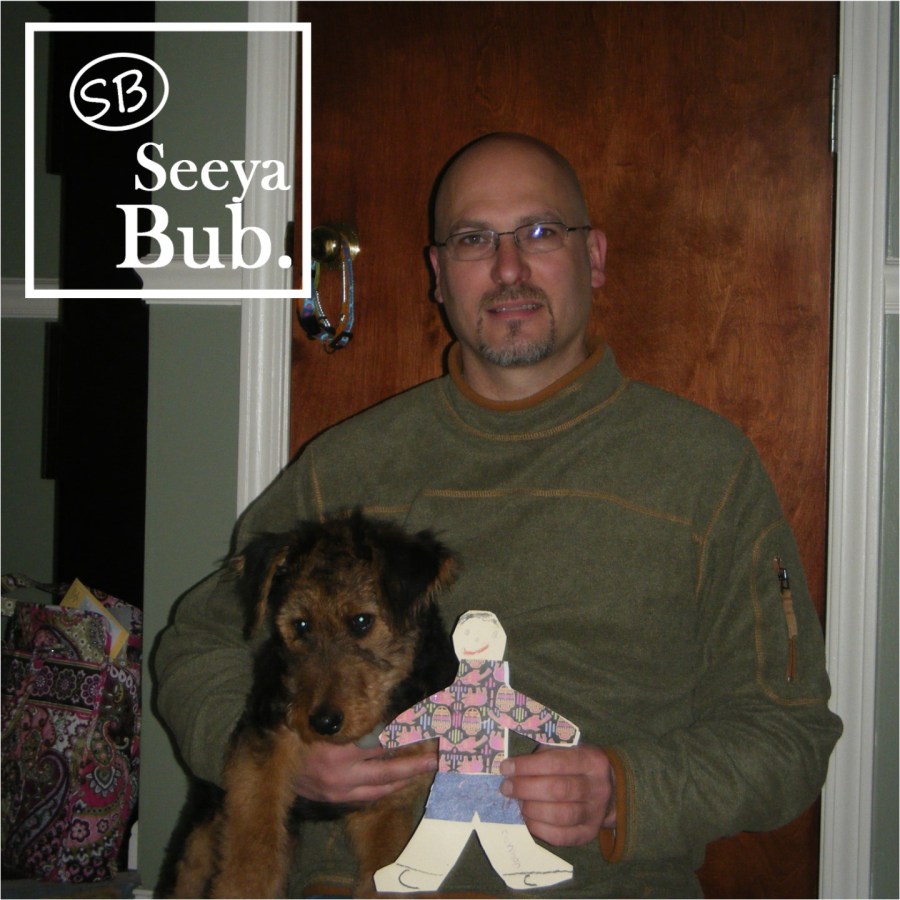
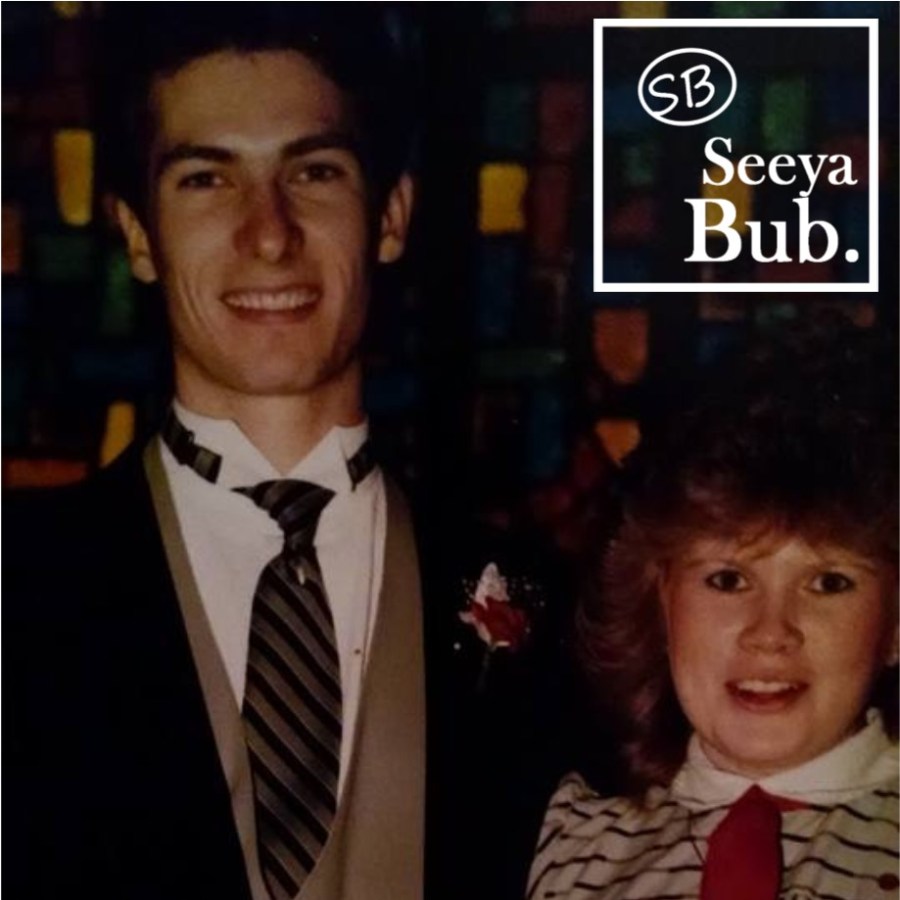
Mom and Dad at Church with SB LogoDad, You didn’t have to wear a mask. I think I know why you did. You wore a mask because you loved me and you loved all of us. And you couldn’t bear the thought of letting us down. Dad, you never would have let any of us down. Even in your death, you aren’t letting me down. You could never disappoint me. I would never be ashamed of you, no matter how sick you felt. Dad, you were courageous. You were brave. And you always had a huge smile on your face because you wanted others to smile, too. I know you were trying to be brave, but I wish I could have told you that being vulnerable and getting help was one of the bravest things you ever could have done. Thank you, Dad, for making my life happier. Thank you for teaching me how to enjoy life. And Dad, thank you for being the fighter that you were. Your story is teaching us all so much. Thanks for teaching me how to share it. Until I can say that I love you in person, seeya Bub.

“But he said to me, ‘My grace is sufficient for you, for my power is made perfect in weakness.’ Therefore I will boast all the more gladly of my weaknesses, so that the power of Christ may rest upon me. For the sake of Christ, then, I am content with weaknesses, insults, hardships, persecutions, and calamities. For when I am weak, then I am strong.” 2 Corinthians 12:9-10 (ESV)

The Inside Cover

Usually, I only write my last name on the inside cover of the books I own (which is too many). Mostly in bright red pen, I emblazon “BRADSHAW” in all capital letters in the top left hand corner of most of my books. Just in case I decide to lend my precious books out and they don’t find their way home, I want the perpetrator to be haunted with the guilt of their thievery forever and ever.

But my Bible? Well, that’s a different story…

Since shortly after graduating from Miami, I’ve carried a hardcover Zondervan Bible. It’s a TNIV (Today’s New International Version) men’s Bible called Strive that I picked up at Half-Price Books. I love it, and I always have. It has great inserts with thought-provoking questions, profiles of historical figures from my faith’s past, and counters to modern-day myths associated with a man’s journey as a Christian.

This is the Bible I’ve always read since I started drawing closer with my faith after college. I read all the way through this Bible from cover to cover, which was a big accomplishment for me. I’ve marked that Bible up with underlinings and notes and circles of passages that grabbed my heartstrings or caused me to think of my faith in a new light. This was the Bible I was reading before my Dad died that has a deeply significant timeline drawn between Psalms 68 and 69—the before and after line marking my Dad’s death during my reading journey. It’s the Bible that I’ve carried with me to church each and every Sunday—on the days that I’ve wanted to go, and on the days when I’ve been so shattered by the grief I feel that I have to drag myself there. This Bible has traveled with me in countless rental cars and hotel rooms when I travel for my job. The thin plastic protective cover has started to peel, and some of the pages might be creased, but it’s never diminished the value of the precious words inside.

The words in the Bible tell the story of my faith; but the words I’ve written on the inside cover help remind me why I believe.

A year or so before my Dad passed, I made a decision about the inside cover of my Bible. I told myself that I was going to wait for the most poignant, thought-provoking, powerful statements about my faith in God and lodge them there. Once I heard those phrases, I would write them on the inside cover of my Bible. It was a pretty simple premise, but one that I took seriously.

I took it seriously because the inside cover of my Bible is precious real estate. It’s the first thing you see when you open the book. Once you use up all the space on the inside cover of your Bible, it’s gone. You can never get another inside cover.

That first quote on the inside cover of my Bible is still my favorite one.

I didn’t write the date (an addition I would add to future quotes). I didn’t note the particular sermon. I didn’t even write it in red pen! (My coworkers probably are probably shocked to see my writing in anything but red pen.) I do, however, remember the speaker who introduced that quote to me.

It was my pastor, Reverend Harville Duncan. I always loved Harville’s messages because they were intellectually challenging, thought-provoking, convicting yet hopeful. His messages always had powerful themes and nuggets of wisdom all throughout that challenged me in my faith in ways that I didn’t think was possible. He also made a somewhat-weekly LA Fitness reference which I conveniently tallied on a post-it note in the back of my Bible (and just in case you’re curious, he told 67 LA Fitness stories between 2013 and his retirement in 2016, with a +/-3% sampling error for the services I missed).

More important than any LA Fitness reference, however, was the quote from Reverend Duncan that founds its way into my Bible:

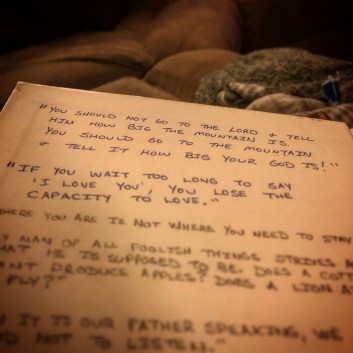
“You should not go to the Lord and tell Him how big the mountain is. You should go to the mountain and tell it how big your God is!”

It wasn’t an original quote, but it was new to me—and it was beautiful. I had never heard that phrase, but I loved it. It gave me courage that I never thought I’d need. It helped me visualize strength in the midst of difficult circumstances. I just loved it, and I knew the second that I heard it where it should belong.

I grabbed a pen from the pew in the middle of his sermon, and I inscribed the quote in my typical all capital (albeit blue) writing on the inside cover of my Bible.

It’s been there ever since; but more importantly, it’s been in my heart and mind every single day since I wrote it down.

I loved the quote—and in a few months, I would need that quote.


When I decided to speak at my Dad’s funeral, I honestly had no idea what I was going to say. I had no words for what had happened just a few days prior. What could I possibly say at that lectern to capture the love I felt for my Dad and the grief I felt in losing him? It just wasn’t possible. I didn’t have the courage.

I did something on that day that I have rarely done when it comes to public speaking. I didn’t prepare at all. I didn’t write out any notes. I didn’t rehearse my eulogy like I typically would any other time I spoke in public. I didn’t even have a general outline. I played a few things through my head during the few quiet times I had in the days after Dad’s death, but nothing would stick. I just prayed that God would give me the strength to say what He wanted me to say in that moment. I didn’t know what to say—but He did.

In an effort to try and prepare, I sat down at my desk the morning of my Dad’s funeral. Adjusting my black suit as I sat down, I said a quick prayer and asked God for guidance, perspective, and a courageous spirit. I told him how beat down I was. I told him that I had never felt this kind of pain before, and that I didn’t know what to do with any of it. I told him that I was completely lost, and insecure, and doubting whether or not I could live life without my Dad.

And then, I opened my Bible. And there it was:

“YOU SHOULD NOT GO TO THE LORD AND TELL HIM HOW BIG THE MOUNTAIN IS. YOU SHOULD GO TO THE MOUNTAIN AND TELL IT HOW BIG YOUR GOD IS.”

Bible Inside CoverGod wanted me to hear that message the day that I originally wrote it down, but he wanted me to live it in this new storm. That was the message God gave to me in a moment of ease to prepare me for a lifetime of perplexing grief. That was the message that God put on Harville’s heart, knowing he would need to pass it along to the members of the flock he cared for. That would be the message of my life, given to help save it.

And that would be the message I would need to say goodbye to my Dad.


I spoke at the funeral that day, and although I didn’t have a clear framework of where I wanted to head with my message, I knew that God wanted me to share this one truth. He had put it on my heart (and on my Bible cover) for a reason. This was that reason.

I didn’t talk long that day. I physically couldn’t. I talked about my Dad and how much I missed him. I talked about the sadness we felt as a family and the gaping hole we would feel in his absence. I shared some stories about his sense of humor. And I was honest with the few hundred friends and family members who had gathered to say goodbye to my Dad. The truth that, deep down, I didn’t know how my Mom and I would ever get through this. I was deeply confused, and I had questions that I feared would never be answered.

But I told them that Harville had shared an important quote with me and our church shortly before my Dad’s death. “We should not go to the Lord and tell Him how big the mountain is,” I said with slowly mustering confidence. “Instead, we should go to the mountain and tell it how big our God is.”

I looked out across the darkened sanctuary, and although I saw tear-stained faces, I also saw nods. I saw people nodding, and smiling through their grief, and encouraging my Mom and I to never give up. I saw people believing that my Dad’s death would be a huge, looming mountain; but I saw them believing that God could help us climb that mountain and conquer it with the strength only He can provide.

The mountain of grief we were facing would never, ever go away; but neither would the Almighty God who could help us climb it.


A few weeks after the funeral, as life began to ease its way into a difficult new-normal, I got an unexpected gift from my Uncle Lee. Lee was my Mom’s only brother, my Dad’s only brother-in-law. Dad and my Uncle Lee may have been brothers-in-law, but they had a bond of brotherhood that was enviable to this only child. They grew up as teenagers playing softball together. They played pick-up basketball together with members of our church from the time I was little. They would always count on one another for help with big household projects, appliance repairs, and the ever-occurring backyard swimming pool problems. I think Uncle Lee and my Dad always got along with one another because they are unbelievably similar—for all the right reasons. They are two of the most hardworking individuals I’ve ever known. They provide for their families without ever begrudging the hard days and long hours. They are each humble to a fault, never boasting or seeking credit for the amazing work they do. I know that when my Dad died, Uncle Lee was just as devastated as anyone else—and rightly so. My Dad had been the brother that he never had, and now he was gone.

In the immediate aftermath of losing my Dad, Uncle Lee was one of the first people on the scene—and one of the last to leave. He stayed with my Mom and I anytime we needed him. He helped us with countless chores and projects around our homes, cutting our lawns and helping with other repairs. He was there for emotional support, even though he was grieving himself.

His personal grief was real, but he always found a way to make sure he was a source of strength for my Mom and I whenever we needed him. I’ll never be able to thank him enough for the support he gave us, and his gift to me after losing my Dad inspires me in new ways every day.

His gift was a sign—a beautiful sign. Uncle Lee wanted to give me a reminder that the words I spoke at Dad’s funeral were more than just words; they represented an undeniable truth. He knew that I would need to do more than remember those words—I would need to live them. So, to help me remember, Uncle Lee made me a beautiful sign that read: “Don’t tell GOD how big the mountain is, Tell the mountain how big GOD is!”

Sign from Uncle Lee

I cried like a baby when I saw that sign for the first time. I ran my hands to and fro across the sign as I read the words and wept at the thought of losing my Dad and living life without him. But I also smiled and nodded my head through the tears because I knew those words were absolutely true. I knew that those words would guide me through the unchartered waters of grief and loss. I would go to that mountain of grief and despair, and I would let God guide me to the peak. This sign was an overflowing of the love in my Uncle’s heart. I’ll always be thankful to him for loving my Mom and I, and I’ll always have this sign to remember the courage and belief he had in us to overcome.

And let me tell you…I’ve needed the reminder many, many times.

Those words would become a mantra to me in the months and milestones that passed after losing Dad—and they still are. Especially in the weeks that followed after losing him, I would recite those words to myself over and over and over again first-thing every morning. I would wake up from a restless, nightmare-laden night. I would take a few deep breaths, trying to shake away the reality of losing my Dad. I would dread having to face the world without my Dad by my side. And on those days when it was hard to believe, I recited the words that I knew would carry me through: “Don’t tell God how big the mountain is; tell the mountain how big God is.”

On nights filled with paralyzing pain, I would have trouble peeling myself off of the couch. There were many nights when I would collapse in the floor of my living room, convulsing and weeping at the mere mention of my Dad’s name. And in those horribly painful moments, I would say those words again: “Don’t tell God how big the mountain is; tell the mountain how big God is.”

And on days when Satan crept into my mind and tried to convince me that my Dad’s death from suicide was unforgiveable, I would beat back his ploys with the truth of God’s love. I would remind myself that God doesn’t just love a chosen few. He chooses to love all of us—including my Dad, mental illness and all. And I would say, with a smile on my face and an eye towards the heavens “Don’t tell God how big the mountain is; tell the mountain how big God is.”

That beautiful sign hangs above the window in my home office, my favorite retreat nestled in the back corner of my home. It’s the office my Dad helped me paint. It’s the office where he installed a beautiful chair molding to help me execute the vision I had for a lovely baseball-themed workroom. And there, above the window where I stare out and daydream, hangs the sign that my Uncle Lee made me with the words that have carried me through my grief. I look at it often, especially when I write. I let it remind me God has a bigger purpose for our pain. He doesn’t demolish the mountains in our lives. He grabs us by the hand and helps us navigate the terrain until we reach the mountaintop.

I live my life relying on those words. I live those words knowing that they were written in the inside cover of my Bible for a reason. That reason is bigger than anything I’ll ever be able to explain on this side of Eternity; but I still trust them. I believe that they are true because they’ve carried me this far. No mountain will ever be too big for my God, and every time I open my Bible that truth jumps out at me—both on the inside cover, and in every single story those pages tell.

Dad in Easter SuitDad, You were always so courageous and so brave, and I wish I had more of that in me. You never let a daunting challenge intimidate you. You believed in your ability, and you believed in your God. Ironically, it was watching your brave example that prepared me to survive the grief of losing you. You taught me that I could do anything if I believed in God and let Him lead my way. Dad, I don’t focus on the one battle that you lost with depression. Instead, I focus on the many years that you fought successfully and conquered your sickness. You tried so hard—for me, for Mom, and for those who loved you. You fought the hardest fight of your life each and every day, and you were unbelievably brave. I’ll always remember that. I’ll always live my life through your example. And until I can see you again and tell you just how courageous you truly were, seeya Bub.

“Then David continued, ‘Be strong and courageous, and do the work. Don’t be afraid or discouraged, for the Lord God, my God, is with you. He will not fail you or forsake you. He will see to it that all the work related to the Temple of the Lord is finished correctly.’” 1 Chronicles 28:20 (NLT)

Grape Heart

As my family walked into church, we were each handed a snack-size Ziploc bag containing two items: one raisin, and one grape. The greeter smiled at us as he handed them out. Dad and I looked at each other and wondered….had our church converted to a different fruit-worshiping denomination since last week? Should we run?

For what seemed like an eternity, the morning announcements were given, the worship team sang, and the offering was collected. And the entire time, no one said a word about the bags of grapes and raisins. Did these people really understand the weirdness of what had happened when they came into the sanctuary this morning?!

Or wait…we did actually arrive on time to church that morning (a rarity in my family). Maybe they had been handing out grapes and raisins to the folks who showed up on time my entire life?! Maybe we had been missing out on the rewards for my entire life!

If all you get for showing up early is a grape and a raisin…I’ll take my extra 30 minutes of alarm-snooze—repeat. Wake me when they start giving out tacos and twenties.

If curiosity killed the cat, there was a vicious feline slaughter going on inside my brain during the beginning of the worship service. It just didn’t make any sense.

Finally, when our Pastor (Ted Herold) took the stage, he referenced the bag and its contents. And even though my Dad never explicitly told me this, the sermon that followed was my Dad’s favorite sermon that he ever heard. I’m positive of that. Dad always enjoyed Pastor Ted’s sermons, but I know how much he enjoyed this one, and I’m thankful for it.

I don’t remember the specific Scripture that Pastor Ted used that morning, but I do remember the message and I do remember the illustration (job well done, Pastor Ted!). It’s been stuck in my mind and my heart ever since that morning.

Pastor Ted instructed us to open our baggies and pull out the two contents: a red grape, and a wrinkled raisin. For the next few minutes, he actually had us compare and contrast the two items as a congregation. Dad rolled the grape and raisin around in his work-worn hands, and I looked on still wondering what was going on.

The raisin, the congregation agreed, was pretty lifeless. It was shrunken and wrinkled and shriveled. Pastor Ted asked the group “Does anyone here even like eating raisins anyway?!” A few of us raised our hands (I didn’t seek them out, but I didn’t hate them either), and Pastor Ted laughed. He then asked us to eat the raisins and react, as he feigned disgust from the front of the sanctuary.

Tasty? Maybe. But not as tasty as a grape.

Then, Pastor Ted went on to have us describe the grape we had in our hands. The grape was robust, especially compared to the raisin. The grape was full of life. The grape was colorful. The grape was bright. Essentially, the grape (although technically the same fruit) was everything that the raisin was not. Pastor Ted asked us to eat the grapes, and then describe it. They were tasty. They burst when you chewed them. They were juicy. Once again, all the things that the raisin we had previously ingested could not be.

That’s when the teaching began.

Pastor Ted asked us to think about the raisin and the grapes as metaphors. Metaphors for our heart. And he asked a simple question: “Do you have a grape heart? Or a raisin heart?”

If you had a raisin heart, your heart had lost its life. Your heart had shriveled into a fraction of what it used to be. Your raisin heart was lifeless, even dead. Your raisin heart had no brightness to it, no vividness. A raisin heart was empty. A raisin heart had nothing to give. It had been disconnected from the vine for too long.

A grape heart, on the other hand, was much different. A grape heart had life. A grape heart had energy. A grape heart had robustness, nearly bursting from the contents inside of it. A grape heart was so full of love that everything about its character was noticeably different from a heart that was empty, both inside and out.

And he continued to pose the question: “Do you have a raisin heart? Or a grape heart?” Do you have a heart that is shriveled and lifeless? Or do you have a heart that is bursting from all the love it contains? The message was simple. Jesus wanted His followers to live with grape hearts, not raisin hearts.

I’m sure we talked about that sermon on the way home and over lunch, because Dad would continue to bring it up throughout the years. And he would bring it up in typical Dad fashion.

Any teenager can get a bit….annoying; and I was no exception to that rule. At the top of all my annoyances? My impatience. I’ve always had trouble waiting for things, and I’ve never liked having to slow down.

My Dad, however, was different. He never, ever let the pace of life get the best of him, and I’ll always admire him for this. In fact, I strive to be like him in this way (and many others) more and more each day. Yes, his slower pace of life frustrated me beyond belief at times, but as I look back on his life, I am deeply envious of his ability to actually sit back, enjoy the moment, and escape from worry. I wish I had more of that in me.

I remember one time specifically when something had gone wrong with my car—which was not unusual. My brakes were squealing like a toddler on the playground with a pulled-pigtail, and I had been telling my Dad about it for what seemed like a month. Alas, there was still no repair, as my Dad was the family mechanic. Finally, with all of the teenage dramatics I could muster up, I went off on my Dad. I told him that I really needed him to fix the issue with my car. I told him that he always put things off. I told him that the squealing brakes were a safety issue. It was likely that I might slam into a tree or pedestrian because they wouldn’t function properly. Was he really this careless when it came to the safety of his only son? I told him the brakes were hurting my social life, which was already difficult enough to navigate with a silent vehicle. Girls wouldn’t even look at me if I had squeaky brakes. And if they didn’t look at me, I could never find someone to be with. Did he really want grandchildren? Well if he did, he better get to fixing those brakes!

After my tirade of nauseating complaints, my Dad just looked at me, months removed from that sermon, and delivered the ultimate comeback:

“You’ve got a little raisin heart,” he said. “You need a grape heart.”

Good luck coming up with a witty retort for that one. I had nothing.

I wasn’t the only victim of the “raisin heart” accusation. As all husbands and wives do, my Mom and Dad would occasionally bicker about things that needed to be done around the house. Mom, the keeper of the most immaculate and well-cleaned house I’ve ever seen, would grow frustrated with projects that would pile up around the house that my Dad had promised to take care of. He had promised to repair the holes in the wall from our fallen Christmas tree, but there were still two huge bolts in the living room from many, many years ago. He promised to clean up the garage and organize his tools (by the way, how much did he spend on that new Dewalt accessory?!), but there was still only room for one car in a two in a half car garage. And don’t you even get her started on that breaker that keeps shutting off every time we used the microwave and space heater at the same time! (My Dad has been gone for nearly five years, and that one still isn’t fixed…)

Dad, with all the sincerity and coolness that he brought to every situation, would simply look at my Mom with a loving smile and say “You’ve got a little raisin heart. You need a grape heart.”

Her comebacks to that were as nonexistent as mine.

Dad would use that refrain many, many times throughout the years to shut down arguments. And the sad part is—it always worked! We always, always let him get away with it! For all the times he used that line, we were never able to come up with a legitimate response.

Probably because we knew, deep down, that he was right. And also because my Dad lived with a grape heart each and every day of his life.

It’s easy to say this after someone is gone, but I would have said it when he was alive too. My Dad lived his life with more love than anyone I have ever known. My Dad lived his life so that others around him knew he loved them. In essence, my Dad lived with a grape heart, just like Pastor Ted had encouraged us to do many years ago. Dad lived with so much love that his heart was bursting at the seams. He lived with so much love that his heart was constantly overflowing with the love he felt for others and the world around him.

In true grape heart fashion, my Dad did more than tell people he loved them (which he often did). My Dad showed people that he loved them. I can’t even begin to recount all of the times that my Dad would show up at someone’s house who needed a repair. From installing ceiling fans to electrical repairs, my Dad was “that guy”. He was that guy that you knew would show up if you needed help with something. He was that guy who would show up to help you not out of obligation, but because he legitimately wanted to help. He didn’t do this for the gratitude. He didn’t do this out of any self-righteous desire to show how smart and talented he was. He did this because he had a grape heart—a heart bursting at the seams from all the love that it contained.

My Dad embodied the grape heart message long before he heard it, but I know that sermon left a lasting impact on him and the way he lived his life. Months and years after he heard that message, Dad still talked about it and made references to it. When it came to sermons, my Dad was a simple guy. He didn’t need complex theology. He didn’t need complicated or fanciful rhetoric. All he needed was the Scripture. All he needed was a bag with a grape and a raisin.

All he needed was a message of love.

Maybe you’re confused like I am. Maybe you’re reading and wondering how someone with this grape heart could succumb to a death from suicide. How could a person with a grape heart feel like life was unlivable?

As confused as I was at first by my Dad’s death, and on many days I still am, I think that his grape heart was precisely the reason why his depression could so severely manipulate his mind. Dad loved people, and he didn’t want to let them down. He never wanted to disappoint those he loved. Being “that guy” with a grape-heart attitude towards life, my Dad couldn’t bear to admit when he needed help and when he needed saving. Dad relied on that love for life, and when his depression got particularly strong, it preyed on his heart. His depression preyed on a misconception that if he let people down, they would think he didn’t love them.

I wish I could tell him we could never, ever be disappointed in him. I wish I could tell him that we would never stop loving him.

Above all, I wish that I had loved my Dad with more of a grape heart.

My Dad taught me how to love people. He taught me that grape-hearted people need to put hands and feet to the idea of love. Saying you love is one thing, but showing is confirmation of that love’s reality. I am learning day by day because of the example my Dad gave me. I don’t always do it perfectly, and the many times that I failed to show my Dad I loved him are examples of that. In spite of all my regrets, however, I’m thankful that on that fateful day when I saw him for the last time, I told him that I loved him. I told him how much he meant to me. I told him that we needed him in this life—not for what he did, but for who he was.

And now, almost five years removed from his death, I still need him. I still need his grape heart to love me and lead me. I still need the example that he set. I will never stop needing my Dad. Even though he can’t be here with me, I feel him near on so many days. Nearly every day in a different way, I’m reminded that his grape heart beats on.

Every now and then, usually right when I need it most, I hear a new story about my Dad that I hadn’t previously heard. I love hearing those stories. When I learn something new about my Dad, it’s like he’s still alive. If his new stories live on, so will he. And usually, those stories are always centered around the love he showed to someone. It’s the lunch he bought for someone he saw at a local restaurant. It’s the tool he leant to a neighbor or the well he helped install when a neighbor’s water went out. It’s the lengthy conversation he had with someone who was hurting deep down. It’s the car engines he fixed, the funny cards he gave, the jokes he told, the hospital visits, and so many more wonderful examples of grape-hearted love.

I’ll always remember that sermon and the way my Dad reacted to it. He didn’t just listen. He learned, and he lived differently as a result. He did more than eat a raisin and a grape. He let that grape heart of his change the world around him.

And I’ll always love my grape-hearted Dad.

Dad Holding Me as a Baby with SB LogoDad, I can still go back to that specific Sunday morning and remember the quizzical look on your face when we were handed that baggie with a grape and a raisin. I can remember and picture the way you engaged in that illustration. I can remember you always reminding me many Sundays after that about how I needed to live with a grape heart. But more than all of those memories, I remember the way you lived. I remember the way you loved others. I remember the way you lived and loved with a grape heart every single day. I’m trying to live more like you because you always showed people that your love was more than a sentiment. It meant something and it made a difference. It’s hard to find people who love others the way you did—and the way you still do from above. I still feel your love each and every day. I still feel your love guiding me through all the good times and the difficult times, and I’m thankful that your grape heart lives on. I wish I could tell you this in person. I wish I could give you the praise that you deserved. Until I can see you again and give you a big hug, seeya Bub.
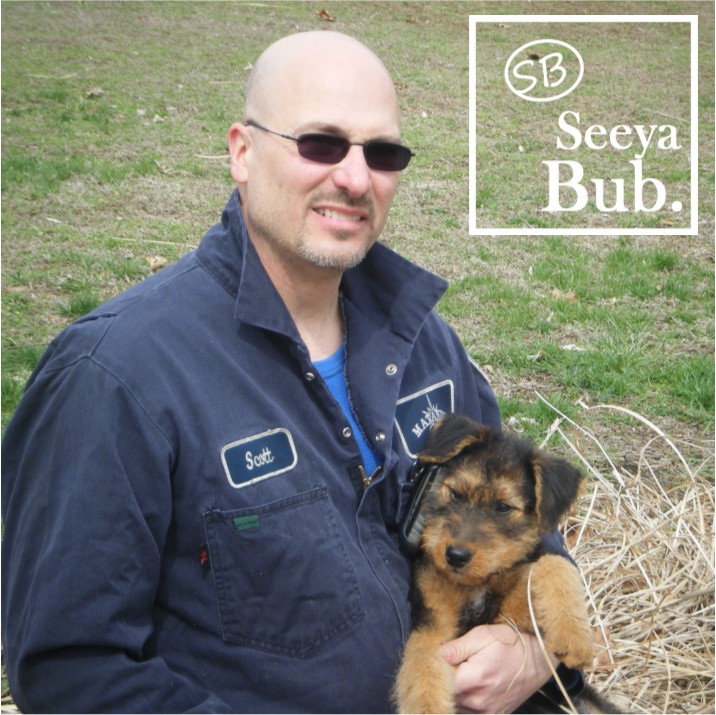
“Let all that you do be done in love.” 1 Corinthians 16:14 (ESV)

Dad’s Song

“I hate that I have to ask you this so soon, but…is there a song you would like played or performed at the service for your Dad?”

My Dad had only been gone for a day. Just a few days earlier, we were making the final plans for our family vacation to the beach. Now, we were making plans to say goodbye to my Dad for the final time. Oh, how life changes in an instant. One horrible, irreversible instant.

Harville, my pastor, was sitting in a chair in the corner of my darkened bedroom. We had been talking for the past thirty minutes or so about the tragedy of the past few days. My pastor had a tender kindness that was so very important to my family in the aftermath of Dad’s death. He came into the room that day to see how I was doing and to tend to my spirit, which had been bruised and battered since that awful Wednesday morning. As tender and thoughtful as Harville was in those tumultuous few days, there were some painful questions that just couldn’t be tenderized. I knew that Harville had to ask questions like this. The reality was that my Dad was dead, and that there would be services to honor his life within the next few days—that unfortunate truth was fixed, unchanging. We couldn’t put it off for too long. We were going to have to come face to face with this horrible reality and plan a service fitting for a life well-lived.

I am still very thankful for Harville, my Mom, and my Grandpa Vern (among many others) who really took control of the funeral planning and shielded me from the heavy lifting. I had very little to do with the wonderful funeral service we were able to hold for my Dad, but when Harville asked a question about music and a song, I had an immediate answer.

“Yes,” I said to Harville, “There is a song.”


Just a few months before that fateful July morning, I found myself in the basement of my friend Steve’s home watching the Super Bowl on his jumbo projection screen. There was nowhere better to watch a football game, especially if it was the big game of all big games. Steve had engineered a projector in his basement to project the cable feed onto his entire wall. If you think you’ve watched a great game on a beautiful television, try watching it on an 8×12 foot wall projection. You’ll take your 70-inch flatscreen and chuck it out the window (don’t do that).

Even though the lights in the Superdome went out that night, it was still a fun game to watch. And, like most who tune into the Super Bowl, I kept a sideways glance at the screen when the commercials came on to make sure I didn’t miss something funny that all my friends would be talking about the next day. Per usual, there were commercials that made you chuckle or pulled at your heartstrings. The Gangnam Style guy was apparently a big fan of pistachios. There was the Budweiser baby Clydesdale. There was also a weird Dorito’s commercial about a goat that made me never want to eat Doritos again.

But there was one commercial in particular that grabbed my attention from the opening chord. As I sat in the glow of the giant wall projection, there was a beautifully-elegant, simple, and rustic guitar intro that caught my ear. It had a country-simplicity to it that I loved. This was the type of country song that existed before most of the current country artists began to ruin country music (You heard me, Rascal Flatts…).

He’s a twenty years straight get to work on time… He’s a love one woman for all his life…

I loved it already.

Then, my love for the commercial turned into complete infatuation when I saw the product that was being advertised: the Chevy Silverado.

The Silverado was the truck of all trucks, in my opinion. It was rugged. Versatile. Reliable. And my Dad always drove one. I trusted his taste in many things, but I especially trusted his taste in trucks.

As the commercial rolled on and my eyes glazed as flashy Silverado after Silverado rolled across a field of amber grain or a windy mountain road, the lyrics of the song continued to speak to me.

He’s the shirt off his back, Give ya his last dime, He’s strong.

It was unbelievably ironic to hear this song paired with this particular product. This was the exact truck that my Dad drove, but it was also a song in which every line spoke to the man he was. This was a song that told the story of my Dad and how he lived his life.

I remembered hearing the song through the first verse during the commercial and immediately getting to my phone to Google the lyrics. After a few seconds, I found the song. Strong by Will Hoge. It was a song I had never heard before, sung by an artist I had never heard of. His voice, however, made it feel like I had been listening to him sing my entire life. Mainly because he was singing about a topic that was so familiar to me. The name “Scott Bradshaw” is never mentioned once in the song, but I felt like every lyric was about him.

I listened to the song on the way home from Steve’s that night. I downloaded it from iTunes and added it to my phone. And each time I heard it or listened to it, I said the same thing to myself: One day, I’ll play this song for Dad and let him know that I think of him every time I hear it.


I had no idea that our time together was running so short. When I thought about playing that song for my Dad, I envisioned playing it many years into the future, possibly when my Dad was in an advanced age and balder than he currently was (not possible). I thought, naively, that I would have a ton of time to play that song for my Dad and share it with him, along with my feelings.

I never got a chance to play that song for my Dad and tell him what it meant to me—what he meant to me. His death from suicide shattered our lives unexpectedly, and now I would have to settle for playing the song at his funeral. I just couldn’t believe it. I am fortunate that God has blessed me more than I deserve and that I have very few regrets in my young life. This, however, is one of my greater regrets. I wish that one day, while riding around together in his Silverado, I would have taken the time and shared the song and my emotions with him. I had the opportunities, but I also thought we would have so much more time together. There were many more drives with the windows rolled down and the radio up to be had.

Alas, we didn’t.

So, the first time I was able to play that song for my Dad was in his memory. Sitting in the first pew of the dimly-lit church our family had called home, Mom and I gazed upon the cherry casket resting a few feet in front of us. As we sat there with hundreds of our family and friends sitting behind us while the clock neared 10:00am, the familiar guitar strum began to emanate from the speakers.

I ask you to place yourself in that moment. I ask you to close your eyes, imagine that day, visualize that church, and listen to the song that I chose for my Dad.

Strong

Will Hoge

He’s a twenty year straight get to work on time
He’s a love one woman for all his life
He’s a shirt off his back give you his last dime
He’s strong

He’s a need to move something you can use my truck
He’s an overtime worker when the bills pile up
Everybody knows he ain’t just tough
He’s strong

Strong

He’ll pick you up and won’t let you down
Rock solid inside out
Somebody you can trust
Steady as the sun
Ain’t nothing gonna knock him off the road he’s rollin on
He’s strong

It ain’t what he can carry what he can lift
It’s a dirt road lesson talkin to his kids
Bout how to hold your ground and how to live
Strong

He’s strong

He’ll pick you up and won’t let you down
Rock solid inside out
Somebody you can trust
Steady as the sun
Ain’t nothing gonna knock him off the road he’s rollin on
He’s strong

Strong
Like the river rollin’
Strong
Gonna keep on going
Strong
When the road runs out
They gonna keep on talkin about

How he was strong

Strong

He’ll pick you up and won’t let you down
Rock solid inside out
Somebody you can trust
Steady as the sun
Ain’t nothing gonna knock him off the road he’s rollin on
He’s strong

Everybody knows he ain’t just tough
He’s strong

Songwriters: Ashley Gorley / Miller Crowell / Will Hoge / Zach Crowell

Strong lyrics © Warner/Chappell Music, Inc, BMG Rights Management US, LLC

 I stared resolutely ahead at the casket, defiant, trying to deny the fact that my Father was gone as that song played through the sanctuary. I tried my best to hold in my emotions and remain stoic, but that weak dam eventually gave way. Every bit of pain I had felt over the last few days tore through me when I heard that song, because it was everything I wanted to be able to tell my Dad, face to face, one last time. I can vividly remember sitting there in that pew with tears streaming down my face as the song played, wishing more than anything that in that moment I could have just one more with my Dad. One more to play that song for him, look him in the eye, and tell him how strong I thought he was. To tell him that he was stronger than he ever thought he could be. To tell him that he was strong enough to beat this.

Mom wept next to me as the song played. She raised her hand towards the heavens as the second verse picked up because she realized, like I did, that although this song may have been written with some other inspiration in mind, it really was written for my Dad. The song was written for this man and this moment. The words spoke to everything he was to us.

After the funeral, I had so many people ask me about that song. It made me feel good that we had been able to pick a song that resonated with so many people and their memory of my Dad. It made me feel relief that people saw past my Dad’s mental illness and his death from suicide to see the man we saw. A man who fought courageously for so long. A man who smiled and loved those around him with beautiful abandon, even though he might not have felt smiley or lovely on the inside. A man that pushed through his own sadness to provide for his family and give them a home life full of wonderful memories. People loved the song because they loved the man whose memory it brought forth. People loved he song because they realized that my Dad’s final chapter was not a true reflection of the beautiful story he wrote in this life for himself and so many others.

Yes, my Father died from suicide. And yes, he is still the strongest man I’ve ever known.

My Dad, Scott Bradshaw, was strong. And he still is. And this song, whenever I need it, is my reminder.

On occasion, particularly when the weather is warm and the sun is shining, I’ll take a detour in my truck—which is ironically the very same Chevy Silverado that my Dad drove. I’ll find myself feeling particularly lonely on those difficult days. Although time may pass from the moment we last said goodbye, the heart never completely heals. And there are moments, tremendously painful but necessary moments, when I need to hear that song again. So, like my Dad would have done, I’ll roll down the windows, crank up the volume, and hear that old familiar chord rattle through the truck speakers. In my mind, I’ll look over towards the passenger seat and see my Dad sitting right next to me with a huge smile on his face. I’ll see him begin to bob his head as the music picks up. I’ll see him thumping his thumb on the middle console between us the way he always did when a particularly good song warmed his ears. And I’ll see his face turn towards me through his sun-darkened spectacles, beaming with that beautiful smile of his.

And I’ll look back over at him, with tears streaming down my face, and I’ll let him know that this song was for him—and that for as long as I live, it will always be his. It will always be the song that helps me remember him. As long as I live, this will be my Dad’s anthem. When my future children and grandchildren ask about my Dad, I’ll play this song for them. This will be the song that reminds me of the love I felt for an amazing Father. It resurrects tremendous pain when I hear the words of that song, but at the same time it reassures me that the man I knew and the man who raised me will never truly leave. Because his heart lives on in me. His memory will never die as long as lyrics like this tell the story of the life he lived.

And that song, a song of love for my Dad, will always play in my mind and in my heart. I’m grateful for a beautiful song and the hearts and minds who wrote it, but I’m even more thankful that I had a Father who lived out the lyrics every single day.

“When the road runs out, they’re gonna keep on talkin’ ‘bout how he was strong.” Will Hoge, truer words have never been written. I’m still talkin’. And I always will be

Dad with Baby Lucy and SB LogoDad, You have no idea how I wish I could wind back the clock and play this song for you. I wish that I could play it, watch you listen, and then say to you that whenever I hear the words I immediately think of you. I desperately wish I could see you thumping your thumb on the console of your truck like you always used to do. I’m sorry that the first time I had a chance to play this for you was at your funeral. So many people have heard the song and told me how perfect it was for you, which is the best testament to your life. It’s what you deserve. Dad, people still talk about how strong you are. People still talk about how courageous you were for fighting through your mental illness for so many years. I know you were hurting desperately, Dad. I know that your soul was troubled. But I pray that you’re able to hear this song in heaven and know that I think of you each and every time I hear it. I’ll always love you, Dad, and I’ll always admire how strong you were. I’ll try to live up to example you gave me—the example that you gave all of us—each day for as long as I live. Someday, I’ll look you in the eyes again and tell you that you were the strongest man I’ve ever known. Until that reunion when we can listen together, seeya Bub.

But he said to me, ‘My grace is sufficient for you, for my power is made perfect in weakness.’ Therefore I will boast all the more gladly about my weaknesses, so that Christ’s power may rest on me. That is why, for Christ’s sake, I delight in weaknesses, in insults, in hardships, in persecutions, in difficulties. For when I am weak, then I am strong.” 2 Corinthians 12:9-10 (NIV)

Papa Sully: Guest Blog by Jeff Sullivan

Ty: I have a confession. A confession that is completely unnecessary for anyone who lives near any of the local golf courses in my community.

I have been, and likely always will be, a terrible, horrible golfer.

I’m almost embarrassed to even call myself a golfer. I do a lot more sand digging and deep-woods exploration than I do golfing when I hit the course.

I could fill an entire book with stories of my atrocious golf exploits. There was the time my friend Chris (most of my horrible golf stories involve him) coerced me into trying out for the high school golf team. I quit halfway through after slamming one of my wooden (yes, I had woods that were actually made with real wood) into the ground, only to start again with about four holes left in the round. I think my groupmates gave me eights on all the holes I skipped.

There was the time I nearly got into a fight with a man who “claims” I almost nailed his wife with an errant Nike Mojo ball. It wasn’t my fault. I yelled fore as loudly as I could, but I guess it didn’t carry the two holes over where my ball landed within a few feet of his wife. I told him rather than yelling at me he should probably get his ears checked. He didn’t care too much for that response.

Then there was the sign from God that almost made me give up the game entirely. This was when I hit a tee shot that went so far right so quickly that it actually nailed a tree to the right of the tee box, bounced straight back, and nailed me in the chest. I HIT MYSELF WITH MY OWN BALL. I didn’t think that could even happen. Between Chris’ hysterical laughter and my writhing on the ground, the local residents must have thought we were going insane. They weren’t far off in their estimation.

As bad as I am at golf, I’ve always wanted to be a great golfer. And in high school, I always remember thinking one thing: I wish I could be like Jeff Sullivan.

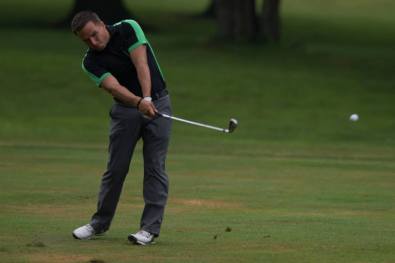
Jeff Sullivan SwingJeff didn’t know me in high school, but I knew of him. Rather than equitably distributing golf talent across all the boys at Fairfield High School, God had taken mine and consolidated it all into Jeff Sullivan. Jeff was a graceful golfer. He would hit shots that I wouldn’t even believe I could hit in my own dreams. Natural talent? Maybe a bit. But more than anything, Jeff is one of the hardest working athletes I’ve ever seen. He spends more time honing his abilities than anyone, and it shows in his competitive spirit.
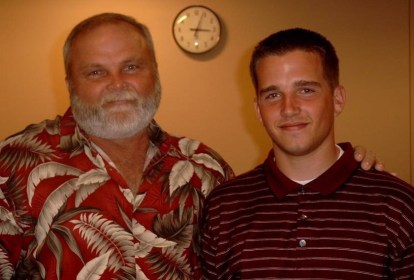
I got to know “Sully” in earnest when I helped emcee the Fairfield High School Athletic Hall of Fame where he was there to support a friend being inducted—he’ll be inducted soon enough, I have no doubt. If it weren’t for my ability to speak in public, I’d never come within a hundred yards of one of those functions.

Jeff and I are miles apart on our golf capabilities, but we have one very unfortunate thing in common: we are both grieving. We are both members of a club where unexpected loss is the common denominator. And although the mechanisms causing our grief are very different, we are both trying our best to honor our loved ones in ways that keep their memories alive. He reached out to me shortly after the Seeya Bub launch, shared his story, and together we’ve been finding ways to support one another through a similar journey.

Jeff has an unbelievable story to tell. He’s been sharing his exploits on a fantastic golf-themed blog he created called Sully’s Sunday Feels, but I’ve invited him to share his story of grief, loss, and the journey that follows here at Seeya Bub. Together, we are creating a community of sufferers to prove one truth: Yes, we all grieve differently, but we never, never have to grieve alone.


Jeff: Thursday, May 12th, 2011. A day and date that I will never forget for as long as I live. This is the day that I unexpectedly lost my Dad.

Before we get into that day, I want to tell you a little bit about the time leading up to that day.

For those of you that know me, especially throughout high school and college, you know a couple things for certain.

  1. If I’m not working, I’m prooobably thinking about, practicing or playing golf.
  2. Wherever and whenever I was doing that, my Dad was there. If for some reason he wasn’t, it was because it was physically impossible for him to be and you better believe he was always the first person I’d call after a tournament.

Another thing you might know is that my birthday is two days before the date I mentioned above. We’ll talk more about that in a minute.

Me, my Dad and my brother were ALWAYS playing sports growing up. It didn’t matter what time of day, what the weather was like or what he had going on. If there was an opportunity to help us be better at a sport, my Dad was going take that opportunity to do whatever he could for us.

Like most kids, when I was younger, I had no idea what he and my mom did in order for me to be able to play whichever sport I wanted when I was a kid, and that support continued all the way through college. I didn’t realize or appreciate the time and ungodly amounts of money spent to allow me to do that, and now that I’m old enough to understand, it’s unfortunately a little bit too late for me to show that appreciation to one of them…

Now, what role did my Dad play in my love for golf? THE role. Well, maybe with a little help from Mr. Eldrick Woods. For those of you that are unfamiliar, that’s Tiger’s real name. What a nerrrd, amirite?! (Don’t tell him I said that.)

Jeff Sullivan and DadI was 9 years old when “Papa Sully”, as my high school teammates would later name him, first took me to the driving range. One trip, and I was hooked. As I mentioned before, this was when Tiger madness was really starting to hit its peak. Tiger had already won 3 U.S. Junior Amateurs and had just locked up back-to-back U.S Amateurs. The next year, he would turn pro, and I was probably on my Dad’s last nerves!
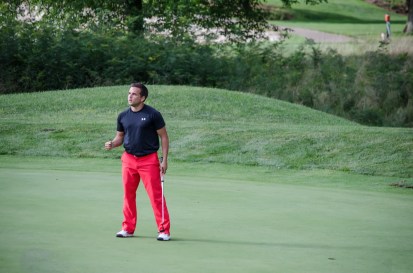
Every single chance I got, I was trying to get him to take me to the driving range or to head over to Golden Tee or Lake Gloria to play. The really cool part about playing and practicing with him is that he was a lefty, so I would always just try to mirror what he was doing. Eventually, there came a point when I was able to take his 7 iron and hit it almost as far as he could. As much as he loved that and got a kick out of it, I’m sure the competitor inside him hated losing. Hmm, wonder where I got that from?!

Once Tiger turned pro, Sundays turned into the best day of the week, always. Early in his career, you could almost guarantee that Tiger would be in the hunt on Sundays, so my dad and I basically planned our entire day around that.

First, I’d bug the crap out of him to make a tee time, typically at The Mill Course (shout out to the place where I had my first win!) and we had to make sure it was an early one! We’d finish that round around noon and from there it was lunch time. Skyline or Penn Station. To this day, there has never been a trip to either one of those places when I haven’t thought about him. We’d talk about our round, I would probably be a little upset for no reason and was too hard on myself while he probably just laughed on the inside at how silly my expectations of myself were. After that, we’d start talking about Tiger, who was about to tee it up just a couple hours later and most likely bury whoever his challenger was that week. My dad and I would commiserate with every bogey and jump off the couch and celebrate every birdie. It was just great. This is how my love for Tiger was born.

Fast forward to high school and college golf. Now, for the sake of length, I’m not going to go into all the great times, wins and celebrations I had with my Dad during these years but instead, I want to focus on the thing I regret most now that he’s gone. My completely idiotic and utter misunderstanding of what was really important.

College is where this stands out to me the most. If you know college golf, you know that it’s not easy for parents to make it to tournaments and even when it is, who in their right mind would want to watch mediocre, spring, college golf when it’s 37 degrees and raining?! Papa Sully, that’s who. A lot of people don’t know this, but he actually tried to find and took certain jobs in life just so he could make it to as many of my events as possible. He also worked at a golf course just so I’d be able to afford to practice as much as I wanted to (shout out to Meadow Links and Golf Academy for letting me hit a zillion balls and destroy natural turf from 2000-2004). A typical week during college golf season for my Dad was to drive from Hebron, KY to Laredo, TX and back which took him about 3 days. And then, as soon as he was back, he’d be heading somewhere else in Kentucky or Tennessee to come watch me play again. My teammates would always be so bummed when I told them he couldn’t make it, but that might have been like twice a year. Oh, on top of this, he was also spending a LOT of his money on things I needed to play the game. Right before a tournament started he would buy me new gloves in the pro shop because he saw my hands slipping on the range or go buy a towel and umbrella if I forgot mine. Whatever I needed, it was done thanks to him.

Now that you know the lengths that he went to support me, let me tell you about how stupid I was. I had, and still have VERY high expectations of myself any time I step on the golf course. I had these for a few reasons. Number one, I know the amount of work I’ve put into my game and I always want to win. Number two, I always wanted to help my team win. Last, but certainly not least, I wanted to make my Dad proud because I knew how much he had done for me. At the time, I thought that shooting low scores and winning was what made him proud and what would make me happy. Boy was I wrong.

Younger golfers who may read this: If you don’t take ANYTHING else away from this, PLEASE take this advice. No matter how you perform on the golf course, as long as you prepare, give every shot all that you have and carry yourself well, I PROMISE you that you’ll never walk around from any round of golf with regrets.

Unfortunately for me, it took losing the one person who mattered the most to make me truly understand that.

My skewed perceptions of what mattered, and my extreme competitiveness made me do some things that I’ll never be able to take back. So many times, my Dad was there to greet me after a round and because I was so dumb in those moments, I would walk right by him, slam my clubs in our team van and just sit in silence, pouting for absolutely no reason other than my own selfishness and lack of perspective. Other times I literally threw plaques and trophies in the trash because they weren’t for first place. I didn’t support teammates like I should have, and I didn’t respect my coach like I should have. I hope that those of you who end up reading this understand how sorry I am for that and can or have forgiven me. Most importantly for me, all my Dad wanted was to be there and to spend time with me. It didn’t matter if I shot 65 or 105, all I had to do was have fun playing the game and enjoy that time with him, but I didn’t. That is my biggest regret and something I will never be able to take back.

That attitude didn’t start to change after college either. I remember a tournament that I ended up winning by 10 shots, and I was pissed off when I walked off the course in the final round because I didn’t break the current course record. I mean, who the hell did I think I was?!

When did it start to change? Thursday, May 12, 2011 at 5:30am.

5:27am –  I wake up from a dead sleep to see that my brother is calling me. That’s weird, probably just a butt dial.

5:28am – My brother calls again but I don’t answer and tell myself I’ll call him back when I’m up for the day which would have been around 6:30-7:00am.

5:30am – My mom calls me. Okay, this is crazy, and something isn’t right. I answer and immediately know it’s something terrible. All she can tell me is that the police called, and something has happened to my Dad but she can’t say what other than that he is at a hospital in Springfield—roughly an hour or so from where I was.

When she told me that, deep down I knew he was gone no matter how much I tried to tell myself to have hope. If the police call you and they can’t say what happened, it’s pretty obvious.

My Dad had a history of heart problems for a few years leading up to this day but hadn’t mentioned any recent issues in the weeks and months leading up to the day. The last time I talked to him was on my birthday, May 10. Two days before he died, and you know what we talked about? You guessed it. Golf.

He was out on the road and based on what I was told, he had a heart attack, was able to call 911 from his phone and pull off the side of the road; but by the time they got to him, it was too late. I’ll never, ever forget showing up to the hospital after what seemed like a 4-day car ride. I walked to the front desk praying that they were going to tell me something. I told them I was one of Rick Sullivan’s sons here to see him and they told me where the room was. There was no mention of what state he was in or what had happened, so I had a small glimmer of hope that he was okay. I walked down the hall, turned the corner, looked at my brother Matt and step mom Sheryl, they looked at me, and then I saw my Dad.

I’ll never be able to find the words to describe that moment when I saw him laying on the table with a breathing tube that was used to try and resuscitate him still in his mouth. Utter disbelief. Anger at the receptionist who could have warned me about what I was walking into. Shock. All the strength in my body left me, I dropped to the ground and sat against the wall, head in my hands, sobbing, while my brother and Sheryl walked over and tried to console me (they had already been there for a while). I glanced over and saw the bag with my Dad’s clothes and belongings in it, shirt and jeans torn from where the paramedics cut them off him. All I remember saying out loud was “No way, no…way” (with some sporadic adult verbiage inserted throughout) because I couldn’t believe that he was gone. this wasn’t real, it couldn’t be. Sometimes I’ll still have dreams with him in them, but then I wake up and know that yes, it was real, and my biggest fan is gone. Physically, that is.

The days following that were a blur and for those of you that have gone through something similar, you know what I mean when I say that.

The year or so following that were hard to say the least. The moments immediately after traumatic loss are actually some of the easiest because your friends and family all know that you’re in pain and want to offer support. It’s no fault of their own, but after a couple weeks or months go by, people just forget and that’s when loss was the hardest.

The one place I could feel okay about things was the golf course.

I actually ended up at my home course the morning after my Dad had passed. I was off work and that was the first thing I could think of. How do I get my mind off this? Well, that was impossible, so the next best thing was to go to the place where I knew my Dad would want me to be. It wasn’t just any golf course though, it was my home away from home, Fairfield Greens South Trace. Most of you know how much I love that place and how much passion I have for our city tournament but may have never known why. Now you know. That was my Dad’s favorite tournament to come to. That’s where he got to watch me play the most matches. He and I played countless rounds together there and I also know he had something to do with the love and support I felt from everyone there after he passed whether they were friends or employees. Dave, Crutch, Kess & Mrs. K-dog, Wyatt, Meow, Ryan, Sara, T.J., Schnee, Trotter, Tyler, Siggy, Verbs, the rest of the Sunday Skins game buddies and the list goes on. Without all of you, there’s no way I’d be the player and person I am today, and I’ll never be able to thank you enough for that. You helped me through the toughest time in my life to date and I hope you are all proud of who I’ve become.

Jeff Sullivan on GreenFrom that day forward, my golf is played for him. Not only to win, but to show him that I can be the man and player that he always wanted me to be. To show great sportsmanship, character and class on the golf course. That’s why I play the game now. In 2011 and 2012 I wanted to win our city tournament SO bad, even more than ever before because I wanted to do it for my Dad. I couldn’t get the job done until 2013 and I will remember that win more than any other as long as I play the game.
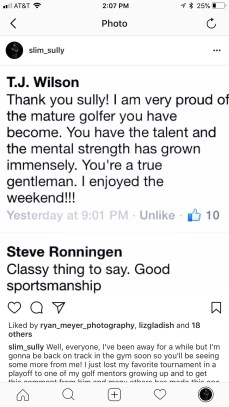
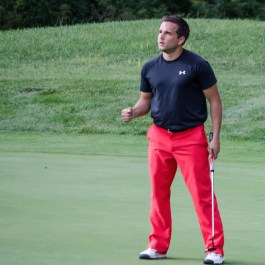
I’m 7 shots behind with only 15 holes to play. 99 times out of 100, you don’t win that battle, but this was a day when I knew I had something more on my side. That something was Papa Sully. From holes 4 through 16 I was able to rattle off 7 birdies and tie for the lead. On #17, I had a putt to take a one-shot lead from about 12 or 14 feet. I guessed wrong on the break, but somehow the ball wiggled its way into the hole and I took the lead heading into the last hole. Pumped full of adrenaline, I blew a 7 iron over the back of the green to a back pin and then hit one of the most nervous flop shots of my life to 8 feet. Make this putt and you win for pops.

I hit the putt, see that it’s rolling dead center, it goes in and I look straight up in the air. I knew who made this happen, and it wasn’t me.

The exhilaration and love for my Dad in that moment was great, but the best feeling I’ve had was actually the following year. Same 18th hole, now I have only a 2 foot putt to win. I missed it and now we’re headed to a playoff. Not a playoff with just anyone, but with a great friend and mentor of mine, T.J. Oddly enough, 4 years prior to this is when my attitude on the golf course was at its worst. You know, that time I talked about winning by 10 and was pissed off? I knew that this was happening for a reason too and with T.J. being involved, it was the perfect time for me to dig deep and show everyone, including Papa Sully, that I get it. T.J. hit an incredible shot on the first playoff hole and made birdie while I missed my putt to tie him. I held my head high, congratulated him and little did I know that the response and praise I got for how I LOST that tournament would be more meaningful than any tournament I could ever win.

Jeff Sullivan Message

This post was extremely hard to write, but I can’t thank my buddy Tyler enough for allowing me to share my story on the wonderful platform that he has created with Seeya Bub. If you haven’t read any of his posts yet, you need to. I haven’t known him long but I can tell you that he’s one of the most brave and influential people I know and I can’t wait to see where his courage takes him next.

Thank you all for reading!

-Sully


Ty: Sully has a deep admiration for Tiger, but I have a deep admiration for Sully. He has done what we are all attempting to do when loss is dealt into our lives: to stand back up, to never forget, and to let that loss lead us into a more consequential life.

I have no doubt in reading this story that Papa Sully is watching over his son. Yes, guiding the extra wiggle on a clutch-putt, but more importantly he is there guiding his son’s character. Even though he isn’t physically here any longer, he is still teaching his son. He is still instructing him. He’s giving him a greater reason to play the game he loves. It’s more than wins and course records, although those things are good and admirable and worthy of the chase. It’s the character, more than anything, that matters to Jeff’s Father and his memory.

And every time Jeff steps on the course, his Dad is watching over him—just like he always did—giving him the courage he needs to step through the fire and cope with his grief.

“My son, obey your father’s commands, and don’t neglect your mother’s instruction.” Proverbs 6:20 (NLT)


Jeff Sullivan Bio ShotJeff “Sully” Sullivan

Jeff Sullivan is a 32 year old weekend warrior who still has a huge passion and love for the game of golf. Jeff was introduced to the game by his Dad at age 9 when Tiger Woods was making his run through U.S Junior and U.S. Am titles. Ever since his first trip to the driving range, he’s been hooked. Jeff lives in Charleston, South Carolina with his wife Sarah after growing up and living in Ohio his entire life. He played high school golf at Fairfield High School and went on to play college golf at Campbellsville University in Kentucky. Currently, Jeff writes for his blog Sully’s Sunday Feels where he shares his love of the game and purpose for playing.

The Portrait

“Of course, Tyler. I’d be honored to do it.”

I couldn’t believe it. I simply could not believe what I was hearing.

My side-gig as a sports announcer has given me some pretty amazing opportunities, and my work with the Joe Nuxhall Miracle League Fields has taken that to a whole new level. As a result, I get to connect with some pretty amazing people. I’ve had the opportunity to become friends with some of my broadcasting idols. I’ve had chances to meet Cincinnati Reds players that I grew up cheering for….and a few that I may have booed at one point or another (I’m from Cincinnati, it’s what we do). I cherish all of the wonderful folks I’ve met over the years, but there are none more special than renowned illustrator C.F. Payne.

CF Payne PhotoWhether you know it or not, you’ve seen C.F. Payne’s work. You’ll find his art on the covers of Time MagazineReaders DigestSports IllustratedThe New York Times Book ReviewMAD MagazineU.S. News and World ReportThe Atlantic MonthlyTexas MonthlyBoys Life and more. He has illustrated popular children’s books, and his art hangs in art museums all across the country.

CF Payne Obama CoverIf you’re somebody, C.F. Payne has likely captured you in one of his illustrations. President Barack Obama, Joe Nuxhall, Magic Johnson, Albert Einstein, President Ronald Reagan, David Letterman, Secretary of State Hillary Clinton, Andy Griffith, Katie Couric, President Thomas Jefferson, the Pope…heck, he’s even done Santa!
 

CF Payne Santa

His style is beyond recognizable. I’m not an art expert, and I am probably not using the right terminology, but C.F. Payne’s work is Americana to me. He takes an image, adds emotion to it, and let’s that emotion shape his representation. He uses wonderfully bright colors, and the texture pops off the page. C.F.’s portraits have such depth and such character. There is no other artist who can do what he does. His gift is simply breathtaking.

But his heart is even greater than his gift.

I’ve come to know C.F. Payne through the work he does for the Joe Nuxhall Miracle League Fields. C.F. has done a number of wonderful illustrations for us each and every year, including portraits of Marty Brennaman, Sean Casey, Anthony Munoz, and others. Just last year, C.F. created one of my favorite pieces when he did a waving illustration of my broadcasting idol, Joe Nuxhall, that was installed on the monster wall of the Miracle League Field complex. Joe is smiling and waving as he watches over the baseball facility that bears his name. I know that Joe has been gone for ten years, but when I look at that illustration, I feel like he’s there with us. C.F.’s work warms my heart.

CF Payne Joe Nuxhall Cutout

On this particular night, though, my heart was racing. I was standing across from C.F. before our annual Miracle League benefit, and a crazy idea had just crossed into my mind.

I wanted to ask C.F. to do an illustration of my Dad.

The event was in early November, and for a few months I had been thinking frantically about a gift that I could get for my Mom that might help her remember my Dad. For a few Christmases, my Mom had given me unbelievable gifts to commemorate my Dad: the phenomenal quilt made of his old shirts, gifts with tags that he had written with his own hand and that she had saved, and ornaments that had reminded me of my Dad to grace the branches of my Christmas tree. Each and every year her gifts got more thoughtful as my heart continued to grieve. I missed him all the time, but I especially missed him at Christmas. Being able to have a gift that celebrated my Dad gave the pain a different feeling. The unbelievable hurt was still there, but there was a warm comfort in the presence of his memory that helped me cope.

I was standing across from C.F. before the event began when the idea came to me.

Tell him your Dad’s story. Tell him how much you miss him. Ask him to do a portrait.

C.F., in typical C.F. fashion, came up to me with a hearty hello and handshake and asked me how things were going. We had met numerous times at the Miracle Leagues, and it was so good to see him again. At some point, our conversation crossed the topic of the impending holiday, and I told him how hard it was to enjoy Christmas after losing my Dad. We began to talk about my Dad, and what impressed me most was how caring and sympathetic C.F. was as I told my story. He listened intently. He asked me questions about my Dad, and his sorrow was palpable. He genuinely wanted to get to know my Dad, to understand what happened, and show me that he cared. I felt a kinship with him in that moment because of the compassion he showed me. We talked about mental illness and my Dad’s suffering, and how his life had ended so unnecessarily and so prematurely, and we talked about the horrible impact of suicide on families like mine. All throughout, C.F. made me feel like my story mattered. He made me feel like my Dad mattered. He made me feel loved.

I don’t know how I ever got the courage to ask a world-renowned artist to create an illustration of my Dad, and I’m sure I did it nervously, but I told C.F. about the wonderful gifts my Mom had given me over the past couple years. As my hands began to sweat, I thought about backing out. But I wanted to do this for my Mom. I cushioned my statement by saying I wanted to ask him something, and that he could feel free to say no if he was too busy, but I wondered, just maybe, if he would be willing to do a portrait of my Father.

C.F. looked at me with the tender smile of his I’ve seen so many times before and he touched my shoulder.

“Of course, Tyler. I’d be honored to do it.”

I immediately began to tear up. This Christmas would be different. Yes, it would still be sad and emptier without Dad there, but he would be there with us in a very different way.

Over the next few weeks, I sent C.F. pictures of my Dad. I told him about the things he liked and his character so he could get a feel for the type of man he was.

I loved getting to see inside C.F.’s mind and how he approached his work. Early on when I was sending him photos, C.F. asked me to make sure I sent photos of my Dad from a variety of different settings so he could get to know his life, and he also asked me to send more than just my favorite pictures of my Dad. He asked me to send photos that were imperfect and candid because they would capture all of my Dad’s features—including his imperfections. I thought this was so fitting, because it was those very same imperfections that had made my Dad who he was. When I think of my Dad, it isn’t glamorized. It’s real, and that’s what I hoped this portrait would be. I had seen the whole picture of my Dad, and I wanted that whole picture to be captured in his portrait.

As the calendar drew closer to the end of December, I began to grow more and more anxious in anticipation of the gift C.F. would give to my Mom and my family. C.F. sent me a few of his initial sketches, and I cried each and every time I got a new message from him. In his studio, C.F. was toiling away as he tried to capture my Father’s likeness.

Then, one day, I got a message from C.F. that he had finished the portrait and couldn’t wait to show it to me. That weekend, I drove to Lebanon and C.F. invited me into his lovely and historic home to show the finished product of his hard work. We walked across the hard wood floors into his dining room, and I saw a white cardboard portrait frame sitting on his table. My heart grew tight when I saw the frame, knowing what was inside it would be so special. We approached the table together, and C.F. opened the frame, pulled back the tissue paper, and revealed his most recent creation—a piece of artwork that would breathe life back into my Father’s memory.

CF Payne Illustration of Dad

I looked at the portrait, into the bespectacled eyes of the man who had given me life and guided me through it, and I saw the smile that I had missed for so long. There, on the table in front of me, was my Dad, illustrated by the caring hands and compassionate heart of the greatest artist I’ve ever known.

I crossed my arms and raised my hand to my mouth as tears began to well up in my eyes. C.F. reached over and grabbed me by the shoulder.

“Well, did I get him?” he said.

“Yes, C.F. You got him, and more. This…this is my Dad.”

I couldn’t take my eyes off the portrait. It was stunning and captivating. My Dad felt so alive when I stared at that piece of paper. I wanted more than anything for him to be alive again. This was my way of still holding onto him. He had even taken the care to include a picture of Lucy, our dog that we had tragically lost just a year earlier, into the picture because he knew how much she meant to us and how much my Dad loved her. I looked at both of them and wished for those Christmases we had spent together as a family.

C.F. hugged me. We talked about my Dad. We talked about how this Christmas would be different. I thanked him as much as I could. And when I got in my truck, I lost it. I completely fell apart. The fact that someone as talented, busy, and important as C.F. Payne would take the time to help me and help my Mom hold onto my Dad was just overwhelming. There are so many people who are talented in this world…but how many of them are kind? Kind to the point that they will give of their talent to help hurting hearts in the world around them?

I know of at least one.

C.F. Payne is just that man. His portfolio runs deep, but his heart runs deeper. He is an inspiration and Godsend for my grieving family, and nothing proved that more than the Christmas morning that would follow a few days later.

I am horrible at keeping secrets, and I had a better chance of playing third base for the Reds than I did to keep this under wraps for those few months. By the grace of God however, I did it. I showed the portrait to only a few folks, and like me, they all cried when they saw it. But they also smiled because it reminded them of the happiness my Dad always sent out into the world. I told them the story and I told them about C.F., and they were amazed by his talent but even more impressed by his generosity.

On Christmas Eve, I hid the portrait behind the couch. I was terrified that this priceless artifact would somehow get damaged before I could give it to my Mom. I had a nightmare that Sadie, Mom’s new dog who can be a bit rambunctious and squirrely, would chew it up. Thankfully, she couldn’t fit behind the couch.

I had a great plan. I was going to wait until we had opened all of our gifts, and then miraculously pull the portrait from behind the couch pretending I didn’t know what it was. I would then hand it to my Mom with a look of complete surprise. This was a good plan. I knew I could do it.

So about halfway through our gift-opening, I’m handing the portrait to my Mom. You can’t be surprised by this if you know me.

Christmas is no time for perfect plans (ask Jesus about that whole manger deal). I just could not contain my excitement and nervousness. I wanted Mom to feel the way I felt when I saw it. I wanted her to be able to smile when she looked at Dad as he smiled back. She deserved that.

She opened the portrait, and her tears burst forth. In that special moment, I could see the pain and anguish in the heart of a grieving widow. I could feel the weight of longing for Christmases of yesteryear. In an instant, I could see how happy my Mom was to see my Dad immortalized, but how sad she was to no longer have him on the couch next to her as we basked in the glow of our family Christmas tree. There was pain in losing him, but tremendous joy in his memory.

mom-with-dads-portrait.jpgMom slowly ran her hands over the paper. “Oh, Scott…” she said. She cried as I put my hand on her shoulder, and I recounted the story of how that portrait came to be.

My Mom must have stared at the image of my Dad for so long without taking her eyes off of it. I admit I did the same. It was hard not to because the portrait had such character, such vividness.

And now, this Christmas, things will be a little different. For the past few years, the living room of our family home has always had that eerie absence. My Mom and I both know it’s there, but we try not to focus on it. We miss my Dad coming down the stairs (usually after we had been yelling at him to do so for quite some time). We miss how excited he would get watching our dog open presents (he was definitely more excited than that than watching me. I had thumbs. Dogs didn’t. Their feat is immediately more impressive). We miss how he would lounge around all day watching Ralphie almost shoot his eye out. I miss the days when I was little and he would spend all day playing with me and the toys I received. He never complained about having to put something together or install batteries. He just enjoyed the day with his family. And now that he’s gone, we desperately miss his excitement.

But in that same living room that has felt less full for the past few years, life is a little bit different. Now, when I miss my Dad, I need only look over at the wall by the window. There, in a beautiful frame, hangs a picture of my Father and his pup looking over all of us smiling with that familiar smile that we long to see again. He watches over everything we do, and you can feel his presence there with us each and every time you look at it.

In the months that have followed, I’ve told C.F. how thankful I am for the art he created for my family, because that portrait has become one of my family’s most cherished heirlooms. You could put my Dad’s portrait next to the Mona Lisa, and I would choose my Dad’s portrait each and every time…and not just because my Dad had a better smile. It’s more valuable to me than the most expensive painting or sculpture that has ever existed, because the man depicted in that illustration meant so very much to me and everyone whose life he touched.

In the time between C.F. giving me the portrait and me giving it to my Mom on Christmas morning, I would talk with people (very secretly) about what I was doing and show them a picture of the portrait on my phone. The week before Christmas at my church, I showed the portrait to my pastor, Dave. Like everyone who knew my Dad and saw the portrait, Dave began to tear up and smile simultaneously (which is a testament to C.F.’s great talent). I remember shaking my head in awe as I told Dave about C.F. and the work he did and how thoughtful he was to me all throughout, but also at my feelings of unworthiness.

“Dave,” I said, “This is a man who has illustrated Time Magazine covers. He has illustrated American presidents. Celebrities. Hall of Fame athletes…”

“And now,” Dave said without missing a beat, “He’s doing someone even more important.”

He was exactly right. My Dad was a tremendous man, and now he had a tremendously deserved commemoration on behalf of the most talented artist I’ve ever met.

The true talent of an artist resides not in his hands, but in his heart. And as valuable as C.F.’s artistic talent might be, it’s his heart that is made of pure gold. I will never, ever be able to say thank you enough to C.F. How do you say thank you to someone who gives your family such a priceless gift? You cherish their work. You appreciate the beauty they’ve given to your life. You gaze upon their art and you thank God for the talent they have, but more importantly for the talent they share.

This Christmas, I’ll look forward to seeing that portrait near the tree on Christmas morning. I’ll say a silent thank you again to C.F., and I’ll wish his family the Merry Christmas that they deserve to have. As we open presents, I’ll look over my shoulder, and I’ll see those familiar glasses. I’ll see that familiar bald head. I’ll see that familiar smile.

And in those moments, I’ll love my Dad and the artist who has helped me hold onto a little bit of him forever and ever. It’s one of the greatest gifts I’ve ever been given and had the pleasure to give, and I’ll never stop admiring that portrait.

CF Payne Illustration with SB LogoDad, Christmas mornings aren’t the same without you. We miss your smile. We miss your silly Dad humor and goofiness. We miss everything about having you there with us. But deep down, in our hearts, we know you’re there. And now, we have a beautiful portrait to remind us that you’re always there. I know what a humble guy you were here in this life, and I’m sure you would feel completely undeserving of having your own portrait done by C.F. But Dad, this is exactly what you deserved. Your life was more important and consequential for me and those whom you loved than most people could ever hope to have. Your life was incredible. Your character was impeccable. And you made people feel loved each and every day. And now, I can gaze upon a beautiful portrait of your face and remind myself that those things have never left us. Keep watching over me, Dad. I miss you terribly, and I long for another Christmas morning like the ones we used to have. I know it’s going to be a long time until we have that again, but oh what an amazing day that will be. Until our first Christmas morning together again, seeya Bub.

“Each of you should give whatever you have decided. You shouldn’t be sorry that you gave or feel forced to give, since God loves a cheerful giver.” 2 Corinthians 9:7 (GW)

CF Payne Banner

Always Thankful

Dad,

It’s always this time of year that I get really, really homesick.

I know. I still live in my hometown. I’m home with family every holiday. That’s not the home I’m talking about.

I get homesick for the home I used to have when you were here. It’s not that life isn’t good. Thankfully, there are so many wonderful, wonderful moments and occurrences that happen to me almost daily. There are so many tremendous loved ones and friends who still make life special. God still speaks to me and directs me, and most importantly He still loves me. And on account of all these things, I shouldn’t feel a need for anything. I shouldn’t want.

But I do. Each and every day. Each day since you’ve been gone, I wake up and wish that you were still here. I wake up thinking about what home used to be when you were around.

And even though it hurts tremendously to think of those moments, I’m thankful. Always thankful. Always thankful that you created such a splendid life for all of us. That you gave us something we could long to have back again. In order to experience the pain I feel now, there had to be some point of reference that was pleasurable and filled with joy. And for 26 years of my life, you gave me that. For 26 wonderful years, you set the bar so high for what life should be. That’s why I’m always thankful, even though I long for those days again.

I’m sure that I’m not the only one who feels your absence. I think of Mom and how different the holidays must be for her without her life partner, and how she must long for those first holidays that you spent together. Even though you didn’t have much when you first got married, you made the most of the love you shared and always made one another feel so special.

I think of your family members who have known you since you were a child, and I think of how different the holidays must feel for those individuals because you aren’t in them. As loved ones leave us, the traditions we once had are tinged with an unyielding sadness. You always made the holiday traditions so bright, and now that you are gone, so is some of the glimmer that made those traditions what they were. We’ve tried to enjoy the holidays in your absence, but I think everyone who loved you would say that they just aren’t the same without you here smiling, and laughing, and loving.

I even think of all the people that you came into contact with. I can picture your smiling face as you wished them a “Happy Thanksgiving.” I can vividly imagine the sparkle in your eyes, hidden behind your wire-framed glasses, as you asked people about their holiday plans with a genuine concern for their answer. I can think of all the times when you would share with extreme happiness that you would be spending time with your family during the holidays. You didn’t care about meals or football games or shopping advertisements. You enjoyed all of those things, but you knew there was more to life and love than that. What really mattered to you on those holidays was spending time with your family…okay, and maybe the occasional post-turkey nap.

My feelings of homesickness are only outweighed by one other emotion, and that is a deep sense of gratitude. I’m thankful for you, Dad. Always thankful.

I’m thankful that you and Mom taught me how to say “thank you” in the first place. From the time I was little, I remember the constant prodding. Each time I was given something by a friend or family member or acquaintance, I remember you and Mom both asking me “Did you tell them thank you?” As a kid, it just seemed like the thing that all parents did. As I’ve grown, however, I see just how few parents encourage a level of gratitude and a heart of thankfulness in their children—probably because they don’t feel it in their own hearts. I’m thankful that you never stopped telling me to tell people thank you. And if I didn’t tell you then, I’d like to say it to you now. Thank you, Dad.

I’m thankful for all those years that you and Mom made Thanksgiving so special. I know (only now) that we didn’t have much when I was little—but I never would have known that because you made our family feel like royalty. You made sure that we were never, ever in need of anything. You were a provider, most times at your own expense. Dad, I have never seen or met anyone who worked harder than you did. Always with a smile on your face, you worked long hours and late nights and countless weekends to make sure that you provided for your family. You didn’t do this out of obligation. No, you did this out of love. And if I didn’t tell you then, I’d like to tell you now. Thank you.

I’m thankful for all those times you brought a turkey home from work to share with our entire family. I think of how fortunate we were to always have a Thanksgiving meal together. I think of how much you enjoyed Mom’s cooking, and Thanksgiving was the perfect chance for you to celebrate her talent. You always told me that you had married a woman who could out-cook anyone else—and you were absolutely right. I know that you gorged yourself on Thanksgiving because you loved her cooking so much, but also because you were able to show her how much you loved her. You taught me to appreciate a good meal prepared by great hands. And if I didn’t tell you then, I’d like to tell you now. Thank you.

I’m thankful that on Thanksgiving, no football game or Black Friday deal ever got in the way of time with your family. I’m thankful that no matter how full you might have been from an excellent meal, you were never to full to turn down an impromptu wrestling match on the family room floor with your son. I’m thankful that when you sat down at the Thanksgiving table, the food was always second to the conversation. I’m thankful that you taught me (and everyone) that the holidays are not about tradition, but about the families who make them. I’m sorry that I never told you how much I appreciated your devotion to your family. I’m sorry for the handful of teenage years when I probably rolled my eyes or acted inconvenienced by a family get-together. I’m thankful that you never gave up on me. And if I didn’t tell you then, I’d like to tell you now. Thank you.

I’m thankful for all the times you called me “Turkey” on Thanksgiving morning. Even your Dad jokes were seasonal–impressive. I’m thankful for all the corny jokes you made before dinner. And during dinner. And for hours afterwards.

I’m thankful that you taught me that driving to multiple family get-togethers is not an inconvenience, but one of life’s deepest treasures. You always reminded me that there were many people who had nowhere to go.   

I’m thankful for all the board games you played with me and the rest of our family, and as much as I may try to forget, I’ll always remember your goofy victory dances at the table.

I’m thankful for you on Thanksgiving, and every other day of the year. I’m thankful that we got to spend 26 wonderful Thanksgivings together.

And I’m homesick. Homesick for the day when we can all be together again. Homesick and longing for the moments where we can share a delicious meal and a game of Scattergories and a good conversation with one another. I long for those days, Dad. I’m enjoying my life and each exciting moment that God gives to me, but I treasure the promise that you and I have not celebrated our last Thanksgiving together. There will be more, for all Eternity. And that promise, more than anything, is what I’m most thankful for.

Dad with Flat Stanley and SB LogoDad, I’ll never stop being thankful for you. I’ll never stop being thankful for the man you were, and the memory you left behind in my heart and the hearts of everyone you met. I’ll never look back on the days and moments I once took for granted without feeling a deeply profound appreciation for all the good times we shared. I’ll always be thankful for a Dad beyond compare. I’ll always be thankful that my Father was an example of what fatherhood should be. Someday, I’ll be thankful when I raise my own children. Yes, I’ll be tremendously sad that they won’t be able to meet and enjoy the presence of their Grandpa, but I’ll make sure they are thankful for you, too. More than any other tradition you might have encouraged, Dad, the most important tradition you established for me is having a thankful heart. I’ll hold onto that for as long as I live.
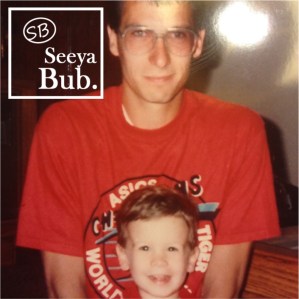
And until I can say thank you in person, seeya Bub.

“Give thanks in all circumstances.” 1 Thessalonians 5:18 (NIV)

Check Please

Both my credit card statement and the ever-tightening waistbands on all of my dress pants will confirm one thing about me: I love Cracker Barrel…possibly, a little too much.

In many respects beyond my diet, I’m a 65 year old man trapped in the body of a 30 year old (although my physique is also more resembling of that elderly man than the young one…). Old men like television game shows. I’ve probably seen every episode of Family Feud that’s ever been recorded, and I definitely scream answers at the television and claim I would be a better contestant than…just about anyone. Old men hate it when kids are on their lawns. I am in a never-ending battle with the young neighborhood whippersnappers who think that my corner lot is public congregation space when they get off the bus. A privacy wall is coming.

One look around in any Cracker Barrel will show you that old men love it…and so do I.

I can get breakfast anytime of the day I want to. They have a fireplace. They have rocking chairs and a checkerboard. They have pancakes and fried chicken and hashbrown casserole and everything that is bad for you. And if that weren’t enough, I can eat all of those foods at once and still go buy a bag of old fashioned candy and some ridiculous house decoration that I don’t need right in the lobby!

I think America just needs a little more Cracker Barrel to solve all of our problems.

Just last week, I had some downtime and decided to make a stop at Cracker Barrel for breakfast with the intent of ordering something moderately healthy. An order of cinnamon streusel French toast and bacon later (I said “intent”), I found myself scanning the restaurant because Cracker Barrels are the absolute best for people watching.

My eyes settled in on the table right next to me. It was a Father and his young (probably 5 or 6 year old) son. My heart sank, but it always does that when I see a father and son. It’s happened ever since Dad died. No matter where I am, if I see a dad and a son out together by themselves, it draws me back to what I don’t have. It reminds me of what I miss most. It makes me wish my Dad was still here.

This particular young boy immediately grabbed me because he was just a cute kid. He wore a flashy Under Armour hoodie and some cool tennis shoes. He had a toothy grin, freckles, and enough gel in his hair to spike up his light brown bangs. He had a gray bubble coat draped across the back of his chair, and he smiled at me when our eyes connected.

I looked across my own table and saw an empty seat—the spot where my Dad should have been sitting. My mind went back to all the times that he and I and Mom had sat at Cracker Barrel tables together—Dad always ordering chicken and dumplings, but always making time for a quick game of checkers by the fireplace before the food came out.

I see that empty seat quite often, and it makes me nauseous. I’ll immediately feel myself tearing up, and I often have to tell myself that I need to think about something else instead to fight off the waterworks. It’s not that I don’t want to think about my Dad—believe me, I do. Mostly, I just don’t want people to stare at my while I’m getting upset at a table by myself.

So, on this particular day, I decided to focus on the boy and his Dad sitting at the table next to me. Little did I know that this would probably make me just as upset as thinking about my own Dad would have.

The boy and his Father placed their orders shortly after I did. I paid particular attention to the little boy’s order: pancakes and bacon. I knew I liked this kid.

After the waitress left, I saw something that I see way too often. The boy’s Dad, sitting at a table with just his son, given the perfect opportunity to be an engaged Father, instead decided to pull out his cell phone. Apparently, there was something more entertaining on that tiny screen than the tiny and interesting human sitting right across from him. I’ve always been bothered by sights like these, mainly because my parents always taught me that time at the dinner table was insanely precious. We always engaged with one another. Little did I know just how valuable it would be when we couldn’t have it anymore…

I watched for a few minutes, and then a few minutes more, as this Father poured every ounce of attention he had into the small phone he held in his hands. The young boy tried to engage his Dad at first, as most young boys will do, but there was no reaction. This particular Dad wanted everything to do with his phone and nothing to do with his son. Absurd.

As young boys will do, this little guy began to get restless. He would occasionally spin around and rest his chin on the back of his chair and his coat, staring at the other families around the restaurant. Before long, he jumped up from his chair and walked over to his Dad, probably to see what was so interesting on that phone of his. That’s when my fury reached a brand new level.

The Dad snapped at this cute, innocent little boy, admonishing him sharply and telling him to sit down. The look on his face was pure meanness. I have an absolutely terrible poker face, so I’m sure my jaw was dropped onto the table by this point. With a force that no young boy deserves, the Dad thrust his son back towards his chair. My heart broke as I watched the young boy’s head hanging in shame, eyes glued to the floor. He kicked his legs back and forth slowly as his face turned red, probably worried that people in the restaurant were staring at him. There are few things more uncomfortable than feeling shame as a young child. It’s debilitating. He looked like he was on the verge of tears, and so was I.

But I was more than sad at this point. I was angry. I was furious. I wanted to get up and tell this Dad off. I wanted to tell him that he had no idea how precious this time was with his son. I wanted to tell him that he should cherish every moment—every single moment—that he has with this young boy. I wanted to tell them that he won’t have these opportunities forever. I wanted to tell him that he has a God-given responsibility to instill values and character into that young boy’s mind and heart, and that he wasn’t going to do that acting like a complete and total jerk.

Somehow, I restrained myself. I clenched my fists, studied the salt shaker, and even gave the Peg game on the table a go (I’m attributing my poor score of three remaining pegs to the low blood sugar of not having yet received my French toast). I tried to ignore what was happening (or not happening) at the table next to me, but after a while, I had to look again.

There sat the little boy, chin resting on his chair back, staring at the other families in the restaurant. And there sat the father, eyes still locked-in on the mobile screen in front of him.

Finally, the Dad looked up at his son. “Finally,” I thought to myself. “It took him long enough, but he’s going to talk to the little guy. Good for him.”

“You wanna put your straw in your water?” he said.

It wasn’t profound, but I told myself it was interaction nonetheless. Baby steps.

It was amazing and a bit saddening to watch the little boy’s composure change just because his Dad recognized him. Just because his Dad finally paid a little bit of attention to him. I thought things might be looking up. With his little hands, he grabbed the paper-wrapped straw from beside his tiny cup of water. Then, he did what most youngsters will do. He began to bang the end of the straw against the table until the paper would slide off.

With a level of anger completely unwarranted by the situation, the Dad reached across the table yelling “Give me that!” from the young boy. He grabbed the straw from his little hands and opened it in a more “dignified” manner. Having opened the straw, he put it in the boy’s cup as his little eyes looked on, head hanging low once again.

Then, the Dad took things to an entirely new absurdity level. He shook his head back and forth a few times as his face began to grow red (from anger, not embarrassment) and said “I don’t understand why you do things like that.”

It took everything I had in me to not stand up from the table, bash his head with the oil lantern, and see myself expelled from every Cracker Barrel in North America. I had a few bottles of mini maple syrup, and I was pretty sure no one would have blamed me had I poured them right over this jerk’s head.

I was furious. Even more furious than this Dad was when his little boy didn’t know how to “properly” unwrap his straw.

“That’s it,” I said in my mind. “I’m saying something to this guy. He deserves it! Before I go, I’m going to tell them exactly what I think of his parenting. And he’s not that big so I can take him if he tries something funny. Or I can knock over a display of candles in the lobby and run really, really fast.”

In that moment, I looked across my own table—the empty table—and got even more upset than I had previously been. My Father was more than a father—he was a Dad. When I was little, he made me feel like I mattered. He talked to me and had conversations with me. He made me feel so important and so loved. He taught me things and was legitimately interested in me. And yes, it may have been a different time, but nothing as silly as a cell phone would have ever gotten in the way of a conversation with his son.

I got angry because my Dad was gone. I began to wallow in my own self-pity, thinking selfishly that it wasn’t fair that Dads like this still got time with their sons when Dads as deserving as mine had lost theirs way too soon. It’s a feeling I get quite often.

When the Dad and his boy finally received their food, the little boy didn’t even get any help from his Dad. He put his own syrup on the pancakes. He clumsily navigated a knife and fork to cut his pancakes into bite-size pieces. I grew even sadder watching him enjoy his little breakfast in unnecessary silence.

So, I did what I often do in moments like this. I began to talk to God. And I began to talk to Dad.

I don’t pride myself on being a theological expert, and I don’t know whether or not it’s even realistic, but when I think of what’s happening in Heaven while I’m down here on Earth, I will often picture my Dad and God standing right next to one another. Their elbows rest on a shelf of clouds, and they are looking down at me, watching over me, and encouraging me. They talk with one another. They roll their eyes when I do something foolish (there’s lots of eye rolling, by the way). They laugh at me. But more than anything, they send me lots of love from above.

The nice part of this visual is that, when times get tough and I don’t know what to do, I’ll often turn my face to the sky and simply ask them. I’ll cry out. I’ll say “Tell me what I should do here. I need you. I need you both.”

And that’s exactly what I did. In the middle of a Cracker Barrel, I looked upwards with my palms facing skyward on the wooden table, and mouthed the words “Tell me what you want me to do here, because I’m lost and I’m angry.”

I expected them to tell me to get courageous. To harden my resolve. That it was time for me to stand up for what I believed in. That I needed to be a man, tell this guy that he needed to be a man too, and walk out with my shoulders back and my head held high. I waited eagerly for their response, and I nearly threw up my French toast when I heard it.

“Ask for their check,” was what I heard. “Ask for their check,” was what came to my mind.

Apparently, people in Heaven are perfect but can still say crazy things.

My eyes must have been as wide as cornbread muffins as I stared across the table at the empty chair opposite me. My mouth was agape, and I was beginning to sweat a little bit. I looked at the spot where my Dad should’ve been sitting, and I told him exactly what I thought about his suggestion: “That’s probably your dumbest idea yet.”

I was angry that this was the solution that came into my mind. I was mad that this was the best solution that the Lord of all mankind and my Dad could come up with. I wasn’t about to reward bad behavior. I wasn’t going to give this guy any of my hard-earned money as he sat there and wasted the best gift he could have ever received—a relationship with his son. No way. I’m sorry, God. I’m sorry, Dad. It’s not happening. Try again.

But the phrase just kept coming back to me. “Ask for their check. Ask for their check. Ask for their check.” Over and over again I kept hearing this phrase. No matter how hard I fought it, it was like God and my Dad were telling me that there was no other way out. There was no other solution to what was happening in that moment. I knew this was a spiritual test, but I also knew it was bigger than that.

I asked God to tell me why. I asked God to explain to me why this was His solution. He didn’t tell me straight out, but He gave me some wisdom to think through this. And I knew that it was wisdom that both God and my Dad would appreciate.

First and foremost, I reminded myself that I was only seeing a snapshot of this family’s life. I hoped it didn’t get worse than this, but I had no idea what their morning had been like. I had no idea of this man’s story or anything he was dealing with at the time. I didn’t know what brought him to that table on that morning, what things were weighing on his heart, or the insecurities he might have been feeling as a father in that moment.

Then, I thought of my Dad. I thought of the types of things he would have done. My Dad was the type of man to pick up someone’s check. My Dad was the type of person to not judge people, even if he didn’t like their actions. My Dad gave people the benefit of the doubt in every circumstance, even when they upset him. My Dad was a giver, and he believed that you could teach people more through kindness as opposed to anger, retribution, and holy discipline. My Dad was a big fan of New Testament love. I was a fan of Old Testament fire and brimstone.

I also remembered something that I saw my Dad live out many, many times during his 50 years here on this Earth. Little actions of love can have big, lasting implications. Little interactions that show kindness can change a life and many more. Little moments of tenderness can spread like wildfire. Maybe, just maybe, I would pay this man’s check. And maybe, just maybe, it would put him in a good mood and change how he interacted with his son on that day. And maybe this little boy, who deserved it, would have a good day. And that good day would lead to other good days and a different relationship between these two. It was stupidly optimistic…and it was exactly the type of thing my Dad would have believed.

I did what I thought was unthinkable. I called upon the Holy Spirit to help me, and summoned some courage from my Dad. When the waitress came by, I signaled her, leaned over, and said to her… “Can I ask you for a Diet Coke to go?”

Just kidding. I said “Can I ask you for a Diet Coke to go? And, also, can you bring me their check without letting them see it?” I nodded towards their table.

“You want the check for the little boy’s table?” she responded.

“Yes, ma’am,” I said, feeling like a wimp. Feeling like I had lost the battle by not telling this man exactly what I thought of him.

“Absolutely,” she said with a huge smile across her face. She returned a few minutes later with a Diet Coke (I felt I deserved this much) and a check a few times larger than the one I had originally received.

I grabbed it, got up from the table, and walked past the man and his son.

As was expected, the Father was a bit too enamored with his chicken fried steak to notice me. But I didn’t want to look at him anyway. I looked at the boy. The little boy with the hoodie and the hair gel and the pancakes. He looked at me and I smiled and winked, walking out of the restaurant without saying a word. I paid my bill. Then I paid for their bill. I grabbed my to-go cup, walked out of the Cracker Barrel towards my car, and looked up towards the sky.

“There. Are you two happy?” I said begrudgingly.

I imagined that both God and Dad were smiling down nodding their heads yes, and laughing that I could get so frustrated showing love to someone else.

While I sat in my car, I began to cry a bit, feeling the emptiness of not having my Dad here with me. But it’s moments like these that remind me that he is always here. That his memory can live on each and every day, as long as I live my life the way he would have. His life and legacy live on in my heart. I know I’ll never be the man that my Dad was. The bar is just too high. But I’ve accepted that. I’d rather aim high and miss a little lower, though, than not try at all. It’s my duty to my Dad to do the things he would have done. If he can’t be here to do them, I need to be the one to live like my Dad. I didn’t pay the bill on that day. My Dad did.

I pray that my Dad’s gesture made that little boy’s day a little better. And I pray that it warmed that Dad’s heart. And I desperately hope that they had a wonderful day together. I mean…it started at Cracker Barrel so how could it be bad?!

I thank my Dad for inspiring me to do things in moments like that. I thank my Dad for helping to change my heart. Initially, I had hoped this man would choke a bit on his chicken fried steak, and just a few minutes later I was paying for his meal. Well played, Dad. Well played.

And, more than anything, I pray that for as long as I live, my Dad keeps guiding me. That he keeps giving me instructions. That he keeps forcing me to do things I would never, ever do on my own.

I’m a better man because my Dad was here for 26 wonderful years, and I’ll be a better man because he will always be in my mind and in my heart for as long as I live.

And next time, I’ll try a bit harder to order the fruit and yogurt.

Sitting in Dad's Lap with SB LogoDad, Even though you’re not here with me, I know you’re always with me. I know you’re always watching over me and guiding me and pushing me to be a better Christian. On the days when I feel sad that you’re not around, it’s always moments like this one that remind me that you’ll never leave. Yes, we haven’t talked face to face since that horrible July day in 2013; but I feel like we’ve been talking ever since. Little things happen in my life that allow your memory to shine through, and I’m so grateful for that. Dad, you would be so proud to know that your story is inspiring people to live better lives. You have no idea how many people miss you and love you and wish you were here. Remind them, and remind me, that you’re always here as long as we live life the way you did. Remind us all that love is more important than absolutely anything. I’m reminded each and every day how much I love you. Thank you for teaching me what it means to be a Father. Thank you for giving your entire self to me. And thanks for never taking it easy on me when we played checkers. I love you Dad, and I miss you terribly. Until we can share a seat at a table even better than one at Cracker Barrel, seeya Bub.

“But love your enemies, do good to them, and lend to them without expecting to get anything back. Then your reward will be great, and you will be children of the Most High, because he is kind to the ungrateful and wicked.” Luke 6:35 (NIV)

One Year of Seeya Bub

“God, I just ask that you let this help someone. If my words can just help one single person avoid the same end that met my Dad, then it will all have been worth it. Give me the strength I need to do justice to my Dad and his life. Walk with me through this, God. I can’t do this alone. I’m really scared, but I know you want me to do this.”

This was the prayer that I prayed one year ago when I prepared to launch Seeya Bub. I can vividly remember sitting at the desk of my office at home, not knowing what to expect. I was crying, and my hands were shaking (more than they usually do, that is).

For a few months, quietly behind the scenes, I had been working on a blog that I had initially resisted. I had set out to write a book about my Dad, his struggles with depression, and his eventual death from suicide. I was growing frustrated because I found it so hard to stay motivated. As I shared this struggle with close friends and family members, a few of them began to suggest a blog as a possible alternative, and I would immediately shake my head no. Most blogs frustrated me because people were just writing without purpose—bloggers were just blogging to be heard, not caring at all what they wanted to say.

The more I thought about things, though, the more I began to warm to the idea of a blog over those summer months. I liked the idea of being to write and react, write and react, write and react. I loved the idea of being able to get feedback from my readers as I went so I could pivot accordingly to topics that they found useful. More than anything, however, I liked the idea of being to reach people who needed help quickly. I envisioned that someday, someone would be sitting at their computer struggling with depression or suicidal thoughts. They would search aimlessly for some sense of hope, come across my blog, and maybe, just maybe, think differently about the path of their life. I didn’t know how many of those people were out there when I started writing.

And boy, was I surprised at the amount of people who were struggling, just like my Dad was.

I tried my best (with the help of some wonderful YouTube videos) to figure out how to manage the technical aspects of a blog, how to deliver posts to as many readers as possible, and how to work in visuals that would honor my Dad. I had done my best to patch everything together, and all that stood between me and the tremendous anxiety I felt was a “Go Live” button and a quick social media post to announce to the world what I was doing.

Just a few hours later, I found myself back at that same desk where I had written the words of that first post, sobbing as I held my head in my hands. I was crying, not from sadness, but from a place of overwhelmed gratitude. Within just a few hours of launching the blog, hundreds of family members, friends, colleagues, and acquaintances had visited the site and read the post. These same readers were sharing Seeya Bub on their own social media networks, encouraging their friends to read and follow. I was receiving messages and comments of unbelievable support.

Most touching in those initial days of the launch were the private messages that I received from readers who were either struggling from mental illness and suicidal ideations, had previously struggled, or had unfortunately lost loved ones just like I lost my Dad. These messages were full of extreme pain and unfathomable hope. These were messages of courage and strength, pushing me to talk about these difficult topics and share my Dad’s story.

God hadn’t answered my prayer on that night. He took my request, made it bigger than I ever could have imagined, and has delivered on my wildest expectations each and every day over this one amazing, spectacular year.


This week marks the one-year anniversary of Seeya Bub’s official launch, and I can’t help but be completely overwhelmed and nostalgic when I think about all of the wonderful things that have happened since that first post.

God is leading me on a journey that I never could have imagined, and I’d like to share some of my reflections over this past year with you today.

Readers. I honestly had my doubts about whether folks would read the words I posted on this blog. Yes, I know my story matters, but it’s a busy world. Taking the time to read and really think about someone else can be hard to do in a hectic life—and I’m guilty of it myself. When I hit that “Go Live” button, I wondered if people would find my message valuable enough to read, and read again, and again.

When I sat at my desk a few hours after launching the blog, I just kept saying “Wow” and shaking my head over and over again. I couldn’t believe what I was seeing. I couldn’t believe the response. And I still can’t.

And ever since then, you’ve continued to read. I’m sitting at that desk one year later having had over 6,500 views at Seeya Bub. It’s astounding, and heartwarming, and emotional for me to see the response. So if you’re reading now and you’ve read in the past, please know how thankful I am to you. Thank you for following the blog, thank you for sharing it you’re your friends, and thank you for pushing me and encouraging me when times got tough or words and messages were hard to come by. You’ve encouraged me to keep writing. You’ve reminded me that my Dad’s life mattered—to me and to you. And you’ve reminded me that I need to share it. Thank you, thank you, thank you.

Pulling Off the Mask. As hundreds of people poured through the visitation line at my Dad’s funeral, there was one common phrase that was repeated over and over and over again: “I had no idea that he was struggling.” I wasn’t surprised to hear this. My Dad was always a jovial guy. He wore a mask better than anyone. He was able to easily hide the depression that would often hijack his brain. It was hard to explain to folks how someone as fun-loving, compassionate, and generally happy as my Dad could find himself in the pit of depression so deep and inescapable.

But Dad was there, and after I launched the blog I found out just how many other people are there too. From the moment Seeya Bub went live, I began receiving messages from people I knew—and some that I didn’t—sharing similar stories. Stories of mental illnesses that make it debilitating for them to get out of bed. Stories of near-fatal suicide attempts. Stories of darkness, and stories of spiritual intervention from above.

And that was evidence alone that God was doing what I hoped he would do with my message. The story mattered, but the telling of the story was what mattered most. So often, just like my Dad, the stories of depression, anxiety, and suicidal thoughts remain untold, hidden behind a mask of protection. Let’s be honest—it’s scary to share our feelings, and when we don’t even know why we feel the way we do, it’s even scarier. And when we aren’t able to share our feelings, we grow isolated. We feel alone. We feel like there has to be more to life and that, if there isn’t, life might not be worth living.

I know that’s how my Dad must have felt. And thanks to those of you who have been courageous enough to share your own struggles with me, we are pulling off the mask of mental illness and helping people fight back the isolation and despair. Make no mistake—this is a battle. We have to fight for ourselves and those we love. We have to fight against the shame that is erroneously coupled with mental illness. But every time we pull off a mask, we are delivering a swift punch to mental illness and depression.

Ultimately, we have to let people know that it’s okay to not be okay…but it’s not okay to stay that way.

Speaking about my Dad. After my Dad died, I wondered how I would tell people what happened. I dreaded the funeral because I wondered how many people would try to pry for information about what really went wrong. I worried that I might not be able to ever speak about my Dad. I worried that his death might become a distant memory. And I worried that other families would continue to suffer, just like mine, without my Dad’s story being able to help them.

I tried to talk to people about my Dad and his memory. Sometimes I would make it through, and other times I would fall apart and be completely inconsolable. I knew that I wanted to write a book about losing my Dad, but if I couldn’t even have a conversation with folks about losing my Dad, how was I ever going to be able to write chapter after chapter about his death?

All I can say is this: God provides. And He equips. And where we fall short, He is there to give us the strength and inexplicable courage that we might never possess without His presence.

I started writing posts months before I knew I wanted to launch the blog. And once I started, I couldn’t stop. I began remembering stories that I had forgotten. There was something strangely addicting about writing about my Dad and how much I loved him and missed him—it was like I was out hunting and capturing memories before they could escape forever.

And as I grew more comfortable writing about my Dad, I also found a brand new comfort when it came to speaking about him. Yes, it still hurt not having him here, but I could talk without breaking down. I could feel grief and joyful memories at the same time. I could share his story without falling to pieces each and every time. As I grew more resilient, I found new opportunities to talk about my Dad and remember his story—and I knew the more I shared his story, the more it could help people who are hurting like he was.

Processing my Own Grief. Most importantly, Seeya Bub has given me the ability to work through my own grief and loss over losing my Dad. It isn’t why I started the blog and it might sound selfish, but I’ve grown so much as a result of sharing my story of my Dad with all of you. Losing a loved one brings on unbelievable grief, and when the grief is so unbearable it is easy to bury things below the surface—sometimes, it’s the only way to survive and get through. Regardless of how deep you might bury those feelings, however, they find interesting ways to work themselves back to the surface.

Writing about my Dad and losing him gave me a unique opportunity to recognize those issues and how they were affecting me, both consciously and subconsciously.

This griefwork has been the most difficult part of life after losing a loved one. There are some days when I just flat out don’t want to do it. I’ll sit down at my computer, fall apart, and realize that I’m too emotionally distraught to write anything productive. Other days, however, the writing is strangely soothing. I can remember a story that brings a smile to my face and write about it positively. I couldn’t imagine ever being able to do that in the days that followed my Dad’s death. The courage that this experience has given me is something I’ll always thank God and all of you for giving me.

No matter the feelings, being able to write and share my heart with all of you has been an unbelievable (and unintended) blessing. Knowing that you read reminds me that I’m not in this grieving alone.


(I hope) there are many, many more years of Seeya Bub to come, and in the one that is approaching, I ask all of you for your support. I also hope you will say a prayer for me while you’re at it. Over the next year, I am planning to write about some very personal and difficult topics regarding my Dad’s death. I’m going to share more of my life without him and how much I miss him. Each and every time that I sit down to write, I get nervous about sharing these pieces of my story and my soul because I don’t know how readers will react to them.

In this year to come, I simply ask that you continue to do what you’ve been doing. I ask that you continue to pray that God will give me the skills I need to reach hearts and minds through this endeavor. Together, I hope that God will help us help others.

On this one year anniversary of Seeya Bub, I also want to take a moment to say thank you for one more thing. Thank you, to all of you, for loving my Dad. Being able to talk with those of you who knew my Dad has been unbelievably therapeutic. You share stories about the difference he made in your life, and about the joyful memories you have of him. What’s even more mind-blowing, however, are the tender messages I receive from people who never knew my Dad, those who have come to know him solely through the blog, who say what a tremendous man he was. I will never be able to say thank you enough for those kinds of messages. Knowing that you enjoy the writing is special, but knowing how highly you think of my Dad brings a tear (and many more) to my eyes every single time. He was an amazing man with an unbelievable heart, a resilient spirit, admirable talent, and compassion beyond understanding. I’ll always love him—knowing you do too comforts the heart of this grieving son more than I could ever describe.

In the year to come, I promise to keep honoring my Dad. I promise to help anyone who is hurting and suffering in any way I can. As long as you read, I’ll be here to write. We are in this together. We are in this for my Dad and all the other people who suffer.

It’s only been one year on a journey that’s got years of life left on it. I’m packed and ready, and I hope you are, too.

One Year PhotoDad, You would be completely astounded to see how many people are touched by your story. You would be overwhelmed by how many people loved you and how deeply they loved you. I know that you’re watching over this journey and giving me the guidance from above that I’ve always needed, and I’m thankful for that. But I wish I didn’t have to write. I wish that you were still here with us. I desperately wish that that fateful July day in 2013 had ended differently. I would do anything to have you back here with me, with us, but I know that you’re at peace. I know that you are basking in the glow of God’s glory in Heaven. And if you can’t be here with us, I’m certainly glad you’re there. Dad, continue watching over me. Continue giving me the words I need to reach the hurting, grieving people in our world. Give me the wisdom and insight to share your story. Thanks for always watching over me. Until I can thank you face to face, seeya Bub.
“Rise up; this matter is in your hands. We will support you, so take courage and do it.” Ezra 10:4 (NIV)

Last Words

As you may have done, I woke up this Monday morning with a barrage of CNN alerts on my phone. After trying to blink the fuzziness from my eyes and shake my brain awake, I sat up with my back against the headboard attempting to wake myself earlier than I wanted to—always a difficult task for me.

It was a little before 6am, and I was reading words on the screen of my phone that I didn’t think could be true. Shooting in Las Vegas. 20 confirmed deaths. Over 100 people injured. My heart immediately felt pain. Could this really be true?

Traveling for work that day, I found myself glued to the television set in the lobby of my hotel as I ate a good breakfast and chugged a few glasses of orange juice. I saw the same footage you likely did. I watched as innocent people attempting to have fun at a country concert ran in terror, hearing blasts but not knowing what they were or from where they came. I saw people huddled like school children in a tornado drill, attempting to seek shelter behind concrete barricades. I saw bodies lying scattered across the Vegas strip and wondered how, again, we found ourselves as a nation in the midst of brutal and senseless violence.

“Isn’t this just awful?” An elderly man who worked at the hotel serving breakfast came around to my table, motioning towards my empty plate that he planned to clear.

“Yes sir, it is,” I responded. “I just can’t wrap my head around why someone would do something like this.”

“I can’t either,” the man said. “It just don’t make sense anymore. Used to be when you had a disagreement with someone you could talk it out or settle things differently. Now, people just get mad and start killing and shooting. Even the church ain’t safe. People go get mad and shoot people in church.”

“It’s a scary world. It really is.” The man and I continued to talk. We watched the developments on the screen in front of us. It was still early, and the reporters on screen were still trying to make sense of what had happened in Las Vegas as I did the same with the man from the hotel.

As I drove from high school to high school that day for my job, I spent my time in the car listening to the radio station, and my stomach grew ill as the numbers steadily rose. 30 dead, 250 injured. Then 40 dead. And then, a staggering 59 deaths with over 500 people injured.

Whenever these tragedies occur, and God knows they occur all too often, I find myself looking at the pictures of the victims and reminding myself that those aren’t just pictures. Those are faces. Faces that belong to human beings with lives and families and stories that are important to tell. I’ll often find myself trying to learn more about those individuals. I’ll wonder about their families. Their careers. The things they would have accomplished had it not been for senseless violence. I think desperately about the loved ones they are leaving behind.

And yes, tragedies like this often remind leave me wondering about last words. What were the final things they said to those they loved? What are the final memories those loved ones will have of those they have to say goodbye to?

It reminds me to leave those I love with love at every chance I get.

It reminds me of how I left my Dad.

I am fortunate. Yes, fortunate. Yes, I lost my Dad. His death was unbelievably tragic and completely unnecessary. I wake up every single day wishing that losing my Dad was just a bad dream. I wake up every day wishing that things would go back to the way they were. That my Dad would still be alive. Still living, and still loving.

In spite of all of this, I am fortunate.

I am fortunate that my last words to my Dad were “I love you, Dad.”

And I am thankful that his last words to me were “I love you too, Bub.”

I will be forever grateful that my last words to my Dad were words of love.

I didn’t know those were going to be the last words I ever said to my Dad. In my heart of hearts, I believed I would leave my Dad that day and see him later that afternoon. I knew that things weren’t good in terms of his mental stability, but I didn’t know they were that bad. Never in my wildest nightmares would I have guessed that a morning conversation with my Dad on July 24, 2013 would be the last conversation we would ever share.

Just like those going to a country concert in Las Vegas never thought that they would be saying goodbye to their loved ones.

Monday’s massacre offered the reminder that I should never need. The reminder that life is amazingly scared and unbelievably fragile. Monday was a reminder that tragedy is often tragic because it’s so unexpected, so unnecessary, and so completely avoidable.

I’m not writing anything original. I’m probably not writing anything that you haven’t heard from a parent, grandparent, friend, pastor, or teacher. But it’s so important. And this weeks horror in Las Vegas is an unfortunate reminder.

I didn’t always leave my Dad with words of love. I think back over the times when I would get mad at my Dad or frustrated with him. Usually, it was because I was being a petty, annoying teenager. I would get mad at my Dad (like most teenagers do) for very, very stupid things. He made a comment about my driving. Who was he to comment about my driving?! He had all the family speeding tickets! Or he would use my laptop and inevitably screw something up. I would get mad at him and say something insensitive and then remind him of his transgressions every time he used my laptop in the future. Or the most egregious of all offenses: while I would be watching television in our family room, he would lay on the couch. And fall asleep. And snore. Loudly, annoyingly, and obnoxiously. Yes, I would actually get mad at my Dad for snoring. And I would yell at him and wake him up…or (my favorite move) I would pinch his nose until he woke himself up while I pretended like I had done nothing at all.

I see how petty, irrational, and insensitive I could be towards my Dad at times, which makes his unrelenting and unconditional love even more impressive.

My Dad was the man who understood the “last word” principle better than anyone. My Mom and I can both attest to this. There was rarely a time where my Dad would let a disagreement last longer than a few minutes. It was annoying for someone like me who likes to hold grudges. Dad and I would bicker about something, and thirty minutes later he would be talking to me as if nothing had happened. As a matter of fact, Dad had the uncanny ability to actually be even sweeter to people who were mad at him. I’m still trying to master this, but I’ll never be as good as he was.

My Dad lived his life as if his goodbyes might be his last. And I’m so thankful that he did, because it makes that last goodbye all the more special.

I have many regrets in my life, and many associated with how I treated my Dad when I didn’t get my way. I wasn’t a perfect son. But I am thankful that our last words, the words I’ll remember with amazing vividness, were simple expressions of love for one another.

In trying to understand my grief, I’ve talked with many other people who have lost their loved ones unexpectedly or prematurely. For every person I talk with that shares a similar story of their final conversation with a loved one, I also talk with folks who have deep-seated regret over the things they forgot to say. The angry comment on the way out the door. The argument over leaving a wet towel on the bathroom floor. Forgetting to say I love you. The things said in regret and the things unsaid in pride can be unbelievably detrimental to our souls when life gives way to tragedy and loss.

The horrible violence in Las Vegas this week is a reminder that we just don’t know when our words to a loved one might be our last. As the news reports rolled in on Monday, I stopped and said a prayer. I said a prayer for those 59 lives. I said a prayer for those 59 families. There are 59 people dead who didn’t deserve to have their last conversations with loved ones, but I prayed that those conversations were full of messages of love. I prayed that those who are now grieving are able to look back and remember saying or hearing “I love you.” I prayed that the memories they have are full of wonderful, loving moments. I prayed for peace at the soul level for these grieving families.

I currently sit in another hotel room, and as I write I am watching Bob Patterson and Amanda Patterson speak (courageously) on CNN. Lisa Patterson, Bob’s wife and Amanda’s mother, is among the 59 who are no longer with us for no reason whatsoever. I can see their heartache. I don’t know their pain, but I can feel it. I’m angry at this killer. I’m angry at the man who stole Lisa Patterson and so many others away from their loved ones. I’m angry at true villains, like murder and suicide, that take our loved ones away from us prematurely. I hope the families of the victims feel love and can remember the love from those they lost. It will be that lingering feeling of love that our loved ones leave behind that sustain us through the heartache and sorrow.

This week’s tragedy is a reminder. A reminder to always let our loved ones know we love them. It’s a simple lesson and a reminder we shouldn’t need, but how many times do you hear stories of individuals who lose a loved one who wish they had said “I love you” just one last time? We hear it all too often. Let’s make sure we refuse to let our last words be anything but expressions of love.

Love is nothing if it isn’t expressed. And I’m thankful my Dad taught me that each and every day.

Dad and Seagulls with Seeya Bub LogoDad, I miss you every single day. I replay our last conversation together in my head so frequently. I can see your face, I can hear your voice, and I can feel the warmth of our last embrace before I left the house that day. Dad, I’m so thankful that we told each other that we loved one another one last time before I left that day. And I’m sorry for all the days when I didn’t tell you I loved you. When I didn’t express my gratitude and appreciation for all the things you did for our family. When I didn’t tell you how proud I was of you for fighting so hard. Your death has proven to me just how fragile life really is. I hate that it took losing you for me to learn this lesson. Dad, you are still teaching me important life lessons every single day. I pray for those who are hurting this week in the aftermath of the Las Vegas shooting, and even though their departure (like yours) was far too soon, I hope that you are welcoming those 59 brave souls home in Heaven. I love you, Dad. Until our last words can be our first on the other side, seeya Bub.

“How then can evil overtake me or any plague come near? For he orders his angels to protect you wherever you go.” Psalm 91:10-11