
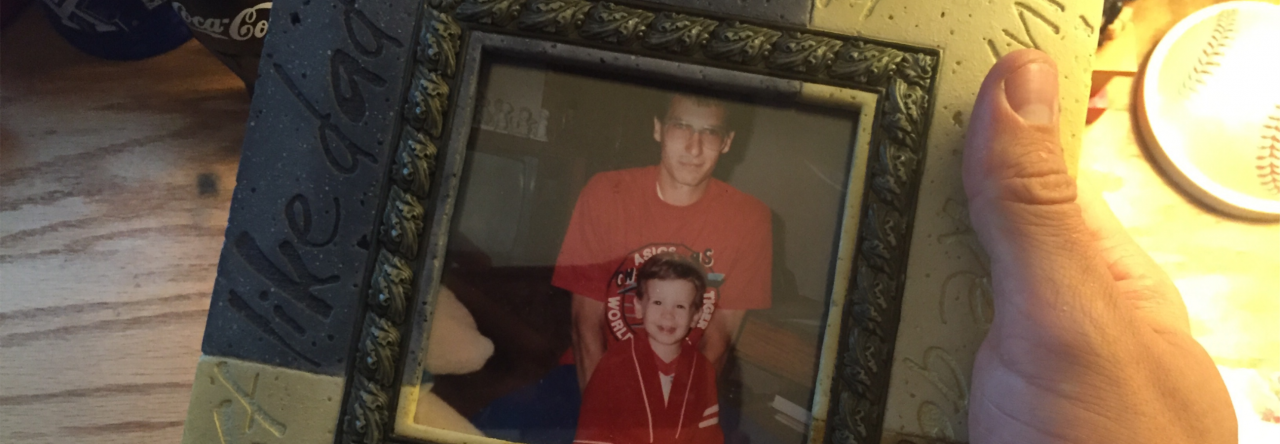

At the age of 26, I never thought I’d have to tell people that one of my parents had passed away. Even more, I never thought I would have to explain that my Dad, a constantly happy and smiling man, was a victim of suicide. That he struggled against depression and had many dark days that most people never saw. Often times, it just doesn’t compute because the people who knew my Dad never saw him struggle. And I’ll admit…there are a lot of days where it doesn’t make sense to me either. But explanation or not, the pain is real. There is a unique pain that emerges when a boy loses his father, and the greater the man the greater the void is left when he’s gone.
I created this blog knowing full-well that I could never tell my Dad’s story. He is the only one who could ever tell that. Instead, I wanted to tell my story of my Dad. I wanted to talk about what it was like having a father who embodied everything a good father should, but who struggled with an illness that he couldn’t control. I wanted to tell the story of an amazing Dad. I wanted to give our friends and family an opportunity to relive the excitement and fun he brought to all of our lives, and introduce an amazing man to millions of other people who never knew him. I wanted readers to know Scott Bradshaw. And I wanted readers to know how much I love him.
You can’t understand this story unless you understand the man who inspired it. I’m a little overwhelmed when I sit back and think about all of the great things I will have to tell you about him, because a man who lived a life as full as my Dad has a lot to share. No matter the story, however, there is always one common theme. When I think of my Dad, no matter what image of him is conjured up, I can always hear his laugh or see his smile. My Dad was a laugher, and if you know that, you understand his outlook on life and the way he chose to live. I don’t often picture my Dad on that last “bad day”. I picture him during the thousands of good days that came before.
I say “good days”, but they were really “great” days. Days where you laughed at the silliest and corniest jokes (after a few heavy sighs and eye rolls, of course). Days where the troubles of the world faded away because of some funny prank my Dad had played on a coworker. Days where he would talk in a funny voice at dinner. Days where you went to bed with a smile on your face, even though everything that would come at you the next day might only bring sadness and despair. My Dad had a unique way of bringing light to dark situations—an eternal optimism that I was always envious of.
You’ve seen the Disney movie Inside Out, right? It’s one of my favorites, and I couldn’t help but think of my Dad throughout the movie. The film tells the story of an adolescent named Riley, but as the title infers, it tells the tale from inside her mind using one of the most creative psychological metaphors I have ever seen. The movie is set inside Riley’s brain, and the main characters are her five primary emotions: Fear, Anger, Disgust, Sadness, and the ringleader, Joy. The characters each have their own way of directing young Riley’s actions and behaviors, and with each interaction they create a memory. Riley’s mind is made up of “personality islands”, different dimensions that create her personality and dictate her behavior. At the outset of the movie, Riley has five primary personality islands: Family Island, Honesty Island, Hockey Island, Friendship Island, and (Joy’s favorite) Goofball Island. Each island has a unique resemblance to an amusement park, and the more active the island, the more you see these personality traits exhibited in Riley’s behaviors.
I’m sure there is a more sophisticated way of explaining this, but consider the mental capacity of the author of this post. My Dad’s Goofball Island was on constant overdrive. It was the part of his personality that was most unique, but also the most dominant. Jokes, pranks, jabs, unexpected silliness, and funny stories were the tools he kept at hand for ready disposal. And this made him such a fun person—the type of person everyone else always wanted to be around.
Even before I had my own memories, my Dad was a comedian. In lieu of memories, I have photos and a few videotapes that prove my point—and even as a baby, you can tell I was captivated by his fun-loving nature. On the tape of my first birthday party, there is a segment (that goes on entirely too long) where my Dad sits on the floor operating the camera as I crawl around his legs. Shortly after he hit “Record” to capture my crawling, I notice his shoes and am drawn to them like a magnet. After a few moments of contemplation, the baby version of me attacks the toe of his shoe—with my mouth. Blame it on teething, or extremely tasty leather, but I tried to fit as much of my Dad’s shoe in my mouth as humanly possible (Maybe this was an early warning to my parents for all the “foot in mouth” moments I would have throughout the years…). Rather than scold me to remove the shoe from my mouth, my Dad lets me chew on his loafers and makes it into a funny game (Health inspectors and social workers, please hold your comments). As soon as I bit into his shoe, my Dad would shake his foot rapidly and let out a howl of over-exaggerated pain. On the first go round, Baby Me pulls back for a moment and stares at my Dad in confusion. But sensing a repeat performance, I let out a small giggle, and nervously go back for a second helping of black shoe leather, keeping an apprehensive eye on Dad the entire time, waiting for the next outburst. Once again, my Dad would rattle his foot and scream a fake scream, and my laughing would amplify. I have a feeling that, had my Mom been around, there would have been a severe (and justified) directive to stop letting the baby lick a dirty shoe. With health precautions thrown out the window, my Dad goes on doing this for at least ten minutes, with my laughter growing more and more intense with each continued mouthful of sole. And my Dad, always the entertainer, never gets tired of the act, as long as his audience kept laughing.
Beyond the infamous “shoe chew”, my Dad also had an entire repertoire of other tactics to induce hysterical laughter from the belly of his only child. One of his mainstays was a family room floor version of bull riding that would make the “don’t shake a baby” folks cringe. My Dad would lay on his back, and pull his knees close to his chest. Then, I would grab onto his legs, resting on his feet, which became the saddle. Then, my Dad’s legs would start kicking, slowly at first, and then more violently as I held on for much longer than eight seconds, wrapping my arms around his legs and holding on for dear life. Amidst all the kicking and bucking, my Dad would make bull noises the entire time, interjecting shouts of “Hang on pardner!” and “Ride ‘em cowboy!” all the while. Every few minutes I would fall off, and although his legs must have been exhausted, the bull was always ready for another ride.
One of the classic routines of our bull riding expeditions is still branded in my brain. After being kicked off one too many times, my Dad would say “Alright cowboy, why don’t you come ride this nice calm cow and slow it down a bit?” I would immediately start laughing because I knew what was coming next, but I played along every single time. Giggling, I would climb onto his legs and he would easily and slowly move his legs up and down, making random cow noises and saying “Oh yeah, this is a nice, calm cow.” Then, he would say “Oh boy, we better milk this cow. She’s probably getting full.” He would then reach around towards his feet, and as my anticipation grew, his eyes would widen. Then he would shriek the same line every time: “Uh oh! This ain’t no cow! It’s a bull!” And then the craziness would ensue—an eight second ride for the history books. Snorting and huffing loudly, my Dad would kick and kick and kick until I would fly off, rolling across the floor, laughing the entire time. There was the occasional minor injury, but what kind of bull-riding cowboy doesn’t get injured? I loved bull riding more than anything, and even though life fills up with new and exciting moments as you age, there was always a sense of emptiness that I felt the moment I became too big to bull ride with my Dad.
My Dad loved hearing me laugh, but he loved making people laugh in general. He had a way of growing laughter, and drawing people closer to him through that humor, which was unbelievably contagious.
His pride didn’t matter when it came to making a fool out of himself to get a laugh, which is why he naturally became the “Neighborhood Dad”. Growing up, my Dad would always jump in with any opportunity to play kickball, and he used this as a chance to entertain, too. As was the case with most Dads who played kickball with their kids, he could always kick the ball further than any of his younger, shorter competitors. If we were playing in the backyard, Dad made it a point to blast the ball over our house (our own version of Fenway’s Green Monster) for an impressive homerun (sorry to the neighbors across the street for any damage that might have been done over the years). But rather than trot around the bases with his head down, Dad would throw in ridiculous dance moves—dance moves typical of any father trying to embarrass his child (which he did effectively on many occasions). He would grab the infielders in a big bear hug and run down the line with them. He made it a point to celebrate the homerun—and whether you were on his team or not, you always laughed at his antics.
In the off-case that Dad didn’t kick a homerun over the house (which I’m sure was intentional), his base running became another shtick in his routine. Dad would run to first, and then he would engage in battle with the opposing fielders. Dad would take a few steps off of first base, daring the youngster who fielded the ball to throw it at him—which they always did. As soon as they would throw the ball, Dad would pull off one of his greatest evasive maneuvers. On a low throw, he would jump high, high, high into the air and do the splits, hooting and hollering as the ball went under his legs. On a high throw, he would roll to the ground and jump back up like a circus tumbler. From second to third, he would do the same thing, but he would use a new technique, always more outrageous than the last. Sometimes it involved a teasing dance to try and provoke another throw. In other instances, he would call out the fielder and let them know they were too “chicken” to make the throw—which was always accompanied by a ridiculous chicken impression. Occasionally, he would pull the oldest trick in the book—a shocked face and point with a click “Look over there! A wild elephant!” followed by a quick sprint the second his opponent turned their head. Either way, Dad went from second to third, and then from third to home. And the celebration at home plate was just as obnoxious—and hilarious—as the celebration for an “over the house” shot. Teams rarely mattered in these scenarios, because everyone was in stitches regardless of where they stood on the field. My Dad was an artist who worked in humor, and the only pay he would accept was unbridled laughter.
As we both got older, the kickball games became fewer and fewer, but his timing and delivery got even better. My Dad was still very athletic as he aged, but he definitely spent more time on the couch in front of the television. One of Dad’s favorite lines that always made me laugh occurred any time that a Victoria’s Secret commercial would come across the tube. Lingerie-clad models would strut across the screen into our living room, giving their best lip pouts and “I know you like what you see” looks. My Dad would immediately perk up the second he heard the commercial and would stare at the television, transfixed by the beauty in front of him, as my Mom and I sat nearby on the couch. As the commercial continued, Dad’s bespectacled stare grew more and more intense, his eyes as wide as golf balls. All the while, Mom’s fury would continue to build as she watched her husband oogling over the models on the screen. As the commercial closed, without ever breaking eye contact, Dad would shake his head back and forth and deliver an exasperated (but perfectly crafted) punchline: “Man….they sure are ugly.” I would roar and howl every time he did it, even though I knew it was coming every single time.
And as his tactics and material got better, his audience grew larger. Every venue became a stage, and every group became an audience to entertain—even when he should have been more serious. One his most infamous (and cringe worthy) performances happened, of all places, at our church. Good comedy knew nothing of appropriate boundaries in my Father’s eyes, and this was evidence that any audience could be a good audience. The incident, thankfully, happened on a Sunday when I wasn’t at church, but when my Mom called me after the service, I could tell this particular act had probably crossed the line.
Just a few weeks before, my Dad had invested his hard-earned money in an extremely valuable toy—a set of “Billy Bob Teeth”. Yes, Billy Bob Teeth. Billy Bob Teeth, for those who might be more refined than my Dad was, are a set of false teeth that would make any dentist shriek and run the other way in pure terror. These teeth look alarmingly real, and alarmingly horrific. The teeth stick out at all different angles, rooted in diseased looking gums. Some are crooked, others are jagged, and all are yellowed. Politically correct? No. Appropriate for church? Absolutely not. Funny in a juvenile humor sort of way? Without a doubt. Here’s a visual of Dad to help you get the full understanding:
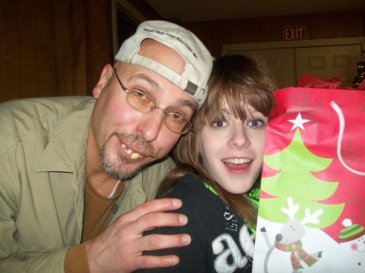 On many Sundays, my Dad would fulfill his churchly duties and serve as an usher, taking up the morning offering. On this particular Sunday, he made history in our church by doing something no other offering taker had ever done (or most likely would ever do again). After the music had concluded, our pastor, Ted, made his way to the front of the stage in between the tear-stained altars, and beckoned the offering takers to come forward and grab their plates. My Dad liked Pastor Ted for many reasons, and one of those reasons was that his humor, as juvenile as it may have been at times, was always in sync with our pastor’s.
As he was being summoned to his post, he exited the pew and made his way to the front of the church to grab the plate and face the pastor. While making his way down the aisle, my Mom noticed his hand reach into his pocket and pull something out. In a moment, my Mom’s heart sank. It was the guilt of a mother who forgot to check her son’s pockets to make sure any Gameboys, frogs, or other toys were left at home before you entered the sanctuary. I can only imagine the anxiety she must have felt, because she knew what was coming. The boy in question, however, was not her son, but her husband. Surely, he wouldn’t embarrass her in front of our pastor, our congregation, and God.
Surely, he proved her wrong. As he reached down to grab the offering plate, he simultaneously slipped the Billy Bob Teeth into position, and as he raised his head, he sported the familiar goofy face he had created any time he wore them. Pastor Ted surveyed his Men of God, his money collectors, one of which was always called out to offer a prayer to bless the offering and our church. His surveying head fell on my Dad’s face and the perfectly positioned Billy Bob Teeth, and his eyes grew wide.
And he laughed. Hysterically. The pastor of a conservative Christian church was doubled over in laughter in front of a crowd of repentant sinners. The pastor’s laugh carried into the over the church’s sound system, but because my Dad was facing the pastor at the front of the church, no one quite knew what was causing the laughter.
Then, Pastor Ted did the unthinkable. He asked my Dad to pray and bless the offering! And my Dad did—with the teeth! He stayed in character for the entire performance, using the Billy he had created to bless the money and offer it up for the building of God’s kingdom. As the pastor continued to laugh, my Dad said “Ay-man” in his best Southern drawl, spun around on his heel, and faced the congregation. As he made his way back through the pews to collect the offering, the laughs spread from the front row to the back. My Dad left the teeth in his mouth the entire time, and he got laughs from almost everyone—except my Mom, who was justifiably embarrassed. And so was I when she called me to tell me this story on the phone. My Dad was a funny guy, but I was just as embarrassed as she was, and I couldn’t laugh at this joke (although I definitely laugh about it now).
I hate to say this, but as I grew older, there were things about my Dad’s humor that I didn’t appreciate the way I should have. When I should have been laughing, I responded with the serious, stern face of an early-twenty something who was trying to be much more grown up than I actually was. When my Mom recounted this story to me on the phone later that afternoon, I experienced the same anxiety she probably felt. It seemed like there were some places that were so sacred, so holy, that not even Billy Bob Teeth were welcome. As I grew older, I began to take life too seriously. Young adulthood is a time where you feel like you can’t laugh at certain things because, well, you’re not a kid anymore. And this particular joke seemed inappropriate. Even though he got great laughs, there was a part of me that was so glad I wasn’t at church that Sunday. I’m ashamed of it now, but I even threatened that I wouldn’t go back to church with him if he ever tried to wear those teeth in the sanctuary again.
But my Dad never let the “sticks in the mud” like me ruin his fun, and I thank God he didn’t. He continued to get laughs, no matter how embarrassing it may have been. And although I wasn’t laughing then, I’m laughing now when I think about just how wonderful and fun-loving he always was. It’s amazing how many people I run into that were in church that infamous morning, and how they still laugh about the situation. They weren’t embarrassed—they were entertained! And they were smiling. And most importantly, they were probably closer to God because they saw a man who truly enjoyed living in God’s creation.
My Dad understood Proverbs 15:15 where the wise author says: “Every day is a terrible day for a miserable person, but a cheerful heart has a continual feast” (GW). My Dad enjoyed life and he enjoyed hearing people laugh because he knew their days would be just a little bit better having experienced even a few moments of cheer. That was Dad’s gospel.
What was even harder for me to understand as I grappled with my Dad’s depression was how a man who was so funny and who laughed so much could suffer from such underlying pain and sadness. How could a man who had always been able to make me laugh not be able to cheer himself up? How could a man who, to everyone else, always seemed unbelievably happy be so ill underneath the veneer of satisfaction and contentment?
I struggled with that question for a long time. And although my understanding of mental illness and depression has become much more extensive, I still struggle with it. I still have days where I just can’t equate the stories I have of my always-joyful, always laughing Dad with the defeated and distraught image I have of him during that last conversation. They are questions I might not be able to have answered on this side of the grave, and I’ve done my best to come to terms with that.
But what is more important, so much more important, is that I’ve learned to laugh more because of my Dad. I have so many great memories of him to laugh at because he lived life not to just get through it, but to enjoy it and make it colorful. From childhood until the week he died, he could always make me laugh. He could always make me smile. He could always make me feel better about life and other people.
And even though he’s been gone for over three years, he still does this every single day.
Dad, I hope you know how much I miss hearing your laugh and the joy you brought to all of our lives. I wish you were still here, so I could watch you come up with new routines and corny Dad jokes. You were always so funny, which made life more fun. From the moment I was born, you tried to teach me the importance of a good laugh. And each and every day, I’ll try to laugh more so I can honor you.
“Every day is a terrible day for a miserable person, but a cheerful heart has a continual feast.” Proverbs 15:15 (GW)


 Seeya Bub