
As I was driving into work this morning (I began writing this post on June 8), I received an alert from my phone from CNN. Just a day prior, I had received a similar alert regarding the Center for Disease Control’s (CDC) recent study release, which found that suicide rates have increased by 25% over the past two decades in the United States.[1] It hit home in ways I never predicted it would.
On that next morning, I looked down at my phone, and I really couldn’t believe what I saw. Television star Anthony Bourdain was dead at the age of 61 from an apparent suicide. Just earlier in the week, fashion designer Kate Spade also died from an apparent suicide.
Before I write any further, I want to first say a few things about my context in regards to these two situations. During his life, I don’t want to claim I was a fan of Bourdain’s work. I never watched his shows (not out of hostility, more just a lack of interest). In the same vein, I don’t want to portend that I was a huge fan of Kate Spade either. I’ve never carried a Kate Spade bag…or any bag for that matter. I don’t want to posthumously conflate any feelings I had towards these two individuals while they were alive. I also don’t claim to know much about their lives (other than the few things I’ve seen in the news), and I don’t claim to know all of the things they were dealing with in their lives. Unfortunately, I don’t know much about either of their lives, other than the sad, untimely ways in which they ended.
Nonetheless, it doesn’t lessen the sadness I feel when I read about these two talented individuals who are gone too soon and unnecessarily. Just because Bourdain and Spade were celebrities doesn’t make their death any more tragic than anyone else who dies from suicide. It also doesn’t make it less tragic. Behind the celebrity façade are family members, friends, colleagues, and neighbors that are left behind with questions—questions they will have for their entire lives.
What I’m writing about, however, is not Bourdain’s death, but a reaction to it. An unfortunate reaction that I think pervades most of our society when issues related to suicide arise. A reaction that is all too common. And a reaction that we must discourage in order to remove the stigma behind mental illness and suicide. Let me tell you the story.
A local radio personality in Cincinnati who I follow on Facebook (and won’t name here) reacted to the news. This individual posted the news of Bourdain’s death along with a short comment:
“So sad. Such a talent. We all have our demons. #anthonybourdain”
Shortly thereafter, a woman I’ll call Jean responded:
“I agree, but I am also ragingly ANGRY. He leaves a daughter. HOW SELFISH can someone be?!? I hope she [his daughter] is shielded from the publicity…”
And, the radio personality wrote back:
“I can’t disagree.”
He can, and he should. He should disagree. Dear friends, we need to talk about this type of reaction because it’s ill-informed, harmful, and ignorant.
First, let me say this. Although social media has many wonderful benefits, I largely despise it for what it has created in our lives. It creates an unbelievable sense of competition because it falsely projects the image that “everyone but me is living the perfect life.” In fact, I have no doubt that the increase in suicide rates in our country is largely influenced by the prevalence of social media in our lives. In many cases, I think social media disconnects people more than it actually connects them.
Along those same lines, I don’t often see the value of litigating every single comment made on Facebook or Twitter or Instagram or any other network. I sure hope that every single comment I ever made on Facebook isn’t brought back to vilify me years after I wrote it. I’m not writing this post to vilify the radio host or Jean (neither of whom I’ve ever met) or anyone else. I’m writing this post as a contemplation on the larger societal attitudes towards suicide as a “selfish” act.
However, I do think it’s important to recognize that this type of attitude and speech surrounding suicide is common. I hear it often—mostly from people who don’t yet know that my own life has been darkly wounded by suicide.
Search the web for “suicide is selfish” and you’ll find any host of authors or commentators who agree with this sentiment. You’ll find articles written by people like Lesly Salazar that read “I still think suicide is selfish and no, I’m not ignorant for believing so.”
Again, my goal is not to vilify these individuals. I vehemently disagree with them. I disagree with everything they believe about suicide and mental illness. I think their positions and their statements are ill-founded, ill-conceived, hurtful, damaging, and dangerous. I think that, had their lives been touched by suicide like mine was (and I’m glad theirs hasn’t been), they might think differently and more compassionately. I write this not to tear them down as human beings. I write this to hopefully educate them. I write this post to hopefully share with them a different understanding of suicide—from an individual who lives with the pain it creates each and every day.
Suicide is not selfish, because mental illness is not selfish. It’s as simple as that.
Those of us who have lived with and loved individuals who suffer from mental illnesses like depression, anxiety, bipolar disorder, schizophrenia, or any other host of illnesses know that those individuals do not consciously choose their illness. People do not choose to be depressed. People do not choose to be anxious. People do not choose to hear voices in their head that tell them they aren’t enough and never will be. People do not choose to be mentally ill.
We know that we don’t choose to be mentally ill because we can’t explain why we feel the way we do in regards to mental illnesses. And although we don’t have an extremely thorough understanding of the physical factors and mechanisms behind mental illness, we do know that there are often biological mechanisms at play. We know that there are regulating chemicals within our brain that can change over time, and the incorrect balance of those neurochemicals and transmitters can create or prolong a mental illness. And if we know that mental illnesses can have a biological root, why in God’s name would we ever, ever accuse someone of being selfish if they die as a result of their illness?
If you’ve ever had a family member die from cancer, would you ever call that person’s death “selfish”? If you’ve ever had a friend die from heart failure, would you ever call them “selfish” for their weak heart? If you have ever had anyone in your life die from an inexplicable physical illness, would you ever dare insult that person’s memory by calling their death “selfish”?
No, you wouldn’t.
And no, we shouldn’t.
I can already anticipate the retort from individuals who disagree with me: “But if we don’t say that suicide is a selfish act, it will encourage other people to do it. There will be no penalty against it. The belief that suicide is selfish actually keeps people from attempting suicide.”
Tell that to the CDC. If that’s the case, why hasn’t the stigma worked up to this point? If most of society thinks this way (and I believe they do), why have suicide rates risen by 25% in just two decades? The belief that suicide is selfish doesn’t discourage people from attempting suicide; it actually exacerbates their feelings of inadequacy, self-doubt, and unworthiness.
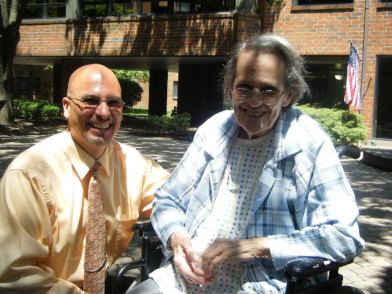
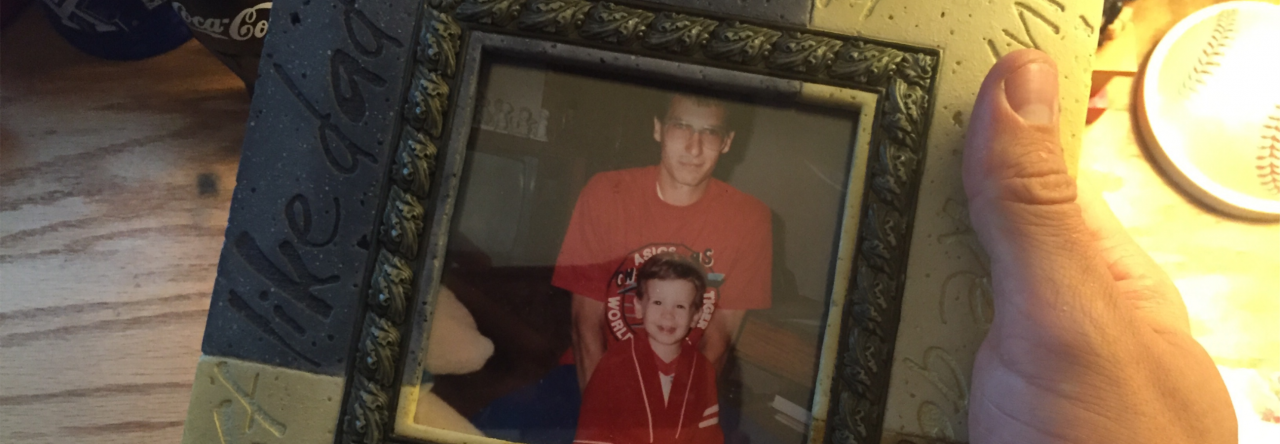
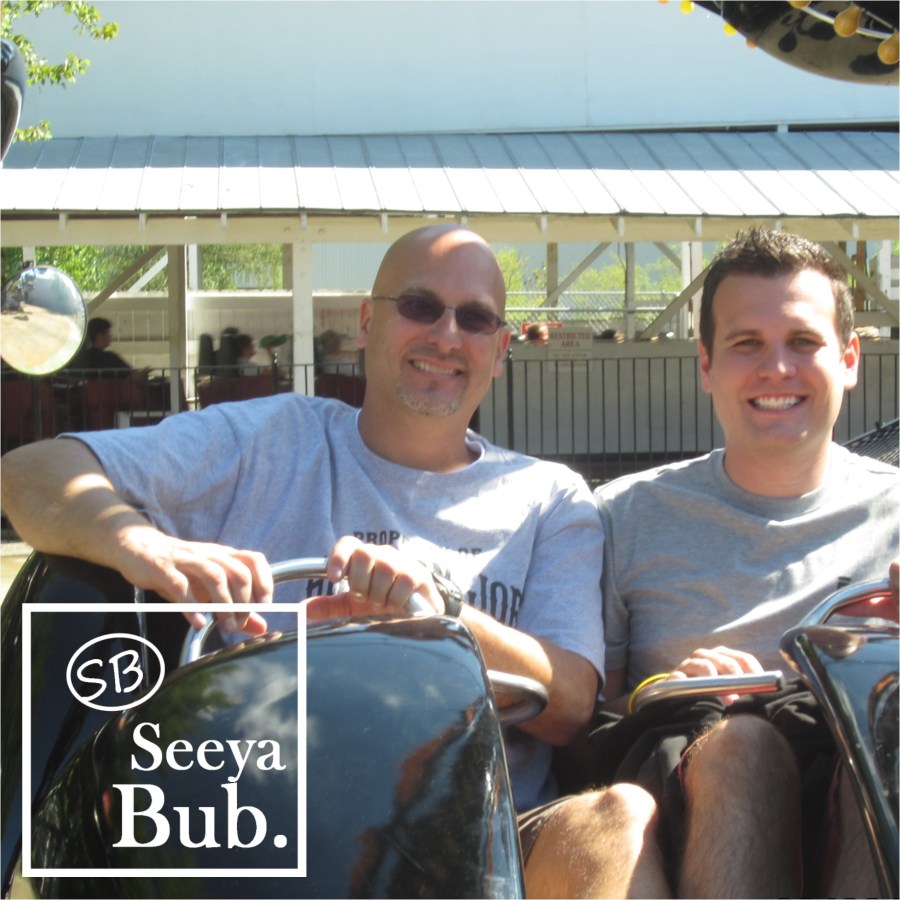
My Dad’s story is the perfect example. My father was the most selfless man who ever walked the planet. He did nothing for personal gain, notoriety, or ambition. My Dad was a giver. My Dad was the man who would take an entire Saturday to help someone build a porch on their back deck. When my Grandfather had a stroke that left him largely immobile, my Dad was the man who spent weeks completely redesigning his home bathroom so my Grandpa could easily navigate his wheelchair into the shower. My Dad drove a truck, and I can’t even begin to count the multitude of times that people would need my Dad’s truck to haul something. And every single time, they got the truck—and they got my Dad to help. He gave money to those in his life who needed it, even when prudence likely told him he would never see a dime of that money again. But more than anything, my Dad gave of his most precious resource—time. There was no such thing as a conversation going too long. My Dad could (and did) talk with anyone he came in contact with. His conversations were never about him, but making others around him feel loved.
 And my Dad was a completely selfless Father. As a child, he spent every minute he had making sure I was entertained and happy in life, even on days when he was likely tired and exhausted from work. When I was in high school, my Mom and Dad took an entire weekend to redo my bedroom to make it more appropriate for a young man in adolescence (the motif went from childhood baseball to vintage baseball—and I loved it!). If my truck broke down in high school (which was a semi-regular occurrence), my Dad was the first person there to help me. And although I’m sure there were many other exciting places he would have rather been, he was always in the stands anytime I announced a basketball or baseball game.
He was selfless. Not selfish. And the mechanism of his death doesn’t change this.
It wouldn’t make sense for someone who has lived their entire life with a code of honor that embodies selflessness to all of a sudden abandon that. My Dad’s death was out of character because, on that morning, he was not himself. His depression had so deeply overtaken his mind that his proper thought processes were disabled. I was there that morning. I saw my Dad before he died. And I can tell you, he wasn’t acting selfish. He was acting hurt, and scared, and completely debilitated.
And here’s the key. As crazy as this may sound, the truth is that it was actually my Dad’s misguided selflessness, not selfishness, that ended his life.
Let me be clear: None of this makes my Dad’s death right, acceptable, or just. None of it. It also doesn’t make it selfish.
My Dad was such a giver that he couldn’t imagine letting those around him down. He couldn’t imagine admitting failure to those he loved and took care of. He couldn’t imagine not being able to help himself after his entire life had been dedicated to helping others. Again, none of this is an excuse. None of this justifies his death. None of this makes his death right because his death isn’t right. It was unnecessary, and premature, and unwanted.
But it wasn’t selfish.
I don’t place the blame at my Dad’s feet—nor should anyone else. Are there things I would do differently? Yes. Are there things I wish my Dad had done differently? Absolutely. Do I wish my Dad’s story wouldn’t have ended on that fateful July morning? I pray this every single night.
But his death wasn’t selfish. And no one has the right to condemn his character (or anyone else’s) with such unjustifiable certainty. They do damage to that person’s legacy; but they also do significant damage to all of those left behind.
It’s not just the person who dies from suicide that is disgraced and discouraged by a “suicide is selfish” attitude—it’s the survivors left behind to grapple with their grief that are just as negatively impacted by this type of attitude.
I want you to imagine this scenario as you read and feel the intensity of the moment I’m describing. Your Father, the man you loved with every fiber of your being, has just died. From suicide. A vibrant, enthusiastic life has just been ripped away without warning. One minute, you’re hugging the broad shoulders that have carried the burdens of your entire family for a generation, and the next you’re standing next to his casket. You look down at that casket and the hundreds of people who have gathered to say goodbye, and you wish more than anything that your Dad would just get up—but he won’t. He’ll never come home again. You’ve cried more tears in a few days than you ever have in your entire life combined, and your pain and grief are inexplicable and inescapable. You’ve had many sleepless nights, and you’ll continue to have them for as long as you live. Just when you think life is establishing a new normal, you’ll wake up in the middle of the night screaming in terror as the horror of those moments replays over and over and over again. All of this is ahead of you as you stand at that funeral, and the weight is crushing.
And then, someone comes up to the casket. They shake your hand, express their condolences, and then say this:
“What a selfish act.”
How do you feel? Did it help?
No, it doesn’t—and it never will.
I’m thankful that this type of reaction never happened to me directly, but reading comments filled with a self-righteous fervor that accuse a suicide victim of being selfish from people I don’t even know is just as hurtful. I’ll return to Jean’s comment and ask you this: If she was so concerned with the well-being of Anthony Bourdain’s daughter, why would she immediately castigate his memory by completely minimizing his suffering? If Jean was so concerned about Anthony Bourdain’s daughter, why would she make a comment that will do absolutely nothing to help this young woman grieve? I have no doubt that Anthony Bourdain’s daughter, like me, loved her Father. By calling his unfortunate death “selfish,” Jean’s comment doesn’t help the grieving—it hurts and wounds them.
I go to bed every single night wishing that my Dad was still around. If people, like Jean, think that somehow letting me know that my Dad’s death was selfish will heal me from my grief, I’m here to tell them it won’t.
Suicide is not selfish, but that doesn’t automatically make it selfless either. An act can be neither selfless or selfish, and we shouldn’t be tricked into the fallacy of outright-certainty in an area as delicate as this.
But suicide is devastating. And it’s life-altering. Suicide is debilitating. It’s irreversible. It’s awful. And terrible. And it’s never, ever okay.
But it’s not selfish. And it’s not selfless. It’s just awful.
I don’t believe individuals who die from suicide are selfish at their core. They are suffering. Suffering from a disease that is awful and confusing. A disease we don’t understand.
So, when we don’t understand the complexities of this life, we shouldn’t self-righteously claim that we do.
I don’t know Jean’s story, but based on her attitude, I highly doubt that her life has ever been touched by suicide. And guess what? I’m really, really thankful for that. I don’t want anyone to ever have to live through the pain my family has endured after losing my Dad. But because we’ve lived through it, and because we knew the man my Dad was, we don’t talk about suicide like she does. We don’t say my Dad’s death was selfish because it wasn’t. Don’t get me wrong—we pray and wish every single day that it hadn’t happened. But it wasn’t selfish.
I’ve written this before, but I’ll say it again: Your words matter. The words you choose each and every day have tremendous power—power to heal pain, but also to inflict it. But words are more than just words. They reveal an attitude. They reveal beliefs. They reveal core values. When self-righteous individuals scream with certainty that suicide is selfish, it causes the survivors of suicide to question everything about our loved ones. Did they really love us? Did they really mean it when they said they cared? Were they selfish?
Survivors of suicide have enough to deal with when it comes to grief. We don’t need the haughty judgement of individuals who claim to have all the answers to explain why our loved ones are no longer here. We feel that pain every single day, and it’s actually selfish for others to minimize our loved ones’ suffering.
My faith in Jesus Christ teaches me that I’m not meant to have all the answers in this life. I shouldn’t claim to be all-knowing, because when I do, I’m claiming to be God. I don’t know why suicide happens. I don’t know why God allows mental illness to persist. So, I don’t claim to have all the answers. Corrie ten Boom said it best: “A religion that is small enough for our understanding would not be big enough for our needs.”
So, unlike all the people shouting about the selfishness of suicide, I won’t stand on the mountaintop and claim to completely understand the suffering in the world around me. Instead, I’ll attempt to be compassionate. Instead, I’ll try and realize that individuals—selfless individuals—are hurting without being able to explain why.
And as hard as it might be, I won’t give up on people like Jean. Or anyone who currently believes that suicide is selfish. Even though their words cut through my heart like a knife, I’ll still believe that they can learn and grow. Because as hard as it is for me to admit, there was probably a time in my life before my Dad died from suicide where I thought just like they did. I’m ashamed to admit it, but I’ve changed and I’ve grown—and they can, too. I’ll still believe that Jesus is not quite done with them yet, just as he’s not yet done with me. I’ll still believe that they will someday realize that suicide isn’t a willing act, but one that occurs when the body and mind are in a frenetic, uncontrollable, irrational state. Because I’m still a work in progress, I’ll believe they are too.
But more than anything, I’ll just keep loving my Dad because he selflessly loved me.
 Dad, It hurts my heart tremendously when I think that there are people out there who think your death is selfish. It pains me when I hear individuals say that death from suicide is selfish because they didn’t understand your pain. They didn’t see the despair in your eyes on that last day. They didn’t see the years that you suffered. They didn’t see how badly you wanted to be healthy. They didn’t live with the unnecessary shame that you lived with for so long. Dad, none of this makes your death and absence any easier. None of this makes the pain of losing you any less real. And yes, I wish things had gone differently on the morning of July 24, 2013—for you, for me, and for all of us. But you suffered from a disease that you didn’t understand. A disease that not even medical professionals completely understand. You died because this disease took over your brain, and I hope you know that I understand this. It doesn’t make your death right, and more than anything I wish you were still here, living the life you always lived to the fullest. But I’ve never been angry with you for your death. I’ve never loved you any less—and I never will. Dad, you are not defined by your death, but by the tremendously selfless life you led. I’m so sorry if you ever felt like you weren’t enough for us, Dad. You were always enough. You lived a completely selfless life, and I wish I was able to remind you of that. Until that day, I’ll keep fighting for your legacy. I’ll keep fighting, alongside God, to redeem the pain of losing you in an effort to try and prevent this pain in the lives of others. And until that day when I can tell you just how selfless you were, seeya Bub.
“Those who think they know something still have a lot to learn.” 1 Corinthians 8:2 (GW)
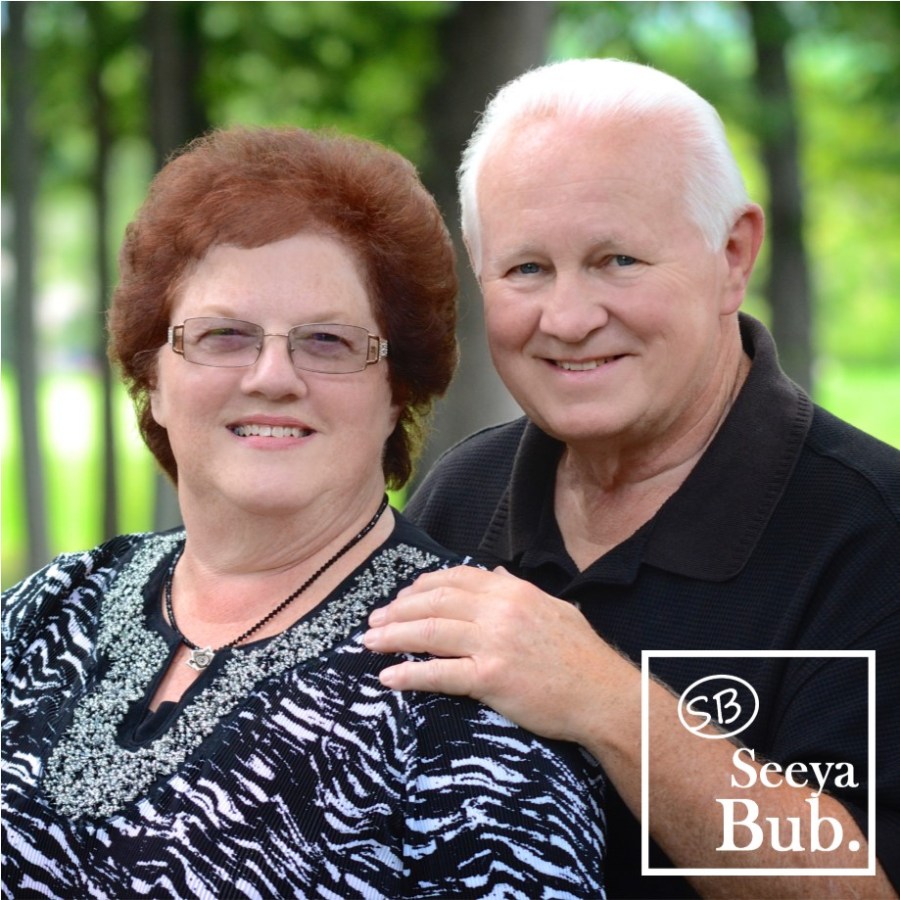
 Dad, I wish you could have read Reverend Walters’ book and heard his story, because I think you felt many of the things he did. I know you struggled with how to share your hurt and your pain because you didn’t want to appear weak. You didn’t want people to think you were a failure. Dad, you never failed any of us—ever. You had an illness that you couldn’t understand, and I wish we had done more to help you escape the trap that forced you into silent suffering. But Dad, I know that our Heavenly Father has welcome you into His loving arms. I know that He is redeeming your story day by day with each individual who loves you and learns from you. Dad, I will never stop loving you. I will never stop trying to find ways to help those who are hurting like you were. Keep watching over me, because I can feel it. Until I can tell you how much you are loved face-to-face, seeya Bub.
  Reverend Dan Walters
 The greatest miracle? She said yes! And I’m the luckiest man alive to know that I’ll get to spend the rest of my life loving her.
 I cherish the unexpected when it comes to the way our paths crossed with one another. I know that God has been orchestrating little life moments all throughout my 31 years with the knowledge of eventually bringing us together. I know that God had a master plan, slowly but surely fitting all the puzzle pieces together at exactly the right moment.
 Both Paige and my Dad have a mutual love and appreciation for all things nature. From parks to puppies, Paige has always loved being surrounded by God’s creation. Secretly, I have a fear that I am going to be that husband who comes home and finds that his wife has picked up six puppies on her way home from work because she “just couldn’t say no to them!” (Note to Paige: Mentioning this on the blog is not an endorsement for you to actually do this.) My Dad had a way with animals that I’ve never seen before. Our family dogs always looked to my Dad as their favorite human. My Dad was able to befriend dogs in our neighborhood, horses on nearby farms, and I even have one picture of him petting—yes petting—a baby deer in the park close to our family home. Both Paige and my Dad just loved being in nature. My third date with Paige was at Sharon Woods, and I remember watching an indescribable sense of peace wash over her as we navigated the trails, creeks, and waterfalls (I tell myself it was my presence, not the natural surroundings, that provided this peace, but I digress…). My Dad had that same sense of calm and wonder any time he was in nature—which was often. My Dad would find any excuse to be outdoors, even if his son would claim it was “too hot” or “too sticky” or “too-not-television”. I think my Dad, and Paige, both feel that they are at their best when they are taking in God’s creation—and I’m thankful that they both remind me to slow down, look around, and join in the wonder.
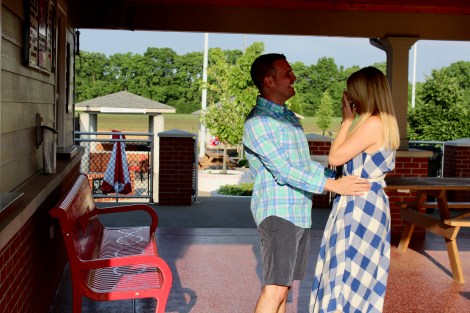 All throughout this journey, from the moment I decided I wanted to marry Paige to the moment she said yes, I felt tremendous joy; but it was a joy accompanied by sadness because I really, really wanted to have my Dad there for everything. In each and every moment, I wanted him there right alongside me. In moments like this, a boy needs his father. My Dad deserved to be there for all of it.
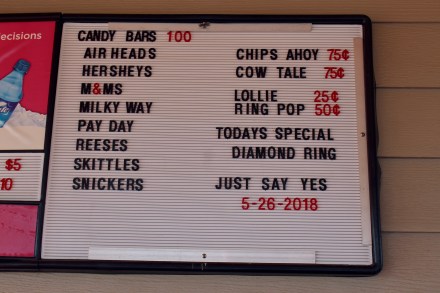 “Why does it say diamond ring?” she said to me nervously, and then, I placed my hands on her shoulders, and I told her how I felt about her. As I did this, photos of us together began to scroll on the video boards at the fields. Then, I got down on one knee (one very nervous, shaky knee) and asked her to marry me. She said yes, and all the promise of the next chapter of my life overwhelmed me with earth-shattering joy. I was able to envision our life together and see years into the future—and I absolutely loved what I saw.
 As our family members started to trickle out to the after-party, our dear friend Megan took some amazing pictures of us at the fields. As we smiled and posed for shot after shot, Megan asked us if there were any other pictures we would like to get before we left.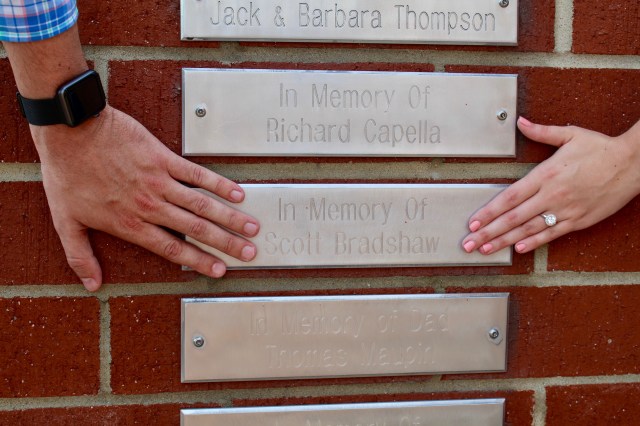
 Of all the things I’m fortunate to have in this life, I’ve always said I’m most fortunate to be the son of Scott and Becky Bradshaw. Now, I can add one more title to the list. I’m the luckiest man alive because I’ll get to call Paige Garber my wife. Although she never met my Dad, I know that she still loves him—and that’s the greatest type of love anyone could ever give. It’s unconditional, Christ-centered, and life-changing. It’s the same type of love that my Dad gave to everyone he knew. It’s the love I still feel him providing from Heaven. It’s the type of love that sustains, builds up, and encourages in spite of difficult circumstances. It’s a love I wish I could have reminded my Dad of on his last day here with us.
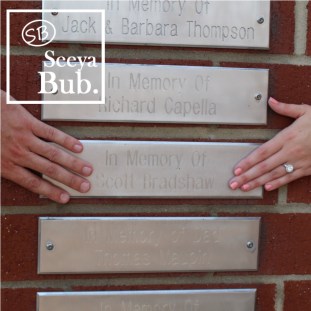 Dad, You would have absolutely loved Paige. You are so alike in so many ways. I often think about what it would have been like to watch the two of you interact with one another—laughing at the same jokes, enjoying sitting around a bonfire together, and just generally appreciating the beauty and simplicity that life together affords. It would have been one of the greatest honors of my life to introduce her to you, but I would have felt that same honor in introducing you to her. Dad, I desperately wish that you could have been here for our relationship. I wish that you could have given me the wisdom and guidance that only a father can provide to a son when it comes to love and marriage. But even though you aren’t here with us right now, I can still feel your presence. I can still feel you prodding me along and helping me make the right moves in this life. I can imagine you would have said to me soon after meeting Paige, “You better hurry up and propose before she wises up!” And Dad, you’re exactly right. She is more than I deserve and more than I could ever hope for, and I thank God for that. On the night I proposed, and every night for that matter, I’ve wanted to have you in our life and in our relationship. You may not be here with us, but in so many ways you are here with us. Your memory lives on in everything I will do as a husband, and I’m thankful that I could watch your patient, kind example over the many years that you loved Mom and me. You are here with me, and you always will be. I promise that no matter how life might change, I’ll never, ever let your memory go. Thanks for loving me from afar, Dad. Thanks for loving us—all of us. I love you, and wish we were here together. Until that day when we are united again, seeya Bub.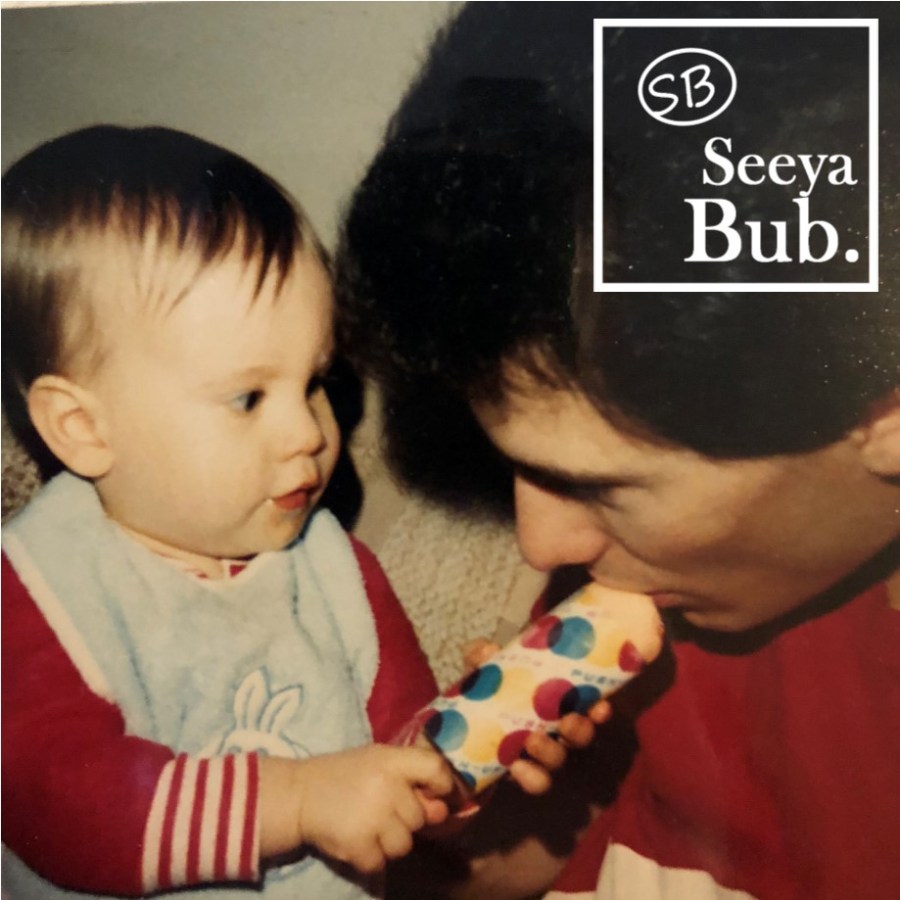


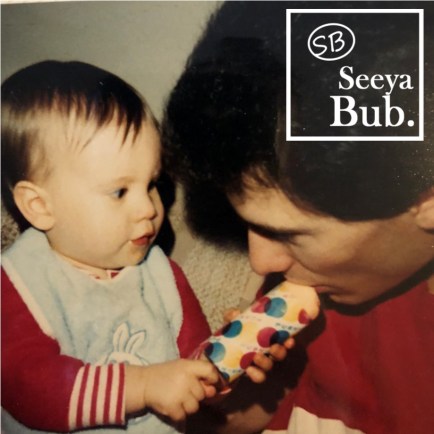 Dad, I don’t know if I could ever relate how much you loved ice cream and how often you enjoyed eating it. I have so many wonderful memories of getting ice cream with you and Mom on those hot summer evenings as a kid growing up. You always gave our family so much to enjoy, and we’ve felt that absence in our heart ever since you left. I miss watching you find a huge chocolate chunk in your black raspberry chip and the exaggerated excitement as you compared it to the size of my head (which was either a testament to the chocolate or insult to my head size). I miss finding empty pints and spoons in the family room next to your chair. I miss those random moments when life would get me down and you would propose the solution of riding out to get an ice cream to make it all better—I wish I had taken you up on it more than I did. Dad, through ice cream and everything you ever did, you taught me to enjoy the beauty of life and all its offerings. I know that I often take life too seriously. I often get so busy and so distracted that I forget to appreciate every bite and every minute that this life has to offer. It always hits me hard when I think of your memory, and I realize in those moments how much I want to be like you. Thank you for giving me these reminders. It’s these little moments in the absence of your being here with us that have provided the most solace and refuge for my soul. Thanks for being a Dad full of love; for ice cream, yes, but mostly for your family. I have no doubt there’s Graeter’s in heaven, and I’m sure you’re still their best customer. Until we can enjoy a few more pints together, I’ll keep missing you here. But I’ll never, ever forget you. I love you, Dad. Seeya, bub.
 Dad, You didn’t have to wear a mask. I think I know why you did. You wore a mask because you loved me and you loved all of us. And you couldn’t bear the thought of letting us down. Dad, you never would have let any of us down. Even in your death, you aren’t letting me down. You could never disappoint me. I would never be ashamed of you, no matter how sick you felt. Dad, you were courageous. You were brave. And you always had a huge smile on your face because you wanted others to smile, too. I know you were trying to be brave, but I wish I could have told you that being vulnerable and getting help was one of the bravest things you ever could have done. Thank you, Dad, for making my life happier. Thank you for teaching me how to enjoy life. And Dad, thank you for being the fighter that you were. Your story is teaching us all so much. Thanks for teaching me how to share it. Until I can say that I love you in person, seeya Bub.
 Dad, I can still go back to that specific Sunday morning and remember the quizzical look on your face when we were handed that baggie with a grape and a raisin. I can remember and picture the way you engaged in that illustration. I can remember you always reminding me many Sundays after that about how I needed to live with a grape heart. But more than all of those memories, I remember the way you lived. I remember the way you loved others. I remember the way you lived and loved with a grape heart every single day. I’m trying to live more like you because you always showed people that your love was more than a sentiment. It meant something and it made a difference. It’s hard to find people who love others the way you did—and the way you still do from above. I still feel your love each and every day. I still feel your love guiding me through all the good times and the difficult times, and I’m thankful that your grape heart lives on. I wish I could tell you this in person. I wish I could give you the praise that you deserved. Until I can see you again and give you a big hug, seeya Bub.
 Dad, I wish I had known. In spite of all your struggles that you dealt with each and every day, I never, ever thought that suicide would attack you and our family. I never believed for one moment that your life was in danger, probably because you shielded us from so much of your heartache in an effort to protect us. Dad, I wish I could have done more to help you. I don’t blame myself for what happened, but I would do anything to replay those moments when I should have done something. But in your memory and because you always taught me to help people, I’m trying to keep others from suffering like you did. I’m trying to make people aware of something that I wasn’t aware of until it stole you away from us. Dad, I miss you every single day. I wish I had many more minutes to spend with you. Someday, we will have those minutes and many more. Someday, we will be able to enjoy being together again. Until then, seeya Bub.
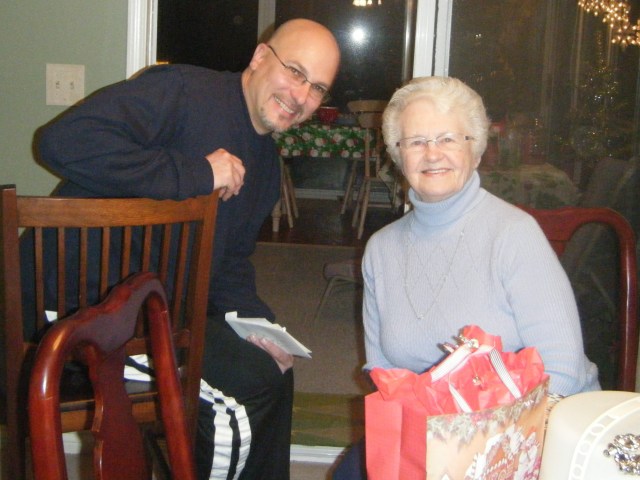 Positive, upbeat, and always smiling, my Aunt Vivian was more like a grandmother to me when I was younger. Both of my parents worked (and worked hard) to provide for our family, which meant I was often in the care of family members like my grandparents. And of course, Auntie was always in that rotation—and I couldn’t have been more thankful. Early on in my life, and during the summer months as I aged, I spent many a day under the loving and watchful eye of my Auntie. I’m a better man today because of all those days I spent with her growing up.
 I have a few prized and cherished treasures in my possession. They aren’t the things I’ve spent the most money on. They aren’t the name-branded and logoed sweaters I can’t afford but buy anyway. They aren’t the pieces of sports memorabilia I have accumulated. They are things that are truly irreplaceable. One of a kind. Sacred.
 Eventually, I got out of bed. Although there have been other days when I can’t. And during every one of those moments, I remind myself. Fear is knocking at the door. Faith must answer. My faith has led me through the challenge of my Dad’s death on days when I just couldn’t do it. It breaks my heart to watch families impacted by suicide or traumatic loss who turn away from their faith, because I know that my faith and the love of Jesus Christ has been the most important component of my survival in life after Dad.
 Dad, There have been so many days after your death that have been full of fear. I didn’t know what I would ever do without you, because you were such a rock for our family. While you were here with us on Earth, however, you gave us all a great example of what faith and courage looked like. Dad, you fought so hard for so long. I can’t imagine how many painful days you must have had and how many times you pushed through when life seemed unbearable. I wish that I could have done more to help you. I’m thankful that we’ve had wonderful family, like Auntie, to help us in your absence. But I know you’re still watching over us. All of us, each and every day. I love you, Dad. I continue to be afraid of what life will be like without you in the years and decades to come, but I know I’ll see you again. Until that day, seeya Bub.
 Dad, You have no idea how I wish I could wind back the clock and play this song for you. I wish that I could play it, watch you listen, and then say to you that whenever I hear the words I immediately think of you. I desperately wish I could see you thumping your thumb on the console of your truck like you always used to do. I’m sorry that the first time I had a chance to play this for you was at your funeral. So many people have heard the song and told me how perfect it was for you, which is the best testament to your life. It’s what you deserve. Dad, people still talk about how strong you are. People still talk about how courageous you were for fighting through your mental illness for so many years. I know you were hurting desperately, Dad. I know that your soul was troubled. But I pray that you’re able to hear this song in heaven and know that I think of you each and every time I hear it. I’ll always love you, Dad, and I’ll always admire how strong you were. I’ll try to live up to example you gave me—the example that you gave all of us—each day for as long as I live. Someday, I’ll look you in the eyes again and tell you that you were the strongest man I’ve ever known. Until that reunion when we can listen together, seeya Bub.
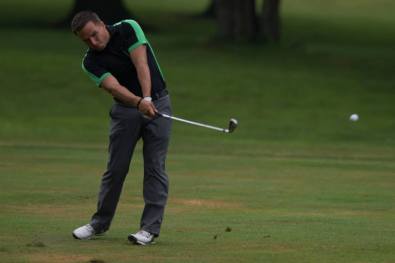 Jeff didn’t know me in high school, but I knew of him. Rather than equitably distributing golf talent across all the boys at Fairfield High School, God had taken mine and consolidated it all into Jeff Sullivan. Jeff was a graceful golfer. He would hit shots that I wouldn’t even believe I could hit in my own dreams. Natural talent? Maybe a bit. But more than anything, Jeff is one of the hardest working athletes I’ve ever seen. He spends more time honing his abilities than anyone, and it shows in his competitive spirit.
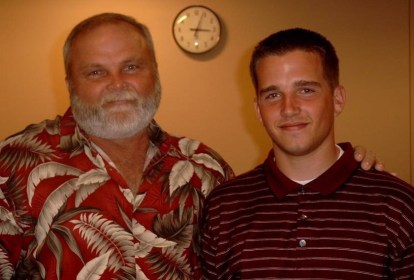 I was 9 years old when “Papa Sully”, as my high school teammates would later name him, first took me to the driving range. One trip, and I was hooked. As I mentioned before, this was when Tiger madness was really starting to hit its peak. Tiger had already won 3 U.S. Junior Amateurs and had just locked up back-to-back U.S Amateurs. The next year, he would turn pro, and I was probably on my Dad’s last nerves!
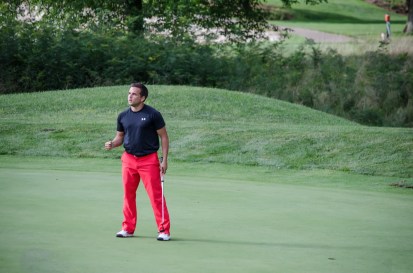 From that day forward, my golf is played for him. Not only to win, but to show him that I can be the man and player that he always wanted me to be. To show great sportsmanship, character and class on the golf course. That’s why I play the game now. In 2011 and 2012 I wanted to win our city tournament SO bad, even more than ever before because I wanted to do it for my Dad. I couldn’t get the job done until 2013 and I will remember that win more than any other as long as I play the game.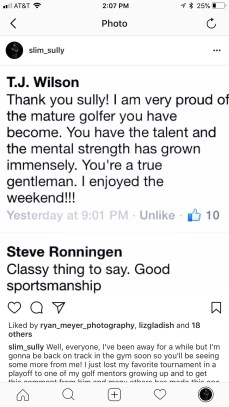
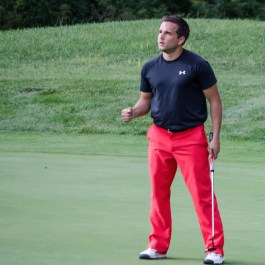 Jeff “Sully” Sullivan
 Seeya Bub