A Mother’s Heart: Guest Blog by Becky Bradshaw

Ty: From the time I was little, I’ve always felt like a bit of a Momma’s boy.

And I’m completely okay with that.

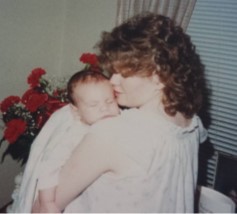
Mom Holding Me - CroppedGod has given me so many wonderful blessings in this life, but none greater than the two loving parents that have been with me since before I took my first breath. I’ve always had a special connection with my Mom since I was little. As an only child, I was fortunate to have all of her love and attention. I’m thankful that even though I’m growing older, I’ve never stopped receiving that.

From the time I was little and would run up to her or lay my head on her lap, I always knew my Mom was special. I don’t think I realized just how special she was, however, until my Dad passed away.

My Mom loved my Dad dearly and deeply, and just as he relied on her, she also relied on him. In the aftermath of my Dad’s death, I remember worrying about what Mom’s life would look like now that Dad was no longer around. I was worried about everything. How would she afford to keep the house? Would she even want to live in the house anymore? How would she pull herself out of bed every morning, knowing Dad wasn’t there?

You know how God tells us about a million times in the Bible not to worry? I understand that now.

Because my Mom is ridiculously strong.

All of the fears and doubts that I had in the initial aftermath of Dad’s death have dissipated as I’ve watched her navigate the complexities of her new life with grace, compassion, and a determination to never give up.

Don’t get me wrong—this hasn’t been easy on her. No wife should ever have to go through what my Mom has experienced. No wife should ever get the call that my Mom got on that fateful July day. No wife should ever have to wake up at the age of [NO, I’M NOT GOING TO MENTION HER AGE] and have her life partner stolen from her so unexpectedly and unnecessarily.

But my Mom has dealt with the scary moments, and in the same way she’s never quit being a Mom to me. There have been nights where I can’t sleep and where I’m racked with nightmares about losing Dad, and I know that I can still call her. There have been moments where life has felt too overwhelming, and I always knew that I could share my anxieties with her and be reassured and strengthened again. Just as I ran to her as a young boy, I’m still running to her now that I’m grown (and significantly taller than she is). On this Mother’s Day weekend, I’ve invited my Mom to share her memories of my Dad. Although our experiences have been so different, I’m so thankful that we’ve had each other throughout this heartache. We suffer differently, but thank God we are suffering together.


Becky: As Mother’s Day approaches, I started thinking back about all the Mother’s Days that I have had—especially my very first Mother’s Day as a mother myself.  Scott and I were so excited, as we would be spending my first Mother’s Day with our new two-week-old son, Tyler.  We went to church together that morning, and then we went and bought flowers to plant in our yard.  As I look back I realize how special that Mother’s Day of 1987 was.  Scott and I spent many more Mother’s Days together, but lots of other times together making memories throughout each year.

When you lose someone you love you try to hang on to every memory you made together, and I wanted to share a few of those special memories we had as a family.

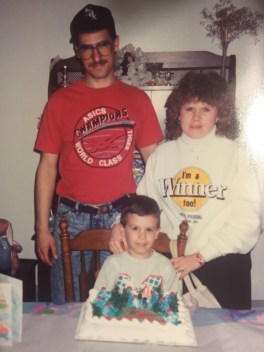
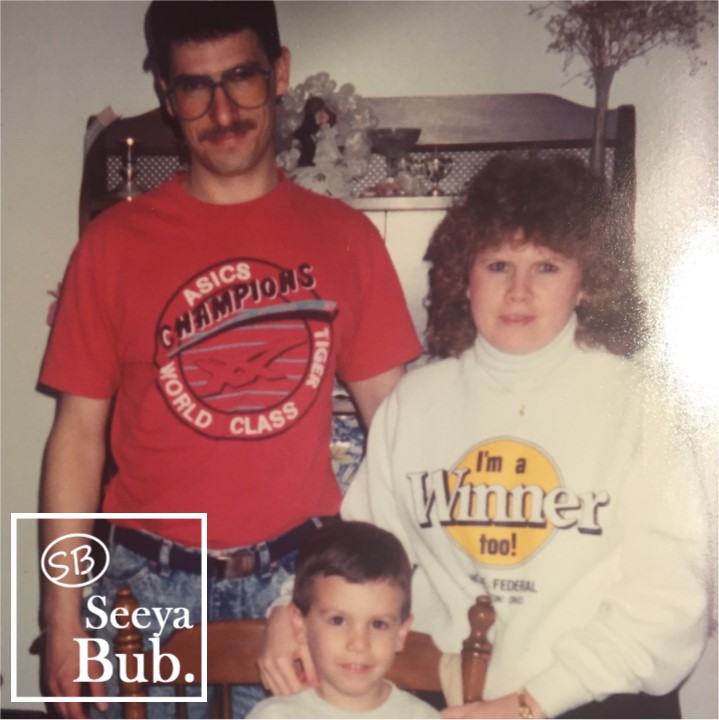
From the time Tyler was a little boy, we tried to do fun things with him.  Trips to Fantasy Birthday PhotoFarm (for those of you who are old enough to remember this place), picnics, movies, making crafts, zoo trips and much more.  Birthdays and holidays were also special times at the Bradshaw house.  Scott and I always wanted to make Tyler’s birthdays special.  Every year we would plan a big birthday party for him, and Scott was always excited and would always try to plan something different each year.

Scott was also willing to step into my mom role when I couldn’t be available.  I remember one particular field trip that he went on.  Tyler was in the 3rd grade and they were going to Wright Patterson Air Force Base.  I guess the laughing and jokes started as they loaded the bus because of Scott’s hair…or, I should say, the lack thereof.

On the same trip Scott was in charge of a group of students.  That was probably the first mistake because he truly was a kid at heart.  I remember Tyler telling me how they got yelled at by employees for going in areas of the museum they weren’t supposed to and for touching items they weren’t supposed to. I don’t recall him going on any more field trips after that.

There are just so many great times we spent together playing with our dogs, building our addition to our family home, spending time at our pool, fun at Hamilton Joes’ games, beach vacations, hanging out with family and friends.  I really think I could write a book about all these memories.

On June 30, 1984 Scott and I started building our lives together and I honestly knew we would play with our grandchildren and grow old together, but on July 24, 2013 all that changed.

The next days and weeks were a blur and I just could not imagine him not with me.  I would hear him calling my name and wait for him to come home from work. As painful as that day was, I try to focus on all of the memories.  Scott, I cannot wait to see you again some day and we can reminisce about old times.

Thank you for the memories I will always have in my heart, even though my life has forever changed.

I love you always and forever and until we meet again!


Ty: A day or so after my Dad’s death, I remember sitting on the back patio of our family home on a park bench with my Mom, each of us starting endlessly across the lawn of our backyard. That patio and that lawn and had been home to so many wonderful memories. We stared at the fire pit where my Dad had spent so many summer nights—burning brush, running out of brush, and cutting things down so he could have more brush to burn. We saw the pool where we had played and splashed and floated on rafts in the warm sun. Everything was still there, but it felt like everything was gone.

I remember feeling so very scared in that moment. I had no idea how we were going to keep up with everything. The house, the pool, the yard, the flowerbeds—there was so much work to do, and the man who had helped us keep our family home perfect wasn’t there any more.

“I don’t know how we are going to do this, Mom,” I said to her in a moment of desperation.

She looked at me, with tear-filled eyes, and gave me an honest and loving response.

“I don’t know either, Ty,” she said.

And my heart completely broke.

I realized, in that exact moment, that neither one of us had the answers to help us navigate this new and unfamiliar territory. And I also realized that just as I was suffering, she was too. It wasn’t a contest—we were both hurting, in different ways and for different reasons.

For that reason, we would need each other. I would need Mom to help bolster my spirit when I missed my Dad, and she would need me to bolster hers when she missed her husband.

We can’t help each other with everything, because the reality is that there are certain voids that only my Dad could have filled. Life is just emptier without him, and that will never change. And I’m glad that’s the case. My Dad’s death left a huge void in our hearts because he occupied so much of our hearts to begin with. We feel so empty because my Dad was such a wonderful presence in our lives.

Mom and I didn’t have the answers to how we would get through life on that day, and I don’t know that we’ve always had them ever since—but we’ve found ways to cope with this terrible tragedy by relying on one another. We sat together, just the two of us, on that bench for quite some time that day. We didn’t have to say anything, but if we felt the need to, we did.

But at some point, we got up. My Mom held onto my arm, and we walked across the yard to my house where our friends and family were waiting to help us grieve.

We got up from that bench. And we walked together. And although we haven’t done it perfectly, we’ve been doing it ever since.

On this Mother’s Day, I’m thankful to have not just any Mom, but my Mom. A woman who has stared Satan in the face and said “You might think you’ve got me beat, but I can assure you that you’re wrong.” This is a woman who, while grieving, has shown unbelievable peace and calm as the storm rages around her. I never envisioned that instead of going on long walks with our family dog, Mom would be spending time at her husband’s gravesite. I never envisioned my Mom without my Dad at family picnics and get-togethers. I never saw my Mom cooking dinner for one or having to manage the landscaping. But she’s defied every expectation of her that I’ve ever had—not just since my Dad died, but since the day I was born.

Happy Mother’s Day, Mom. Thanks for being there—to love me, to grieve with me, and to walk with me throughout this life.

I am always proud of you, and know this:

Dad is too.

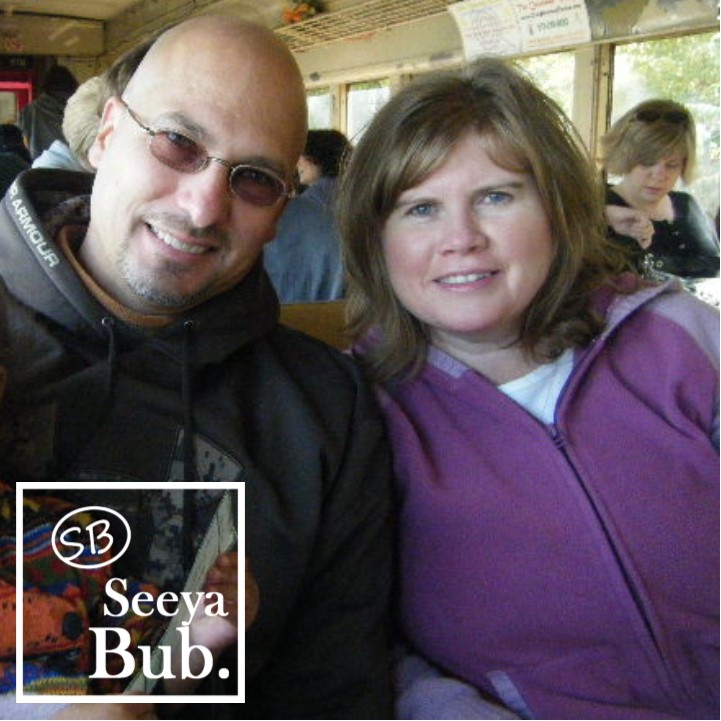
Mom and Dad on BusDad, I always pictured you growing old with Mom. I knew you would make a tremendous Grandpa, but just as importantly I know that Mom will be an amazing Grandma someday. I hate that you didn’t get to enjoy this chapter of life here on this Earth with her. But I know that you are so unbelievably proud of her as you watch how she’s handled the troubles of this life without you. I know that you are watching over her each and every day. She is lucky to have such an amazing guardian angel. It doesn’t change the fact that we would rather have you here with us, but it does make life easier to handle knowing that, someday, we will all be reunited—a family again. Although we don’t have you here with us, we will always cherish and hold near to our hearts the memories that you gave us. You gave us so many. Thank you for always doing that. Thank you for being a wonderful Father, and thank you for choosing the best Mother any kid could ever hope for. Until we get to relive those wonderful memories together again, seeya Bub.

“Listen, my son, to your Father’s instruction and do not forsake your mother’s teaching. They are a garland to grace your head and a chain to adorn your neck.” Proverbs 1:8-9 (NIV)

MomBecky Bradshaw

Becky is Ty’s Mom. She works at Envision Partnerships in Butler County, Ohio, specifically working with substance abuse and driver intervention programs that keep our communities safe. She is involved at her church, and loves spending time with her dog, Sadie.


Just Talk

When I spoke in public, I rarely stood behind a podium. I’m a roamer. I’m pretty animated and I like to have free range of the stage.

But on this particular day, I had never gripped a podium more tightly in my entire life. My knees were buckling and my legs felt weak, and I had a white knuckle grip on the lectern to prevent myself from collapsing. I felt like I could fall over at any moment because every time I looked down from that particular podium, I didn’t see the 500 faces in the audience.

Instead, I saw a casket. A casket which carried my Dad’s body.

It was Monday, July 29, 2013—the day of my Dad’s funeral.

I wanted to speak at the funeral, even though every physical sign told me that I probably shouldn’t. I hadn’t been able to eat regularly since finding out my Dad was dead. My nights were tormented with sleeplessness and nightmares, reliving the sights and sounds of that tragic day. A short time standing caused me to feel lightheaded. My body reflected the way my mind and my heart felt—everything was completely broken. But I knew I had to speak.

Since college, I had overcome a fear of public speaking that had once paralyzed me. In high school, I dreaded public speaking. My hands would shake and my voice would quiver. Thank goodness for Miami University and an amazing public speaking professor named Carol Shulman. She gave me the confidence I needed during each and every class, even entering me in a public speaking competition where I had to present to a jam-packed auditorium on campus. In my first year of college, I grew to love any opportunity to speak in public. It became my modus operandi. I loved it. I craved it.

But on this day, I despised it. I would have done anything to avoid it.

Even the best college courses in public speaking don’t always prepare for the magnitude of speaking at a eulogy—especially for a parent. I knew that, if our lives had played out naturally, I would someday have to pay tribute to my Father after he passed. But I never imagined I would be delivering his eulogy before I hit the age of 30. I imagined I would be old and gray (hopefully not bald like my Dad), delivering a tribute to a man who would live into his eighties or nineties. But life didn’t play out naturally. Everything about this moment was unnatural. Real life, but completely unnatural.

I knew why I was speaking. I wasn’t going to the pulpit in an effort to console people, because I was hurting too much myself to do that. I wasn’t going to the pulpit to answer anyone’s questions about why this had happened, because I was struggling with those same questions and still am today. I wasn’t going to the pulpit that morning for any reason but this—I wanted to honor my Dad. I wanted to tell him I loved him, even though he wasn’t there to hear it. I wanted to say thank you for all the times he had sacrificed for me and loved me when I didn’t deserve it. I wanted to say thank you to a man who had given me everything and who had exemplified every aspect of strong fatherhood.

My motivation was clear, but my notes weren’t. Actually, they didn’t exist. For better or for worse, I decided to go to the pulpit that day and speak from the heart. I attempted to sit down and map out my thoughts many times, but I just couldn’t do it. I would sob uncontrollably every time I thought about having to deliver his eulogy. It seemed impossible—mainly because I didn’t want to admit that I would have to say goodbye.

But how do you prepare to eulogize your Father? I might have been prepared if he had died at a ripe old age of natural causes, but in the blink of an eye at a beautiful season in his life, my Father was tragically and suddenly gone. I couldn’t prepare for his death, and as such, I couldn’t prepare for his eulogy. I’m not saying it’s easier to give a eulogy in particular circumstances—saying goodbye at any age is no fun at all. But I envisioned something like this happening many years down the road. I knew I would eventually have to say goodbye to my Dad—but not when he was 50 and I was 26. That just didn’t seem right. Again, it felt unnatural.

But deaths rarely seem right or natural. In fact, they usually always seem wrong. And they should. We should desire for Eternity. God has put that longing in our hearts. But in an imperfect world, we try and take horrible messes, with God’s hand over us, and turn them into something useful.

I hoped I would be able to do that at my Dad’s funeral.

Flanked by my cousins, I made my way to the front of the church. I walked up the carpeted stairs in the dimly lit sanctuary, with a chorus of sniffles behind me from the family members, friends, coworkers, and loved ones who had come to say goodbye and support my family. Everything in my line of vision seemed somewhat blurred. I didn’t feel like myself. I was living a life that was now mine, but my mind refused to accept it.

I was able to give a somewhat coherent eulogy, telling a few stories about my Dad’s humor and thanking the people who had loved him over his life and who had loved Mom and I when they heard the news of his death. I don’t remember much of what I said that day, but I do remember feeling like God was calling me to say something to the folks who had gathered to say goodbye to my Dad. I didn’t know who or what, but I knew there had to be people gathered in that church—just like my Dad—who were suffering from mental illness or depression but were just too ashamed or too embarrassed to ask for help. I didn’t want my Dad to have to be the sacrificial lamb, but I also didn’t want him to die in vain. Although I would have done anything to have him back, I wanted his death to be a reminder that mental illness is a really, really debilitating disease. And I wanted people to know that their fate could be different.

“Just talk,” I said. “If you’re suffering or if you’re hurting, just talk to someone. To anyone. You don’t have to suffer like this.”

It wasn’t profound, but it was heartfelt. A heartfelt plea to anyone sitting in those pews who, like my Dad had done for so long, put on a mask to try and hide their own depression, anxiety, and fear. I wanted those people to see a heartbroken family torn apart by a disease that can be treated but often isn’t. I wanted those individuals to feel compelled to fight back against the dark thoughts they might have. I wanted those individuals to live a different ending than the one that stole my Father.

Oftentimes, the best solutions are not the profound ones, but instead are the solutions that are so simple we often don’t do them. And when it comes to fighting mental illness, we all just need to talk.

We need to talk about how we are feeling. We need to ask for help when we need it—both from friends and professionals. We need to talk about what we are feeling, no matter how irrational, without fear of embarrassment or shame.

One of the best weapons in the fight against suicide is talking to someone when we are feeling suicidal. And although we know this and acknowledge its truth, it’s often much more difficult for us to live this out.

I don’t pretend to have a crystal ball, and I’m not naïve enough to believe that had my Dad simply talked that everything would have been different. I simply don’t know the answer to that question, and I never will. But I know this:

It couldn’t have hurt.

It couldn’t have been any worse than how it ended.

It might have been different.

I pray that I never experience another tragedy as heartbreaking as the death of my Father because it has completely torn me apart. There have been sleepless nights where I can’t quit thinking of him, and sleep-filled days where I’m so paralyzed by hurt that I can’t function normally. There have been moments of regret filled with a desperate longing to talk with him just one more time. I miss him more and more every single day.

So today, and in everything that I do, I’ll honor the talkers. The people who aren’t afraid to come forward and say “I need help,” “I’m hurting,” or “I just don’t understand.”

People like Prince Harry. Yes, that Prince Harry—the royal one. It’s fitting that I’m writing this post as a Dateline episode plays about the death of Harry’s mother, Princess Diana. I remember watching the news coverage with my Mom when I was a young boy. I remember my Mom’s sadness, and I remember watching those two little boys at their Mom’s funeral—not knowing someday I would experience a similar pain of tragic and inexplicable loss.

Diana’s death was the impetus of a very dark period in Harry’s life—a period that has gone on for 20 years. Diana died 20 years ago when Harry was only 12. Now, at age 32, he’s just beginning to talk. But he’s talking nonetheless. And he’s inspiring millions.

A recent article in USA Today recapped an amazingly candid and recent interview when Harry began to talk about his own struggles with mental illness spurred by his mother’s death. Here’s an important excerpt from the article that I’d like to share with you:

“I can safely say that losing my mum at the age of 12, and therefore shutting down all of my emotions for the last 20 years, has had a quite serious effect on not only my personal life but my work as well,” Prince Harry said. “And it was only three years ago — funny enough — from the support around, and my brother and other people saying that, ‘You really need to deal with this. It’s not normal to think that nothing’s affected you.'”

Harry said instead of processing his grief for The People’s Princess, he stifled his emotions.

“My way of dealing with it was sticking my head in the sand, refusing to ever think about my mum, because why would that help?” he shared. “It’s only going to make you sad; it’s not going to bring her back. So, from an emotional side, I was like ‘Right, don’t ever let your emotions be part of anything.’ So, I was a typical sort of 20, 25, 28-year-old running around going ‘Life is great’, or ‘Life is fine’ and that was exactly it.”

Harry said that when he began having the conversations he previously avoided he began to understand, “‘There’s actually a lot of stuff here I need to deal with…’”

“It was 20 years of not thinking about it and then two years of total chaos,” Harry recalled. “I just couldn’t put my finger on it. I just didn’t know what was wrong with me.”

Harry also revealed he’s “probably been very close to a complete breakdown on numerous occasions” which he attributed to “all sorts of grief and sort of lies and misconceptions” that come with his royal title and public platform. He said during his trying years he began boxing, which he shared “really saved me because I was on the verge of punching someone, so being able to punch someone who had pads was certainly easier.”

During the interview, Harry said he is now “in a good place” and seemed grateful that he was finally able to process his mother’s death in a healthy way.

“… Because of the process that I’ve been through over the last two-and-a-half to 3 years,” he said, “I’ve now been able to take my work seriously, be able to take my private life seriously as well, and be able to put blood, sweat and tears into the things that really make a difference…”[1]

I commend Prince Harry for what he’s doing, especially his founding of a mental health advocacy group called Heads Together. But more than the public work he is doing, I am thankful that he is vulnerable enough to share his own story. It’s making life easier on a lot of people, and it’s making me feel even more normal as I continue to grieve for my Father.

When you’re a Prince, I would imagine people of many expectations of you. Expectations of perfection. As a Prince, everyone’s eyes are constantly on you and they are expecting you to make the right step, every step.

But Prince Harry is giving the rest of us the freedom to make mistakes when we grieve. I’ve said it numerous times, but there’s no manual on how to grieve because everyone grieves differently. Because there’s no manual, there’s also a strong likelihood that those who grieve won’t get it right every single time. Prince Harry’s story proves that.

And he’s also proving that when we talk, we begin to heal.

Prince Harry’s story reinforces an important point that has helped me come to terms with my own Father’s death: Depression is an illness that can invade our lives at any point, even when things are seemingly perfect.

Imagine the life that Prince Harry most likely leads. As a member of Britain’s royal class, there’s never a concern about money. Want a vacation? You can take one. Anywhere at any time. Want to buy a car? Why stick with just one when you could buy 47? You have influence over anyone. Unmistakable power and fame. Every material thing that most people dream of is right at his fingertips. And you can walk around in a crown and no one will think you’re dressing up. They know you’re a prince. And I’m sure they treat you like one.

But in the midst of a seemingly happy existence, there is a level of grief and depression that invaded Prince Harry’s life because he bottled up his emotions. No matter what cultural definitions of happiness were met, “sticking his head in the sand” led to a place of darkness and inescapable grief. Depression, then, has a unique and extremely frightening way of clouding and contorting our lives into something that seems completely overwhelming.

That is, until, he began to talk.

Once he began to talk, he began to be freed from the tight grasp depression held on his life. The stranglehold was loosened. And it probably saved his life.

I don’t fault my Dad for his death—I never have. My Dad suffered from a terrible disease that took over his mind, clouded his thoughts, and made the worries of this life seem inescapable. I would never blame him for his death, but that doesn’t mean that there aren’t things I wish we could have changed about this experience. I would give or do anything to change the outcome of that fateful July morning. Chief among those? Just talking with my Dad in the hopes that he might talk when he needed help.

Whether it was fear of embarrassment or trying to attain an unattainable societal expectation of perfection, my Dad couldn’t bring himself to talk about his struggles with depression. He did exactly what Prince Harry has admitted to doing. He bottled up his feelings. He stuck his head in the sand. He felt that showing weakness wouldn’t have helped. And I hate that, in his final moments on this Earth, he probably felt more alone than anyone.

I wish there was more I could’ve done. And ultimately, I wish I had done more to encourage him to talk.

But now, I’m in an unfortunate but redeemable place. It’s too late for me to talk to my Dad and encourage him to talk. He’s no longer here. So, instead, I am trying my best to encourage others to talk. In a sense, it’s my way of trying to change the lives of others, since I can’t change my Dad’s. I may not have the influence of Prince Harry, but I’m not concerned with numbers here. If I can impact one person—just one person—and encourage them to talk with someone, it will all be worth it in the end. If I can change one life, I will have made the difference God is calling me to make. We will suffer, yes—but we are never expected to suffer alone.

My Dad’s funeral was over three years ago, yet I find myself saying the same thing now that I said that day:

Just talk.

To someone.

To anyone.

About anything. And any feeling.

Because you matter. Your life matters. And you are loved.

But please, for your life and the lives of those who love you…just talk.

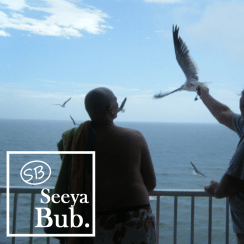
Dad at Beach with SB LogoDad, I wish each and every day that you were here with me still. I wish that I could hug your neck. I wish that I could ride in the truck with you. I wish, each day, that I could hear your laugh again. But more than anything, I wish I had done more to help you feel like it was okay to talk. I wish I had encouraged you, even forced you, to get the help that you deserved. In lieu of being able to tell you that now, however, I’m trying my best to use your story to save other people. I’m trying to do what you always did—help those who are down on their luck and need it most. Dad, you may not be here with me, but I hope you know that your story is making a tremendous impact. I can’t wait to just talk with you again. Until that day, seeya Bub.

“Not only so, but we also glory in our sufferings, because we know that suffering produces perseverance; perseverance, character; and character, hope.” Romans 5:3-4 (NIV)

[1] https://www.usatoday.com/story/life/2017/04/17/prince-harry-talked-about-his-grief-following-princess-dianas-death/100556842/

Birthdays & Big Days

Yesterday, I hit a milestone…and I hit it begrudgingly.

I turned 30.

I say “turned 30” because “celebrated my 30th birthday” doesn’t properly capture my emotions towards this momentous occasion. It doesn’t properly reflect the terror I feel in my heart. The terror that…like my Father….I might start losing my hair at 30. Not to mention all the other age-induced physical changes one goes through as they get a bit older.

When people ask me if I’m turning 30 and I sadly tell them that I am, they often gush and glow and tell me that my thirties are going to be the best years of my life. They tell me this because their thirties must have been great….and most of the time they aren’t in their thirties anymore. I guess I would think my thirties were pretty darn great if I was sixty. And hairless.

I know, I know. I should be really, really, really grateful that God has blessed me with an amazing thirty years. And that he’s given me a mostly healthy life so that these years will likely continue to accumulate. I am thankful for those things, and I guess that it’s mainly vanity that is keeping me from turning 30 with a smile on my face.

Vanity, yes, but also the fact that every year that passes on is a year spent without my Dad.


My Mom and Dad always made birthdays a very exciting time around our house. Part of this good fortune was likely a result of my only child status, but most of it likely came from the fact that I just had really awesome and amazingly thoughtful parents. I look back on my life and I’m thankful for this: I never had to think about whether or not my parents loved me. I knew they loved me. And they showed it every single day. But birthdays were extra-special.

I remember the birthday parties as I was growing up. A handful of my friends would always join us for a special day, and Mom did most of the planning and execution, but Dad was always there to help and have fun. Some years it involved a trip to a fun spot in our town, like Discovery Zone or Sports Zone. We would chow down on pizza, play arcade games, and run through tunnels and ball pits until our socks wore out. Other times, my parents would turn our backyard into a fun zone all its own, with Mom cooking lots of food and Dad setting up games or piñatas for everyone to have fun with. No matter the locale, it always felt like a special day; and all the while, my parents never failed to tell me they loved me.

I remember the elaborate gifts that my parents would buy for me. Like the year they purchased me a Sega Genesis (every 90’s kid is reading this and saying the “SEY-GAAAAA” jingle). I played Sonic & Tales and Aladdin until my eyes crossed. There was the year I got a CD player for the first time…and I thanked my heavenly Father that I would no longer have to rewind cassette tapes anymore! Okay, I am really starting to feel older than 30 now…

There was the year that my Mom and Dad had bought me a bike and stowed it at a neighbor’s house for safe-keeping until a surprise gifting planned for later that night. Already having dressed for dinner, I sat in the living room in front of our windows waiting for my Mom and Dad to get ready. Suddenly, I saw my Dad hoofing it across our front lawn, pushing a flashy new yellow and blue 21-speed Mongoose. I pointed out the window and looked at Mom with a quizzical face, saying “Hey Mom, am I going crazy or did I just see Dad run across the front yard with a bike? Is that my birthday present?!”

Mom and Dad had a brief “discussion” about how he should have brought the bike over sooner and how he shouldn’t try to hide a surprise by running it in front of our huge front windows, but it was eventually confirmed that, yes, the bike was mine. I remember running my hands across the sleek new frame, grasping the stiff and unused brakes, and pedaling up and down the street where we lived before Mom told me we absolutely had to leave for dinner right then. She promised me I could ride the bike when I got home, and I remember riding the bike that night as Mom and Dad sat on lawn chairs in our front driveway, making sure I got off the bike and stood in the grass every time they saw headlights. That bike and I traversed the trails of Rentschler Park hundreds of times of the years, and it eventually came to Oxford with me, helping me get from class to class and back to my apartment. It was a special gift. Special, and also built tough—I still have it, and it still looks brand new. My Dad always had a knack for picking out high-quality, durable, and usually brand-name gifts. Unfortunately, I’ve inherited his taste for nice (and more expensive) things.

As birthdays accumulated, the childlike whimsy and fun that I remembered was always harder to recapture—but my parents always did everything they could to try and make me feel special. Mom always offered to cook my favorite meal and make me a cake or dessert that I enjoyed. The favorite tastes of my childhood, especially my Mom’s cooking, always have a way to bring me back to a happier place. Both of my parents would always make sure they wished me a happy birthday before I left the house that day, each giving me a big hug. Some years we would go out to a nice restaurant, like the year we went to the Montgomery Inn Boathouse in Cincinnati. And they kept buying me gifts—like the year I turned 18 when they helped me buy a brand new set of golf clubs. The gifts and the meals were nice, of course, but they never outranked the importance of having a wonderful set of parents to celebrate with.

It’s hard for me to think about those great birthdays of the past without thinking of how hard it is to celebrate in a new way now. Without my Dad, it’s just harder to smile on my birthday.

This is my fourth birthday without my Dad being here with me. This is my fourth birthday without having him give me a hug and telling me that he loved me. This is my fourth birthday without receiving a text from him, usually in all caps, that reads “HAPPY BIRTHDAY BOY”. This is my fourth birthday without seeing him at my birthday dinner and sharing a cake or dessert together. My fourth birthday without a card that he thought was funny and without a laugh as he told stories from when I was little.

Birthdays just aren’t the same without my Dad, and there are lots of big days that aren’t the same without him. When I graduated from Miami with my Master’s degree, I was excited to have my family cheering me on in the stands, but I was so deeply saddened that Dad wasn’t there to watch. It was really hard to stop thinking about him that day, no matter how hard I tried to put on a brave face. When I got my current job at the Oxford Campus, I really wanted to call him and tell him all about it and hear his encouragement over the phone. I constantly wish I had the opportunity to introduce him to my girlfriend, but I can’t. There have been so many big moments that I haven’t been able to share with him. It’s amazing how your hurt can simultaneously be filled with happiness and hurt in those moments. This complexity is brand new for me, and it’s hard to understand.

There are big days coming in the future—big days where I know his absence will be even more profound. I think about getting married and not having him sitting in the first row with a big smile on his face. As happy as that day will be, it will also be terribly hard for me because he should be there. He should be there to talk to me right before the wedding and tell me all the important truths he’s learned about marriage. He should be there to tell jokes about how he thought this day would never come. He should be there to dance foolishly and laugh with all those in attendance. But he won’t be.

I think about big games and events that I’ve announced. My Dad was always there for those types of things, but he isn’t there to cheer me on anymore. He isn’t sitting in his typical seat at Foundation Field when I announce. He isn’t there taping and recording games that I’ve broadcasted, showing them to people and telling them how proud he is. My Dad was my biggest supporter, my best cheerleader. But he’s not here to do it anymore.

And of course, I think about having children. If you knew my Dad, you know he would have made a tremendous Grandpa. I can’t begin to tell you how much he was loved by kids of all ages. He was goofy and playful and hilarious. He knew how to make people smile, and he never tired of playing with children when he knew they were having fun. I struggle with this one the most. My Dad deserved to be a Grandpa. He deserved to have a set of little feet run up to him and wrap their arms around his shins. I can’t imagine my Dad being an even better Grandpa than he was a Father—but he would have been. But he won’t be now.

There is a sense of finality that is terribly painful as every year moves on. There are times when I can think about him and smile, but there are just as many moments when I think about his absence and all I can do is cry. As a Christian, I am thankful that I know I’ll be reunited with my Dad in Eternity—but it doesn’t erase the pain I feel right now from our temporary separation.

Since Dad’s death, my “big moments” in life have taken on an entirely new complexity. Those moments that should be happy are often constant reminders of the person who isn’t there anymore. Those big moments signal a new chapter in life, but it’s tough to come to terms with the fact that those new chapters are missing a very important character.

But I’m also reminded that even though he isn’t “here”, my Dad is still with me in these big moments—and he always will be. I can eat birthday cake until I’m sick and laugh because my Dad taught me to enjoy life and eat every piece of cake that is put in front of you. I can show my love for another person because my Dad taught me how to put the needs of others before my own. I will someday have the ability to be a good Father because my Dad taught me how to love unconditionally and parent with a purpose. My Dad isn’t physically here with me anymore, but I try and live the way he did—and in that way, he’s still here. And he always will be.

There are some things that I may have inherited from my Dad that I will gladly surrender—chief among those being the gene for hair loss that begins at the age of 30. But I’m proud to be Scott Bradshaw’s son. I’m proud that he taught me how to overcome life’s biggest trials and tragedies. I just wish I didn’t have to lose him to test those skills.

The little moments without him hurt, but so do the big ones. I will continue to live my life, even though I’d rather live it with him here. I’ll continue to blow out the candles on my birthday, wishing more than anything that he could come back. I will continue aging with grace, just like he always did. And I will continue to vigorously and nervously apply copious amounts of preventative Rogaine, because, after all, I will always be my Father’s Son.

Birthday Photo with SB LogoDad, A birthday just isn’t a birthday without you here to celebrate. I often think about the great jokes you would have had worked up for me now that I’ve turned 30. I guarantee that there would have been some hair growth treatments involved—you should know that better than anyone. As painful as it’s been to blow out the candles on a cake without you for the fourth year, I’m thankful that I got to spend 26 wonderful birthdays with you here. You always made birthdays so special for me, and I’ll always be thankful for your unbelievably fun-loving attitude towards life. You have a new birthday in Heaven now. One that represents the start of your eternal life in paradise. As much as I hate aging, I’m thankful that with every passing day I’m one step close to hugging your neck again and telling you how much I’ve missed you. I long for that first hug, because I know it will be even better than the last one we shared. We are going to have a lot of birthdays to catch up on! And I can’t wait to tell you about every day that you’ve been gone. You’ll always be here with me, even when you aren’t. And I’ll always be grateful that on this day 30 years ago, I received one of the greatest birthday gifts God could ever give me. The gift of loving parents, and a Father who made life worth living. Thanks for giving me life, and thanks for always adding love to it. Until I can thank you in person, seeya Bub.

“It is beautiful how God has done everything at the right time. He has put a sense of eternity in people’s minds. Yet, mortals still can’t grasp what God is doing from the beginning to the end of time.” Ecclesiastes 3:11 (GW)

Hi Meggie: Guest Blog by Megan Turner

Ty: “Quit wooking at me!” was all she ever yelled when we were little. I must have heard it a thousand times, but we always kept looking.

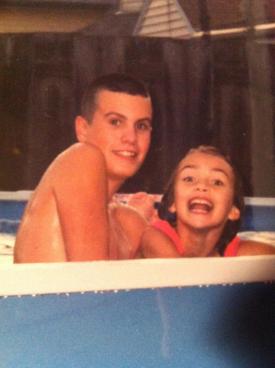
Megan and Ty in PoolShe is my little cousin, Megan—and she’s more than a little cousin. I’m an only child. I always imagine that my parents took one look at me when I was born, realized they couldn’t possibly create another child as perfect and naturally adorable, and abandoned their plans for any additional little ones. Hey, at least I said I imagined it…

Although I grew up without any technical siblings, I was blessed with my cousin Jake when I was four. The son of my Aunt Beth and Uncle Lee came into the picture, and I immediately took a liking to him…which is not easy because I was constantly obsessed with how ginormous his baby head was.

Jake must not have been perfect enough, because his parents decided to give him a sister, and that’s when Megan came into the picture. I remember thinking she was always so cute, and our family constantly told her that even though she would constantly yell at us as a youngster and tell us to “Quit wooking” or looking at her.

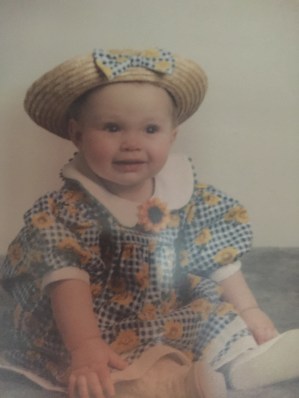
Megan's Baby Photo

But no matter how loud she yelled, my Dad never quit looking at her because she was always so very special to him. I think that Megan was the daughter that my Dad never got to have. She was always a really playful child, and my Dad loved that about her. He had an uncanny ability to make children laugh, most of the time as he made a complete fool of himself, and Megan was no exception. I still have so many childhood memories that are flooded with the sound of Megan’s laughter as she watched my Dad do something ridiculous.

And I also remember Megan’s tears on the day she found out that he was gone. I remember her trying to simultaneously comfort my Mom and I while grieving herself. And I remember, in those moments, looking at a young girl that I was tremendously proud of and watching her mature in the midst of a terrible tragedy.

When Megan sent me an essay that she had to write in one of her college classes about a life-changing experience, I was moved to tears as I read. It reminded me that I lost a Dad, but in losing my Dad there were also many other people who lost someone special to them—a husband, an uncle, a friend, a coworker. My Dad is no longer here, and neither is Megan’s uncle. Her words remind me that we all lose when we lose someone special, and that we all suffer uniquely and in our own way. And thankfully, God puts the people in our lives that we need most to carry us through the storm.

Megan Jake Ty and Dad at Beach


Megan: I never imagined, at the age of eighteen, my small, extremely close family could change so drastically, in one day, so unexpectedly. It was summer, around the end of July. I had been driving around with my Dad all that morning and everything seemed fine. Little did I know that day was getting ready to completely turn for the worse.  I was about to receive some horrible news about someone I dearly cared for. Though I thought my Uncle Scott was one of the happiest men around; I was not completely aware of what he struggled with, as well as what several others do too. Never assume that just because someone is outwardly happy that they are not struggling with something bad on the inside.

As I got back into the car from receiving an important job, I knew everything was about to go downhill and change right away. I buckled my seat belt and as I glanced at my Dad, I saw he had the saddest look in his eyes.  I knew something was not right at that very moment. My Dad was a tough, strong, hardworking man that never showed any signs of weakness or sadness. This time it was different; he had tears running down his face.

“What’s going on Dad?” I instantly said to him.

“Megan I have something I need to tell you,” my dad replied “Something really bad happened a little bit ago. Uncle Scott attempted to take his own life, and they weren’t able to save him. He’s passed away.”

I could not believe what I was hearing. “What do you mean passed away?” I could not even imagine my outgoing, always happy, funny Uncle Scott doing something like that.

“Honey, your uncle Scott has been suffering from depression for a while now. I know he never showed any signs, but the past few weeks he has really been in a depressed state.”

I did not want to believe a word I was hearing. There are a lot of things in life I do not quite always understand, but this was something I knew for the rest of my life I would never understand. We instantly started driving to my Aunt’s house where all my family was waiting for us.

While the sun was shining warmly on my face through the window on the drive there, a handful of memories were rushing through my mind. Every time I would see my Uncle, the very first thing he would do is give me a huge hug and smile, saying, “Hi Meggie, how are you?” How was I going to be able to go to family events and be around my family not being able to hear those five words every time like I always did? Right away I began to think about all the memories I shared with him. My Uncle Scott was adventurous and always up to doing something. A few summers before, he spent hours and hours with me at the pool teaching me how to dive. I continued to get frustrated every time I could not get it right, but Scott never gave up on me. He pushed me and told me to try again, and eventually, I was able to do a dive in the swimming pool just like he had shown me. There were so many things he was talented at. He had a huge heart and would do almost anything for anyone. He was a hard worker who could fix almost anything, enjoyable to be around, great with animals, and most importantly a huge part of our family.

When we finally got closer to my Aunt’s I could not even think straight about how upsetting everything was getting ready to become. There were quite a few cars parked around the street. I noticed my Mom was there, as well as my Grandparents. As I got out of the car, I saw my Grandpa standing there talking with a detective. My skin, right away, had chills going down my arms as I realized that something terrible like this really just happened.

I rushed into the neighbor’s house, where my Aunt was at the time with my Mother and Grandmother. I dramatically threw myself in my Aunt’s arms, with tears dripping down my face. She held on tight, squeezing me tighter every few seconds and whispered in my ear, “I love you so much, Megan.” My heart started beating faster as the tears from both mine and my Aunt’s eyes continued to tremble down our faces. As my Brother approached us, while standing there, she grabbed him close to her and I both, and the tears began coming out faster. “Your Uncle Scott loved the both of you so much and don’t ever forget that. He thought the absolute world about you.”

Walking next door to the house that my cousin Ty lived in, I could not put the puzzle pieces together in my mind that this tragedy in my family really just happened. What were we going to do the next time we gathered for family events and without him there? How were my Aunt Becky and cousin going to be strong enough to get past this? How was I going to be able to hold up at his funeral?

I never imagined seeing my cousin the way I did. His face was pale, and he sat on the couch as if he was deer in headlights. Only blinking a few times every minute, he had nothing to say. My cousin was just as outgoing as my uncle and always had a smile on his face. This time it was different. It seemed as if a different person was inside my cousin. Sitting in the living room for hours and hours letting it all sink in was the most hurtful and painful thing my family had to do.

Time has gone by now and the thought of my uncle no longer being with us crosses my mind first thing every morning and last thing every night. The day was here that I was dreading all along. It was the day that my family and I gathered around and had to set up the arrangements for the devastating loss of my wonderful Uncle Scott.

That was one of the most challenging days my family and I had to face with one another. Nothing about it was easy, and the thought of that day crosses my mind over and over again. Death is a very common thing that everyone goes through at some point in their life, several times. Everyone handles the death of loved ones differently. It is important to be close to those that you love and care for, and know whether or not they are struggling inside with something. Depression is a very common disorder that many people have and face on a daily basis. It’s important for those to get help and see the doctor when they are feeling that way. Never believe that you could never lose someone that you love unexpectedly. Cherish the memories you share with the ones that mean the most and always be there for your family. This day was a very difficult day for my family and I that we all still deal with the pain of my Uncle being gone every day. My Uncle Scott was a strong man that could not fight any longer. He is an amazing man that is truly missed by so many, and I’ll never stop loving him.


Ty: I knew that I wanted to speak at my Dad’s funeral, but I didn’t know if I could. I tried numerous times to write down notes in the days leading up to the funeral, but every time I sat down my mind would fog or I would start sobbing uncontrollably. I wondered if I’d be able to give my Dad the proper eulogy that he deserved.

I remember talking with my Grandpa and him asking me whether or not he thought I would be able to speak. I told him that I was going to try, but that I honestly didn’t know if I would have the strength or the emotional stability.

And then, he told me “I’ve talked with Jake and Megan, and if you’d like, they would like to stand next to you at the pulpit when you speak.”

Immediately, I felt a new sense of courage. I wasn’t going through this alone. I was suffering with people who loved me. I was suffering with family members who were heartbroken, too. I was suffering with two individuals that I loved like a brother and a sister. Two very special people who would be there next to the pulpit.

And if they were there to suffer with me, I knew they would also be there to help me heal.

They weren’t leaving. They weren’t going anywhere. I was never in this alone, even though my Dad’s death made me feel so lonely.

Megan and Ty EasterI don’t remember everything I said that day at my Dad’s funeral, but I remember turning to Jake and Megan, telling each one of them how proud I was of them. I’ll admit, I don’t often do that enough to those I love, and I’ve been trying to do it more ever since my Dad’s death. I am tremendously proud of them for the love and care they showed to my Mom and I when Dad died. In that tragedy, Megan grew from a little girl to a courageous young woman. She still grieves, like we all do. She is still suffering, too. But her experience reminds me that although we suffer uniquely, we never suffer alone. There will always be someone there, even in the moments where it doesn’t feel like it, to stand next to you when you can’t stand on your own.

She doesn’t yell at me anymore, but I’ll always be “wooking at her” with the admiration of a proud big cousin brother.

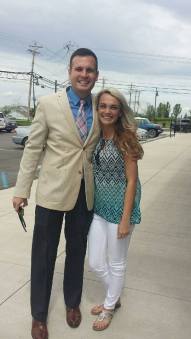
Megan and Dad with SB LogoDad, You would be so proud of the young woman that Megan has become. I know I am. She is intelligent and beautiful and caring—all the things you valued in life. I know you are watching over all of us and smiling, but it just isn’t the same without you here next to us. Family get-togethers just seem to lack the same fun and excitement that they had when you were at them. We all lost a piece of our heart when we lost you on that July morning, but we’ve never lost your memory. I pray that every day, God will help me live the type of life that you lived, and I pray that I can treat my family with the same amount of love and dedication that you always did. We miss you terribly, and until we are all together again, seeya Bub.

“My health may fail, and my spirit may grow weak, but God remains the strength of my heart; He is mine forever.” Psalm 73:26 (NLT)

Megan TurnerMegan Turner

Megan is Ty’s younger cousin, and she currently works as a medical assistant at the office of an Allergest. Megan enjoys watching sports, being outdoors, and spending time with her family. Megan is currently planning to return to college to pursue a degree in Special Education, as one of her passions is working with the mentally and physically impaired.

The Bench

I don’t think I had ever smelled so bad, felt so tired, or been so dirty in my entire life. If this was what home ownership was all about, I was ready to sell.

I had just purchased my house about a month earlier, and although the inside just needed some fresh paint without any major renovation, the outside was a completely different story. Standing there with sweat dripping down my brow, I knew I had grossly underestimated the amount of yardwork that needed to be done, or I had overestimated my ability to be a green-thumbed workhorse.

The list of things that needed to be done was both exhaustive and exhausting. Cut the grass and spray for weeds. Cut down numerous overgrown trees and shrubbery. Pull the layer of weeds that had almost created a natural green carpet covering over the large brick patio. Pull more weeds from all of the flowerbeds, which were many. Take out some of the flowerbeds to prevent me from having to pull that many weeds next time. Pray that there were no snakes inhabiting any hidden areas in the yard (that prayer was not granted). My yellow legal pad ran over with chores to complete. I wondered if I would ever get to complete them before I paid off the mortgage.

But my real nemesis was the pond. Or at least the hole in the backyard where the pond had once been.

The previous owners of the house had been wonderfully nice people, but their landscaping credentials were questionable. When they inherited the house, they were welcomed by a beautiful tiered pond directly off the back patio. Two small pools resided at the top of a flat-rock covered raised bed, with rushing water flowing into a 15 foot by 20 foot main pond. There were lily pads, Koi fish, and all the other amenities that make a pond peaceful and relaxing. Trees hung over the water, shading the fish as they scurried through the slightly green water. Frogs would croak at night, and birds would bathe by day. I rarely remember seeing many backyard ponds that could match the majesty and naturally-disguised beauty of this one. It rivaled many postcard ponds that I had seen!

In nine years of owning the house, the previous owners never took a liking to pond maintenance (and in their defense, there isn’t much to like about it). Slowly, the pristine nature of the pond gave way to algae and plant growth, and eventually, the owners relented to Mother Nature. They let the pond go—completely. As a matter of fact, I don’t think the previous owners had even touched the interior of the pond for a period of at least six years.

I remember trying to conceal my shocked face when I toured the house with the owners the first time. I didn’t want to let them know that I was appalled by the overgrowth of the pond, but I have the worst poker face in the history of the game. I remember standing at the sliding glass door looking out over the back yard and saying something to the effect of “Wow. This is really bad.” I’m really good at sugarcoating my feelings, if you can’t tell.

“I know, I know…we are so embarrassed!” the owner exclaimed to me. “We just didn’t think it would be as much work as what it was. We hate what it’s become.”

Despite my better judgement and lack of interest in all things landscaping, I bought the house and inherited all the yardwork that came along with it. And to think I was only indebted to the bank for 30 years because of this! The pond was on the top of my list of things that needed to be tackled immediately. But looking at the pond as an owner brought on a whole new level of doubt as to whether or not I could actually make this happen.

I know that people often exaggerate when they talk about the height of plants, but I’m not making this up—the weeds and cattails growing in the pond were taller than I was. A huge root mat at least a foot and a half thick had tangled itself in the bed of the pond. The root mat looked like a 15 foot by 20 foot package of Ramen noodles. It was impossible to pull any one weed. It had to be all or nothing. And in the midst of all the overgrowth, there didn’t appear to be a drop of water in this entire pond.

I can’t take credit for eventually getting that pond back to its original working order. There were two people who helped me get things under control.

The first, to no one’s surprise, was my Dad. While every ounce of my soul absolutely despised yardwork, my Dad seemed to find a quiet stillness and peace when he was working in the yard. The sun was his fuel. Sweat and dirt were his tools. His hands were calloused and dirty, and he wouldn’t have them any other way. Planting, chopping, growing, and maintaining came naturally to him, while complaining, procrastinating, and accusing my Dad of child slave labor were my natural responses to any yard-related chores I was assigned. When I bought the house, Dad didn’t hesitate to jump in and help any way he could—even when it included yard work after a long day in a hot steel warehouse. There were even days when I would find him digging up plants or weeding when I hadn’t even asked him. I was lucky to have a green-thumbed Dad.

The second person to help me with the pond and many of the other chores when I bought the house was my good friend, Steve Adams. I met Steve in 6th grade. We shared a study hall table by virtue of our last names being at the beginning of the alphabet. All throughout high school, we become good friends. Steve and I would often leave school together for an afternoon trip to Skyline for a few coneys, and then make our way to Fairfield Lanes where we would bowl (albeit pathetically) a few games. Over the years, we continued our friendship, playing in weekly poker games and attending Reds’ games as often as we could.

Steve went away for college, but ended up transferring back home and attending Miami at the start of his junior year. Steve was a logical roommate for a number of reasons, ultimate among those being his desire for cleanliness, which honestly borders on the level of OCD. I have never seen anyone keep a cleaner and more organized apartment than Steve Adams. I’m sure that our parents must have thought we had girls living with us because our apartment was so clean, but I can assure you from the multitude of rejections I received from the bulk of the female student body at Miami that that was definitely not the case. Steve would vacuum constantly, clean any surface, and straighten any item that was askew. As a matter of fact, I would often move things around on our kitchen or bathroom counters just to see how long it would take him to put everything back (maybe this kind of stuff is why I was constantly rejected by females). In most cases, it was within the hour that he had returned everything to its original place. Unbelievable.

Steve eventually graduated, got a job as an engineer, bought a house, and kept it as clean as it was the day he moved in. Fortunately, his house was just down the road from mine, and we were able to maintain a great friendship. Steve and I would usually see each other four or five nights a week, and I was lucky to have a friend as true as him in my life.

Aside from being a clean freak, it’s more important that you know that Steve is one of the most hardworking and genuinely helpful friends that I’ve ever had in my entire life. Steve has an attention to detail that is absolutely remarkable, which has made him an exceptional engineer and a talented DIYer. His methodical approach to his job translates into being able to do a variety of things around his house, from constructing furniture and hanging televisions to remodeling entire rooms and repairing broken equipment. This is a handy trait to have, but it’s even more powerful when you couple it with his thoughtful heart.

We all have one of those “anything you need” friends. The person who will drop whatever he or she is doing to be by your side and help you when you need it. And when I bought my house, Steve was definitely that person. He jumped right in, so much so that I felt guilty for my name being on the deed instead of his. Every night after work without fail, Steve would drive over to my house in a cutoff and cargo shorts, ready to work. He did absolutely everything. He helped me paint. He helped me move furniture. He helped repair things that had been broken when I had tried to do them myself and failed tremendously. He was an absolute life saver.

And when it came to yardwork, Steve had two green thumbs and an unbelievable amount of energy. He often pushed me when I felt like I was too tired to work. He would shake my shoulders and tell me to “man up” and that we had too much to do to sit still. Steve would pull weeds until his hands were raw. He would work in the hot July sun until it set and had completely zapped him of his energy. If there was something I needed to do in the yard, he would do it right alongside me until the job was done. I was lucky to have him by my side.

And on this particular night, to all of our glee, Steve, my Dad, and I were all standing in the nearly weed-free pond with our hands on our hips and sweat covering our faces. It was another brutally hot night, but we were so close to completing the work in the pond that we pushed through. The root mat was so thick and so tangled that we actually had to saw through it with a machete (which my Dad owned for reasons I will never know or understand), hauling out chunks of weeds that weighed nearly 75 pounds. We eventually ended up with two trailers full of weeds from the pond alone. We were proud of the work we had done because it was unbelievably exhausting, but we also knew that the end product—a beautifully glistening pond right on the back patio—would be well worth the time and sweat we invested. We surveyed the pond and the surrounding landscaping, which was full of trees and ornamental grasses as we tried to catch our breath. Then, my Dad pointed at a bare spot just to the right of the upper pond and the rear waterfall.

“Hey boy. That would be a great spot for a bench. It would be a perfect place to sit,” he said.

“Yeah, that would be really nice. Maybe I’ll look for something the next time I’m out shopping,” I replied.

“No, don’t do that,” he said. “I’ll build you something. I’ll make you something really nice.”

It was just like my Dad to promise to build something we could just as easily buy, but I agreed because I knew anything he built would be top of the line, beautiful, and perfectly crafted in every way.

And with the vision of a bench fresh on our minds, we went right back to work. All the while, Steve stood silently and listened to our normal, commonplace conversation. And like he always did, he started pulling weeds right along with us when we started to work again.  Typical Steve—thank goodness.


My Dad never got a chance to build that bench. He died nearly a year from the date that I had bought my house. I felt his absence in every facet of my life, but especially when it came to repairs and projects around the house. My Dad was the handyman, and I was the son who reaped the benefits of having a handyman father. I didn’t know how to build anything. I didn’t know how to fix a dishwasher when it failed to wash dishes. I would go to Home Depot, pick up a “Plumbing for Dummies” book, and ask the store clerk if they had anything that was easier to read. Needless to say, that spot where my Dad had proposed we construct and place a bench would remain vacant until I could buy something…and pray that it was already assembled upon purchase. It saddened me to sit by the pond and reminisce on all the hard work we had put into it, because Dad hadn’t been able to enjoy it long enough. It wasn’t fair. And there were so many nights where I would stand on the shore of that pond where the bench should have been as my salty tears fell endlessly into the churning water.

But one Sunday morning, my tears began to splash into the pond for an entirely different reason. I woke up that morning tired and emotionally exhausted from the day before. Our neighbors, who had also been childhood friends with my Dad, were kind enough to put on a benefit for my family after my Dad’s death. They went to so many businesses collecting items for silent auction baskets, getting more donations than I ever thought would be possible. Hundreds of our friends and families, as well as many of my Dad’s old friends and coworkers, came out to show my Mom and I how much we were loved. And even through our desperately painful heartache, we felt their love.

As I prepared to start my day, I went through my familiar routine. I left my bedroom, brushed my teeth, and proceeded to the family room where I would throw open the curtains and survey the back patio and the pond.

But what I saw that day stopped me dead in my tracks.

As I looked out across the water, in the exact same spot my Dad had identified a year ago, sat a beautiful wooden bench.

Steve's Bench

I rubbed my eyes because I thought I was hallucinating. This couldn’t be real.

I threw open the door and ran across the waterfall of the front pond, splashing water into my flip flops. I clambered across the rocks towards the bench with my mouth wide open and tears streaming down my face.

I touched the bench, and it was real. I ran my hand across the smooth wooden armrests. I admired the rich brown stained wood and the tremendous craftsmanship. Precise, functional, and completely perfect—all qualities that my Dad would have put into anything that he had created.

And there, at the top of the bench’s backrest, a beautiful silver plaque was mounted:

In Memory of

Scott Bradshaw

1963 – 2013

I lost all composure as I ran my hands across the engraved words. I wanted the pain that those words inflicted to disappear, but I never wanted to let this plaque or this bench go. I was simply astounded—and I had no idea how the bench got there or who put it on the banks of my backyard pond.

I ran back into the house and grabbed my phone, dialing my Mom’s number. She answered the phone, already in tears herself, most likely anticipating my call.

“Mom,” I sobbed, “How did this bench get here? Who did this?”

She immediately responded, “Steve. I can’t believe this, Ty, but he built that bench by hand. He brought it over yesterday while we were at the benefit.”

Mom and I cried together for a few minutes, talking about how much we missed my Dad. After hanging up with her, I immediately called Steve and, through tears, tried to tell him that I couldn’t believe what he had done.

“You’re so welcome, buddy,” Steve said in his ever-gracious and reassuring tone of voice. Then, he said a phrase that I’ll never forget that captures the essence of his heart.

“I couldn’t let your Dad not fulfill a promise he made to you, so I built the bench in his place.”

If I wasn’t emotional enough at this point, I lost all control when I heard those words. Steve had remembered what was probably an unmemorable conversation we had on a busy day of landscaping work. He had remembered a moment in time and a promise my Dad had made me when even I had begun to forget about it.

I shared with Steve how lucky I was to have him in my life, and how I couldn’t imagine navigating the tragedy of my Dad’s death without his unbelievable support. I thanked him over and over again, and after hanging up the phone I went back outside and took a seat on my new bench.

I sat there looking out over the water with my hands clasped around my mouth, still in a state of utter shock and bewilderment. I sat alone and cried, wishing beyond belief that my Dad could have been there sitting next to me.

He was right all along. It was the perfect spot for a bench.

And then I prayed, and I thanked God. I told Him how much I missed my Dad and how I didn’t understand why he was gone so soon, but I thanked Him for positioning so many amazing, caring people in my life to help support me when I was weak—just like Steve. I thanked God for being able to see down the road much further than I ever could. I thanked Him for bringing us together so many years ago, knowing that I would need someone with his steadfast trust and courage to help pull me from the depths of my own despair. I thanked God for giving Steve a heart that sought after Jesus—a heart that desired to turn God’s words into tangible actions in the lives of those around him. I thanked him for giving Steve both the talent and the compassion to give me such an extravagant gift.

And after saying “Amen”, I did what my Dad would have done. I sat and I enjoyed the sound of pond water rushing over a rock ledge. I admired the glory of a perfect pond-side perch. And I smiled as I admired God’s creation and the heart of His people.


It’s a few years down the road from that wonderful morning, and the bench has some slight signs of typical wear. The stain has started to fade a bit, and the wood has started to age—and I wouldn’t have it any other way.

That bench has character and it tells a story. A story of a friend so true and dedicated that he taught himself to build a bench to help heal a friend’s broken heart. I have no doubt that that bench is exactly what my Dad would have built me, which is another reason why it’s so special to me.

On occasion when I am feeling low, I’ll traipse out onto the back patio and spot the bench—and I’ll know that I just need to sit on it and rest. But I rarely sit there without having a conversation with my Dad. I will talk with him about my day, toss about my problems, and just tell him how much I miss him. He may not answer, but I know that he’s there with me. That bench is a constant and tangible reminder that no matter what his headstone may say, my Dad will always be right here with me.

But of all the things I hear my Dad say when I sit on that bench, more than anything I hear him saying “thank you”. Not to me, but to my friend Steve. A friend who stepped in for my Dad and built a bench to fulfill a promise to a son when he couldn’t be here to do it himself.

I’ll always be thankful—both for a Dad who knew where a bench belonged, and for the friend who built it after he was gone.

Dad Turned Around in Chair with SB LogoDad, I’m so sad that I never got to see you build the bench that would have sat by my pond, but I’m thankful that I got the next best thing. I know how much you thought of Steve and how grateful you were for him being such a good friend to me. I see a lot of your character in my friend Steve. He is hardworking, trustworthy, and caring—just like you. You inspired so many people why you were here with us. I wish you were still here to keep building benches for all the people who need you most, but I’m thankful that God has dispensed his angels here on Earth to carry on where you can’t. One day, I know you and I will be sitting on a bench by the water again, talking about all the wonderful times we shared. But until then, seeya Bub.

“Be devoted to one another in love. Honor one another above yourselves.” Romans 12:10 (NIV)

A Jar of Sand

I opened my desk drawer at work and pulled out a jar of sand.

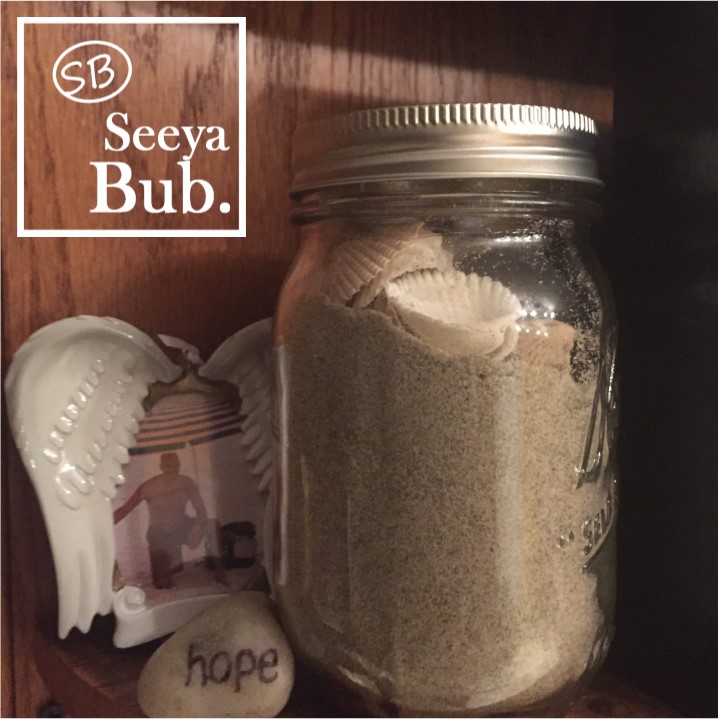
To the outsider looking in, the jar is nothing special. It’s a simple mason jar filled with gray sand. On top of the sand, there rests a handful of seashells. The seashells range in color, shape, and size.

But to me, that jar is a truly cherished possession. A gesture of love and compassion. Something that means more to me than most people would ever know. This unsuspecting jar of sand was a treasure that helped me get through some of the most difficult emotional obstacles of my life.

And it came from a student I’ll never forget.


Swimming trunks? Check. Sunscreen? Check. Shades? Check.

I ran through the list as I had done so many times before, as my family geared up for our summer vacation to Gulf Shores, Alabama. Mom, Dad, and I were heading down to the beach for a week. We hadn’t been in a few years as a family, so we were all looking forward to the opportunity to get away for a week and soak up the sun in our favorite seaside haven.

It was July of 2013.

In a week or so, my family would be leaving for our beach vacation, and we couldn’t be more excited. We all needed a break from the everyday routines we had established, and in my family nothing was more peaceful than parking a chair in the sand along the coast and staring out into the endless waves.

We were anticipating so many great times together in Gulf Shores, and we were also anticipating a very long and very uncomfortable ride in the truck. My Dad’s truck may have comfortably sat four riders, but that was without luggage. But even a family of three should have been able to fit in the truck somewhat-comfortably with plenty of luggage to last throughout the week.

Not my family. Specifically, not my Mom. Although Dad and I were pretty efficient packers, Mom always believed that we should bring anything and everything that we would possibly need or want during that week—and to be safe we should probably bring two of them.

The night leading up to our departure was always interesting, as Dad would try to solve the most complex game of Tetris he had ever encountered—piecing all of our luggage into the back of the truck without obstructing his view out of the rear window. I would always help my Dad as he put the luggage into the vehicle we were driving, and we would both shake our heads and bite our lips when we saw how much stuff we had packed. Dad would typically find at least one thing to grow endlessly frustrated about that my Mom had packed.

“Becky, do we really need to take a gallon sized plastic pitcher with us?” he would yell through the door.

“What am I going to make lemonade in if we don’t?” she would yell back.

Dad would turn around, mumble under his breath about how there were pitchers in the condo kitchen that she could probably use, and then he would do what any good husband would do. He put the pitcher back in the truck and packed it anyway.

But this summer, Dad had his new truck. In an effort to make us all a little more comfortable, he was scouring the Web for a new cap or toolbox he could put in the bed of his truck so we could store all of the luggage in there instead of cramming everything into the cab. Each night, Dad would spend some time looking at the newest name-brand contraptions that would turn the bed of his truck into the premium luggage hauler for our nearly 700 mile drive. He would slowly read things on the Internet, pondering reviews and printing out possible solutions.

He did this all the way up until the night before his death. I would like to think that my Dad was looking forward to that trip. I have no idea whether the suicidal thoughts he would feel the next day had already invaded his mind, but it’s very hard to imagine that my Dad would have been looking at options to increase his packing capacity had he not envisioned going to the beach.

What a great trip it would have been. Dad absolutely loved the beach. We had spent so many summer vacations sitting shore-side in chairs under umbrellas soaking in the sun and admiring what we thought was God’s most beautiful creation. My Dad always seemed to be at peace at the beach. He would lay calmly on a beach towel in the sand as the sun beat down on his back. He would dig holes and build sand sculptures. He would swim out as far as he possibly could into the ocean while my Mom looked on nervously from her chair.

But he was never isolated at the beach. He and my Mom would take long walks along the shore, talking and looking at the sea gulls as they flew by. He and I would toss a baseball back and forth until our arms got tired or we overheated, and then we would jump into the waves and toss a ball there instead. And Dad, always the chatterbox, would make friends with the strangers who had set up camp near us on the beach. He would get to know people from all over the country and learn about their lives. If he met them early on in the trip, he would be sure to get to say hello to them every day of the trip.

Dad just seemed so happy at the beach. It was his little slice of heaven on earth. And I often wonder if he’d still be sitting here next to me today had that trip been a week or so earlier. I can’t help but imagine…


Instead of spending that week on the beach, it was more than a month after my Dad’s death and I was sitting in my office chair at Miami University Middletown, staring aimlessly at my computer and pondering my new life. My work days, when I could actually get the strength to go in, were full of daydreaming, pondering, and distraction. I would try to commit my mind to projects and tasks before the start of the semester, but it was nearly impossible. I could only seem to think about my Dad and how desperately I missed him.

Mom and I hadn’t seriously entertained the idea of going on vacation without Dad after his funeral, even though many people had encouraged us to go anyway as a way to escape the reality of our new life. We both knew that it was just too early to go on a family vacation when we felt like our family wasn’t whole. Going to the beach without Dad was just too much for us to take on so soon. So, we stayed home and eventually tried to get back to normal life—or our new normal. I knew I couldn’t go so soon, and seriously wondered whether I would ever be able to go back again without him.

As I sat at my desk one afternoon trying not to cry, I heard a knock at my office door. It was Gillian Maxfield, one of my campus tour guides and a student I had grown to adore during her time at Miami.

“Hi there, Gillian,” I said, pronouncing her name with a hard “G” (like Gilligan), an inside joke between she and I that traced back to the first time I met her. I had read her name off of a roster of campus tour guides shortly after I took over the role at Miami, and when I pronounced her name the way I did, everyone laughed as she corrected me.

“It’s Gillian! Like with a ‘J’!” she laughed.

“But it doesn’t have a ‘J’,” I said with a look of mock confusion on my face. Honestly, I had never seen that name spelled that way! “It has a ‘G.’ Therefore, I’ll call you Gill-ee-en.

Everyone laughed, including Gillian, and for as long as I worked at Miami I nearly always pronounced her name that way.

Gillian was the type of student that every educator dreams of—resilient, willing to take chances, and always appreciative of the opportunities she was given in life. Gillian came to Miami with a healthy dose of nervousness towards college, but she immediately started to embrace leadership opportunities all across the campus. She started participating in the wealth of student activities that were offered, and eventually joined the student organization that planned all of them. She held a campus job as an administrative assistant in the Dean of Students’ office. She was a dynamic student leader for the new student orientation programs held at the campus. And she became one of my most reliable, dependable, and engaging campus tour guides during her time there—not to mention a favorite for many of the families who came to explore.

Gillian always seemed a little nervous when she started giving tours on a regular basis after I began supervising the tour guides, but she was courageous and took every opportunity she could to improve her communication skills. She did it with great success, because her tour groups would always return from their stroll around campus with big smiles on their faces and plenty of compliments for their guide.

“Gillian was absolutely tremendous! She did a great job!” This was a common refrain from the visitors who would come to our campus. Gillian, always humble and never boasting, would smile, blush, and laugh nervously. She never failed to disappoint.

Seeing Gillian stand in my office doorway shortly after my return to work after Dad’s death was so comforting. She walked around my desk as I rose from my chair.

“I am so sorry to hear about your Dad, Tyler,” she said as she gave me a hug. “I know this must be a very difficult time for you.”

Her words were filled with compassion and generosity. She was always so genuine, and I appreciated this most. We both sat down and talked about how kind and supportive everyone had been during my return, and how I was slowly but surely learning to cope with a new world that my Dad was absent from.

Then, Gillian gave me one of the most genuine memories from that difficult chapter of my life that I still hold near and dear to my heart to this day. Gillian reached into her bag and pulled out a mason jar, handing it to me across the desk.

“I know that you weren’t able to go the beach this summer,” Gillian said, “and I know how much you were looking forward to going with your Mom and Dad. I wanted to bring you some sand and seashells from one of my family vacations as a way for you to remember the good times you had with your Dad at the beach.”

Jar of Sand

I looked at the mason jar as tears filled my eyes. I got up from my desk again, giving Gillian another hug as I attempted (unsuccessfully) not to break down. We sat back down as I turned the jar around in my hand, appreciating the beauty of the seashells and sand in front of me. Gillian was right—having that jar in my hand did bring back so many wonderful memories of the times that my family and I had spent together on the beach. I shared some of those stories with Gillian, and she sat in my office helping me grieve in ways that she never even knew. We talked for a while, and she let me express my feelings with the patience and maturity of someone far beyond her years. As we neared the end of our conversation, I got up to give her another hug as she left the office.

“Thank you, Gillian,” I said, pronouncing her name correctly for the first time in many years. “You have no idea how much this means to me.”


Just a few weeks ago, I was looking at that same jar of sand, yet again with tears in my eyes but for a very different reason.

I sat the jar down on the table, and walked out of my house in a black suit and shirt. After a short drive, I walked into the funeral home. I was there to attend Gillian’s funeral.

Gillian MaxfieldHealth complications had taken her too soon. We hadn’t seen each other in a few years after I left the job at the Middletown Campus, a fact that I now felt very guilty about. It’s so easy to say that we will all stay in touch when jobs or other circumstances change, and I hate that time makes these promises so difficult to maintain.

I used to have such difficulty attending funerals, but being on the receiving end of one changes everything. Thousands of people came out to show their love and support for my Dad during his funeral, and it made my Mom and I feel so loved and cared for. Ever since then, I’ve learned how wonderful it can feel to have people attend a funeral and tell stories about their loved ones.

I went for Gillian, but I also went for her family. Before approaching the casket, I had a chance to share the story of the jar of sand with Gillian’s heartbroken parents, once again with tears in my eyes. I told them how that gesture of love had warmed my heart and helped me survive the most difficult loss of my life. I told them how proud I was of all Gillian had done at Miami.

“I’ve kept that jar in my desk ever since that day,” I told them. “Every now and then, I pull it out and think about that day when she came to my office and gave it to me. She is the type of student every educator dreams of. Thank you for sharing her with all of us.” We discussed all of the memories we both shared of her, and Gillian’s Dad even remembered the day she had gathered the materials for the jar. We smiled together through tears—a reflection of a life well lived.

We hugged, and I approached her casket, preparing to say my respects one last time. Although her body was in front of me, I could only see the Gillian in my memories, full of life and flashing that familiar smile that had warmed so many hearts on our campus during her time there.

“Thank you, Gillian, for the jar of sand,” I said to her in my final goodbyes. “Thank you for being you.”

That jar of sand will always be one of my most treasured possession—not because of the shells and sand it contains, but because of the love it represents. More than I could ever express to her in person, Gillian went out of her way to help me grieve. But when I attended the funeral that day, everyone had their own “jar of sand” story about Gillian. We could all recollect moments when Gillian had touched our hearts so deeply in completely extraordinary ways.

I hope I can be more like Gillian as I go through this life. I hope I can exude the same zest for life she showed each and every day. Tragedy is inevitable, and I hope that in someone else’s moment of distress I can provide a “jar of sand” for them. I will never, ever forget how much that loving gesture strengthened my courage and resolve to deal with tragedy, and I’ll always be grateful for Gillian—a student who, just like a seashell, was truly one of a kind.

dad-and-seagulls-with-seeya-bub-logoDad, I often envy the fact that you are meeting so many wonderful people who are in Heaven, and I hope you’ve had an opportunity to meet Gillian. She helped me remember all the wonderful moments you and I had shared together with Mom and our family at the beach. She was one of God’s angels here on Earth who helped me cope with your loss, and I have no doubt that you are thanking her in person for that jar of sand she gave me. Thank you for giving me so many great memories. Until we can share all of those memories again together, seeya Bub.

“So, encourage each other and build each other up…” 1 Thessalonians 5:11 (NIV)

More Than Four Wheels (Part 2)

*Last week, I told you about one of my favorite memories of my Dad: the day of my college graduation party when he gave me a car as a graduation gift. Check out Part 1 of More Than Four Wheels here before you read on!

When you’re fresh out of college and you’re driving around in a nearly-new car gifted to you by your parents, you drive with an extra sense of caution because of the sentimentality of the vehicle. When you park in a lot, you park a little bit further (and at least three miles away from the nearest cart corral at any Wal-Mart). You take a little extra time at a stop sign. You drive even slower on a snowy day. You drive with a purpose, because it was purpose that gave you the vehicle you drive.

But even the most careful driving style leaves a car vulnerable to the wear and tear of the open road. Math is math, and miles add up. Engine parts give out. And no matter where you park at Wal-Mart, a cart from a careless shopper is almost guaranteed to bang into your bumper causing a disproportionate amount of damage (just another reason not to shop at Wal-Mart, I guess…)

In the blink of an eye, and definitely before I was ready to let go, my precious Envoy started to see the effect of both age and my rather aggressive driving style. For those of you who knew my Dad, you knew he was a tried and true parishioner in the Church of Offensive Driving. He had passed on this impatience, frustration, and love of the accelerator to his son. God bless him.

Over the years I had toyed with the idea of selling my Envoy, but I learned to deal with the occasional vehicle repair or failure on the side of the road. I was willing to put up with a slightly dirty interior, the minor rip in the leather interior, or the all too frequent inability of the air conditioner to actually condition the air.

And then, in the summer of 2013, my Dad passed away.

In that moment, in spite of the Envoy’s miles, scratches, or lack of reliability, I knew that I never wanted to let that car go. Along with many of my other physical possessions that my Dad had given me throughout the years, the Envoy became a tangible and lasting testament of my Dad’s love. Every time I got into it, I would think of him. My mind would go back to the day when he gave me that car as a gift for my college graduation. All I had to do was look at the Envoy and I could see him standing in the driveway again equipped with a camera and a huge smile. I can remember the feel of the hug he gave me. I can picture him tossing me the keys, and I can relive that first drive as a proud new car owner. To let go of the Envoy would be like letting go of all those memories and special moments. I couldn’t bring myself to do it.
When Dad Gave Me My Car

But at some point, you don’t have the choice to get a new car—you’re forced to, and I feared that day was approaching. Without my Dad to help me change the oil and take care of minor repairs, the Envoy started to become quite a financial burden. Every three months I seemed to be on the receiving end of a four-figure bill from the auto shop.

I slowly watched the odometer creep up and up the more I drove. 140,000. 150,000. 175,000. And I remembered taking a picture of the odometer when it hit 190,000 miles. I had made so many great memories putting those miles on the meter, but now when I thought about the impending problems that would be associated with increased mileage, I wished I would have taken my friends up on their offers to drive to dinner a few more times than I had.

I pledged that I was going to drive the Envoy until I couldn’t drive it anymore. It was a senseless decision fueled by love and memory, but it was something I felt that I needed to do to hold onto my Dad. I prayed that I could at least get the Envoy to 200,000 miles. I didn’t know what I would do with the Envoy once she sputtered across the finish line, but I would find a way to preserve her memory…and my Dad’s in turn.

But as soon as I started formulating this game plan, I heard a noise. No, not the voice of God or the trumpeting of an angelic chorus. It was a knocking from one of the rear wheels. This was a new one. I had heard many, many noises over the years from this particular vehicle. The squealing of brake pads. The hissing of parts unknown under the hood. And I swear, for all the great things my Envoy offered, I went through more squeaky serpentine belts than any care owner I knew. There are few things more embarrassing and annoying than puttering down the road as people turn their heads to look at your car because it sounds like a small woodlands creature is being tortured underneath your hood. If I ever did sell the car, the perfect customer would need to be an elderly person with severe hearing complications.

I pulled into my parking spot at work, worried and terrified that the knocking noise was something severe. Something I wouldn’t be able to repair. Something that my Dad would have been able to fix had he been here to help me. But he wasn’t.

And neither was his truck. The truck that I should have bought but didn’t…


My Dad was a truck man. It’s as simple and plain as that.

In fact, for my entire life my Dad drove trucks. It all started with a blue pick-up that I remembered from my childhood. And then a 1992 gray GMC Sierra with a single bench seat, manual windows and locks, an air conditioner that wasn’t very reliable, and a built-to-last gray toolbox in the bed. That Sierra became my very first ride when I turned 16. I drove it for one year in high school, and I had more problems with it than I would have thought any single vehicle could have in its entire lifetime. But I drove it and envied my Dad as he cruised around in his new, sleek Silverado.

Yes, a Silverado. The envy of any Chevrolet man with a desire to own their own “most dependable, longest-lasting full-size pickups on the road” (Chevrolet’s words…and probably my Dad’s too). The dark grey Silverado he chose blew my mind on the day he brought it home. It was a four-door truck, which I had rarely seen. The leather interior was spotless. The truck ran smoother than any vehicle I had ever been in—especially at high speeds. And I knew that because my Dad loved high speeds. He would take me out on backroads near our home, and my Dad and I came from the same school of thought in regards to speed limits. (Sorry, Mom.) Speed limits are merely suggestions. This truck allowed us to test that out.

Dad drove that truck for a long time, putting many miles and many memories into it. Aside from a few minor problems, it was a great vehicle. But not as great as the one he would buy next.

In 2012, unbeknownst to my Mom and me, Dad started to shop around for a new ride—and boy did he find a good one. Dad always bought his trucks from Rose Chevrolet (now Rose Automotive), a local family-owned dealer with a tremendous reputation. He liked the dealership owner, Ed Larkin, and Dad always tried to buy things from people he liked.

Ed called my Dad in 2012 with a surprise. He had an almost new 2012 Chevy Silverado on the lot, and he knew my Dad would just love it. And he was right—Dad absolutely adored it, probably drooling a bit the first time he saw it. It was a lighter gray than his previous truck, but much, much newer. The previous driver had bought it, and after adding only about 1,000 miles to it, decided he wasn’t happy with it and wanted something else. His loss was my Dad’s gain, and Dad left Rose Automotive that day as a happy man in a new truck. He came home with a big smile on his face. I’m sure that smile faded a bit when he and my Mom had to have a “discussion” about his proclivity for expensive things, but Dad eventually charmed her into accepting the purchase. It only took one ride in the truck to realize why he bought it. It was spotless, beautiful, sleek, and perfect. And Dad was really happy.


I was sitting in the driver’s seat of that parked truck, alone and feeling very different from the first day I had sat in it.

My Dad wasn’t there to drive that truck anymore.

We had just had Dad’s funeral a few days earlier, and I was coming to terms with the face that he would never drive this truck again. His work-worn hands would never again feel that steering wheel. His heavy foot would never use that accelerator to defy another speed limit. His 20 ounce bottles of Mountain Dew would never rest in that cup holder ever again. His favorite country albums would never blare through the speakers with the windows down on a warm summer afternoon as he rode home from work.

He would never drive it again…but I could still feel him there.

When I sat in the seat of that truck, I could hear that familiar laugh of his. I could see that same familiar smile. I could feel his presence there with me.

I just sat in his truck in my parent’s driveway, slowly running my fingers over the same buttons and switches that he had once touched. I flipped through the loose items he had accumulated in the middle console: pens, scratchpads, hand sanitizer, the floss picks that he often drove my Mom and I crazy with as we drove home from dinner. I laughed at the memories, and I was upset that they were now only memories.

My Dad had worked so very, very hard to get that truck. Weekend shifts. Overtime calls. Side jobs. Whatever it was, my Dad had always taken extra opportunities to earn money to provide for our family. Thanks to the hard work of both of my parents, we had always led a comfortable life. Not extravagant, but comfortable.

I was mad and I felt robbed because this truck was, finally, my Dad’s opportunity to be extravagant. And he had only been able to enjoy it for a few months. I’m sure those few months were great for him, but Dad deserved years, maybe decades, of driving around in this truck. He would have taken care of it like it was his own child. He would have changed the oil before it needed it. He would have spent weekends performing routine and preventative maintenance to make sure that his truck would look newer and newer as it grew older and older. Dad deserved this truck. He deserved more than what he got. It was the first time I felt angry after Dad’s death. But I wasn’t angry at Dad. As much as I hate to admit it, I think I was angry at God for taking him away from all of us too soon. He had so much more life ahead of him, and so many more miles to drive.

I knew that I would only be able to sit in his truck and get angry for a little while longer, because my Mom had a tough but inevitable decision ahead of her. Dad had just purchased the truck a few months earlier, and we knew regardless of the emotional connection to it, there was no way we could keep it. The payments were just too high, and my Mom and I couldn’t let our hearts outweigh the reality of dollars and cents.

Although we had tried. Mom had asked me if I wanted to buy the truck, saying how much my Dad would have wanted me to have it. I knew she was right, but I also knew that even with a “family discount” there was no way I could afford it. Working in education is rewarding, but not so much on the “monetary reward” side of the scale. Working in an entry-level job and attending graduate school simultaneously while paying for my own house was too much some months. I couldn’t add a truck payment on top of that, even though my heart told me I should. My Mom knew the answer, but she needed to ask—for me and for her. My heart broke, but I knew what she would have to do.

We would have to sell my Dad’s truck. And I would always regret not buying it.


A few weeks later, my Mom called me in tears, which wasn’t unusual at this point in our lives. She would call me crying some days, and I would call her crying on others. But this one was different.

“Ty, I wanted to call you and let you know that Ed found someone to buy your Dad’s truck.”

It hit me like a ton of bricks, but I tried not to let it show because I didn’t want my Mom to be any more upset than she already was. I knew that I needed to be strong for her. I knew that this was just as difficult for her as it was for me. I knew that she was hurting, suffering, and having a hard time letting go of the pieces of my Dad’s life. Letting go of his truck made this all too real, all too final.

We talked for a little while through tears about how much Dad had loved that truck and how it wasn’t fair that he didn’t get to enjoy it more than he did. We talked about how much we missed him, and how we would give anything to see him pull into the driveway in that gray Silverado one last time.

Mom asked me if I wanted to see the truck again, one last time, before the new owner bought it from the dealership.

“I can’t. I just can’t.”

She understood. And just like that, my Dad’s truck was gone.


Two years down the road, I had put many, many more miles on the Envoy that my Dad had given me. With every thousand miles there came new, nerve-inducing noises. Knocks in the rear wheel wells. A haunting creak when you opened the door. Every day, I prayed that my plan to drive the Envoy “until the wheels fall off” wouldn’t involve them literally being blown off by an explosion.

I hated to admit it, but I didn’t know how much longer I would be able to hold onto the Envoy. I was starting to think I needed to cut my losses. I should get a couple thousand bucks out of it before I had to turn it in for scrap metal and parts. Each and every morning, I would say a quick prayer on my way out to the garage, and then I’d gamble. I’d turn the key in the ignition and pray that it started—and that there were no new noises. Some mornings I won, and other mornings I lost terribly. And, just like a casino, my wallet felt considerably lighter every time I lost.

But no matter how much it cost, how could I just let this car go? It was a gift from my Dad. It was a piece of him. And I had had to let so many pieces of him go over the past two years. Letting go of another one, especially one this significant, would hurt too much. I wasn’t prepared for the pain. I wasn’t prepared to say goodbye.

I prayed, a lot. I asked God for guidance. I told him that He knew the ins and outs better than anyone. I asked Him to give me the wisdom to make the right decision.

And one night, randomly, I was at the gym and I decided to send a text message that would change everything.

I was fortunate that a previous coworker happened to be a relative of Ed Larkin, the owner of Rose Automotive where my Dad had purchased all of his vehicles. Ed had been kind enough to sell the truck for my Mom after Dad had died, and he had also made sure that she received any of the profits that were made on the sale. He was one of a kind, and I knew that if I needed to buy a truck, Ed had earned my loyalty.

So, I sent the text to my old coworker, Karen, and explained the situation. “Karen, I think it might be time to sell my vehicle, and I’m hoping you can get Ed to help me. I’m having a really hard time thinking about selling my Envoy because it was a gift from my Dad, but I know that it’s time to start looking. I would love to get a truck, but I’ve never bought a car before and I don’t really know what I’m doing. My Dad always used to help me with this kind of stuff. Can you have Ed get in touch with me?”

Karen, always helpful, certainly agreed and said she would send Ed a text message and let him know all about the situation. I was shocked when I looked down at my phone about fifteen minutes later and saw her name on an inbound call.

Karen and I quickly exchanged hellos, and then we exchanged one of the most heartfelt conversations I’ve ever had in my entire life.

“Tyler, I really can’t believe this, but the person who bought your Dad’s truck returned it to the lot today,” she said. “He traded it in because he just wanted something new and it’s in spectacular shape. I talked to Ed, and he said the truck is yours if you want to buy it.”

Right there, in the middle of the gym, I fell onto my knees and started to cry. I couldn’t believe it. My Dad’s truck. It was coming home.

Karen was still on the phone, and said “Ed didn’t know how you would feel about it, and he completely understands if it’s too emotional for you…”

“I want it,” I interjected. “I’ll be at the lot tomorrow morning.”


“Mom,” I said, sitting on a bench at LA Fitness a few moments later, “You’re not going to believe this.”

“What’s going on?” she said nervously through the phone.

“I don’t even know how to tell you this, but the person who bought Dad’s truck traded it in today. Ed wants to know if I want to buy it.”

My Mom’s voice broke. “What?” and she started to cry. We couldn’t even talk to one another. We just sat on the phone, tears falling on both ends of the line.

“Ty, your Dad wants you to have this truck,” she said.

We just sat on the phone and cried together for a long while before she could ask me questions. And before I knew it, our conversation had steered from the truck to the reason that it had such sentimental value for us.

“I miss him so much, Ty,” my Mom said, a heartbroken wife opening up to her son.

“I do too, Mom.” And with that, I knew I had to buy the truck and bring it home.


I pulled into the lot at Rose Automotive the next morning, and although it was a gloomy day outside, my heart was full and bright. I was excited, but I was also nervous. I didn’t know how I would react. Would I be excited to see the truck again? Would it have changed too drastically to remind me of my Dad? Would it be too emotional for me to even drive it?

I didn’t have much time to collect my thoughts, because when I pulled in I saw it right away. And the tears immediately began to fall.

There it was. My Dad’s truck. Just as I had remembered it, but absent its familiar driver. I tried to contain both my excitement and my raw emotion, but was unsuccessful holding in either one.

Ed Larkin, the owner of Rose Automotive, was there to meet me with a smile and a handshake. “Ed, I just can’t believe this,” I said to him through budding tears.

“Tyler, I’m the one who can’t believe it,” Ed responded, as shell shocked as I was to be standing in front of the truck again. “The last person who owned it took tremendous care of it, and it looks just as good as the day we sold it to him. I was contemplating whether or not to call you and tell you that your Dad’s truck was back if you wanted it, and that’s the exact moment that Karen called me and told me you were looking for a car.

“I’m not just saying this as a car dealer trying to sell a vehicle, but Tyler there’s someone bigger at work here in this,” Ed said.

“I couldn’t agree more,” I responded.

And just as my Dad had done many times before, Ed tossed me the keys to the Silverado and told me to take it for a spin. I hopped in, drove away, and although he wasn’t there, I could feel Dad in the passenger seat with me.


It’s been a little over a year since that day, and I’m fortunate that my test drive didn’t end on that day. I’ve been driving my Dad’s truck since December 2015, and owning his truck is one of the greatest honors of my life.
Dad's Truck

I was fortunate that in my Dad’s absence, God positioned so many people in my life to help make this dream come true. He put Karen there to help connect me with Ed. He put Ed there, an honest and caring individual, to think more about the emotional value of the truck than its monetary worth. He put my Mom there to encourage me to buy it and help me with the down-payment. He put her there to encourage me and love me, and although it always feels a little emptier than either one of us would like, we ride together in that truck frequently and remember the happy days we shared with Dad in it. I was thankful to have my friend, Chris, to consult with when I thought the truck might be out of my price range. I remember Chris telling me “Don’t let a little extra money on the payment steal this away. This is your Dad’s truck, and you’ll find a way to make it happen.” God put all these wonderful people in my life to make sure that my Dad’s truck came home with me. And it’s been bringing me home every day ever since.

I know that God doesn’t always concern Himself with material things, but I know that He concerns Himself with things of the heart. God was able to use this material thing, a truck, to provide me with another connection to and memory of my Dad. He was able to use a truck as more than just four wheels. He was able to use that truck to help me grieve—and ultimately draw closer to Him.

I feel like I was able to hold on to a very important piece of my Dad by buying his truck—and not just any piece, but one of the most valuable and most memorable. My Dad loved his truck. He loved all the trucks he drove over the years. He took care of them and maintained them. He kept them clean and often criticized me when I hadn’t been to the car wash in weeks (or likely months). To my Dad, the truck was a symbol of pride. It said something about his character.

Anyone who drives a truck knows that you instantly become very popular with any of your friends who are moving or who need to haul heavy items or landscaping supplies. It’s fitting that my Dad drove a truck because he was always, always willing to lend a helping hand to anyone who needed it. My Dad would frequently sacrifice his personal time to help other people, from hauling items around town in his truck to extensive home repairs. It makes so much sense that my Dad always drove vehicles that would allow him to help other people, because my Dad truly had a servant’s heart.

When I sit behind the wheel of that truck, I can feel my Dad there with me. My mind flashes back to a happier day—the day my Dad brought that truck home and the first time he let me drive it. I remember that he let me drive as he sat in the passenger seat, probably anxious that his son was behind the wheel of a very new (and very expensive Silverado). Always trusting, however, Dad and I rode around in the truck for a few minutes, rolling down the windows on a cool Fall day, letting the sunshine and the open road renew our spirits.

2015Holidays-298

Although he isn’t here anymore, I still see him in that passenger seat every time I look over. I can picture it as clear as any real passenger that’s ever been in that seat. I can envision him with his harm hanging out the window. I can see him bobbing his head and thumping his thumb against the door to his favorite country song as it plays through the speakers. I can see him running his hand over his bald head after a hard day at work. I can see him leaning the seat back to relax his work-worn muscles. I can see him grabbing a bottle of Mountain Dew from the cup holder and taking a big swig on a hot summer day.

But more than anything, I see that smile of his. I see him smiling at the fact that his boy is driving his truck again, the way it should be. I see him proud that the truck found its way home.

And occasionally, I’ll see him in that passenger seat when he turns his head towards me and says, “Nice ride, huh Bub?”

“The greatest, Dad,” I’ll respond with love. “The absolute best.”

Dad, I don’t think I could ever accurately describe the joy I felt in my heart when I heard that your truck was back at the car lot and for sale. I had been so anxious about getting rid of my Envoy, and I couldn’t have dreamed for a blessing as miraculous and perfect as the one God provided. I try to make you proud and honor your memory each and every day, but I think your truck is a daily reminder of that call. You’ll be happy to know that the interior is still spotless, and I wash the truck weekly—just like you taught me. I take care of that truck because, although the title might have my name on it, I know that it’s really still yours. You gave it to me, Dad. Just like you and Mom gave me the Envoy at graduation, you gifted me another car—but this time you did it from Heaven. I can’t wait for the day when I can hug you and thank you in person. Every mile I add on that truck is one mile that I’m closer to seeing you again. But until that day, I’ll take good care of the Silverado. And until that day, seeya Bub.

P.S. You’ll be happy to know the Silverado is still out there breaking speed limits, in your honor…

“So with you: Now is your time of grief, but I will see you again and you will rejoice, and no one will take away your joy.” John 16:22 (NIV)

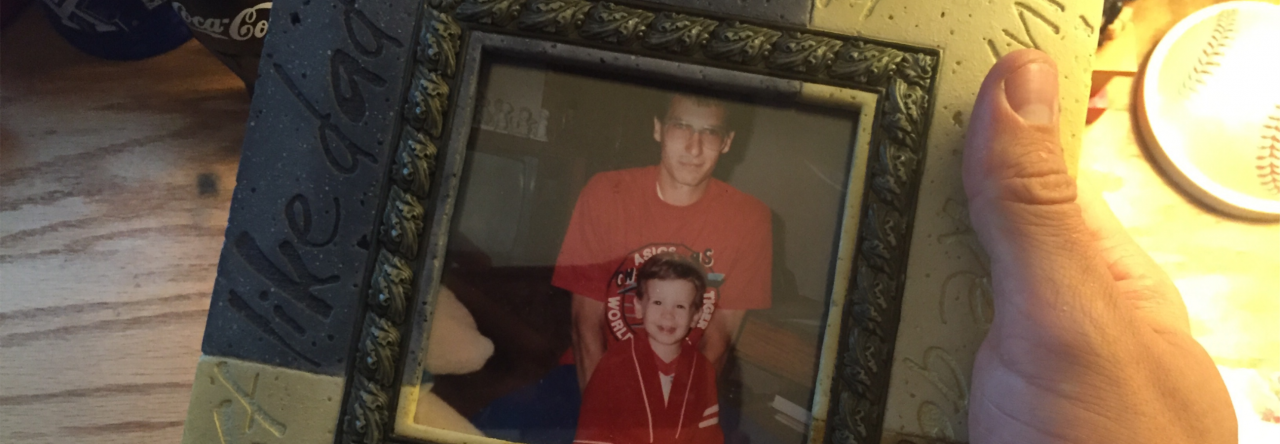
More Than Four Wheels (Part 1)

My best friend Chris and I stood over the opened hood of my 1998 GMC Envoy pretending to know what we were looking at. We knew for sure that the car wouldn’t start…and that was about the extent of our mechanical assessment.

Chris and I were just graduating from Miami, and this night was a rarity for us—we had actually been invited to a party and we had girls to go with us. Those same girls were now sitting impatiently in the backseat of a GMC Envoy that was parked on Bishop Street in Oxford and had no plans of moving from that particular location any time soon.

“I think we’ve almost got it fixed,” I yelled as I poked my head out from underneath the hood, flashing my best smile to our damsels in distress. Both girls smiled and laughed, probably knowing that I was using a liberal application of the word “almost”.

“I have no idea what I’m looking at here,” I said to Chris as we peered over the engine. I probably also added a few additional “adjectives” to help capture my emotions towards the vehicle, the car my Dad had bought for me during my senior year in high school. When he had bought it, I was super excited to have a car with a leather interior, a CD player, heated seats, and a sunroof. Four years and lots of driving, however, had gotten the best of the Silver Bullet. She was exhausted from the over 160,000 miles she had earned. The victim of my Dad’s attempts at numerous repairs had gotten the best of her. And now she was refusing to do the one thing I needed her to do: to start.

So Chris and I did what any college boys trying to impress a couple girls would have done. We took off our button downs, bent over the engine in white t-shirts and jeans, and started banging unmercifully on any piece of the engine that looked like it needed to be hit.

And when that didn’t work, we called my Dad.

Dad had received dozens of these calls over the years. “Dad, I went to get in the car after work and it won’t start.” “Dad, I have to be to class in 15 minutes and my car won’t start.” “Dad, I’m stuck in the middle of Route 4 and my car just died and there is an angry mob with pitchforks and torches ready to flip this hunk of junk if I can’t get it going. I might join them.” He always had a solution, usually something completely outside of my technical understanding of motor vehicles, but more times than not he could tell me what I needed to do to get the car moving, at least temporarily until we could get it to the shop.

But on this night, our call would be different. Memorable, and different.

I dialed his number and told him the story. “Dad, Chris and I and some friends are stuck in Oxford because my car won’t start.”

And then, he did the unthinkable.

He laughed.

“Did you hear me?!” I said, ready to explode. “I said my car won’t start! We are stuck. I don’t know what to do.”

“Well, I don’t know. Do you have the hood open?” he replied.

“Yes, Dad, of course we do.”

“Have you tried banging around on the engine yet?” he said.

“ARE YOU SERIOUS RIGHT NOW?! DAD!”

He laughed even harder. I, on the other hand, found myself within moments of violating a handful of the Ten Commandments in a single response.

“It’s a Friday night. Hang out in Oxford for a bit, try to start it again, and if it doesn’t work you’ll find a way to get home,” he said. “Maybe this is why you don’t get invited to parties that often,” he said in between his maniacal fits of chuckling.

I closed my phone, looked at Chris, and gave the only response I could possibly drum up that would explain the conversation I had just had.

“I think my Dad is on drugs.”

So, Chris and I regrouped and came up with a new plan. We would bang on the engine even harder than we had done the last time, and then we would start feeling around for parts that had popped loose and we would jam them back into the spots where we guessed they probably belonged.

And, miraculously, the car started.

Sometimes, a little dumb luck and advice from your Dad goes a long way.


“I can’t believe you were just going to leave us stranded up there!” I yelled at my Dad after getting home much later than I had originally planned. “You know I’ve got a big day tomorrow, and you were no help at all!”

Dad just sat in his recliner, smiling from ear to ear. He had stayed downstairs watching television, probably falling asleep in the recliner and waking up once he heard me come through the door. I swear I saw popsicle sticks laying on the side table. The audacity! Your only son is stranded and you have the nerve to eat popsicles?!

“You got home alright, didn’t you? Did you bang on it like I told you?” he smirked.

Yes-I-banged-on-it-like-you-told-me-to. And it worked, but that’s not the point!”

“Is the point that you want to thank me for giving you such great mechanical advice?” he said, with that all-familiar smugness of a Father knowing he has his son cornered in an argument he can’t win.

I turned around, face beat red, ears burning, and said “I can’t talk to you when you act like this.”

“We will fix it tomorrow,” he yelled up the stairs. I ignored him and went into my room, slamming the door in an all-to-predictable move for an angry son.

As I stormed up the stairs, I could still hear him laughing to himself in the chair. That laugh would infuriate me more than anything. I was half-tempted to tell him I hitchhiked home with a drug dealer just to see if it would get him to stop laughing.


I hadn’t lied to my Dad when I told him that the next day was a big one. Maybe more busy than big, but jam-packed nonetheless. It was a hot day in the early summer of 2009, and I had classically overcommitted myself yet again. I was scheduled to referee two soccer games in the morning. Then, I had a brief break in the middle of the day before I needed to leave and announce a post-season baseball game. After that, I would have to scurry back home, clean up, and leave again because that night promised to be a special night.

My college graduation party. My Mom and Dad had worked really, really hard to put together a beautiful graduation party for me to celebrate the end of my time as a student at Miami. They had rented out the athletic center at a local school that my Dad had helped to construct. My Mom had ordered a ton of food from my favorite Greek restaurant in town, and had also cooked many more items for everyone to enjoy. They had each set up tables, decorated, set up cornhole boards, hired a DJ, ordered a cake, and done just about everything they could to make this an amazingly special night. They had invited hundreds of our friends, family, and neighbors to come to the party, and I was beyond excited to see everyone.

I got home from the morning soccer games on that Saturday—sweaty, smelly, and overly exhausted. I hopped in the shower, put on some fresh clothes after, and hit the bed for what I hoped would be a brief and refreshing nap. And as soon as I did, I was disrupted.

“Ty,” my Mom said from the bottom of the stairs, “we need you to come outside for a minute. There’s someone here who wants to see you and say hi.”

I immediately felt annoyed. I was tired, and wanted a nap more than anything to prepare for the rest of the day.

“Okay, Mom,” I said. I got up, dragging, and made my way down the staircase.

As I made my way down the staircase, I saw a really sharp black SUV parked in our driveway. I tried to look out the windows in the hopes that I might recognize who it was, but I had no idea. This being my graduation party, I figured it was probably some long lost relative that my Mom and Dad wanted me to meet. Whoever it was, he/she drove a really nice car. I made my way through the foyer, opened the front door, and stood there with a look of shock on my face as I saw who was waiting in the driveway.

It was my Dad, standing next to the black SUV, with a camera in his hand—pointed directly at me.

“Happy graduation, Bub!”

When Dad Gave Me My Car Surprise

When the reality of what was happening actually set in, I completely broke down. I started crying, and I turned around and hugged my Mom, who stood in the doorway right behind me.

“We love you, Ty,” she said. “Happy graduation!”

“Mom, you guys shouldn’t have done this,” I responded, tears already forming.

“Ty, your Dad really wanted to do this for you,” she said.

I ran out into the driveway, and threw myself into my Dad’s arms. He put his camera down and hugged me really tight—I can still feel that hug. “Happy graduation, bub. You’ve made us all really proud, and you deserve this.”

I opened the doors of the new car—my new car–another Envoy, but much sleeker, newer, and reliable than the one I had previously had. It was absolutely beautiful, and it looked brand new. It had everything I wanted in a car. I just couldn’t believe it was actually mine.

Envoy New

Dad had gone the extra mile, as he did with everything in life. He had driven all the way up to Oxford and bought Miami University license plate frames, window decals, and some of my very first Miami “Alumni” items that I ever owned. We walked around the car, checking everything out from top to bottom. The engine grill was mesh and really made the car pop. There wasn’t a scratch to be found on it. The interior was spotless.

When Dad Gave Me My Car

“Want to take it for a quick spin?” Dad said. He tossed me the keys, and of course, he had added a Miami RedHawks key chain to them.

I hopped in the driver’s seat as Dad climbed into the passenger seat and Mom hopped in the back row. I began to drive down the road, shaking my head the entire time and repeating over and over again “I just can’t believe you did this.”

We rolled down the streets of our neighborhood as Dad showed me all of the cool features that the car had. He rolled from the main console to the seat controls and to all of the other things that this car had which my old one didn’t. We rolled down the windows and rode together as a family down Canal Road near our home, basking in the sunlight of a summer day and a boy with fresh wheels.

And then, it hit me.

“THAT’S WHY YOU WERE LAUGHING LIKE A MANIAC WHEN I CALLED YOU LAST NIGHT!”

And there it was again. The same laugh I had heard the night before when I stood over a cold engine on the streets of Oxford. The same laugh that is burned into my senses anytime I think about my Dad now that he is gone. The same laugh that brought me, my family, and anyone who met my Dad such tremendous joy. The laugh that I long, more than anything, to hear again someday.

Yes, the night before when my old car had once again failed to start, my Dad knew all along that he would be giving me a new car the very next day. As a matter of fact, I found out that my Dad was actually cleaning the interior of my new car when I had called him. With a bottle of leather cleaner and a microfiber cloth in hand, Dad was laughing at the irony of the situation—and probably at the thought of how much more I would appreciate the new ride in less than 24 hours.

My Dad understood that for a boy in college (or freshly graduated from it), a car is so much more than four wheels. A car tells a story about the driver. A car is not simply a transportation device to get someone from Point A to Point B. A car has character. A car has its own story to tell. And a car, in my life, represents much more than freedom.

“You’ve worked really, really hard in college,” my Dad told me as we drove around. “I wanted to think of a way for your Mom and I to show you how proud we are of you for working so hard.”

That new Envoy was a trophy. It was a daily reminder, each day that I opened the door, of how proud my Mom and Dad were of me. Every day when I opened that car door, I could feel a sense of happiness, appreciation, and confidence wash over me. It was a daily reminder of the love my parents had made me feel my entire life. And it reminded me of the sacrifice they made—and had always made—to show me how loved I was.

I remember pulling into the parking lot at Foundation Field later that day to announce the baseball game, and the look of surprise from the coaches who saw me roll into the complex in a sleek new ride. They all came jogging out to the spot I parked in (very, very far away from the reach of any particularly pesky foul balls) and put their arm around me when they saw the new car.

“My Dad and Mom gave it to me,” I said proudly as I shook my head. “I still can’t believe it.”

After the game, I drove with a new sense of pride and purpose to my graduation party across town. Dad made me park the Envoy right out in front of the door, and he went back to work on my new gift—polishing, cleaning, waxing, and perfecting. Apparently, Dad had told a number of people that we worked with what he was getting me for a graduation gift—it was amazing that his secret actually stayed a secret!

That car became a reminder of my Dad each and every time I opened the door and sat behind the wheel. He had found the car from an old coworker and friend and bought it while it didn’t have many miles on it. Even though it had miles, it looked brand new. He had come up with the idea of getting me a car for graduation, and convinced my Mom that it would be a great idea.

And then, when my Dad passed away, it became a tangible reminder of his love for me. Daily, that car would bring me back to happier times when my Dad was here to love all of us in person—but it also reminded me that he was still loving me and my Mom and our entire family from the other side of Eternity. After he was gone, I often that back to that day when I stepped out of our front door and saw him standing there with a camera. It’s a memory, thankfully, that is burned in my mind forever. I’ll never forget the feeling my parents gave me that day, and I’ll never quit seeing the smile on my Dad’s face.

But even the very best cars that are gifted from loving parents will break down over time. The interior will dirty and the engine will fail, and there will always come a time when that car is no longer as functional as it was before.

But how do you let go of a car that is more than four wheels? A car that is a gift from a Father who is no longer there? A car that is a physical reminder of the Dad who raised me, loved me, and taught me how to drive and so much more?

I’ll tell you how I let go next week in the conclusion of this story.

dad-in-redhawks-sweater-with-sb-logoDad, I still remember that Saturday afternoon when you and Mom gave me the new Envoy for graduation. I remember the smile on your face when you saw me come outside. I remember that you took so many pictures, and I remember how happy you were to show me every detail and feature the car had to offer. I cherished that car and I will always cherish that day. You made that entire day so special, but more than any tangible gift you ever gave me, you always told me how proud you were of me. I never told you how much confidence that gave me and how your belief in me helped me overcome so many obstacles. After you left, there were so many days where I would just hop in the car, drive down the road, and reminisce about the day you gave it to me. You blessed me with so many gifts in this life, and I am eagerly waiting for the day when I can see you and thank you again. Until then, seeya Bub.

“Start children off on the way they should go, and even when they are old they will not turn from it.” Proverbs 22:6 (NIV)

Think to Feel: Guest Blog by Jeff Yetter

Ty: I can say this with the utmost certainty: I have never once blamed my Dad for his death.

I have never once been mad at my Dad for leaving us earlier than he should have.

I have never once been angry at my Dad since his death.

But that doesn’t mean there are things I wouldn’t change about my Dad’s struggle. 

When I look back at my Dad’s experience with depression and his eventual suicide, there are definitely moments of “Monday Morning Quarterbacking” that I would return to and reverse if I had the capability. I think back to my first response to learning of my Dad’s depression, and how I wish I would have treated him with more love and compassion (read more about his in an earlier post). I think back to all the moments where I told him I didn’t have the energy to go on a bike ride or toss in the yard, and given the opportunity to change it, I would have put down the television remote and spent more time with him. I would have never left him alone that morning that he died. I would have prayed with him.

But if there is one thing above all that I wish my Dad would have done differently, it’s this: I wish my Dad would have gone to see a professional counselor.

Let me reiterate: I’m not blaming my Dad for his untimely end. I’m not even saying that this would have definitely changed the final chapter of his life, because that’s for God to know—not me.

What I am trying to do is understand the things that went wrong in our story in an attempt to prevent these same situations from happening to other fathers, other sons, and other families.

I’m trying to understand the reasons why my Dad wouldn’t go see a professional counselor, and they are reasons that aren’t unique to his situation. As a culture, we are often afraid of the stigma or stereotype that comes along with going to see a mental health professional. We are afraid that it makes us look weak. We are afraid to admit that we have a problem. This, coupled with a masculine cultural reinforcement that we simply need to buck up and hide our feelings kept my Dad (and plenty of others) from getting the help they need.

But there’s one more reason worthy of our exploration together: the fear of the unknown.

I know this fear all too well. The first time I decided to go to a counseling session, I didn’t quite know what to expect. I had seen depictions of therapists in movies and on television, and I worried that it was all hokum designed to make a quick buck.

I’m so glad that my counselor proved all of these stereotypes wrong.

If my Dad knew what counseling really was, he would have gone. If he knew what actually happened in those sessions, he would have gone. If he knew that getting help was not a sign of a weakness but was, instead, one of the boldest, bravest decisions an individual can make, he would have gone—if not for himself, for my Mom and I.

Which leads us to this post. Welcome back my friend (and I hope yours) Jeff Yetter—Licensed Professional Clinical Counselor, and the man who has walked with me “arm in arm” through so many struggles. He is the counselor who helped me realize the power and potential of going to see someone who can provide help. Jeff is a sincere, authentic, man of God who has provided so much brightness in the face of the evil that has invaded my life. Jeff’s first post detailed how we came to know each other and how we’ve come to walk together through the trials of my life. Now, I’ve asked him to provide a description of his unique counseling style—a theory he created called “Think to Feel”—in an effort to destigmatize the counseling profession.

So, if you find yourself needing help but are too afraid to pick up the phone and schedule that first appointment, I hope this message provides the ultimate encouragement you need.


Jeff: I am so humbled and grateful to have been asked by Tyler to contribute, again, to this amazing blog. What an incredible ministry this is for Tyler, and for all who come here to read, and share, and learn, and love! It is an honor to be with you all once again…

For this post, Tyler has asked that I share with you all the way that I “do counseling”. He has asked that I share my primary method of working with the folks who come to see me, because he believes this has been helpful on “our walk”.  I sincerely hope you find it valuable as well.

A Little History…

As a first-semester graduate student in counseling studies, way back when, my earliest recollection was being directed by department faculty to decide what theory of counseling I was going to practice when I completed my degree. In other words, I needed to decide what I believed about human beings and their behavior, in order to know exactly how I was going to do counseling when I got out in the “real world”. Sure, there were courses on counseling theories and techniques, and I learned about the greats in the field, like Freud, Jung, Adler, Rogers, Skinner, and Ellis (to name a few). But where did I fit in this picture? I knew I wasn’t going to be a “clone” of one of these theorists, and I had an inkling that I believed in Cognitive Behavioralism (“thinking” as it relates to behavior), but I was pretty uncertain as to which direction I was going to go as a practitioner. So, I left grad school with three wonderful gifts: excellent grades (all grad students do well, academically), a beautiful diploma (fit for framing), and infinite confusion with regard to theory and effective techniques of counseling practice. So…

The Birth of a Theory

I entered the counseling profession determined to help people. True, the notion of “helping people” emanates from the minds and hearts of nearly every recent graduate in the health care field, but I really believed it was possible – I just didn’t know exactly how to go about it. I needed to think about what I believed about human beings, their behavior, and what, if anything, produces change in human behavior. So, I started to actually practice counseling. I was nice. I listened well. I could paraphrase and re-state what I heard with the best of them. But this wasn’t enough to me. Not to mention, I was placing an incredible amount of pressure on myself to heal my patients. This was not going to work well for me, if I wanted to be in the field for very long. So, I began to consider, “What makes me feel?” Seemed like a logical place to start. And that was it – “makes me feel”. I realized that NOTHING “makes” me feel. Things, people, songs, movies, situations, the weather, do NOT “make” us feel. We actually “make ourselves feel” by the way we THINK about these things. And a theory was born. My “theory”. Simply put, we “Think to Feel”.

Think to Feel

Ok, Jeff, what are you talking about? We think to feel? What?? Like I said above, nothing “makes” us feel. People come into my office every day with the belief that things, people, situations, movies, music, etc. “make” them feel. Have you ever said, “a sunny day makes me happy”? Or, “that movie made me cry”? Or, “he really makes me mad”? Well, that’s not true. Any of it. And believe me when I say this, that’s GOOD NEWS! Allow me to explain…

If a sunny day “made” people happy, EVERYBODY would be happy on sunny days. If movies “made” people cry, EVERYONE watching the same movie, at the same time, would be crying. The entire audience. All of them. This simply does not bear out. There is always variation in an individual’s response to his/her environment. Different people “feel” differently, because they “think” differently. In other words, it is the way we “think” about the sunny day that produces the way we feel about it. For instance, I may look out the window and say, “thank you Lord, for this day. I have my twins (9 year old son and daughter), my health, and I’m doin’ ok”. So I feel ok. Someone else may look out the window and say, “yeah it’s sunny, but it’s still too cold out there”. So, he/she may feel less than enthused with the weather, and therefore he/she does not allow for a positive impact on his/her mood. Similarly, when watching a movie, it is what we are thinking when we are watching that produces how we feel about the film. We may be engrossed in the story, identify with a character, or relate it to something in our own life, and ultimately shed a tear. Someone else may be watching the movie, thinking of all he/she needs to do at work tomorrow, and has no feelings about the movie, whatsoever. Thoughts “produce” feelings. Things do not “make” us feel. Let’s continue…

Powerful

The foundation of my theory is one of “empowerment”. I want people to feel strong and empowered. I want people to know they actually have a choice in how they feel about the things they encounter in their lives. And this is the crux of “Think to Feel”: THE ONLY PERSON IN THIS WOLRD YOU CAN CONTROL IS YOU. Think about this for a second. “I can only control me”. Pretty cool, right? Also happens to be true. We can only control ourselves. Consider this: God gave us Free Will. He made us, He created us, and yet, He doesn’t “control” us. He allows for us to make choices. His will, yes. His plan, absolutely. But our choice. Free will. I figure if this logic was good enough for the Lord, it probably makes sense for us as well. Therefore, we cannot control what another person says, does, thinks, or feels. And conversely, no one controls what we say, do, think, or feel. Pretty powerful, if you allow for it to be. The only person who can “make you feel”, is you.

Feelings are choices. Not like choosing a flavor of ice cream, but choices nevertheless. Because “choice is power”. Think of this example: if I say “Joe Blow makes me mad”, who has my power? Joe does. Now, I am mad, but powerless to do anything productive about it, because my power resides with “Joe”. However, if I say, “I’m mad at Joe”, I am mad, but my power still resides with me. May sound like “semantics”, but rest assured, it is not. Two very different and distinct subjective experiences. One: you are mad and powerless. The other: you are mad and “in charge” of your feelings. You have “chosen” to be angry. And that’s fine. Feelings aren’t always pleasant, but they are always a choice.

To further this “power” example, I use the sport of football. Many years ago, I was a quarterback, and in the huddle, when I would call a “hand-off”, I would kindly remind the running back to “hold the ball”. Meaning, don’t fumble. Don’t put the ball on the ground. Don’t toss it up in the stands to your friends. And don’t hand it to the linebacker trying to tackle you. Seems logical. But my point is, the football represents the team’s power. Without it, you can’t score. For metaphorical purposes, I refer to “holding the ball” in life. Don’t give it away. It’s your power. Don’t give your power to the weather, to a movie, or to another person. That “ball” is yours. It’s your power. Hold onto it. Hold the ball!

Positive Thoughts: That’s It?

Ok, now some of you might be thinking, “Alright Jeff, if we “Think to Feel”, all we need to do is just ‘think happy thoughts’, right?”  We just need to “look on the bright side, and all will be well?”  Nope. Believe me, if thinking happy thoughts worked, I would be unemployed. Everyone would simply walk around thinking positively, and all would be well. But of course, that is not how life works. Bad things happen. Sadness and depression are part of life. People get anxious. Sometimes we feel lousy. Negative feelings occur all the time. See, even though we “think to feel”, and feelings are a choice, sometimes the appropriate or even necessary way to feel, is to feel “bad”. “Thinking to feel” is not a “cure” for feeling bad. It simply allows for the “ownership” of those feelings. “I feel bad”, versus “it makes me feel bad”. A choice. Therefore, empowered to do something about it. It’s the difference between “having bad feelings”, and “bad feelings having us”. The difference between “having depression” and “depression having you”, etc.

Although life doesn’t “make us feel”, we are still very much “affected” and “impacted” by life. I always say, “if you jump in a lake, you get wet”. Life “affects” us. We are “impacted” by things people do and say. It’s just that those things don’t “make us feel”. We get to “hold the ball”. Keep our power. And now, life becomes a little more manageable. And in essence, that’s what I do each and every day. I teach people how to “hold the ball”, keep their power, and learn how to “think” in ways that allow them to “feel” better than they did with their old way of thinking. So, each day, each session, each person who comes to see me, learns that we “Think to Feel”.

Always Help

Like I mentioned in my first post, we all have hurt, confusion, pain, and issues. But it’s important to remember: you’re not alone. Because we “think to feel”, it’s important to remember that we are never alone. It is times when people believe they are “alone”, or no one understands, that they feel hopeless. That “thought” of being “alone”, produces the “feeling” of hopelessness. But as I said, we are never alone. There is always “someone”. Whether a family member, a friend, a clergy person, a coworker, or even a professional. There is someone. Let’s all find that “someone”, and maybe even be that “someone” to others. The thought that there is someone out there, produces hope. And that’s the goal of “Think to Feel”. To offer hope…

Bless you all. Until we speak again.

– Jeff

“For as he thinks in his heart, so is he…” Proverbs 23:7


Dad Smiling Against StairsTy: Dad, you would have loved spending time with Jeff, and more importantly I’m confident that he would have been able to help you find a level of peace and comfort in the midst of your depression. I have many regrets in this life, but one of my biggest is that I didn’t encourage you to go seek professional help more vigorously. I know that his style of counseling is something that would have resonated with you. I know that you would have been comfortable talking to him, and I have no doubt that you would have befriended him, just like you did with nearly everyone you crossed paths with. I wish that, as a family, we could have found a way to make you more comfortable with the idea of counseling. But, I find peace in the fact that you are now in a place where you no longer experience the pain of depression. You are living in a beautiful paradise with our Maker in a land where the trials of this world are long forgotten. I long to see you experience this peace, but until then, seeya Bub.

“Ask and it will be given to you; seek and you will find; knock and the door will be opened to you. For everyone who asks receives; the one who seeks finds; and to the one who knocks, the door will be opened.” Matthew 7:7-8 (NIV)

jeff-yetter-headshotJeffrey Yetter, M.Ed., LPCC
Licensed Professional Clinical Counselor

Jeff Yetter has practiced in the field of counseling and psychotherapy for the past 24 years. He has worked in both the public and private sector, and is currently in Private Practice in Middletown, Ohio. Jeff has also been an Adjunct Professor in the Graduate School of Counseling at Xavier University. Academically, Jeff completed his undergraduate study at the College of Mount Saint Joseph (now, MSJ University) in Cincinnati, Ohio, where he graduated Magna Cum Laude. He completed his Master’s Degree in Agency and Community Counseling at Xavier University. He completed his Post-Master’s Endorsement in Clinical Counseling at Xavier University as well.

Quietude

“You better slow down.”

It was a constant refrain from my Dad when I was fifteen-and-a-half and he was teaching me how to drive. I was planning to inherit my first vehicle: My Dad’s old 1992 Chevrolet Sierra pick up truck. It had a single bench seat, manual windows and locks, and roared pretty loud any time you hit the accelerator.

“Is this the pot calling the kettle fast?” I would reply. It was ironic that Dad was telling me to slow down, because he was the family member with the heaviest leadfoot.

Dad enjoyed driving fast because he enjoyed feeling the power of a vehicle. He never drove fast because he was in a hurry. He drove fast because…well, he just enjoyed driving fast.

Whether I realized it or not, I inherited the gene that causes leadfoot syndrome, and like my Dad, I enjoy driving faster than I probably should.

But Dad also had an uncanny ability to slow down—and I’m not simply talking about his ability to ease his foot off the accelerator. My Dad was a pro in slowing down at life and eliminating the noise that so often crowds our minds. Dad was very good at embracing the quiet and simple moments of life, and I’ll always envy his ability to do that.


My Dad was a man who could enjoy the simplicity of everyday life. The moments that so many of us take for granted were moments of complete serenity and clarity for my Father. When things were quiet, my Dad was at an extreme peace—a level of peace I hope to obtain someday.

I think some of it may have been a result of his vocation. My Dad was always a physical laborer. He started out in construction, and during his life he was able to build remarkable structures: from the garage and foyer addition of our family home to a handful of wooden crosses at our local cemetery’s veteran memorial. Where there’s building there is often banging, and the sound of a hammer pounding a nail was a natural one for him to hear.

After his career in construction, my Dad worked in a number of different steel plants as a maintenance technician. If you’ve never been inside of a steel plant, they are notoriously noisy places. Machines bang and whir as they roll out steel and cut it into pieces for customers to use. Cranes fly overhead and forklifts zoom across the floor, picking up steel while honking, buzzing, and beeping to alert pedestrians of their impending arrival. Dad, being a maintenance technician, was very close to all of the machines in the plants where he worked. It was his job to know that machine inside and out; to capture the intricacies of how it worked so he could fix them when they didn’t. Dad was very, very good at his job; but being good at his job required him to be in the midst of constant noise.

So when Dad came home, he got very good at finding ways to escape the noise and enjoy the peace and solitude of our life in suburbia. And Dad enjoyed finding that quiet peace outdoors.

The weather can be a bit of a mystery in our corner of Ohio, but from mid-April to September you can usually rely on a nice evening with a beautiful sunset rather regularly. Where most families like to eat at a dining room table, my Dad was always fond of eating outside. When I was young, he built a beautiful brick patio that became our family’s private backyard oasis. Dad would often grill (I mean burn) our dinner, Mom would salvage the meal with a handful of delicious sides, and we would all settle in to share a meal. Dad, often covered in the grease and grime of a hard days work in a steel plant, would sink back in his patio chair, eat his meal, and throw back a can (usually two cans) of ice cold Coca-Cola. There was nothing fancy about these dinners, but you could tell Dad enjoyed them.

And although he would talk and converse with us, we didn’t have to say much for the dinner to be enjoyable. Dad would enjoy listening to the sounds and sights of birds flying through the air. He would watch clouds as they moved across the sky. He would laugh as a squirrel tried to steal food from our bird feeders, or watch our family dogs as they meandered across the back lawn. Simple things brought him extreme pleasure.

On a nice summer night, Dad usually enjoyed a bike ride. My family was fortunate enough to grow up within biking distance of Rentschler Park, a beautiful hidden gem in our neck of the woods. Rentschler Park is full of hiking trails, natural woods, and a waters-edge view of the Great Miami River that is hard to beat. Whenever I take a bike ride, I will nearly always have a pair of headphones in, listening to my favorite music; but Dad’s bike rides were different. My Dad was never a big fan of headphones. He enjoyed taking in the natural beauty and wonder of the world around him without the noise of every day life. He would ride his bike, yes, but he would also make a stop near the river bank and listen to the wake of boats as they lapped against the shore. He would stop and listen to the stream near the hiking trail, or watch the waterfall as the cool water meticulously pelted the gray clay of the streambed. He would listen for birds as they chirped, and talked with any stranger who had a dog—always eager to steal an opportunity to befriend a puppy.

And when he would come home from these bike rides, usually after an hour or so, Dad had a favorite spot in our backyard. It was around the fire pit that he built for all of us to enjoy. My Dad enjoyed so many sounds, but I think he enjoyed the pops and crackles of a wood burning fire more than any other. Using the flame thrower that he “engineered” (an extremely dangerous toy that is hooked to a propane tank which I was fortunate enough to inherit after his death), Dad would start the fire, toss on lots of wood, grab our family dog and a lawn chair, and settle in for a few hours of quality rest and relaxation. He would try out new burning materials to see what interesting sounds they might make. He became a particular fan of bamboo which, if you don’t know, makes a loud explosion when it burns. Or pine tree limbs which, after a significant drying period, will burn faster than just about any other material. For hours my Dad could sit in his chair with the warmth of a good fire on his face. He would drink yet another Coca-Cola, eat a few popsicles or Klondike bars, and stare at the night sky above him. He would wonder at the marvel of the moon and the stars overhead, pointing out obscure facts he had learned about them over the years. No frills, nothing fancy—but completely and utterly at peace and happy.

Not every night was like this for Dad. There were nights where my Dad would have to work late or get called in after returning home. There were nights where he would go out to eat or come to one of my baseball games. There were nights where Dad would work side jobs in an effort to support our family financially. And on the unfortunate night that the rain and foul weather would prohibit any outdoor enjoyment, Dad would be relegated to the couch for another night of UFC reruns.

But I have no doubt that my Dad was happiest on the nights where he could enjoy nature and the peace and solitude they provide. I have no doubt that my Dad experienced a slice of heaven on those nights where he could escape the noise of everyday life and marvel in the joy of the world around him.


Mister Rogers popularized a unique phrase: “quietude”. Quietude was the act of withdrawing from the noise and constant chatter of the world we live in to embrace the beauty of God’s creation and listen as He speaks to us. Mister Rogers was a tremendous appreciator of silence, and he found ways to make quiet time for himself each and every day. Mister Rogers would wake up early each morning to pray, and then he would swim laps relentlessly. In one of his books, he even talks about a day he spent doing nothing but reading, praying, and listening to the world around him. He said that that particular period of “quietude” led to a restful night’s sleep and an extremely productive day of work. Fred Rogers said that his moments of quietude were an opportunity to “stop, reflect, and receive.”

I like to think that my Dad was able to achieve this same state of quietude pretty frequently in his life. Although he may have lost his final battle with depression, I like to think that he was able to fight of the mental illness for so long and so successfully because he was able to close off the distraction and noise of the world around him and embrace quietude. He was happiest listening to a bird chirp. He was happiest listening to a river flow. He was happiest listening to a dog bark. And he was happiest listening to a fire crackle. He didn’t need to talk to be happy. He didn’t need to be productive twenty-four hours a day to enjoy God’s creation. He took God’s command to relax and enjoy life seriously. And he lived it in a way that we should all strive to do.

Although it’s been many years since my Dad gave me that initial driving lesson, I think he’s still telling me that I better slow down. I think my Dad is still telling me that I need to find ways to take my foot off the accelerator of life and strive for a level of quietude that will brighten the world around me. There are so many times where my “to-do’s” distract me to the point that I can’t enjoy anything else I’ve already done. I’m constantly thinking about what’s next, what I can be doing to be successful, and all the ways that I can be productive and contribute. I rarely think that the best way for me to be productive might be to slow down, but I’m still learning this lesson from my Dad—even if he’s been gone for over three years.

There are days, less frequently than I’d like, where I’m able to replicate the life my Dad led. I’m trying to take more bike rides and make more backyard fires. I’m trying to listen to the natural world around me and pay attention to the amazing things that God has created all over. There are days where I’m able to hop on his bike, pedal my way back to the park, and enjoy the sights and sounds of a sunset over the river bank. In those moments, I find myself hearing the still, small voice of God that is so often described in the Bible.

But I also find myself hearing my Dad’s voice. We have conversations with one another. I’ll ask him questions about the tough things I’m dealing with in life. I’ll ask him to help me fight my feelings of doubt and insecurity and uncertainty and hopelessness and fear. I’ll tell him that I still don’t understand why things happened the way they did. And I’ll tell him how much I miss him and love him.

And I know I’ve found Dad’s quietude on the nights where I hear him answer back. And more than anything, I always hear him say “I miss you, but I’ve always been here and always will be. I love you, and I can’t wait to see you again, even though I see you in every moment of every day.” I hear it in the break of a wave against the shore or the flap of a bird’s wing overhead. I hear it in the crackle of log in the fire, too. But there are many times where I hear it in his voice. Speaking to me, from the heavens.

When I force the world around me to slow down and get quiet, I hear some of my favorite noises. I’m thankful to God for all that He’s created, but I’m especially thankful for my Dad for showing me how to slow down and enjoy it.

Dad Leaning Back in a ChairDad, I know that there were so many times when I didn’t understand why you would tell me to slow down, but now it all makes sense. I look back on the moments when you were happiest here in this life, and it seemed to be the moments when you were unplugged, disconnected, and severed from all the chatter and distraction that we think is important. You found what was really important in life, and you embraced it head on. You found ways to enjoy the beauty and simplicity of God’s creation, and you found a state of quietude that led to happiness and rest. I’m striving to be like you in so many ways, Dad, but I’m working especially hard on slowing down. You’d be proud to know that I still drive a little fast, just like you, but I’m slowing down to enjoy the things that were important to you and are important to me. Until we can enjoy them together in heave, I’ll seeya, Bub.

“He makes me lie down in green pastures, he leads me beside quiet waters.” Psalm 23:2 (NIV)