

“Tyler, you can’t blame yourself for what happened to your Dad. You can’t live with any regrets. Your Dad loved you so much.”
In some variation, I probably heard this hundreds of times in the days and weeks and months following my Dad’s death. As friends and family members poured through the visitation line, most of them said something to this effect. When I would talk with fellow Christians in deep conversation about my sorrow, they would always reassure me with this truth. Over and over again, whether from those who had lived close to grief’s shadow or those who were far away, I heard the same encouragement to press on and to live without regret.
And I’m glad I heard this, because the regret and the questioning entered my thoughts moments after hearing that horrible news of my Dad’s death. I immediately started to second-guess myself. I panicked that I had not done enough to save my Dad from the darkness that invaded his mind. I quickly grew nauseous over the thought of all the missed opportunities to spend time with my Dad, knowing that these would likely haunt me for the rest of my earthly existence.
I tried to convince myself, deep down, that I had done all I could. That I had lived life, in every moment, to the fullest when my Dad was around.
But it’s only natural to have regrets. Yes, regrets are natural, and I think that although it may not be easy to think about your regrets when you’re grieving, it’s completely okay to do it when you’re ready. In a perfect world, we would all live lives without regrets, but everyone who reads this blog knows that life isn’t perfect. It’s messy, and complicated, and extremely difficult at times. As a result, we don’t always do things perfectly, which makes regret natural in the aftermath.
I think that the intensity of our regrets are often amplified in the immediate aftermath of a tragic loss. Naturally, we begin to ponder a desired alternative—and in order for that desired alternative to come true, we often envision ourselves making different choices.
Suicide amplifies these regrets to another level. Suicide, above so many death mechanisms, is preventable. It is unnecessary. I’m not saying it’s any more or less tragic than any other type of death, but I do think suicide is unique in that it brings with it an entirely unique set of circumstances.
I live with these regrets, each and every day. I live with the questions of what I could have done differently. And I pray that both God and my Dad might forgive me, in the hopes that I will, someday, be able to forgive myself.
I regret not doing more to let my Dad know that I didn’t blame him for his depression. I know that my Dad was ashamed of his depression. I know that it made him feel weak. I know that he didn’t want to admit that it was getting the best of him. And although I grew to have a more mature understanding of mental health and depression as I aged, there were many times when I, whether consciously or not, failed to recognize the severity of Dad’s depression or the lack of control he had over it. I expected him, as he did with so many things in his life, to find a way to control the way he felt. I didn’t always understand that, of course, if my Dad had the ability to change the way he felt, he would have done it in an instant.
I think back to the times that my Dad’s depression would get the best of him. I’m thankful that there were moments when I let him know that I cared deeply for him. That I understood the nature of his depression was intense, and entirely not his fault.
But there were other times, like the first time I learned of my Dad’s depression, where I was ruthless, unforgiving, and even cruel. I expected him, unwisely, to find a way to “snap out of it.” I regret that I ever considered my Dad weak because of his depression, because I know looking back that he showed tremendous, unbelievable courage to fight for as long as he did. He was unbelievably strong—and definitely stronger than me.
Eventually, I found the proper lens to view my Dad’s depression through. I realized that someone with depression, just like a victim of a physical illness like cancer, should never be blamed for the problems they are plagued with. But I regret those moments, in my immaturity and stubbornness, that I wasn’t more compassionate to a Father who was nothing but compassionate to me whenever I needed it—even though I didn’t always deserve it.
I regret not being more forceful in my plea for Dad to find help. My Dad was a fixer. He was a man who built things with his hands, and as a maintenance technician at a local steel plant, his job was to fix things—huge machines, specifically. Big, complex, very complicated machines. Most people would look at those machines and be immediately overwhelmed and intimidated—but not my Dad. He could take the most complicated problem and break it down, piece by piece, arriving at a solution quicker than most. Dad was smart, intelligent, and very talented. There were very few problems that could whip my Dad.
And I think it was exactly that fixer’s mindset that made depression so difficult for my Father to cope with. If he could fix huge, multifaceted, million-dollar machines with nothing more than his brain and his own two hands, I’m sure he wondered, then why couldn’t he figure out the solution to his own depression?
Of all the regrets I live with, I think what I regret most is failing to encourage my Dad to seek appropriate medical attention from a counselor to help him cope with his mental illness. As I’ve written about before, the one thing my Dad always resisted was going to speak to a mental illness counselor or therapist. I think that his resistance was part pride, part embarrassment, and part a lack of knowledge for what a therapist actually is and the difference this person could have made in his life and thinking.
The first time I really encouraged my Dad to go speak with someone and shared my own experiences with my counselor was, unfortunately, on the last day of his life. I wish that my Dad and I could have had more honest, deep, and heartfelt conversations about our struggles with mental illness. This would have given me the opportunity to share with him how helpful my therapist, Jeff, had been to me. And maybe, just maybe, it would have encouraged Dad to find a counselor. And maybe that counselor would have helped my Dad avoid his untimely death.
I regret not asking my Dad if he was feeling suicidal tendencies. In our final conversation together, I asked my Dad a lot of questions about how he was feeling and why he might be feeling the way he did. Some he could answer, but others he couldn’t.
But there’s one question that I couldn’t bring myself to ask him—partly because I didn’t want to know the answer, and partly because I already thought I knew. But I was wrong on both accounts.
I regret not asking my Dad whether or not he was feeling so depressed that it might lead to suicide.
It’s so tough to even write that question because of the regret I feel. As much courage as I might have been able to muster on that morning, I don’t think I could have ever have built up enough strength to ask him that question—but it doesn’t change the fact that I wish I would have. And now that I know how he died, I definitely would have asked him.
Yes, so much of this is Monday-morning quarterbacking, because in all of my Dad’s struggles with depression, he had never once attempted suicide or led us to believe that suicide would enter his mind. So many people who knew my Dad were utterly shocked at his funeral because they never suspected he might succumb to something so tragic. Those who lived closest to him, like me, were just as shocked.
I wonder if I would have behaved differently that morning had I asked that question. I wonder how Dad would have responded. Would he break down and confess that, indeed, he was feeling suicidal? And would I have been able to save him? Call a doctor? An ambulance? Anything? Or would he have masked his inner sadness as he had done so many times before, unable to tell his son the true answer? Would me asking that question have opened up a new avenue for our conversation on that day? Would I have been able to convey to my Dad that life would be almost unbearable without him? And whether it was guilt or responsibility, would either of those emotions or thoughts been enough to deter him in those final moments?
I live with regret because I don’t know the answer to any of these questions. And, unfortunately, I never will. But I know, given the opportunity to live my life over again, I would have at least asked. Yes, it would have been the toughest question I would have ever asked my Dad—but it would have also been the most important.
I regret not living life more with my Dad. I am fortunate to live in a country of surplus, but no matter what tangible blessings I might accumulate in my life, I will never, ever be able to accumulate more time. And more than anything, I regret all those moments where I chose less meaningful things over precious time with my Father.
There were so many things that Dad wanted to do with me, and that I wanted to do with him, that we never got a chance to do. Dad wanted to go to a country concert together, but we never got the chance to make that happen. Dad had always wanted to go on a kayaking trip together, but we never got that opportunity. Dad would often beg me to go watch UFC fights with him. I would stop dead in my tracks, roll my eyes, and then tell him how much I hated UFC fights more than…anything else in this life (that’s right UFC fans, you heard me). There were so many times when my Dad would ask me to do something with him, and I would be too busy or too preoccupied to make it happen. And boy, do I regret ever saying no to him.
Now, instead of doing those things with my Dad, I do them in his memory. I do them because I know he would have wanted me to do them. I had never kayaked before Dad died, but about a year after his death, I bought a kayak and I’ve fallen in love with being on the water. The rowing calms my mind and the beauty of the surrounding nature soothes my soul, but all the while I usually think about my Dad. I think about how much he would have enjoyed being out on the water with me. I think about all the great laughs we would have enjoyed together, especially the first time I ever got in my kayak and abruptly tumbled into the water on the riverbank and flopped around like an idiot for a few seconds. I laugh about how many times he would have pointed out a certain type of tree on the riverbank or a bird that would fly overhead. I wish I was doing things like this with Dad, not in his memory. I regret that we never had the opportunity to do it together in this life, but I’m hopeful for an Eternity where we can do them together, forever.
But this regret, as powerful as it is, would be there no matter how fully I had lived life with Dad. As much as I regret these specific things, I know that there were so many times when I did live life to the max with my Dad. When death strikes, the one thing we all wish we had was more time with our loved one—even if we had spent every single waking hour with that person. Coupled with this regret is an appreciation for all the dinners we had at LaRosa’s, all the hours we spent in the truck together singing country music, the trips to the beach, the zip-lining excursion together for Father’s Day, and all the episodes of The Office we watched together on our family room couch. Yes, there would have always been other times I could have spent with Dad, but I’m thankful that looking back on our lives together, we were there for each other more often than not. I don’t necessarily regret the opportunities which I said no as much as I long for more of the opportunities when I did say yes.
I think that regret can only be natural if a deep, abiding love was there at one time—and I’m tremendously grateful for that. I’m thankful that life with my Father was so good and so amazing for 26 years that it made me desperately yearn for more and more of it. Yes, when we look back on our lives we would all make changes—some minor, and some significant. And although I try my best to live without regret, it’s a natural part of the grieving process brought on, only naturally, by the love I have for my Father.
And as much as I may do in his memory…I think I’ll still pass on those UFC fights.
 Dad, Even though I know you would tell me not to feel regret, I do wish that I had the chance to hit the “do-over” button on so many things in my life. I wish I had been more of a support to you when you needed me. I wish that I had spent more time with you doing the things you loved to do. I wish that I could have done more to help you find peace and solace in the tumult of your depression. I don’t know the answer to why this terrible tragedy happened, but I do know that God has a plan to make something good out of it. I often wonder what could possibly be better than more time with you, but I know that although I feel a horrible separation from you in these moments, there will come a day when you and I can both live completely free of regret and goodbyes. I long for that day, but until then, seeya Bub.
“No, dear brothers, I am still not all I should be, but I am brining all my energies to bear on this one thing: Forgetting the past and looking forward to what lies ahead.” Philippians 3:13 (TLB)
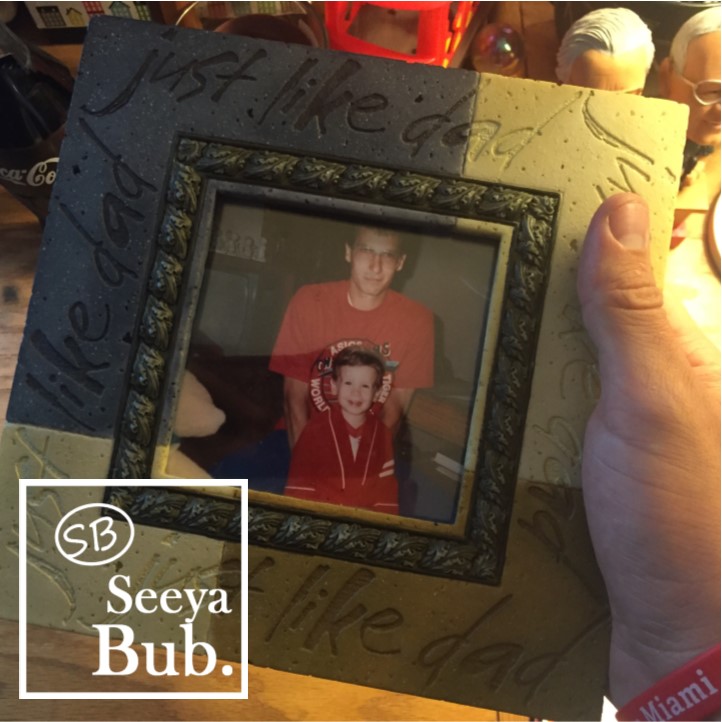
 Dad, I hate that I ever had to say goodbye to you. It’s been four years since I said goodbye to you for the last time here on this Earth. I feel the pain of losing you each and every day. I would give absolutely anything to have you back, even if only for a day. For 26 years, you were always here for me, and now that you aren’t I feel the awful heartache of losing you. But I know that I could only feel that heartache because you touched my heart in ways no one else could. You taught me so many important lessons in this life, but more than anything you taught me that love matters above all else. In every moment of every day, I never doubted your love for me, for my Mom, for our family, and to all who mattered to you. You didn’t just tell people that you loved them, you showed them. And I’m thankful for that. The days stretch on without you, Dad. There are days, like today, when it’s all I can do to get out of bed at the thought of losing you. But I know that all of the wonderful moments we shared in our time together here will be completely outshined by the life we will live together in the glory of God’s grace. Thank you, Dad, for everything. I’ll never be able to tell you how much I loved you, but until that day when I try, seeya Bub.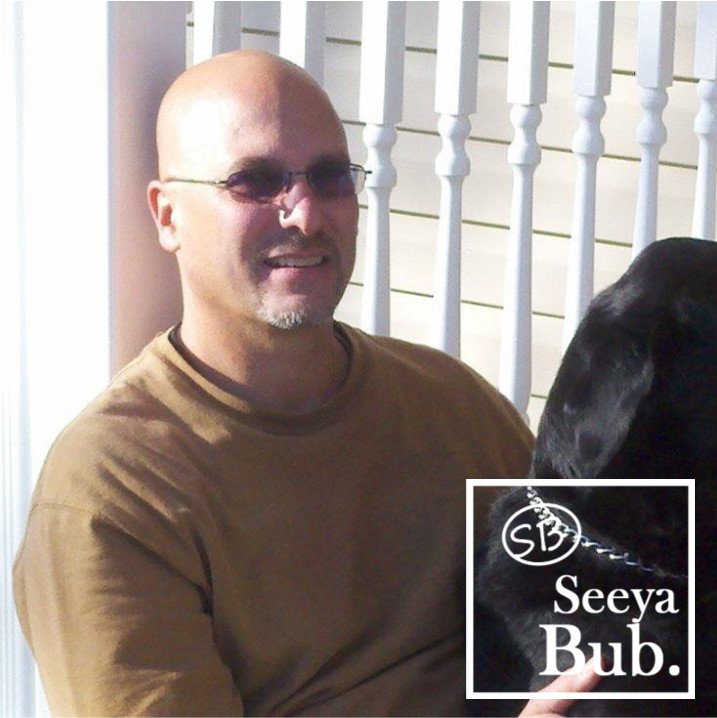
 Dad, There have been so many days when life has seemed unlivable without you in it. There have been moments when I’ve completely collapsed under the weight of my own worry and troubles, and I wish more than anything that you were here to encourage me in those moments of doubt and frustration. But in a sense, you are here with me. The lessons you taught me throughout my life were always lessons of empowerment. You taught me that I am always stronger than I think I am, and that when I am weak God is strong. You also showed me that it’s okay to have feelings and emotions and that I can express those when I feel them. You showed such bravery in your life, and I hate that in your final moments you doubted your own courage. Dad, you were the most courageous man I’ve ever known. You fought so hard for so long, and I’m glad you’re not fighting anymore because that enemy that you faced is defeated once and for all. I’m so thankful that you are completely at peace, completely healed, and completely perfected in God’s love and image. Dad, you deserve eternal rest in paradise (hopefully free of snakes), but boy do I wish you were still here with me to help me in this imperfect world. Keep giving me that courage when I need it most. And until I can thank you in person, seeya Bub.
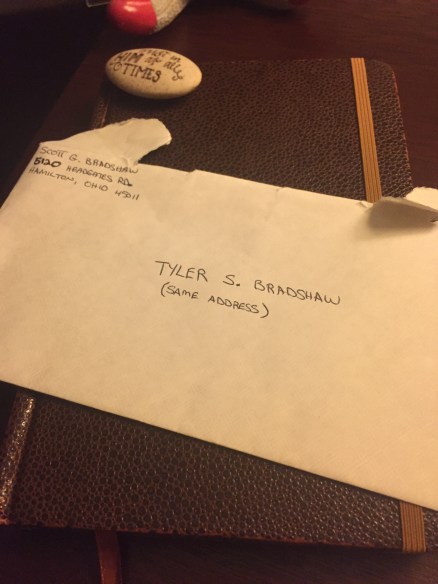
 Dad, In lieu of the letter I should have written to you before you died, I have been writing letters to you ever since. Letters that share my love for you and my sadness that you are no longer here. There isn’t a single day that goes by when I don’t miss you. You writing such an honest and authentic letter to me as a young freshie is just one of the many spectacular gifts you gave me as your son. I read your words, and although they still bring tears to my eyes as they did on the first day I read it, they also bring a sense of gratitude that I had you as a Father here on earth for all the years I did. I wasn’t just lucky to have you as a Dad—I was blessed beyond belief. Your words in that letter are so important to me because I know they aren’t just words. They are reflections of your innermost beliefs, and you lived and loved me in a way that made those words come to life. Thank you for writing that letter, Dad. I’m sorry that I never wrote you the one you deserved to read. It breaks my heart knowing that I never handed you a letter in return, but it gives me hope knowing that I’ll get to tell you exactly how much I love you face to face someday. Until that wonderful day, seeya Bub.
 Dad, Even though you weren’t able to mold me into a terrific athlete (yes, I’m going to blame this on you), you never quit teaching me that athletic competition was just a vehicle to deliver some of life’s most important lessons. You taught me about humility, hard work, dedication, courage, and competition. You knew that, when you compete, there are lots of people watching how you react to adverse situations. And you always, always made sure that your character was on display. I wish I had been a better athlete because I wanted to make you proud, but I hope you know how much I enjoyed watching you compete…and how much I desperately wanted to be like you. Dad, you made a tremendous impact on people each and every time you played. Thank you for being a character-giant in my life. Thank you for always giving me a solid example of Christ-centered love to look up to. And thank you, seriously, for putting up with my pathetic arm when we would toss. When I’m perfected in Heaven, our games of toss will be a lot more fun. And until that day, seeya Bub.
  Dave Hicks
 Dad, I never thought I’d have to experience life without you so soon. I had images of you growing old, and I was excited to see you enter new chapters of your life, because you always had a sense of adventure. There are days, many days, when I feel helplessly lost without you. It always feels like something is missing when you aren’t around—it’s like there’s a gaping hole that can never be filled perfectly, even though good things are happening all around me. You brought such life to my life, and now I try to use your memory to fulfill that. I look forward to life in Eternity when the “you aren’t here” times are simply a thing of the past. Until that day, I’ll continue honoring your memory and loving you with all my heart. Seeya, Bub.
 Dad, What I wouldn’t give to hear you sing another song right next to me. What I wouldn’t give to go back to those days where we would ride around in your truck and listen to country music together. I’m thankful that you always set the right example for me in church by singing along with the worship songs. I’m thankful that you always remembered that singing songs of praise and worship aren’t about us but are about developing a relationship with God. Certain songs come on the radio, and I still think of you. I’ll always be appreciative of the memories you gave me as a young child listening to country music in your truck. Thank you for being a Dad who always had a song of love in your heart. Until we both join the chorus of heavenly angels together, seeya Bub.
 Dad, I always admired your energy and vitality. You attacked life and took on new challenges, and you were never that Dad who loved the couch more than he loved spending time with his family. In your life, you always seemed to be able to find a good balance between rest and being active, but when you were active, you always made the most of it and there was always a huge smile on your face. Whether it was riding bikes, walking the dog, playing softball, schooling a bunch of youngsters in basketball, or simply goofing around in the backyard swimming pool, you realized that life was designed to be lived. Even though I didn’t always listen (and boy do I wish I would have), you always encouraged me to get up and get going. You always encouraged me to believe there was life outside of a TV set or computer screen, and since you left I’ve tried to live this out. I’m looking forward to many bike rides together on the other side of Eternity. And if you could talk to the Big Guy upstairs and have him send me a little more muscle mass, I’d be appreciative. Until then, seeya Bub.
 Dad, I would never fault you for the sickness you experienced, but I sure wish we could have gotten you the right treatment you needed. You had so much to live for and experience, and I know that Jeff could have helped you fight off the demons and doubts you were facing. I’m still learning from you even after you’re gone, and because I love you I promise that I will always get help when I need it. I’ll never let my emotions overwhelm the plan God has for my life, and I’ll always encourage other people to get help when they need it. If nothing else, you would have loved talking baseball with Jeff. I’d give anything to see the two of you meet—and someday you will. But for now, seeya Bub.
  Jeffrey Yetter, M.Ed., LPCC
 Dad, I don’t think a single day goes by where I don’t replay the sights and sounds of that awful July morning. I constantly fight against my mind to not let the tragedy overshadow the love you showed me, but I’m not always successful. There are days when it’s hard for me to feel happy. There are days when it’s hard for me to feel like I couldn’t have done more to help you. But I never questioned your love for me and for our family. In the moments where life gets really tough and the waters especially overwhelming, I can always feel your presence right there with me. I can always feel you helping me fight against those aftershocks. I’m thankful that you taught me how to love others. I’m thankful that you helped prepare me for the difficulties that would come my way. I’m grateful to have had a Dad who always knew how to comfort me, and I’m thankful that, even from Heaven, you still continue to love me and direct me. Until then, seeya Bub.
  Seeya Bub